By Life In Humanity Analysis Desk

“Courage isn’t having the strength to go on, it is going on when you don’t have the strength.” These powerful words by Napoleon Bonaparte challenge the conventional view of courage. It does not entail possessing an abundance of strength, power, or resilience, but the ability to continue pushing forward even when we feel completely depleted.
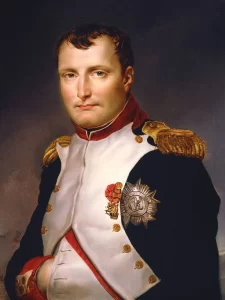
Bonaparte (1769–1821) was a French brilliant military general and political leader who rose to prominence during the French Revolution and became Emperor of the French from 1804 to 1814. He is one one of the most featured personalities in the history of the West. Napoleon attempted to expand his empire across all of Europe and nearly succeeded—until his ill-fated campaign to conquer Russia marked the beginning of his downfall.
True courage is born from moments of weakness, doubt, and exhaustion. It is the choice to move forward when the odds are stacked against us, and the strength to keep going despite feeling like we can’t. This article explores the essence of courage in adversity, how it shapes our character, and why it is often in our lowest moments that we discover the greatest strength we never knew we wielded.
The misconception of courage: strength versus willpower
Most people tend to associate courage with raw physical strength or an innate ability to overcome obstacles without breaking. We celebrate the warriors, the fighters, the fearless leaders, and the strong. However, true courage is not the absence of fear or exhaustion, nor is it an innate gift of invulnerability. The real measure of courage is not how strong we are in the face of adversity but how we choose to act when we are at our lowest and weakest level.
Think of a soldier who, in the face of overwhelming odds, is continuing to fight despite the exhaustion and fear that consume them. Their courage is not displayed in their strength to fight, but in their will to persist in fighting when they feel incapable of doing so. This type of courage doesn’t come from a well of physical energy, but from a deeper well of willpower, determination, and perseverance.
The common misconception that courage is all about strength often leads us to believe that we are weak when we feel exhausted, overwhelmed, or afraid. But, in truth, the most courageous actions are often born out of necessity—the necessity to continue when we believe we cannot. It is in these moments of sheer vulnerability and depletion that we demonstrate the true power of courage. The strength to go on is not the same as the courage to continue when we feel that we have no strength left. Courage is the decision to face life’s challenges, no matter how insurmountable they may seem, with the unwavering belief that we can still push through, even when we are exhausted.
The Case of the late Shizo Kanakuri

He is an Olympic Marathon runner who refused to quit. In 1912, Kanakuri— a young Japanese marathon runner— participated in the Stockholm Olympics—the first time Japan had ever competed in the Games. The journey to Sweden itself had been grueling. He traveled over 18 days by ship and train, arriving utterly exhausted, malnourished, and jet-lagged.
When the marathon began, temperatures soared unexpectedly to around 30°C (86°F)—extremely high for the region and the season. Runners collapsed one after another. Halfway through the race, dehydrated and physically spent, Kanakuri fainted in a local garden. A Swedish family cared for him until he regained consciousness. Ashamed and disoriented, he quietly returned to Japan without notifying the Olympic officials—who then listed him as “missing.”
The website, Olympics, reports “After 30 km of the Olympic marathon, he stopped at a house and asked the residents for a glass of water. The residents gave him water, and he lay down on a couch, fell asleep awakening the next morning. Ashamed of his actions, he at first refused to return to Japan.”
But this wasn’t the end. World Athletics, in its 3 January 2025 story headlined “Land of the rising run: Japan’s father of the marathon” says “He qualified for the Paris Olympics four years later only for those Games to be cancelled because of the Great War but returned for Antwerp in 1920 where he finished 16th overall.”
Surprisingly, over 50 years later, the Swedes tracked him down and offered him the chance to finish what he had begun. At the age of not less than 75, Kanakuri returned to Stockholm and completed the marathon—more than half a century after he had begun. Olympics says “In 1967 he returned to Stockholm at the age of 76 and finished his marathon run. Therefore he has the ‘slowest’ finishing time ever in an Olympic marathon with 54 years, 8 months, 6 days, 32 minutes and 20.3 seconds, a record surely not to be broken.”
He holds the world record for the slowest marathon ever completed—because he started the race in 1912 and, over 54 years later, finally finished it. His persistence, not his speed, earned him admiration as Japan’s father of the marathon. According to World Athletics, he then reflected “The Olympic spirit is not to win but to take part.”
This world governing body for the sport of track and field athletics adds “It was music to the ears of millions of Japanese people already in awe to distance running but adding to core national values of hard work and never giving up. Lapped [overtaken] as many as four times by much of the field, undeterred he continued to the bitter end first to the bemusement and then utter delight of the 70,000-strong crowd.”

He crossed the finish line with a smile and a bit of humor. He reportedly declared “It was a long trip. Along the way, I got married, had six children, and 10 grandchildren.”
World Athletics, in the same story, states “As Tokyo prepares to host the World Athletics Championships later this year, we take a deep dive into Japan’s passion for road running and how it helped inspire a love for the sport of athletics as a whole. The former athlete, who started a lifelong passion for running by jogging the four miles to school each day in the small town of Naomi in the Kumamoto prefecture, became Japan’s much-celebrated ‘father of the marathon’.
He was integral to establishing Japan’s passion for long-distance running which still exists today, launching what is now the Fukuoka Marathon (albeit under a different name) and the Hakone Ekiden, an inter-university distance relay race, with viewing figures of up to 60million people each year on national television.”
Kanakuri’s story exemplifies the core message of this article—true courage means never surrendering in spite of a hardship which appears too overwhelming to be defeated. He was not at his peak when he first ran—he was exhausted, overwhelmed, and eventually collapsed. But what defines his courage was not the moment he fainted—it was the fact that, decades later, he still carried the will to finish what he had undertaken, not for fame or victory, but to honor the journey itself. This is the courage that emerges not from strength, but from resilience—the unseen power within, when we feel we can’t go on.
In fact, such examples abound in the world in various spheres— with Walt Disney, Sylvester Stallone, Elon Musk, and Tony Robbins, just to name very few.
The power of perseverance in the face of adversity
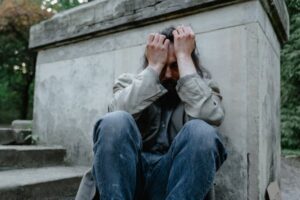
In life, we all face challenges that test our limits. Whether it’s a personal crisis, a professional setback, or a physical ailment, there arise moments when we feel as though we have reached the end of our endurance. Yet, it is during these times that courage reveals itself most clearly. Perseverance—the ability to keep going even when we feel like abandoning—represents the most potent form of courage.
Take another example: the story of J.K. Rowling. Before becoming one of the world’s most successful authors, Rowling was a single mother struggling with depression, poverty, and a complete sense of failure. She possessed no money, no job, and little belief in her own abilities. Yet, despite all of this, she continued to write. It was neither the strength of her resources, nor the abundance of her energy, that pushed her to finish her manuscript for Harry Potter and the Sorcerer’s Stone—it was the will to persist in the face of seemingly insurmountable odds.
Her perseverance wasn’t about bearing the strength to succeed; it was about continuing despite feeling as though she had nothing left. Rowling’s story also acts as a testament to the incredible power of persistence. She faced rejection after rejection and experienced several moments where it seemed like her dream would never come true. Yet, she chose to keep going. That decision to persevere in the face of adversity, even when she felt powerless, constitutes the very definition of courage.
Similarly, numerous athletes who face physical injuries and setbacks demonstrate this type of courage. Professional athletes often push their bodies to their limits, and the road to recovery after an injury can seem long and daunting. But true athletes know that the most important part of their journey is not the strength they carry when they begin, but the perseverance they maintain when they are at their weakest point. It is the ability to continue, step by painful step, until they can once again stand tall.
Perseverance in the face of adversity teaches us that courage doesn’t include avoiding hardships, but embracing the challenge to keep moving forward, even when everything inside us is forcing us to quit.
Hidden strength in vulnerability
Why courage develops, while we are feeling weak. Often, we see vulnerability as a weakness, a state of being fragile and exposed. However, vulnerability is not the absence of strength—it is instead the manifestation of true courage. It takes immense courage to be vulnerable, to expose our flaws, our limitations, and our fear to the world. And it is in our most vulnerable moments that we discover strength that we never thought we oozed.

When we reach a point where we feel we can no longer go on—when our emotional, physical, or mental strength is depleted, it is easy to believe that we are at our weakest stage. But this is when courage manifests itself in its true sense. It is the ability to admit to ourselves and others that we are struggling and to keep going despite our fear of failure or rejection.
Consider the example of someone dealing with a serious illness. When faced with a life-threatening condition, patients often find themselves at their lowest point—both physically and emotionally. But it is during these difficult times that they display incredible courage, when they are determined. It’s not about fighting the illness with sheer physical strength, but about the mental and emotional will to keep fighting, despite the toll it inflicts on their bodies. Many cancer survivors, for example, talk about how it wasn’t their strength that carried them through their battle, but their ability to persevere and remain hopeful, even when they felt completely drained. Exactly, Michaels Brenda who has survived cancer perfectly exemplifies the strength of resilience. For more on her, click on this piece featuring her.
True courage emerges when we allow ourselves to be vulnerable, to acknowledge our weaknesses, and still choose to continue the fight. It is the understanding that it’s fine to feel weak, as long as we don’t permit that weakness to stop us from pushing forward. Vulnerability is not the absence of courage; it is where courage thrives.
Cultivating resilience
Build courage for life’s toughest challenges— nurturing resilience— is one of the most important aspects of developing courage. Resilience is the ability to bounce back from adversity, to continue when we feel we can’t, and to find strength even in our most challenging moments. It’s not about never falling or experiencing hardship; it’s about growing the inner strength to rise again, no matter how many times we fall.
Cultivating resilience begins with changing how we view setbacks. Instead of seeing failure or difficulty as something that defines us, we can view it as an opportunity to grow stronger. Every challenge we face, no matter how small, serves as an opportunity to build resilience. It involves taking small steps to rebuild our strength, mentally and physically, so that we can face even greater obstacles in the future.
One way to cultivate resilience is by focusing on the things we can control, even when we feel helpless. In moments of distress, it is easy to feel fully overwhelmed by the things outside of our control. But concentrating on small, manageable actions helps us to recover a sense of agency and purpose. Whether it includes a few moments to meditate on how to overcome the adversity, reach out to a loved one for support, or simply realize one small step toward our goal, these actions help us to reconstruct the strength we need to keep going.
Resilience is also about developing a mindset that views challenges as temporary. This perspective allows us to persevere even when the road ahead seems impossible. The belief that difficulties will eventually pass, that things will get better with time, is a crucial part of cultivating resilience. It is this mindset that allows us to keep going even when we feel like we have no strength left.
Courage: our decision to always go on
Bonaparte’s words remind us that courage is not about the strength we have at any given moment; it’s about our decision to go on, even when we feel we can’t. True courage arises in our weakest moments, when we have nothing left but the will to continue. It is in these moments that we discover our true strength—the strength to keep fighting, to persevere, and to embrace vulnerability.
Resilience is born from these challenges, and as we cultivate it, we learn that courage is not about avoiding hardship, but about moving forward through it. In our most difficult times, we find the greatest power within ourselves, and it is through this power that we achieve greatness.