By Emmanuel Gatarara Ganza and Lionel Itangishatse, under Life In Humanity and Ishingiro Radio Collaboration
Globally, agricultural pests wreak havoc on food security, threatening the livelihoods of farmers and the sustenance of communities. With over 40% of crops lost to pests annually worldwide, the issue stands alarmingly serious. In Rwanda’s Gatsibo District, some farmers are sounding the alarm over umikondo w’inyana, a cutworm species that voraciously consumes seeds and roots, jeopardizing the future of their farms. As the farmers witness their crops wither away, these farmers echo the challenges faced by their counterparts worldwide—from root-attacking nematodes devastating fields in Africa to armyworms raging in Latin America.
The Rwanda Agriculture and Animal Resources Development Board (RAB) acknowledges the crisis, recommending perferctly decomposed organic fertilizers to combat these relentless pests. This local struggle underscores the urgent need for resilient agricultural practices worldwide, as the threat of pests looms larger in an ever-changing climate. Based on a case study in Malawi, the World Bank advises Integrated Pest and Disease Management as an effective strategy to fight pests. In Gicumbi District also in Rwanda, various farmers are raising the problem of lack and costliness of pesticides.
Rwanda
The farmers in Kiramuruzi, Kabarore, Gitoki, and Ngarama Sectors of Gatsibo say that they are troubled by the cutworm. They point out that burrowing into the soil, it eats all seeds that they have planted or damages them to the point of being unable to sprout.
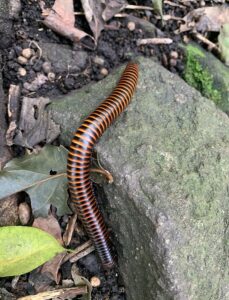
The farmers explain that the cutworms, moving underground, pose a significant threat to crops by severing their stems, leading to plant death. Regardless of any crops planted, these pests cause seeds to dry up and fail to germinate, resulting in barren fields. For instance, entire maize fields have been devastated, leaving only the cultivated soil behind. Attempts to switch crops as a countermeasure have also remained unsuccessful. The farmers underline that they have tried everything they can but to no avail. Therefore, they express an urgent need for researchers to investigate and develop effective solutions to combat these destructive worms.
Jean Leonard Sekanyange, the Vice-Mayor of Gatsibo in charge of Economic Development, also explains that they know this issue. He adds that they have reported it to the RAB, to see if there is any action that can be performed to help the farmers. “The cutworms have become a scourge, but it is not widespread across the district; it is found in certain areas. For instance, when you have planted maize and that it is beginning to sprout, the cutworm gnaws it. Research is currently being conducted in collaboration with RAB to find out if there is a solution that can eliminate the cutworm,” he says.
Dr. Florence Uwamahoro, the Deputy-Director at RAB in charge of the Agriculture Department, also acknowledges this issue, explaining that they are seeking a solution and offering advice to the farmers. “Indeed, we are aware of these cutworms called ‘umukondo w’inyana’. We are conducting research to explore existing pesticides so as to pinpoint those we can apply to seeds before planting, to see if these pests will not attack the seeds.
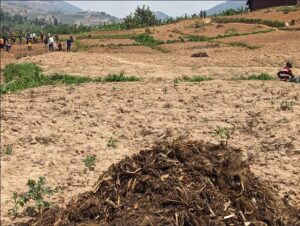
This still lies in the research phase, and we have not yet reached the results to present to the farmers, but we stand at a promising stage, carrying out tests on bean, maize, and potato crops. In the meantime, the first advice is to encourage farmers to use perfectly decomposed organic fertilizers with the recommended quantity, because while these pests are consuming poorly decomposed fertilizers, they also feed on the seeds or crops that have been planted.”
Meanwhile, some farmers in Muko Sector, Gicumbi District, specifically in a wetland known as Cyamuhinda, say that their farming is hindered by the lack of access to pesticides.
Climate change has led to the emergence of unusual pests and diseases in agriculture, including an unprecedented armyworm known as Fall Armyworm (locally known as nkongwa) in maize, mealybugs (locally known as utumatirizi) attacking mangoes causing damage to the fruit and reducing yield, and tomato maggots or tomato fruit worms known as urunyo, among others.
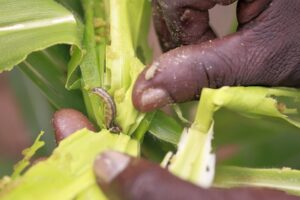
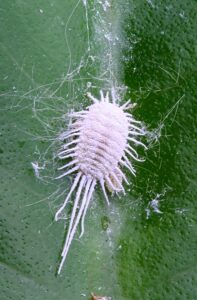
The Fall Armyworm causes different types of maize damage. Fall armyworm larvae primarily eat the leaves of maize plants. They can consume entire leaves. They also feed on the crop’s growing point, resulting in the death of the plant. They create irregular holes in the leaves. Mealybugs are a type of sap-sucking insect that specifically targets mango trees. The tomato-infesting insects bore into the fruit, creating holes and tunnels that compromise its integrity. Their feeding can introduce pathogens such as fungi and bacteria into the plant tissues, leading to rot and decay. This not only affects the fruit that they infest but can also threaten the overall health of the plant.
However, despite this situation, farmers exploiting Cyamuhinda marsh don’t easily procure pesticides, their agriculture suffering due to pests which beget significant losses. The farmers say that there are people who sell the pesticides and that they pay any amount money that these traders charge them. They accept to pay any sum that they are charged, because they highlight that they enjoy no bargaining power, since there are no other places where they can get the pesticides. “We don’t know where to find the pesticides; they are sold by only a few suppliers, and even when you find them, the prices are usually high.
They are often bought through a group of people, like a group of three people where you cooperate to purchase a bottle. But the most important thing involves knowing where to find them. Ideally, those selling seeds and fertilizers should also have the pesticides available, ” one of the farmers says.
They suggest that these pesticides be included in the Agriculture Government Support Program known in Kinyarwanda as “Nkunganire” which is literally translated as “Let me support”. They say that just as they receive support for fertilizers and quality seeds, the same should apply to pesticides, for it to protect them from continuing to struggle to find them. Gicumbi District’s leadership urges the farmers to seek solutions on their own, while their request has not been implemented yet.
Parfaite Uwera, the Vice-Mayor of Gicumbi in charge of Economic Development, explains that while efforts are being conducted to include pesticides in the support program, farmers must also seek solutions themselves. She also says that they are going to assess the issue of the lack of pesticides, in a bid for farmers to obtain them at any time they want them. “I even tell them that the support won’t exist forever, I always encourage them to work hard to climb to another level where they are self-sufficient but we are carrying advocacy on for the pesticides to be added to the program.”
Pests in Africa
Agriculture& Food Security is a peer-reviewed open access journal which addresses the challenge of global food security. On 22 April 2024 it published a review titled “Cereal production in Africa: the threat of certain pests and weeds in a changing climate—a review.” The review provides an elaborate overview of current pathogens. This review highlights that the pathogens’ threat to cereal production in Africa might increase due to changing climatic conditions.
It reads “Cereals are the most cultivated and traded crops for food, feed, and industrial uses worldwide. Among other producing regions, Africa hosts 27% of the world’s total cereal production. Like other staple crops, the production of cereals such as maize, rice, wheat, millet and sorghum in Sub-Saharan Africa is threatened by herbivorous pests and weeds leading to significant losses. The fall armyworm insect (Spodoptera frugiperda) reduces maize production by 21–53%, while the stem borers (Busseola fusca) account for 82% of all maize losses in Kenya.
Granivorous birds such as Quelea spp. are responsible for an average of 15–20% cereal production damage in semi-arid zones of Africa. Rodents such as the multimammate rat also pose a threat causing 48% yield losses on maize fields across Sub-Saharan Africa. With a changing climate resulting in drought and flooding, the threat of these cereal pests is likely to intensify.”
The review underscores that stem borers and the fall armyworm are some of the most serious pests which are raging in Africa. It points out “ Stem borers represent the most prevalent and damaging group of insect pests of cereal crops. They are widely recognized as one of the limiting factors of cereal production around the world. They are present in the field from the time the crop germinates until it reaches maturity.
The fall armyworm (FAW) is an insect pest that is native to the Americas. In the last four years, it has invaded and spread all over Sub-Saharan Africa. The fall armyworm invaded Africa for the first time in early 2016, specifically Nigeria, Sao Tomé, and Principe. Since it was introduced, FAW has become a serious threat to the productivity of cereal crops, such as maize and sorghum, which are two of the most important staple foods for smallholder farmers. This threatens food security in Africa, and it is also a serious threat to food and nutrition security. It then spread to other African countries, such as Kenya, Uganda, Rwanda, Ethiopia, and Tanzania.”
The review underlines that Africa is considered one of the most vulnerable continents to climate change primarily because there prevails “a lack of support services for small-scale farmers in tackling its consequences and impact on the dynamics of various noxious weeds of major cereals, such as maize and rice.” “In the wake of increased precipitation and alternating temperatures, certain weeds and rodent pests might become highly threatening in regions where they were not originally widespread.”
This review deplores the paucity of reliable data and information around this particular aspects of pests. “Unfortunately, not so much research has been done to predict the potential impact of many weeds, including Striga, and rodent pests on cereals within the Sub-Saharan belt.” It therefore recommends research for it to enable people to comprehend the issue. “Given the invasive nature of many weed species, it is imperative to carry out studies to understand the trends of climatic change events in major cereal-producing regions of Africa and their corresponding influence on the cereal pests considered in this review. Findings from these predictive studies will provide insights into the best-integrated pest management approach (especially preventive) to uniquely adopt against the impact of these pests on cereal production within the African landscape.”
Pests in the world
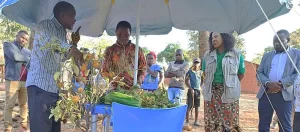
In its November 02, 2023 article entitled “Back to basics: Smallholder farmers embrace integrated pest and disease management in Malawi, saving ecosystems” the World Bank recognized pests as a global hindrance. “Pest and diseases are a global challenge when it comes to turning food and nutrition security into reality. Climate change has also caused the dispersal and intensity of pests to worsen. The Food and Agriculture Organization (FAO) of the United Nations estimates that annually up to 40% of global crop production is now lost to pests.
Each year, such plant diseases cost the global economy over $220 billion, while invasive insects cost it at least $70 billion. The impact of this is felt even more in small and unstable developing economies like Malawi, whose economy is agro-based.”
This story admonishes people not to abandon their traditional ways of dealing with pests. In other words, it recommends the combination of traditional and modern mechanisms to beat pests. This matches the advice furnished by RAB where it advises Rwandan farmers to defeat the worm with properly decomposed manure or compost.
The article reads “But just as much as the global community is obsessed with ‘modernization of production techniques,’ so integrated pest and disease management have proven that we do not entirely need to throw away traditional approaches in pest management.
The approach of using scientific advancement and technology seems to have left out old indigenous knowledge. An African proverb says, ‘Do not throw away your water just because you heard it will be raining.’ We must therefore acknowledge that the combination of both indigenous and scientific knowledge for pest management could help us achieve more than either approach can on its own.”
For instance, the World Bank explains that farmers use lemon grass, a soup from a fish species called limnothrissa miodon, ash, pepper, and a species of shrub called Vernonia amygdalina to manage weevils, worms, and aphids in cereals and legumes. “These are some of the locally available resources, and farmers spend either less or nothing to access them, yet they are very effective in the management of pests and diseases.”
However, “While the indigenous methods are popular, they also have challenges, including people not knowing the right quantities in which they should be used,” states the article suggesting that it is here that modern technology ought to come in so as to close the gaps between effective traditional and modern approaches. The amalgamation of traditional and modern approaches in pest control has been dubbed “Integrated Pest and Disease Management (IPDM)”.
Featuring Malawi, this article gives suggestions to assist in the development and promotion of IDPM. “Document all the names of the plants, materials, and processes used in different areas of Malawi to build knowledge in existing indigenous pest management methods.
Develop enabling and coordinated agricultural policies and strategies that recognize community, self-initiated action research to contribute to building IPDM systems. Invest in scientific research of indigenous methods to increase their efficiency and environmental safety to ensure they are agriculturally sustainable approaches that build up the health of soil without compromising agricultural production.”
To highlight the importance of sustainable agricultural practices, it’s essential to explore methods that balance both ecological health and food security. One approach gaining traction is IPDM which experts believe holds promise in fostering a healthier environment and improving agricultural outcomes, as articulated in the following perspective. “I think that integrated pest and disease management has the potential to support ecological healthiness by improving soil life and protecting non-targeted species. It also reduces the potential chemical contamination of soil, air, and water, and increases the healthiness of plants, as well as promoting sustainable, bio-based pest management alternatives.
Therefore, scientific and indigenous methods of disease and pest management must support each other while we aim to improve production of food and the nutrition, and health, of Malawi’s citizens.” Yet, the article doesn’t show the owner of this quote.
Conclusion
In conclusion, addressing the pervasive issue of pests in agriculture requires a multifaceted approach. As Life In Humanity argues, replicating successful pest management practices in regions heavily affected by infestations can significantly bolster agricultural resilience. Experts recommend prioritizing preventive measures—such as sourcing quality seeds, utilizing organic and chemical fertilizers, and adhering to proper planting techniques—before resorting to pesticides.
Timely interventions, including appropriate irrigation strategies and diligent field monitoring, play a crucial role in averting pest outbreaks. According to a study published in Environmental Science & Policy, integrated pest management practices which combine biological, cultural, and chemical methods, can enhance productivity while minimizing environmental harm .
By adopting these comprehensive strategies, farmers can not only safeguard their crops but also contribute to sustainable agricultural practices that ensure food security and protect ecosystems. The collaboration of agricultural specialists, local communities, and policymakers is essential to create an environment where these practices can flourish, ultimately transforming the battle against pests into an opportunity for growth and innovation in the agricultural sector.
For more insights on integrated pest management and its benefits, you can explore resources from the FAO and Environmental Science & Policy.
Very good story. Keep it up brother.
We appreciate, brother.