By Jean Baptiste Ndabananiye
“Chinese President Xi Jinping on Thursday [2025 March 06] stressed strengthening the role of education in supporting scientific and technological advancement as well as talent development. Xi, called for a deep understanding of the needs of Chinese modernization for education, science and technology, and talent” reports Xhinhua in its 6 March 2025 story headlined “Xi Focus: Xi stresses role of education in supporting sci-tech, talent development.”
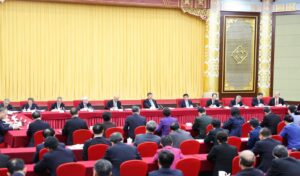
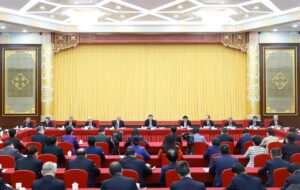
The President Jinping— also serving as the general secretary of the Communist Party of China Central Committee and chairman of the Central Military Commission— delivered the statement during a meeting attended by national political advisors from the China Democratic League, the China Association for Promoting Democracy, and the sector of education. They were participating in the third session of the 14th National Committee of the Chinese People’s Political Consultative Conference (CPPCC)— the top political advisory body, in China’s capital—Beijing “NPC and CPPCC Annual Sessions 2025”.
Jinping’s emphasis on strengthening education for scientific and technological advancement and talent development, despite China’s already advanced position, constitutes a strong case for why African nations should also prioritize talent development. If a global superpower sees the need to keep improving, why should Africa lag behind, while this continent is expected to produce a global workforce?
Xi said that the goal of his call is to cultivate a steady stream of talent, open their full potential, and assure that their abilities are fully employed. Xinhua explains “He called for nurturing a new generation of capable young people with the moral grounding, intellectual ability, physical vigor, aesthetic sensibility, and work skills needed to join and carry on the socialist cause.” This Chinese media house adds that China’s president underlined that to develop a high-quality educational system that meets the people’s expectations, the key lies in deepening the comprehensive reform of education.
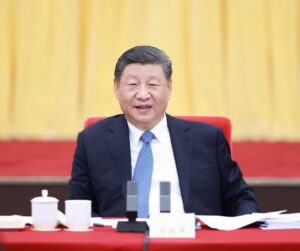
“He stressed the need to refine the mechanism for aligning talent cultivation with the needs of economic and social development to enhance the quality and efficiency of self-reliant talent training. Noting that boosting education, sci-tech and talent development is a shared responsibility of the entire Party and society, Xi urged the CPPCC to fully leverage its role as a specialized consultative body.”
“It is a shared responsibility of the Communist Party and society as a whole to build a nation of strong education, strong science and technology and strong human resources,” he told the members, as echoed by South China Morning Post. “It is necessary to implement the national strategy for the digitalisation of education, build a learning society, and promote the emergence of talent of all types and at all levels.”
Isn’t China’s education already strong? Why really talent development?
To respond to the question, Life In Humanity is going to predominantly avail itself of a piece of writing featuring on International Education News— International Ed News. International Ed News is a platform furnishing access to news, research, and reports addressing what’s new, good, and effective from pre-kindergarten through secondary education around the world.
International Ed News is also a project undertaken at the National Center for Restructuring Education Schools and Teaching (NCREST) at Teachers College, Columbia University. The Founder/Editor of International Ed News is Dr. Thomas Hatch, a Professor at Teachers College, Columbia University, and Director of NCREST.
His research involves studies of reform initiatives at the school and district levels in the United States. His current work includes a comparative study of accountability and school improvement policies in higher- and lower-performing countries. He also intervenes in a variety of projects using multimedia and the internet to document teaching and share teachers’ expertise.
He wrote the piece “The Desire for Innovation is Always There: A Conversation with Yong Zhao on the Evolution of the Chinese Education System ” which appeared on International Ed News on 12 June 2024.
“What’s changing in China’s education system? What might change in the future? Those are some of the questions that led Thomas Hatch to spend almost a month in China this spring. In preparation for that visit, he talked with Yong Zhao to get his perspective on what’s been happening in education in China in the past few years. Zhao was born in China and now works all over the world, including in China, exploring the implications of globalization and technology on education.
In the first part of this post, Zhao shares his observations about some of the educational innovations he’s seen in China and about some of the work he’s been involved in there. In part two, Zhao offers his impressions of recent changes in addressing students’ mental health and discusses the broader context of the Chinese education system and some of the challenges and opportunities for changes in the future.” These are words which start the conversation between Dr. Hatch and Dr. Zhao.
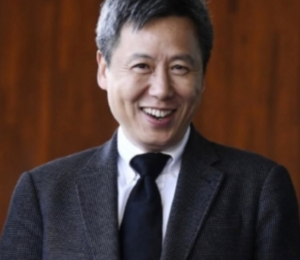
Dr. Yong Zhao is a Foundation Distinguished Professor in the School of Education at the University of Kansas and a professor in Educational Leadership at the Faculty of Education, University of Melbourne in Australia. He previously served as the Presidential Chair, Associate Dean, and Director of the Institute for Global and Online Education in the College of Education, University of Oregon, where he was also a Professor in the Department of Educational Measurement, Policy, and Leadership.
Prior to Oregon, Yong Zhao was University Distinguished Professor at the College of Education, Michigan State University, where he also served as the founding director of the Center for Teaching and Technology, executive director of the Confucius Institute, as well as the US-China Center for Research on Educational Excellence. He is an elected member of the National Academy of Education and a fellow of the International Academy of Education.
Conversation Part I
The first part of Dr. Hatch and Dr. Zhao’s conversation concentrates on a number of examples of some innovations and educational developments in China. Dr. Hatch begins, acknowledging that Zhao has written extensively about China in the past, but that he (Hatch) is particularly interested in issues happening in the Chinese education system over the last few years. He first asks Zhao, if he is observing some innovations or changes in classrooms and schools in China.
Dr. Zhao replies “I think there’s a huge hunger for innovation in China. Let me give you an example. I was just talking to a group of school principals and heads of the Education Commission in the Chaoyang District in Beijing. It’s the largest district in Beijing, and it’s where most of the embassies and many foreign companies are located. We were planning to do a summer camp for students from different countries based on my education philosophy, which is very much child-centered, focused on uniqueness, personalization, project-driven instruction, and problem-solving.
We wanted to make the camp very big, involving kids from different countries, and they were open to the idea. Alongside the camp, we planned to organize learning festivals to discuss topics like artificial intelligence and what I call ‘re-globalization.’ We started this conversation in January, and the issue is that very few schools outside China are willing to send their students and teachers here at the moment, so we’re planning to do it next year. But this kind of summer camp is something I began working on before COVID, in May 2018 in Chongqing.”

He adds “Every year since, we’ve been running similar innovative programs in the summer. Even during COVID, we tried it out. The first year in Chongqing, we had students from US schools, Australian and British schools, with hundreds of students and teachers staying in the same dorms, interacting.”
Zhao indicates that China’s education is already experiencing great transformation. “In addition, in the public schools in Chongqing, we have students enrolled in a special course I helped design called ICEE, which stands for innovation, creativity, and entrepreneurship education. It’s expanding in the public schools even though students have to pay extra to participate, which shows that parents and schools are interested in it.
Beijing Academy is another school that is particularly innovative. I was partially responsible for co-designing that school. We formed a global advisory group, including people like Richard Elmore and Kurt Fischer and Ron Beghetto. It was an international collaboration. They built a brand-new school based on our advice. It just celebrated its 10th anniversary in Beijing. Now they have over 9 or 10 campuses. I think this shows that many parents and students and teachers actually want change.”
Dr. Zhao contends that Chinese public schools have to become more innovative. “The desire for innovation is always there…it’s a lot more complex in China than what many people think. The whole system is evolving.”
Dr. Hatch asks Dr. Zhao, if he has noticed any schools or initiatives, afterschool programs or other aspects that he thinks are particularly interesting or innovative in the Chinese context. He responds “In the book Let the Children Play, Pasi Sahlberg and William Doyle described an approach in the Zhejiang Province near Shanghai that developed genuine playhouses for preschool and kindergarten (Anji Play).
It was really play-driven, play-based, and it started in one kindergarten and then it spread around the whole province. It wasn’t country-wide, but it was a model recognized by the Chinese Ministry of Education, and they began to promote it across the country. I don’t know how it’s going now, but that is something that I think it’s definitely worth looking at.”
Dr. Zhao talks about some other Chinese schools which he describes as innovative. “There are also a number of schools that are trying to do something different. The Beijing City International School just had me visit for three days. Their student population is over 90% Chinese students, and they are struggling with the fact that parents have invested significant amounts of money, expecting their children to attend prestigious universities like Harvard and Columbia. But they also want to change, so they had me over to discuss transitioning to personalized education. Whenever someone has me presenting, they are willing to be challenged.
The Beijing National Day School and a couple of other public schools are also known for being innovative. Another interesting school is the one called #80 Secondary School in Beijing. I was just there, and I was impressed. If you are a good student in some areas, then you don’t have to take certain courses. They would allow you to explore on your own, which shocked me. It’s a Chinese government high school, and it’s quite powerful.”
In the second part, these doctors concentrate on students’ mental health in China. Dr. Hatch starts, reminding him in other places like Finland, the US, and even in places like Vietnam and Singapore, “I’ve also seen more attention to students’ mental health. Have you seen any initiatives related to supporting students’ healthy development or mental health and well-being in China?”
Dr. Zhao answers “I think that is happening because they’re adding more psychiatrists, more psychologists or ‘psychological teachers’ to schools. Those never existed in China until recent years. So that’s a beginning. But also, traditionally, teachers of Chinese have had a responsibility for psychological support, though they may not have specific training for it.
But the approach in Chinese culture is also different from the western way of constructing psychological and mental well-being. In the West, I think we sometimes misunderstand psychological issues because we just describe them, we measure them, we test them. And we have a handbook that defines what’s considered mental health. I’m quite worried about this. Is this a good thing to do? ”
Dr. Hatch raises the question “When you say you think that the approach to psychological well-being and health is different in China, how would you describe it?”
Dr. Zhao responds “First, I’m not a researcher in that area, so I cannot describe it, but I’m very worried about the Western definition going into China and getting applied in that cultural context. I’ve always worried about what is China and what is the Western way of doing things? I’m struggling with this. But one thing I want to emphasize is people always think I’m critical of China, but I’ve said, ‘I’m critical of everybody.’ This is very important. I don’t think anyone has got it right. If someone had it right, we could retire.
And some people say, ‘you’re pro- America.’ And the truth is, I’m more critical of American education than other places. I think there is an interesting question about whether the Western way is the right way of doing this. When you think about well-being, I’m not sure because when you look, you can see there is widespread misuse of special education, misuse of mental health issues, and I think there are a lot of problems that arise with psychiatrists and psychoanalysts.”
South China Morning Post reports that years of effort to improve tertiary education in China seem to have generated positive outcomes, “especially with Chinese firm DeepSeek showing that home-grown engineers and graduates can make world-leading breakthroughs in cutting-edge technology.”
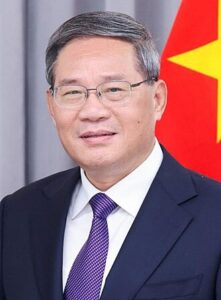
Premier Li Qiang presented this year’s government work report in the opening of the National People’s Congress, according to South China Morning Post. He also underlined the need for a high-quality education system, a high level of expertise in the labor pool, and superior reliance on the country’s own science and technology.
The Organization for Economic Cooperation and Development—OEDC— constitutes an international organisation, with more than 60 years of experience, saying that it works to build better policies for better lives and helpls countries to forge a path towards stronger, fairer and cleaner societie. In 2020, this organization published a reported titled “Benchmarking the Performance of China’s Education System”.
The report suggests China’s advanced education, though like in any other country this nation’s education system can not be described as perfect. The report reads “China’s education system is also one of the world’s fastest-changing education systems in recent decades. Great efforts have been made to achieve universal access to education and enhance the quality of schooling. These efforts have improved the outcomes of the education system, yielding social and economic returns for the country. Meanwhile, like many other education systems in the world, China faces a series of challenges such as urban-rural inequality, [and] student segregation.”
Potential for African nations to leverage their potential
Africa’s potential for economic transformation lies in its ability to harness its youthful population, abundant natural resources, and emerging tech hubs through strategic talent development. With over 60% of its population under 25, the continent boasts a vast labor force that, if properly skilled, can drive innovation, entrepreneurship, and industrial growth. “Africa is a continent teeming with youthful energy and untapped potential, boasting the world’s youngest population with more than 60% of the continent’s population under the age of 25.
This burgeoning youth population is projected to grow even further, as Africa’s population is expected to reach 2.5 billion by 2050, up from 1.4 billion today. Notably, by 2035, there will be more young Africans entering the workforce each year than in the rest of the world combined,” says the World Economic Forum in its August 16, 2023 story “How Africa’s youth will drive global growth”.
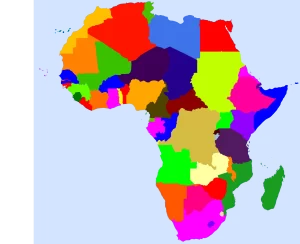
The United Nations in its story headlined “Young People’s Potential, the Key to Africa’s Sustainable Development” says “Africa has the youngest population in the world, with 70% of sub-Saharan Africa under the age of 30. Such a high number of young people is an opportunity for the continent’s growth – but only if these new generations are fully empowered to realise their best potential.”
You can rarely help children to realize their best possible potential,l unless you allow them to fully develop their talents. Talent development is essential for unlocking their abilities, building confidence, and equipping them with the necessary skills to thrive. Without nurturing their talents—whether in academics, arts, sports, or technology—children may struggle to discover their true strengths and passions.
Providing opportunities for exploration, mentorship, and structured learning ensures that they maximize their potential. If talents remain unrecognized or undeveloped, children may not achieve the level of excellence they are capable of, limiting both personal fulfillment and societal contributions. Thus, talent development does not just constitute an option but a necessity for helping children to reach their highest potential.
Governments must therefore institutionalize talent development by creating enabling environments for children to discover their talents early and then work to develop them to the utmost degree. This ensures that young people are equipped to capitalize on Africa’s expanding opportunities in various development sectors.
By aligning talent development, African nations can accelerate economic diversification, job creation, long-term prosperity, and fulfillment. A person working in a field matching their talent or talents enhances their abilities to the fullest potential and is likely to remain fulfilled—entirely happy with their career—throughout their life. We use the word “likely”, since lifelong happiness demands other factors like the workplace environment, health, economic conditions, and the burnout-free situation.
Talent development requires strategic policies—not huge bugets
What African governments need—just as China’s president is calling for—is clear policies that guide education systems in detecting children’s talents early and cultivating them to their fullest potential. This doesn’t require heavy costs but rather a shift in approach.
Education systems in Africa should be designed to identify individual strengths from a young age, whether in science, technology, arts, or sports or in any areas of life. Instead of a one-size-fits-all curriculum, schools should integrate talent discovery mechanisms, such as specialized aptitude assessments and diverse extracurricular programs. Once identified, structured pathways must be established to nurture these talents through tailored learning, mentorship, and hands-on experience.
By institutionalizing this approach, African nations can unlock a generation of skilled individuals without excessive spending. Rather than relying solely on expensive infrastructure, governments can optimize existing resources by training educators to recognize and develop talent effectively. Public-private partnerships can further support this system through innovation hubs and skill-based training centers.
Ultimately, fostering talent through strategic policies ensures that African nations maximize human capital, drive innovation, and sustain economic growth—without necessarily depending on massive financial investments.
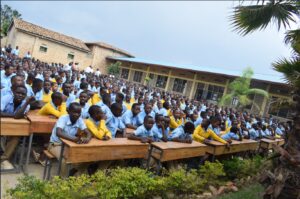
Beware that no talent is insignificant. There occur talents that seem trivial or simple, but strategically developed, they can revolutionize the world. Image a child with the talent of compassion, kindness, and goodness. What would happen, if you helped them to discover these talents and fully cultivate them?
Actually, no talent is insignificant. Talents that may seem trivial or simple, such as compassion, kindness, and goodness, ooze the power to create monumental changes. Imagine a child with these qualities, nurtured and fully developed—such a person could become a force of positive transformation. When these innate talents are recognized and cultivated, they not only enrich the individual but also benefit society at large.
Compassionate leaders, empathetic entrepreneurs, and caring professionals can revolutionize industries, bridge divides, and inspire global movements for peace and unity. By fostering all talents, we unlock the true potential to change the world for the better.
Talents are essential in shaping one’s path and creating opportunities for growth and success. They provide the unique abilities and insights needed to solve problems, innovate, and contribute meaningfully to society. Harnessing and nurturing talent allows individuals to unlock their full potential, achieving personal and professional fulfillment. In a rapidly evolving world, talent is the driving force behind progress and the key to overcoming the challenges of tomorrow.
Though you should not wait for your forties to develop your talent or talents, the latter one(s) transform(s) one’s life at any age. To understand the undeniable crucial importance of talent and that it holds the capacity to immensely change your life, if you identify and develop it, read this article: Beyond age: the unexpected and unstoppable rise of a 74-year-old YouTube sensation who has defied limits. What does it teach?

While the article emphasizes other factors like mindset and support as factors behind her unimaginable success, her culinary talent is indeed a key driver behind her success. It’s her expertise in preparing traditional Maharashtrian dishes with homemade spices that has resonated with her audience and made her channel so popular.
Her talent in cooking, combined with her authenticity and dedication, creates a unique and compelling content that attracts millions of viewers. Without that foundational talent, her rise to stardom would not have been materialized, no matter how much support or determination she has enjoyed.