By Jean Baptiste Ndabananiye
While every 15 October the entire world enthusiastically celebrates the World Food Day established in 1979 by the United Nations and that the world produces enough food to nourish all of its 8 billion people, 733 million people (1 in 11) lack food. “Collective action across 150 countries worldwide, in up to 50 languages, is what makes World Food Day one of the most celebrated days of the UN Calendar.
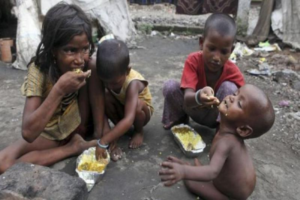
Hundreds of events and outreach activities bring together governments, municipalities, businesses, CSOs, the media, the public and even youth. They promote worldwide awareness of hunger and promote action for the future of food, people and the planet. Together we can create a better, more sustainable food future for all,” states the Food and Agriculture Organization. All these above words have caused Life In Humanity to ask itself “Why all these hungry people in the world which actively observes this old international day and generates food sufficient to feel all its humans? Will there arrive time when this issue of global hunger will become a thing of the past?” The article, addressing the first question, is organized around these major sections:
- Status of hunger
- Food abundance in spite of hundreds of hungry millions
- Factors behind the hungry souls despite the abundance of food
Status of hunger
As already suggested, hunger remains a critical issue globally, with alarming figures indicating that millions are deprived of sufficient nourishment. In some regions, especially those with lower income levels, the vast majority struggle to maintain a nutritious diet, leading to severe health consequences, including high mortality rates among vulnerable populations. “Around 9 million people die every year of hunger and hunger-related diseases. This is more than from AIDS, malaria and tuberculosis combined. A child dies from hunger every 10 seconds. Poor nutrition and hunger is responsible for the death of 3.1 million children a year. That’s nearly half of all deaths in children under the age of 5. The children die because their bodies lack basic nutrients.
Globally, 822 million people suffer from undernourishment. Well into the 21st century hunger is still the world’s biggest health problem. 1 in 9 people go to bed, hungry. And it’s about to get worse,” reports The World Counts, a comprehensive online platform for global statistics.
Released annually by Concern Worldwide and Welthungerhilfe, the 2024 Global Hunger Index (GHI) points out “Within the past year, two important anniversaries in the world’s efforts to advance human rights have taken place: the 75th anniversary of the Universal Declaration of Human Rights and the 20th anniversary of the Voluntary Guidelines on the Right to Food. These landmark accomplishments enshrined and pointed the way toward a universal right to adequate food—yet in 2024 adequate food is out of reach for billions of people, while both the human right to adequate food and international law are blatantly disregarded by those in power.”
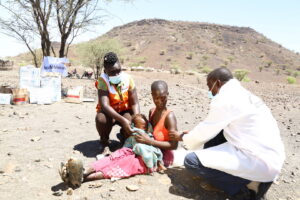
The index reveals a significant rise in food insecurity, with millions currently facing dire conditions that threaten their very survival. “Hunger rates in Africa are especially high, with 1 out of 5 people going hungry each day. 2.8 billion people around the world cannot afford a healthy diet — 35% of the global population. In low-income countries, 71.5% of people cannot afford a healthy diet. In high-income countries, that figure drops to 6.3%.
The number of people experiencing hunger has gone up by approximately 152 million since 2019. As of this writing (story published on 10 October 2024), the Integrated Food Phase Classification (IPC) estimates that 1.33 million people around the world are experiencing famine or famine-like conditions. Half of all child deaths are linked to malnutrition. 9 million people die from hunger-related causes every year; many are children under the age of 5.”
Concern Worldwide and Welthungerhilfe’s 2024 GHI indicates that Africa South of the Sahara desert constitutes the world region with the highest and most concerning hunger levels. “While the region’s GHI scores have significantly improved over the past two decades, hunger remains serious and progress has virtually stalled since 2016. The high GHI score is driven by the highest undernourishment and child mortality rates of any region by far. Undernourishment rose sharply between 2015 and 2023, particularly in West and Central Africa, owing to recurring conflicts; economic challenges such as currency devaluations, soaring inflation, stagnating production, and trade barriers; and heavy reliance on food imports (WFP 2024).
In 2022, 72 percent of the population in Africa South of the Sahara were unable to afford a healthy diet—the highest rate of any world region (FAO et al. 2024a). In five countries—all in Africa South of the Sahara—more than 1 in 10 children dies before their fifth birthday. The region also has the highest neonatal mortality rate in the world, accounting for more than 40 percent of global newborn deaths (Zerfu 2024). A recent study of 45 countries in Africa South of the Sahara suggests that while economic growth benefits child survival, environmental degradation undermines these gains (Fotio et al. 2024).”
Top 10 most hunger-stricken nations in the world and factors behind
Concern U.S based its story entitled “These are the hungriest countries in the world in 2024” on the 2024 GHI, also publishing the story on 10 October 2024. Concern U.S wrote that Somalia, Yemen, Chad, Madagascar, the Democratic Republic of Congo, Haiti, Niger, Liberia, Central African Republic, and Democratic People’s Republic of Korea are the top 10 most-hunger hit countries in the world.
With regard to the Democratic People’s Republic of Korea, the Central African Republic and Liberia, Concern U.S says “Chronic food insecurity and childhood malnutrition are widespread in the Democratic People’s Republic of Korea (DPRK). The country ranks highest in the 2024 Global Hunger Index for undernourishment, which affects over 53% of the country’s population. For more than a decade, a widespread humanitarian crisis in the Central African Republic has left one out of every four people displaced and one-third of the country hungry.”
“Over the last two decades, Liberia has recovered from a 14-year civil war (which destroyed infrastructure and shattered the country’s economy), the world’s largest Ebola outbreak, and the knock-on effects of the COVID-19 pandemic. Despite tremendous progress, over half of all Liberians still live below the poverty line, and nearly just as many (47%) are food-insecure — a clear example of the link between poverty and hunger. Agriculture is the main source of income for many Liberians, and the effects of the climate crisis have left many farmers coming up short during harvest seasons. This in turn has led to an undernourishment rate in the country of over 38%.”
Concern U.S points out that at the beginning of this year, the Integrated Phase Classification (IPC) estimated that 3.2 million Nigeriens — just over 10% of the population — would experience high levels of food insecurity. “In the 2024 Global Hunger Index, Niger ranks third-highest in the world for child stunting rates (over 47% of all children), tenth highest for child wasting rates (nearly 11% of all children), and first for child mortality rates, with nearly 12% of all children not living to see their fifth birthday.”
As for Haiti and the DRC, the same source stresses “ A protracted humanitarian crisis in Haiti has led to the rising threat of famine in the country, with the IPC reporting earlier this year that over 14% of the country’s population is at emergency levels of food insecurity (one step below famine or famine-like conditions).
The 2024 GHI reports that undernourishment in the country has risen by more than ten percentage points between 2017 and 2023, with over 50% of the country undernourished. Like Haiti, an ongoing crisis in the Democratic Republic of the Congo has left hunger rates climbing in the country amid protracted violence and civil strife. An increase in violence in the country’s eastern provinces this year has contributed to a quarter of the population (some 25 million people) facing high levels of food insecurity, with nearly 75% of the country living below the international poverty line.”
This organization highlights that climate change and hunger coincide in several of the countries on this list, and that the island nation of Madagascar doesn’t constitute an exception. “The country relies heavily on rain-fed agriculture, which is under increasing threat from climate shocks, particularly in the south which has been affected by recurrent drought. (The southeastern region has also faced an increasing amount of severe cyclones.) The country has the eighth-highest stunting rates for the 2024 GHI, with the condition affecting nearly 40% of all children. It also has the fourth-highest rate of undernourishment, also affecting nearly 40% of all residents (adults and children). Economic shocks have also made it hard for families to afford food among rising prices and other issues including gender inequality.”
The organization adds “Sitting at the nexus of climate change, conflict, instability, and inequality, Chad is a mainstay on the Global Hunger Index. While it has made progress in some areas, it still has the fourth-highest child mortality rate, with more than one out of every ten children not reaching their fifth birthday. In February 2024, the Government of Chad declared a food security and nutrition emergency, with the IPC projecting that approximately 17% of the country are facing hunger.”
Concern U.S highlights that before the current crisis in Yemen, this nation depended on imports for 70% of its food needs, involving 90% of the country’s main staple (wheat) and 100% of its rice, tea, and sugar. “Since the onset of conflict in 2014, it has faced severe food shortages related to restrictions on trade and international access, leaving it consistently among the hungriest countries in the world. In 2024, Yemen has the second-highest child stunting rates (nearly 49%), the third-highest child wasting rate (over 16%), and the fifth-highest undernourishment rate (over 39%).
However, as the 2024 GHI report notes, progress towards ending hunger in Yemen has been stalled for two decades. Climate change has affected life for 70% of Yemenis, who live in rural areas and rely on agriculture for their food and livelihoods. Droughts, water scarcity, and the increasing cost of farming supplies all present huge challenges.”
Despite significant progress achieved since 2000, according to Concern U.S., Somalia is experiencing a protracted hunger crisis ignited by ongoing conflict, economic challenges, and the climate crisis — all in the larger context of a government with restricted capacity to execute basic functions and key emergency response. “At the beginning of this year, the UN estimated that 4.8 million people (out of a country of 18.7 million) would require nutrition support, and an additional 4.3 million would require humanitarian assistance in the area of food security.
The country is also still recovering from the Horn of Africa crisis, which left some regions at high risk for famine. In the meantime, it has the seventh-highest child wasting rate (nearly 12%), the second-highest undernourishment rate (over 51%), and the third-highest child mortality rate (over 10%). ”
Food abundance in spite of hunger and more on reasons behind

The GHI highlights “The world produces enough food to feed all of its 8 billion people, yet 733 million people (1 in 11) go hungry every day”. Action Against Hunger exactly echoes the issue in these words “There is more than enough food produced in the world to feed everyone on the planet. Yet 733 million people still go hungry.” It adds “Nearly one in 11 people around the world go to bed hungry each night, a crisis driven largely by conflict, climate change, and chronic inequality.”
In its 5 September 2017 article, Oxfam Canada wrote “The world produces 17% more food per person today than 30 years ago. But close to a billion people go to sleep hungry every night. The problem is that many people in the world don’t have sufficient land to grow, or income to purchase, enough food. 925 million people do not have enough food to eat —more than the populations of Canada, USA, and the EU.”
On 25 June 2024 the World Food Program (WFP) published a story headlined “5 facts about food waste and hunger”. It underscores that the shocking cost of poor storage in the farms of developing countries and careless shopping in rich ones are key factors behind the food crisis on the globe.
The WFP deplores “Global hunger isn’t about a lack of food. Right now, the world produces enough food to nourish every child, woman and man on the planet. But nearly a fifth of all food produced each year is squandered or lost before it can be consumed.”

“In many rich countries, this food waste happens in the kitchen — when we prepare foods that go uneaten, or leave food to spoil in fridges and kitchen cabinets. For millions of people in developing countries, this food waste happens at harvest time. Poor storage facilities in farms lead to pest infestations and mould ruining crops. Lack of access to technology and markets means many farmers are forced to watch their crops rot in fields as the labour and financial investment required to harvest them is often unavailable.”
This UN program in charge of food in the world also acknowledges the other issues mentioned as causes of the food crises, but underscoring that food loss represents a major one. “Along with chronic poverty, conflict and economic shocks, food loss is one of the root causes of hunger worldwide. Food loss also represents a waste of the very resources used to produce food — such as land, water and energy.”
From information supplied by UNEP Food Waste Index Report 2024, the WFP says “One-fifth of food produced for human consumption lost or wasted globally amounts to one billion meals a day. The total cost of food loss and waste for the global economy is estimated at roughly US$1 trillion. Food loss and waste generates up to 10 per cent of global greenhouse gas emissions – almost five times the total emissions compared to the aviation sector.
Sixty percent of food waste happens at household level. Food waste is higher in hotter countries, both at the household level and in the post-harvest phase, with high temperatures affecting storage, processing and transportation of food.”
In light of all this, The World Counts and Concern agree with Life In Humanity that the achievement of zero hunger in the world by 2030 seems impossible. This article in Life In Humanity provides more details on the unlikeliness of the realization of the UN’s 2030 agenda. The World Counts says “It will be a huge challenge to achieve the UN Sustainable Development Goal of Zero Hunger by 2030.”Concern points out “We likely won’t reach Zero Hunger by 2030. Over the past decade, progress against hunger has slowed to a troubling degree. The situation is most severe in sub-Saharan Africa and south Asia, which face rising undernourishment, child mortality, and child malnutrition rates, driven by poor diets, economic challenges, and the increasing impact of natural disasters.
With this in mind, the goal of reaching Zero Hunger by 2030 appears to be impossible. Moreover, if progress remains at the pace we’ve observed in the last decade, the world will not reach even low hunger levels until 2160 — more than 130 years from now.”

The WFP however says that cutting global food waste in half by 2030 stands as one of the UN’s top priorities. “In fact, it’s one of the organization’s 17 Sustainable Development Goals. Imagine what one farmer could do if all that food was not wasted — and now imagine what that would mean if this were to happen with millions of food-insecure farmers. Lack of skills to handle and store harvested crops is one of the biggest challenges smallholder farmers face. The WFP helps farmers address this problem through training in improved post-harvest handling methods, and subsidized water- and air-proof storage equipment.”
Conclusion
Despite global awareness and efforts, hunger persists due to a complex web of factors. Addressing these challenges requires not only immediate humanitarian aid but also urgent and long-term strategies that tackle the root causes of hunger including food loss, inequality, conflict, and climate change. As today we observe the World Food Day, it is crucial time to reflect on how we can work collectively towards a more sustainable food future for all.
👍🏿