By Life In Humanity Analysis Desk
No one is completely shielded from life’s suffering. Even those who seem untouched by tragedy often carry invisible wounds. The death of a loved one, betrayal, heartbreak, war, disaster, illness, poverty, identity crises, or the loss of purpose—these are just some of the reasons that validate Hemingway’s view so strongly that it becomes impossible for us to imagine anyone who would genuinely deny its relevance to every human life.
While suffering touches everyone, not all emerge stronger. Healing requires time, support, self-awareness, and often, a conscious struggle to rebuild. Some remain trapped in their pain, while others transform their wounds into sources of strength—proving that resilience is not guaranteed, but cultivated. “727 000 people die due to suicide every year. Suicide does not just occur in high-income countries but is a global phenomenon in all regions of the world,” points out the World Health Organization in its 25 March 2025 in its story titled “Suicide”.
This stark reality substantiates that only some grow strong at the broken places. And, the question is not whether life will wound us, but how we will respond when it does. Pain forms part of the human experience, regardless of our background, wealth, or strength. So, you will certainly be broken yet strive to be unbeaten.
Four Lessons that emerge
Suffering is universal, but resilience is not automatic
No one is completely protected from pain. We may see people who seem untouched by tragedy, but the truth often lies beneath the surface—hidden wounds that do not appear on social media feeds or in confident conversations. The death of a loved one, betrayal, war, personal failure, serious illness, or existential crises are only a few of the countless human struggles that leave lasting marks.
However, experiencing suffering does not automatically lead to strength or wisdom. The path from brokenness to resilience requires conscious effort, inner work, and sometimes external support. Many remain stuck in their suffering, unable to process or transcend it. Some mask it through addictions, others collapse into isolation or hopelessness. The difference between merely surviving and truly growing from pain lies in one’s approach: the willingness to confront the hurt, to accept vulnerability, and to slowly begin rebuilding.
This is why some people appear crushed by life’s circumstances while others emerge transformed by them. The experience of being broken is universal, but the journey to becoming strong at those broken places is intentional.
Invisible battles are real and widespread
We often assume that those who appear stable or successful are immune to emotional or psychological distress. But in reality, even those who wear a smile and carry out their daily tasks may be silently fighting internal battles. Depression, anxiety, trauma, or loss can reside in the lives of people we least expect.
The illusion of invincibility is dangerous because it prevents open dialogue about mental health. When we presume that pain is rare or shameful, we isolate the very people who most need help—including ourselves. The truth is, everyone bears scars—some emotional, some mental, some spiritual.

Vincent van Gogh, for instance, left the world with more than 800 paintings, many of which are now considered masterpieces. Yet he died by suicide, having sold only one painting in his lifetime. His story is a sobering illustration that even those with extraordinary talent and potential can be overwhelmed by internal anguish if not properly supported. For more on him, click on this piece.
Recognizing the prevalence of invisible battles is not just an act of compassion; it constitutes a societal necessity. It encourages openness, erodes stigma, and creates space for healing. When we acknowledge our own hidden wounds and those of others, we foster a culture where resilience is more attainable.
Suicide reveals the urgency of cultivating resilience
The global suicide toll—727,000 deaths annually—is more than just a statistic. It’s a scream from humanity’s collective soul, echoing that emotional suffering can be deadly. And yet, it remains a topic cloaked in silence and stigma.
What this reality exposes is the critical importance of mental health resources, emotional education, and social support systems. Without these pillars, the broken places inside us can become irreparable voids.
Cultivating resilience must start early—through parenting, education, community, and public health. It’s not merely about teaching people to be tough. It entails equipping them with tools: emotional literacy, coping strategies, access to help, and meaningful connection. Resilience also requires environments that do not punish vulnerability but embrace it as a stepping stone to strength.
We should treat resilience not as an individual virtue but as a shared responsibility. In doing so, we help not only ourselves but others to rise from despair.
Since everyone is broken, and some grow strong—fight, you will vanquish
Hemingway’s quote reminds us that being broken is part of the journey. But it also suggests that growth from brokenness is possible. To that truth, we add this empowering extension: since everyone is broken and some become strong, you too must fight—and you will vanquish.
This is not naïve optimism. It’s a call to arms—a reminder that resilience is not reserved for the special few. It is within reach for all who are willing to engage the struggle. Fighting back does not mean denying your pain. It means acknowledging it, learning from it, and using it as fuel to forge a stronger, more compassionate version of yourself.
There exists immense strength in knowing that others have walked through fire and emerged not only intact but more radiant. Their stories are not meant to make our pain seem small but to make our recovery seem possible. Your brokenness is not your end. It is the soil from which something greater can grow.

Healing is a choice, and hope is a discipline—the idea that “The world breaks everyone” is not meant to depress us—it’s meant to unify us in our shared humanity. Whether our suffering is visible or invisible, brief or prolonged, mild or severe, we are all navigating a world that can wound us deeply. But the possibility of becoming stronger at the broken places is also universal.
Resilience is not a given. It must be cultivated—through courage, community, compassion, and conscious effort. And the reward? A life not free of pain, but rich in meaning, fortified by strength, and radiant with purpose.
So if you’re struggling, continue fighting. Others have broken and rebuilt. You can too. And perhaps one day, your healing will light the way for someone else to rise.
Tony Robbins in his book “Awaken the Giant Within” says “We all have dreams… We all want to believe deep down in our souls that we have a special gift, that we can make a difference, that we can touch others in a special way, and that we can make the world a better place. At one time in our lives, we all had a vision for the quality of life that we desire and deserve. Yet, for many of us, those dreams have become so shrouded [masked] in the frustrations and routines of daily life that we no longer even make an effort to accomplish them.
For far too many, the dream has dissipated—and with it, so has the will to shape our destinies. Many have lost that sense of certainty that creates the winner’s edge. My life’s quest has been to restore the dream and to make it real, to get each of us to remember and use the unlimited power that lies sleeping within us all.”
He adds “I´ll never forget the day it really hit me that I was truly living my dream. I was flying my jet helicopter from a business meeting in Los Angeles, traveling to Orange County on the way to one of my seminars. As I flew over the city of Glendale, I suddenly recognized a large building, and I stopped the helicopter and hovered above it. As I looked down, I realized this was the building that I’d worked in as a janitor [cleaner and caretaker of a large building like a school] a mere twelve years ago!”
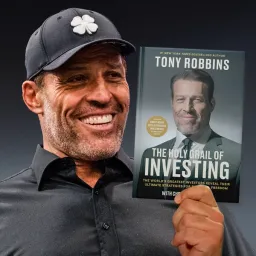
“In those days, I had been concerned whether my 1960 Volkswagen would hang together for the 30-minute trip to work, my life had been focused on how I was going to survive; I had felt fearful and alone. But that day, as I hovered there in the sky, I thought, ‘What a difference a decade can make!’ I did have dreams back then, but at the time, it seemed they’d never be realized. Today, though, I’ve come to believe that all my past failure and frustration were actually laying the foundation for the understandings that have created the new level of living I now enjoy. I decided to change virtually every aspect of my life. I decided I would never again settle for less than I could be. Who would have guessed that this decision would bring me to such an incredible moment?”
For more on Robbins, read “Who would have guessed that this decision would bring me to such an incredible moment?” Robbins. Never give up and Tony Robbins’ hardships: proof that with adversity, you are on the right path to incredible success and transformation.
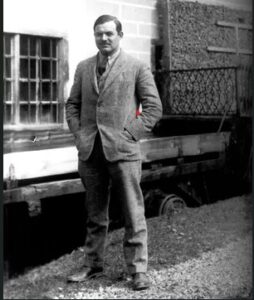
A bit more about the late Hemingway
Hemingway was born in 1899 and died in 1961. He was a renowned American novelist, short story writer, and journalist. He is considered one of the greatest and most influential writers of the 20th century, known for his distinctive writing style—simple, direct, and powerful—which greatly influenced modern fiction.
Hemingway was awarded the Nobel Prize in Literature in 1954 for his mastery of the art of narrative and for the influence he exercised on the contemporary style.
He served as an ambulance driver in World War I, a war correspondent in the Spanish Civil War and World War II, and lived in various countries including France, Spain, Cuba, and the U.S. These experiences shaped his writing and themes—particularly war, masculinity, suffering, and human endurance.
Hemingway died by suicide in 1961 after battling mental and physical health issues, including depression and the aftermath of numerous injuries.
As for his legacy, he left behind not just a rich literary legacy but also enduring reflections on courage, pain, loss, and resilience—captured in quotes like “The world breaks everyone, and afterward, some are strong at the broken places.” This line or quote appears in his 1929 novel, A Farewell to Arms, which is set during World War I and explores themes of love, loss, and the devastating effects of war.
In fact, the full quote reads “The world breaks everyone and afterward some are strong at the broken places. But those that will not break it kills. It kills the very good and the very gentle and the very brave impartially.”