By Jean Baptiste Ndabananiye.
The person is Vincent Van Gogh who is an indescribable lesson, as you will learn it in this article. In the meantime, he once stated “If you hear a voice within you say ‘You cannot paint’, then by all means paint and that voice will be silenced.” He was born on March 30, 1853 in Zundert in the Netherlands. He deceased on 29 July 1890 in Auvers-sur-Oise near Paris in France. This former Dutch painter, who also desired to become a true Christian, encountered rare hardships and even rare success, as you will see it.
Gogh’s major hardships are his failure to sell his paintings during his life, and get married even though he has considerably tried to do so. He was able to sell only one painting to his friend during his life. His posthumous success justifies his quote. If he had developed patience to wait just for less than 5 years, he could have seen his quote fulfilling tremendous transformations in his own life.
Further details on Gogh’s failure to get a wife
Gogh conducted every endeavor for him to build strong relationship with girls, in efforts to find a wife but in vain. Britannica and a museum named after him, Van Gogh Museum contend it.
Britannica points out “Moreover, his approach to life darkened when his love was rejected by a London girl in 1874. His burning desire for human affection thwarted, he became increasingly solitary.”
Van Gogh Museum says “Vincent had difficulty being alone. He often longed for a wife and a family, but he remained single. His unlucky love streak continued in Paris, to where he moved at the age of 32 (in 1886). Vincent’s mother and pastor father worried intensely about their son’s troubled love life. They were uncomfortable with Kee [his cousin Kee Vos-Stricker with whom he fell in love] being [a] family [member] and they were appalled by Vincent’s plan to marry Sien.”
“When that was all over, Vincent fell for another woman who those around him considered a dubious choice. In 1884, the 30-year-old Vincent moved back in with his parents in Nuenen. He got involved with his neighbor, Margot Begemann, who was mentally unstable. This was another love that largely grew out of sympathy. Vincent wrote to his brother: ‘Theo, I feel such damned pity for this woman’.”
Van Gogh Museum adds that Vincent wished to marry Margot but that her sisters and his parents opposed the union. It points out that they thought the couple didn’t constitute a good match. “The affair ended dramatically. When Margot heard that her family were against the relationship with Vincent, she tried to kill herself. Margot survived, but the relationship was beyond saving.”
Van Gogh Museum indicates that Vincent wasn’t however discouraged. It states that in the City of Love, he met Agostina Segatori who was Italian owner of the restaurant- Le Tambourin- on the Boulevard de Clichy.
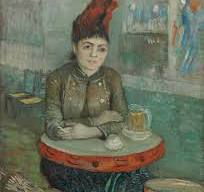
“The two had a relationship and according to Vincent’s friend Paul Gauguin, he was deeply in love with her. ‘We don’t know exactly how the relationship ended, but it didn’t last longer than a few months.’ Vincent wrote ‘As far as Miss Segatori is concerned, that’s another matter altogether. I still feel affection for her and I hope she still feels some for me. But now she’s in an awkward position.”
Van Gogh Museum highlights that Gogh felt compelled to accept his circumstances. It specifies that with so numerous failed relationships and attempts, Vincent finally came to admit that being lucky in love wasn’t a thing to happen in his life. “Even though – like many of us – he wanted to love, and be loved. Years earlier, he wrote: ‘If you wake up in the morning and you’re not alone and you see in the twilight a fellow human being, it makes the world so much more agreeable’ After so many failed relationships and attempts, Vincent eventually came to accept that being lucky in love was perhaps not written in his stars.”
“We’ll never really know why Vincent was so unlucky in love. He may have been difficult to get along with. And it probably didn’t help that he fell for women who he thought needed ‘saving’. But these aren’t real answers. It sometimes simply doesn’t work out, and that is sad.”
According to Van Gogh Museum, Gogh once said “I still love art and life very much. But as to ever having a wife of my own I don’t believe in it very strongly’. As a new life in the South of France, Vincent ultimately gave up hope for ever finding hope, which brought him peace. He moved to the South of France and found comfort in his requited loves: art, nature and his brother Theo. What he didn’t know at the time was that this would become one of his most productive periods as an artist.”
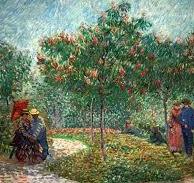
“The most famous of these [paintings] is Garden with Courting Couples, a romantic vision of the little park at Square Saint-Pierre. Could it be that Vincent painted himself here – in a blue smock and straw hat – next to the woman with the parasol?”
Notwithstanding, this love for art and life didn’t endure, as already mentioned and will be explained soon. It failed to be lasting, since he committed suicide for reasons which will also be clarified.
Spiritual crisis adding to the other hardships
Britannica says that impelled by a longing to serve humanity, he envisaged entering the ministry and pursued theology, but that he forsook this project in 1878, “for short-term training as an evangelist in Brussels. A conflict with authority ensued when he disputed the orthodox doctrinal approach.”
“Failing to get an appointment after three months, he left to do missionary work among the impoverished population of the Borinage, a coal-mining region in southwestern Belgium.”
Britannica further states that he encountered the first great spiritual crisis of his life there in the winter of 1879–80. “Living among the poor, he gave away all his worldly goods in an impassioned moment; he was thereupon dismissed by church authorities for a too-literal interpretation of Christian teaching. Penniless and feeling that his faith was destroyed, he sank into despair and withdrew from everyone.”
“They think I’m a madman,” Britannica says he revealed it to an acquaintance, “because I wanted to be a true Christian. They turned me out like a dog, saying that I was causing a scandal.”
Britannica explains that it was then that he began to draw seriously, thereby detecting in 1880 his true vocation as an artist. Britannica says that Van Gogh decided that his mission from then on would be to bring consolation to humanity through art. “I want to give the wretched a brotherly message,” he told his brother Theo. Britannica maintains that this realization of his creative powers reinstated his self-confidence.
His success
National Gallery reports that Gogh is today one of the most popular of the Post-Impressionist painters, although he was not widely appreciated during his lifetime. “He is now famed for the great vitality of his works which are characterised by expressive and emotive use of brilliant colour and energetic application of impastoed paint.”
Britannica echoes it in these words “The striking colour, emphatic brushwork, and contoured forms of his work powerfully influenced the current of Expressionism in modern art. Van Gogh’s art became astoundingly popular after his death, especially in the late 20th century, when his work sold for record-breaking sums at auctions around the world and was featured in blockbuster touring exhibitions. In part because of his extensive published letters, van Gogh has also been mythologized in the popular imagination as the quintessential tortured artist.
He is generally considered the greatest after Rembrandt van Rijn, and one of the greatest of the Post-Impressionists. His artistic career was extremely short, lasting only the 10 years from 1880 to 1890. During the first four years of this period, while acquiring technical proficiency, he confined himself almost entirely to drawings and watercolours. First, he went to study drawing at the Brussels Academy; in 1881 he moved to his father’s parsonage at Etten, Netherlands, and began to work from nature.”
Van Gogh worked hard and methodically but soon perceived the difficulty of self-training and the need to seek the guidance of more experienced artists. Late in 1881, he settled at The Hague to work with a Dutch landscape painter, Anton Mauve. He visited museums and interacted with other painters. Van Gogh thus sharpened his technical knowledge and experimented on oil paint in the summer of 1882.
He finished close to a thousand more works and since his death, his most expensive painting sold for the staggering amount of $82.5 million. Britannica “Largely on the basis of the works of the last three years of his life, van Gogh is generally considered one of the greatest Dutch painters of all time. His work exerted a powerful influence on the development of much modern painting. Yet of the more than 800 oil paintings and 700 drawings that constitute his life’s work, he sold only one in his lifetime.”
Gogh’s death
Britannica states “Everything in these pictures seems to be moving, living. This phase was short, however, and ended in quarrels with Gachet and feelings of guilt at his financial dependence on Theo ( married and with a son) and his inability to succeed. In despair of ever being able to overcome his loneliness or be cured, van Gogh shot himself.”
He did not pass away instantaneously. When reached wounded in his bed, he reportedly said “I shot myself. I only hope I haven’t botched it.” Police interrogated him, and refusing to answer their questions, van Gogh instead said “What I have done is nobody else’s business. I am free to do what I like with my own body.”
He deceased, two days after. His brother, Theo, also died six months after on January 25, 1891. In 1914, Theo’s remains were carried to his brother’s gravesite in a small cemetery in Auvers where today the two siblings lie side by side, with identical tombstones.
Reasons for Gogh’s success and fame after his death
Van Gogh Museum says “In the final two years of his life, Vincent had gained recognition amongst the avant-garde and his work had been displayed in exhibitions in Paris and Brussels. After Vincent’s death, his brother Theo wanted nothing more than to raise the profile of his brother’s work. But just six months later, Theo also passed away.”
It is Theo’s widow, Jo van Gogh-Bonger, who succeeded in rendering Vincent famous. Resolved to complete the task initiated by her late husband, she sold some of Vincent’s works, loaned others out for exhibitions and “also very importantly – published his letters to Theo”.
Van Gogh’s fascinating life story is one of the reasons why his work gradually grabbed the whole world by storm. The museum says “Without Jo’s dedication, this would never have been possible. Aged 28, Jo lost the love of her life. Her husband Theo van Gogh died, leaving Jo with their baby son and an apartment filled with his brother Vincent’s artworks. In the years after Theo’s death, Vincent van Gogh’s work became world-famous. That was largely thanks to Jo.”
“Why was she so committed to Vincent’s art?”Jo and Theo had dwelt together for less than two years when his lifetime finished in 1891. Jo was then forced to first take care of herself and her son who was still a young baby. “And what was she to do with the hundreds of Vincent’s paintings that Theo had left to her? Fulfilling Theo’s wish. Theo always sought to raise public awareness of his brother’s work. Jo wanted to fulfil this wish, in memory of her husband,” says the museum.
She relocated from Paris to the Dutch town of Bussum, where she established a guest house. Bussum constituted a home to numerous writers and artists with whom Jo got acquainted. “They were able to help her find her way in the art world. Jo was smart. She organised sales exhibitions to boost the visibility of Vincent’s work. This helped pique the interest of potential buyers. She made many strategic sales of the artworks: to collections accessible to the public, and all around the world. This meant that as many people as possible could see Vincent’s work.”
In 1905, Jo performed her most significant feat whereby she successfully organized the largest ever retrospective of Vincent’s work at the Stedelijk Museum in Amsterdam. She displayed over 480 artworks. Owing to this exhibition, the prices of Vincent’s work skyrocketed rapidly.
“The preparations for the exhibition reveal Jo’s exceptional organisational skills. She arranged everything from the choice of works to be exhibited to payments to the attendants. The exhibition featured a cross-section of Vincent’s work. Some found the work too modern, with its bright colours and expressive paint strokes. But there was also high praise. The Bedroom was one of the works on display.”
Meanwhile, Jo had undertaken another significant project, namely publishing Vincent’s letters to his brother Theo. The museum states “Selecting and editing the letters not only brought her closer to the artist, but also to her deceased husband, as the brothers were close and wrote to each other frequently.
Jo categorised and edited the letters, and wrote a biographical introduction about Vincent van Gogh. For years, this text would remain the source for other texts about the artist. Thanks to the publication of the letters in 1914, appreciation rose not only for Vincent as an artist, but also for him as a human being. Thanks to the letters, people got to know his dreams, desires and struggles. And, of course, his views on art.”
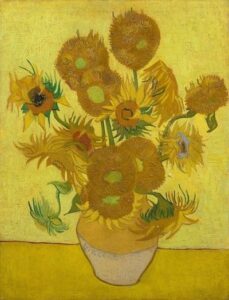
Jo had learned English and worked steadily on the English translation of the letters. When she deceased in 1925, Jo had translated around two-thirds of the letters. The English edition of the letters was published four years later. “Sacrifice for Vincent’s glory. Between 1891 and 1925, Jo sold nearly 200 of Vincent’s artworks. But there was one work that she and her son had difficulty parting with. They still owned two of the five sunflowers paintings, and loved the works dearly. Jo eventually sold one of the paintings to the National Gallery in London in 1924.” “It is a sacrifice for the sake of Vincent’s glory”, wrote Jo to the director of the museum.
Jo managed to accomplish her wish, and that of her late husband. When she died in 1925, Vincent’s work had already turned world-famous and exhibited in museums across the world.
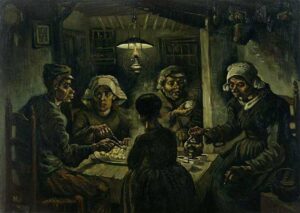
“At the same time, Jo always knew exactly which works she did not want to sell. For example, because certain works were of emotional value to the family or because they were favourites of hers, such as The Harvest. This core collection was to stay in the family. Continuing the dream, after Jo passed away, her son Vincent transferred the artworks that were still in the family to a foundation.
He was also one of the founders of the Van Goth Museum. It was his greatest wish that the collection be permanently accessible to all. This way Vincent continued working to realise his parent’s dream. To this day you can admire the core collection of the Van Gogh family in the the Van Gogh Museum,” writes this museum.
Lesson and Legacy
The Art News Paper in its 23 September 2022 article says “But Van Gogh’s eventual commercial success began in 1895, when the Parisian dealer Ambroise Vollard recognised his importance and started to stage a series of exhibitions—eventually selling around 30 paintings in the next five years. Now, of course, Van Gogh is one of the world’s best-selling artists.”
Van Gogh Museum says “Always desperately poor, he was sustained by his faith in the urgency of what he had to communicate and by the generosity of Theo, who believed in him implicitly. The letters that he wrote to Theo from 1872 onward, and to other friends, give such a vivid account of his aims and beliefs, his hopes and disappointments, and his fluctuating physical and mental state that they form a unique and touching biographical record that is also a great human document. The name of van Gogh was virtually unknown when he killed himself: only one article about him had appeared during his lifetime.
Van Gogh’s fame dates from the early years of the 20th century, and since then his reputation has never ceased to grow. A large part of this reputation is based on the image of van Gogh as a struggling genius, working unappreciated in isolation. The dramatic elements of his life—poverty, self-mutilation, mental breakdown, and suicide—feed the drama of this mythology. The notion that his unorthodox talent was unrecognized and rejected by society heightens the legend, as it is just that sort of isolation and struggle that has come to define the modern concept of the artist. This mythical van Gogh has become almost inseparable from his art, inspiring artists to dramatize his saga in poems, novels, films, operas, dance ensembles, orchestral compositions, and a popular song.”
Wide and diverse audiences eventually admired his art. The record-breaking attendance at exhibitions of his works and the popularity of commercial items featuring imagery from his work reveal a substantial and incredible thing. They disclose that, within the span of a century, van Gogh became potentially the most recognized painter of all time. Unparalleled prices that his works have earned through auction and attention paid to forgery scandals have only enhanced van Gogh’s stature in the public imagination. “More than a century after his death, van Gogh’s extraordinary appeal continues to endure and expand.”
Life In Humanity is convinced that this case is glutted with lessons, so that every person is likely to draw their own lesson. But, Life In Humanity argues that a lesson from this amazing man is that you don’t have to be discouraged at all. Moreover, never dare to kill yourself, how undefeatable your adversities appeared. Remember that he committed suicide, while he was only two years away from the start of success. This substantiates that hardships only seem insurmountable, because no adversity exists forever. When an adversity intensifies to its peak, it almost stands at its end.
Thank you for your sharing. I am worried that I lack creative ideas. It is your article that makes me full of hope. Thank you. But, I have a question, can you help me?
Your point of view caught my eye and was very interesting. Thanks. I have a question for you.
I don’t think the title of your article matches the content lol. Just kidding, mainly because I had some doubts after reading the article.
Your article helped me a lot, is there any more related content? Thanks! https://www.binance.com/fr-AF/register?ref=JHQQKNKN
Your point of view caught my eye and was very interesting. Thanks. I have a question for you.
Thank you for your sharing. I am worried that I lack creative ideas. It is your article that makes me full of hope. Thank you. But, I have a question, can you help me?
I don’t think the title of your article matches the content lol. Just kidding, mainly because I had some doubts after reading the article.
Thanks for sharing. I read many of your blog posts, cool, your blog is very good.
Dear Binance Account,
Thank you so much for your kind words and for taking the time to read our blog posts! We’re really glad that you’re enjoying them—it means a lot to me. Feel free to share any thoughts or suggestions anytime!
Your point of view caught my eye and was very interesting. Thanks. I have a question for you. http://数字货币行情.cryptostarthome.com
Thank you so much indeed.
Thank you, your article surprised me, there is such an excellent point of view. Thank you for sharing, I learned a lot. https://accounts.binance.com/pt-PT/register?ref=VDVEQ78S
Thank you so much indeed.
I don’t think the title of your article matches the content lol. Just kidding, mainly because I had some doubts after reading the article. https://www.binance.info/uk-UA/register-person?ref=W0BCQMF1
We actually recognize the importance of your engagement with the article and are ready to respond to your doubts if you clearly express them.
Thank you for your sharing. I am worried that I lack creative ideas. It is your article that makes me full of hope. Thank you. But, I have a question, can you help me?
I’m truly touched by your kind words. We’re so glad our article could bring you hope. Of course, I’d be happy to help with your question—please feel free to share it.
Your point of view caught my eye and was very interesting. Thanks. I have a question for you.
Thank you so much indeed! Please, ask the question.
I don’t think the title of your article matches the content lol. Just kidding, mainly because I had some doubts after reading the article. https://www.binance.info/hu/register?ref=FIHEGIZ8
Thank you for engaging with the article, and we are ready to welcome clarifications on the doubts so we can clear them.
Your article helped me a lot, is there any more related content? Thanks!
Yes, the website holds more related content. We are delighted to hear that it has helped yoy.
Thank you for your sharing. I am worried that I lack creative ideas. It is your article that makes me full of hope. Thank you. But, I have a question, can you help me?
We are very glad that the article has brimmed you with hope and we are dedicated to maintaining the momentum. Please, ask the question; we remain ready to work on it.
Your article helped me a lot, is there any more related content? Thanks!
Saying that we are not very excited by your feedback could be a pure lie! Thank you so much indeed for this acute encouragement. Yes, the website features more related content.
Can you be more specific about the content of your article? After reading it, I still have some doubts. Hope you can help me. https://www.binance.com/register?ref=IHJUI7TF
Thank you for your interest! We’d be happy to clarify. Could you let us know which part has left you with doubts? In that way we can provide a more specific explanation.
Your article helped me a lot, is there any more related content? Thanks!
We are actually pleased to learn that it has helped you a lot. Yes, there are more related pieces.
Your article helped me a lot, is there any more related content? Thanks! https://www.binance.com/register?ref=IHJUI7TF
Thank you a lot for your kind and uplifting words. Yes, there is more related content.
Your article helped me a lot, is there any more related content? Thanks! https://www.binance.com/register?ref=QCGZMHR6
Yes, there is more related content. Moved by your comment!
Your point of view caught my eye and was very interesting. Thanks. I have a question for you.
Please ask the question and thank you for your feedback.
Thanks for sharing. I read many of your blog posts, cool, your blog is very good.
We thank you so much for your galvanizing comment.
Thanks for sharing. I read many of your blog posts, cool, your blog is very good.
Thrilled by your kind and inspiring words.
Your point of view caught my eye and was very interesting. Thanks. I have a question for you.
We thank you a lot for your encouraging comment. We are actually eager to welcome your question.
I don’t think the title of your article matches the content lol. Just kidding, mainly because I had some doubts after reading the article.
We will be delighted to receive clarifications so we can deal with your doubts you jokingly say!