By Jean Baptiste Ndabananiye.
There are individuals and organs that say that Russia’s President, Vladimir Vladimirovich Putin, is continuing to stand up on the entire path of the Western countries. If the President Putin is actually an insurmountable mountain for the West, this article is also going to delve into factors permitting him to successfully position himself against the West on multiple fronts.
The Moscow Times forms a Russian newspaper which is said to remain independent and a significant source of news for those looking to understand Russia from an independent perspective. In its 14 July 2024 article, this media organization sometimes conducting critical coverage of the Russian government, says “The full-scale invasion of Ukraine by President Vladimir Putin, a nuclear-armed leader, poses what appears to be a completely unsolvable challenge for Western diplomacy.
While Russian gliding cruise bombs and ballistic missiles have been falling from the sky onto peaceful Ukrainians for two and a half years, Kyiv’s Western allies have been unable to overcome their internal disagreements to decide whether to negotiate or fight Putin. The more visible this indecision is, the more brutally Russia will strike at Ukraine.”
The Moscow Times adds that economic sanctions have remained insufficient to cause Putin to surrender. “For the Kremlin, large-scale economic restraints were a touchy, but predictable step — and therefore not an existential threat. Instead of gas and oil money from the West, a stream of money from China and India poured into Russia, allowing the Kremlin to buy the loyalty of Russia’s hesitant elites, give more money to the population, and finance large-scale munitions production. Putin, a Soviet KGB officer, paranoid of any dissent, felt his confidence and stability grow after he was elected to another presidential term this year”.
Those details suggest that Putin is a giant leader in global geopolitics that Western countries cannot push or eliminate, to attain their agenda in the world. This Russian media organization adds that another step, which was expected to convince Putin to capitulate, has also failed. “Another setback awaited the West in its attempt to isolate Putin by making him persona non grata on the world stage. Although the warrant for his arrest from the International Criminal Court (ICC) in The Hague remains in force, leaders of major powers have gradually resumed their visits to Moscow.
China’s Xi Jinping continues to speak of Beijing developing a “boundless partnership” with Moscow. This week, India’s newly re-elected Prime Minister Narendra Modi visited Putin’s residence outside Moscow, embracing him and calling him ‘dear friend’ and ‘Your Excellency.’ But even more egregious for the West was seeing Hungarian Prime Minister Viktor Orban being driven to negotiations in the Kremlin in Putin’s luxury Aurus limousine, accompanied by a motorcade, from Moscow’s government-run Vnukovo Airport, where Western airlines have not flown since the beginning of the war.”
Orban, the leader of the Hungarian presidency of the European Commission, was going to discuss the terms of a possible ceasefire in Ukraine. “European leaders are outraged. Kyiv, allies slam Orban for Ukraine talks with Putin. EU officials, the United States and NATO blasted the Hungarian Prime Minister’s surprise trip.”
Some key enabling factors for Russia’s Putin
1. Military modernization-despite economic challenges, Putin has overseen the modernization of Russia’s military capabilities. This includes the development of advanced weapons systems and a more assertive military posture, which enhances Russia’s ability to project power and protect her interests.
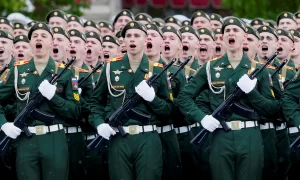
The Center for European Policy Analysis (CEPA) confirms Russia’s military modernization. In its 16 May 2023 article titled “Russia’s military has improved- the West should take note”, it says “The world has learned more about Russia’s armed forces in the last 15 months than in the previous 20 years. Now it needs to understand that Russia is adapting.”
The New York Times’ 27 January 2022 article reads “Russia’s military, once creaky, is modern and lethal. A significantly upgraded military has emerged as a key tool of Vladimir Putin’s foreign policy, as he flexes his might around the globe and, most ominously, on the Ukraine border. In the early years of Vladimir V. Putin’s tenure as Russia’s leader, the country’s military was a hollowed-out but nuclear-armed shell. It struggled to keep submarines afloat in the Arctic and an outgunned insurgency at bay in Chechnya. Senior officers sometimes lived in moldy, rat-infested tenements. And instead of socks, poorly trained soldiers often wrapped their feet in swaths of cloth, the way their Soviet and Tsarist predecessors had.”
“Two decades later, it is a far different fighting force that has massed near the border with Ukraine. Under Mr. Putin’s leadership, it has been overhauled into a modern sophisticated army, able to deploy quickly and with lethal effect in conventional conflicts, military analysts said. It features precision-guided weaponry, a newly streamlined command structure and well-fed and professional soldiers. The modernized military has emerged as a key tool of Mr. Putin’s foreign policy: capturing Crimea, intervening in Syria, keeping the peace between Armenia and Azerbaijan.”
“The mobility of the military, its preparedness and its equipment are what allow Russia to pressure Ukraine and to pressure the West,” said Pavel Luzin, a Russian security analyst.
Forbes, in its 31 May 2024 article headlined “Top 10 countries with most powerful military strength”, places Russia’s military in the second position as usual after the USA. “The United States stands first among the top 10 militaries in the world. This dominant position is attributed to the country’s commanding presence in crucial material, financial, and resource categories. The United States also leads globally in technological advancements, excelling in the medical, aerospace, and computer/telecom sectors. The nation possesses 13,300 aircraft, with 983 being attack helicopters.”
“With a history spanning a millennium, Russia came into being after the Soviet Union’s collapse in 1991, maintaining nearly 900,000-strong active military forces. Russia has advanced technology, a significant and well-trained military force, and strategic global influence. However, the ongoing Russo-Ukrainian War has highlighted shortcomings regarding leadership, preparedness, and supply chain management within the Russian military. Nevertheless, Russia continues to hold its second-place position among the top 10 armies in the world.”
A nuclear weapon represents such a maximally dreaded arm that any country possessing it is unreservedly feared. Africa is regarded as the least advanced continent. But, an African country which would manage to produce or own a nuclear arm would certainly be a terrifying power. It is said that South Africa once achieved a nuclear bomb, but that the West negotiated with this African giant to destroy it. Russia remains the most nuclear weapon-possessing superpower. Putin is exploiting Russia’s nuclear capabilities and advanced military technologies, to advance his country’s agenda.
Moscow Times points out “Some voices in the West say that a cornered Putin would be dangerous — and if left with no way out, the Russian leader will use nuclear weapons. They say whatever you do, Putin will win one way or another.
Putin is actively playing with and capitalizing on these fears. But Washington, Brussels and other allies cannot allow Putin to seize Ukraine and do what he wants with it. After all, it would be a symbolic defeat for the West and give Moscow’s autocrat even more power. While the West is talking itself into inaction by being unable to decide whether to back Ukraine wholeheartedly or push for negotiations, the Kremlin continues to successfully play on their divisions.”
2. Assertive foreign policy-Putin has pursued assertive foreign policies which challenge Western interests and influence, mainly in former Soviet states and Eastern Europe. This involves military interventions in countries like Georgia in 2008, Syria in 2015, and currently Ukraine since 2022. The policy also entails support for regimes opposed to Western influence, and efforts to subvert Western alliances such as NATO.
The Wilson Center, established by the U.S Congress in 1968, is said to provide non-partisan counsel and insights on global affairs to policymakers through deep research, impartial analysis and independent sponsorship. This center’s website contains an article which appeared online on May 22, 2006 and featured Andrei P. Tsygankov.
Tsygankov is a Professor at the Department of International Relations within San Francisco State University. He teaches Russian/post-Soviet relations, comparative foreign policy, and IR theory. He graduated from Moscow State University (Candidate of Sciences, 1991) and University of Southern California (Ph.D., 2000).
The center says “At a recent Kennan Institute talk, Andrei Tsygankov, Associate Professor, International Relations / Political Science, San Francisco State University, discussed the main forces driving Russian foreign policy. Contrary to the increasingly popular image of Russia as an aggressive, imperialist state, Tsygankov argued that the primary drivers in Russia’s foreign policy are domestic.
President Vladimir Putin’s priorities are to pursue opportunities for economic growth and stability, and to address Russia’s increasing security threats. Tsygankov stated that Russia’s foreign policy is non-confrontational and should not be viewed as threatening to the West.”
One of three primary reasons for Russia to pursue an assertive foreign policy, as articulated by Tsygankov, is Russia’s new economic confidence. The center wrote “Russia has a growing middle class and strong economic growth indicators. Evidence of Russia’s economic revitalization can be seen in the massive immigration of labor, growing energy demands, and strong domestic support for a policy of pursuing economic opportunities abroad.”
Russia currently constitutes a high-income, industrialize, mixed market-oriented economy. It counts among the largest economies in the world.
In its 6 July 2024 story, The Economic Times said “Despite war and sanctions, Russia becomes a high-income economy.” This media house states that Russians enjoy more income in spite of the war. “Despite Western sanctions over the Ukraine war, Russia has transitioned from an upper-middle to a high-income economy, according to the World Bank’s latest rankings. The country has become a high-income economy from an upper-middle income economy. In its latest rankings, the World Bank has promoted the Russian economy to the top income category.
As per the World Bank [WB], economic activity in Russia was influenced by a large increase in military related activity in 2023, while growth was also boosted by a rebound in trade (+6.8%), the financial sector (+8.7%), and construction (+6.6%). These factors led to increases in both real (3.6%) and nominal (10.9%) GDP, and Russia’s Atlas GNI per capita grew by 11.2%.”
The WB updates the income classification of countries every July 1. This bank founds the ranking on the gross national income (GNI) per capita of the previous calendar year. GNI measures are expressed in United States dollars. In each country, factors like economic growth, inflation, exchange rates, and population growth carry an influence on the level of Atlas GNI per capita, as per the WB.
A July 03, 2024 article by Investopedia says that Russia sits among the richest nations in the world. Investopedia says “The U.S., China, Germany, Japan, and India are some of the top economies in the world based on gross domestic product (GDP). GDP is an estimate of the total value of finished goods and services produced within a country’s borders during a specified period, usually a year. GDP is popularly used to estimate the size of a country’s economy and its impact on the global economy.
Russia is the world’s 11th-largest economy. Russia has moved toward a more market-based economy over the 30 years since the collapse of the Soviet Union.”
Professor Alexander Dynkin, prominent Russian economist and President of Primakov National Research Institute of World Economy and International Relations, reiterated to ET in June Russia’s incomparable power. He declared that no single economy in the world, not even the Chinese one, could resist the kind of financial and economic “aggression” unleashed against Russia. He stated “We are self-sufficient in energy resources, raw materials, and food. We have a skilled labor market. Our fundamental science is world class. Our national innovation system is successfully solving the tasks of technological sovereignty and using the vacated market niches.”
“The main driver of Russia’s economic growth, the fighting in Ukraine.”
Surprisingly, various media industries report that the main driver of Russia’s economic growth is the fighting in Ukraine. One of them, The Economic Times says “Now [the war is] as important to the Kremlin economically as it is politically.” The Conversation in its 22 February 2024 reports “Perhaps the most worrying reason for the Russian economy’s resilience is the war itself.
For a long time, the economy of Russia has not been diverse, relying heavily on the export of natural resources such as oil and gas. And a major reason for the relatively high revenue of the Russian government today is precisely that the war has led to high energy prices.”
Because of the fighting and chiefly inspiration from the sanctions, Russia has found herself obliged to adopt and implement certain measures. Though the ongoing war has resulted in challenges for Russia, it also brought opportunities to the country.
The measures are that Russia has shifted away from Western dependencies, focusing on non-Western markets, developing new industries, diversifying and innovating energy, strengthening the domestic financial sector, increasing focus on self-sufficiency and resilience and boosting domestic tourism and culture.
For example, in the St. Petersburg International Economic Forum in June 2024 the President Putin stated that the country had expanded economic ties with countries in Africa, the Middle East and Asia. Then courting investors in the forum, he also declared that the Russian economy is rising in spite of heavy international sanctions.
According to The Economic Times quoting London-based European Bank for Reconstruction and Development (EBRD), Russia’s economy will grow further this year. The EBRD predicts that Russia’s resilient economy is set to expand 2.5 percent in 2024. “I think it was unrealistic to expect that sanctions against Russia would lead to a deep economic and financial crisis, as many had hoped,” EBRD chief economist Beata Javorcik told AFP in May.
She pointed out that Russia has refocused its economy on the war effort. “So this is leading to faster growth. Russian growth in the medium term will be lower than it would have been in the absence of sanctions.”
Investopedia says “China was in 13th place in 2000 but has been sitting in second place since 2010. Further down the list, Indonesia vaulted forward from the 27th largest economy in 2000 to the 16th as of 2024.” This suggests that instead of relapsing, Russia’s economy can continue advancing to the extent that it is likely to feature among the top five strongest economies in the world within a few years. Yet for this to happen, it demands that this giant keep its momentum.
3. Energy Dominance-Russia’s vast energy resources, particularly natural gas, provide Putin with significant leverage over European countries dependent on Russian energy supplies. This economic influence usually enhances Russia’s position in negotiations and political interactions with Western nations. It even upgrades the nation’s standing in other countries especially in Asia.
The Conversation says “Despite all of this [Western sanctions], Russia’s economy has not collapsed. But it does look very different. One reason for this relative resilience is Russia’s strong, independent central bank. Since 2022, it has imposed massive interest rate hikes (currently at 16%) to control inflation (still above 7%).
This has been combined with government-imposed controls which make it almost impossible for Russian exporters and the many foreign companies still operating in Russia to take money out of the country. Together, these policies have helped to avoid a total collapse of the ruble, by keeping the currency flowing inside Russia.”
This medium adds that Russian firms have also learned to sidestep sanctions, with the oil cap being a prime example. “In theory, no Russian oil should be traded with the west above the cap, which would have a massive impact on Russia’s public finances. In practice, it has been circumvented by a large ‘dark’ fleet of uninsured vessels and the use of accounting loopholes.
And while sanctioning countries are trying to tighten the rules, Russia’s public coffers have actually been flooded with oil money. Many countries have also made money playing the role of intermediaries. Turkey, China, Serbia, Bulgaria and India are among those which have reportedly circumvented sanctions, and carried on selling goods to Russia.”
Can you be more specific about the content of your article? After reading it, I still have some doubts. Hope you can help me.
Your point of view caught my eye and was very interesting. Thanks. I have a question for you.
Your article helped me a lot, is there any more related content? Thanks!
Thanks for sharing. I read many of your blog posts, cool, your blog is very good.
Thank you for your sharing. I am worried that I lack creative ideas. It is your article that makes me full of hope. Thank you. But, I have a question, can you help me?
Your point of view caught my eye and was very interesting. Thanks. I have a question for you.
We thank you a lot indeed, and we are ready to respond to your question, please ask it.
Reading your article has greatly helped me, and I agree with you. But I still have some questions. Can you help me? I will pay attention to your answer. thank you.
We’re so glad to hear that our article was helpful and that you found it meaningful — thank you for sharing that! Please feel free to ask your questions; we’ll be happy to provide answers and guidance;
Can you be more specific about the content of your article? After reading it, I still have some doubts. Hope you can help me.
We appreciate your comment and the time you took to read our article. Please let us know which specific areas you’d like us to elaborate on—we’ll be happy to clarify and ensure the message comes across clearly.
I don’t think the title of your article matches the content lol. Just kidding, mainly because I had some doubts after reading the article.
We appreciate your feedback and the lighthearted tone. It’s helpful to know that some parts of the article may not have fully matched the title’s expectations. We’d be glad to hear which aspects you think could be better aligned so we can improve future pieces.
Your point of view caught my eye and was very interesting. Thanks. I have a question for you.
We thank you so much for your kind words— we’re truly gladdened that the perspective has stood out to you. That means a great deal to us. We’d be very happy to answer your question. Please feel free to ask it, and we’ll respond as thoughtfully as we can.
Your article helped me a lot, is there any more related content? Thanks!
Thank you so much for the feedback. The website contains more related articles.
Thank you for your sharing. I am worried that I lack creative ideas. It is your article that makes me full of hope. Thank you. But, I have a question, can you help me?
Thank you for this feedback. Please, ask the question so we can channel our attention on responding to it.
Your article helped me a lot, is there any more related content? Thanks! https://accounts.binance.info/hu/register-person?ref=IQY5TET4
Yes, there is more related content. We thank you for your encouraging words.
Thank you for your sharing. I am worried that I lack creative ideas. It is your article that makes me full of hope. Thank you. But, I have a question, can you help me? https://accounts.binance.bh/en-ZA/register?ref=B4EPR6J0
Please, raise it.
Your article helped me a lot, is there any more related content? Thanks!
Excited. Yes, there is more related content.
I don’t think the title of your article matches the content lol. Just kidding, mainly because I had some doubts after reading the article.
Please, elucidate the doubts.
Can you be more specific about the content of your article? After reading it, I still have some doubts. Hope you can help me.
Please clarify your doubts so we may address them.
I don’t think the title of your article matches the content lol. Just kidding, mainly because I had some doubts after reading the article.
We are eager to receive clarifications around your doubts.
Your point of view caught my eye and was very interesting. Thanks. I have a question for you.
We are actually galvanized by your kind words. Raise your question, so we can address it.