By Editorial Staff
A revolutionary idea took root on the outskirts of a great ancient city, where wisdom flourished under the open sky. It was neither a temple nor a marketplace, yet it became the cradle of thought that shaped the minds of some of history’s greatest intellectuals. Here, seekers of knowledge gathered—not as students in the modern sense, but as equals in pursuit of truth. Conversations sparked like fire in the night, unraveling the mysteries of existence, politics, mathematics, and the cosmos itself.
Long before the world would recognize the concept of a university, this sacred space stood as a beacon of inquiry, challenging minds and forging legacies that endure to this day. This sacred space emerged as a guiding light for human intellect, laying the foundation for what would one day be formalized as a university. Its influence stretched across centuries, its legacy still shaping the way we think today. This article draws from Greek Reporter’s October 16, 2024 feature, to explore the origins of this remarkable place—the cradle of education as we know it today.
Who was the founder of the first higher learning institution?
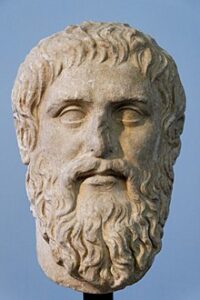
One of extraordinary personalities of all time that this planet boasts— philosopher and thinker, Plato—is the creator of the first university in the world. In an article headlined “Plato’s Academy: The World’s First University”, Greek Reporter affirms it.
Britannica in its 12 February 2025 article reports “Academy, in ancient Greece, the academy, or college of philosophy in the northwestern outskirts of Athens where Plato acquired property about 387 bce and used to teach. At the site there had been an olive grove, a park, and a gymnasium sacred to the legendary Attic hero Academus (or Hecademus).”
Greek Reporter echoes the point, recounting “Plato’s Academy, or simply ‘The Academy’ was a famous school in ancient Athens founded by Plato in 387 BC, located on the northwestern outskirts of Athens, outside the city walls. The site acquired its name from the legendary hero Academos.
Plato is the one figure who must receive the credit for giving birth to this unique institution. He firs [first] acquired the land on which the Academy was eventually built, and began holding informal gatherings there to discuss philosophical issues with some of his friends.”
Greek Reporter explains that the gatherings involved thinkers like Theaetetus of Sunium, Archytas of Tarentum, Leodamas of Thasos, and Neoclides. It further states that these meetings and discussions continued for years but “it was not until Eudoxus of Cnidos arrived in the mid-380’s BC that Akademeia was recognized as a formal Academy”.
Though it did not constitute an educational institution as we know it today, according to Greek Reporter, Plato’s Academy is regarded as the world’s first university. “It had the characteristics of a school and covered a wide variety of topics such as philosophy, astronomy, mathematics, politics, physics and more, it is considered to be the first university in the entire world. The garden which Plato decided to use for his discussions had also been used previously by many Athenian groups, both civil and religious, with the Akademeia hosting a nighttime torchlight race from altars in Athens to the altar of Prometheus in its gardens.
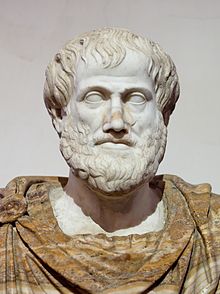
An exclusive group of intellectuals met in Akademeia, with Plato’s ‘students’ not truly bearing the title of a student apart from their distinction between junior and senior members of the body. One of them, Aristotle, came to be one of the world’s most influential philosophers of all time.”
Greek Reporter adds that Plato’s teaching methods including both lectures and seminars concentrated on his instructions, besides dialogue between teachers and students. No school fees were paid and the school flourished for around two centuries, before it sustained a tragic end. “The Academy was free. It is worth mentioning that during Plato’s leadership of the Academy, its members did not pay any fees, and following his death, the Academy continued its operation for nearly 200 years.
Diogenes Laertius, a biographer of ancient Greek philosophers, divided the operating history of the Academy into three periods; The Old, the Middle, and the New. At the head of the Old he naturally placed Plato; at the head of the Middle Academy, Arcesilaus; and of the New, Lacydes.”
What was the fate of the Academy?
“In the year 86 BC, Lucius Cornelius Sulla, a Roman general and statesman who held the role of consul twice and revived Rome’s dictatorship, laid siege to the city of Athens and conquered it. The Academy was destroyed and razed to the ground.
Tragically, the magnitude of the destruction was so massive that the school never reopened. Still, the legacy of The Academy has stayed alive throughout the millennia, giving us vital knowledge and insights even today about the world in which we live.”
The Tunisian Muslim woman— Fatima Al-Fihri: the reason behind the first formal university

Research Gate, in its September 2021 article— entitled “The First University in the World: Al-Quarawiyine University”— having appeared in MAS Journal of Applied Sciences, reports “Most people would suppose that the first and oldest university in the world is in Europe. The first university in the world is in North-Africa Morocco and it was founded by the Tunisian Muslim woman Fatima Al-Fihri.”
The aim of this article by Research Gate was to raise awareness about the important role of this university and how it encouraged “researches and scientists from all over the globe. In addition to this, most people are not aware of the existence of this university even though it was actually recognized by the UNESCO and the Guiness World Records. So, another aim of this article, is to make readers fully aware about how the idea of ‘University’ was introduced for the first time in Morocco and then later expanded to the rest of the world.”
This university also named the University of Al-Karaouine was wholeheartedly supported by the Idrissid dynasty—the Arab Muslim dynasty that ruled in Morocco from the eighth century to the tenth one. Research Gate says “It is highly primordial to talk about the Idrissid dynasty.
Because it is under the reign of its kings and their acceptance that the Al Quarawiyin University got to exist. The mosque and the university were built under the supervision of the committed, compassionate and cultivated Muslim woman Fatima Al-Fihria.”
Who is Fatima Al-Fihri and how did she get the idea of building a university?
Research Gate underlines that Fatima bint Muhammed Al- Fihria Al-Qurayshi was the founder and the history of mankind. “Fatima Al-Fihria was born in present-day Tunisia in about 800 AD and was the daughter of a well-off Arab merchant. Fatima’s family migrated to the city of Fez in Morocco, around the same time Arabs were fleeing Cordoba and Southern Spain as they were being expelled from those regions. Fatima and her sister Mariam were well-educated young females.”
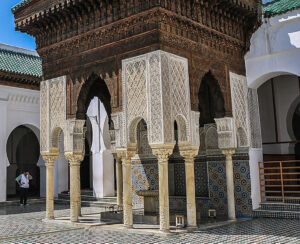
“But what was the reason that made Fatima Al-Fihria build a mosque that is now the world’s oldest operating educational center? Fatima came from a devout Muslim family that valued learning and she happened to inherit a very large sum of money after her father’s death.”
Amid the winding alleys and golden-hued walls of Fez, a city teeming with merchants, scholars, and seekers of faith, a new era was about to unfold. Waves of migrants poured into this vibrant hub, their dreams and traditions merging into a cultural mosaic unlike any other. The air buzzed with the fervor of intellectual pursuits, artistic expression, and spiritual devotion. Yet, amidst the splendor of this awakening, one woman— Fatima Al-Fihria— saw beyond the present—her vision etched in stone, her will unwavering.
With the weight of legacy upon her shoulders and an inheritance in her hands, Fatima made a choice that would alter the course of history. As worshippers outgrew the spaces around them, she vowed to build a new sanctuary—one that would not only offer space for worship but also stand as a beacon of knowledge and enlightenment. Every stone laid, every arch raised, bore the mark of her dedication. Her sacrifice woven into the very foundations of what would become the Quarawiyine Mosque—a place that, in time, would transcend its purpose and give rise to one of the greatest centers of learning the world has ever known.
Research Gate explains “At the time, a lot of people were migrating to Fez as did Fatima’s family. The city quickly became a bustling cultural melting-pot, where arts and sciences flourished alongside religious devotion. Worshippers eventually outgrew the mosques that were available to them.
So, Fatima decided to build a new mosque with all the money she inherited and name it the Quarawiyine Mosque after the immigrants from her hometown of Qairawan. She made sure the Mosque was built under her supervision, and made sure to fast until the Mosque was completed.”
What kind of subjects were taught at the university?
After the Quarawiyyine mosque was completed in 859 AD, according to Research Gate, religious studies were taught at the center, then it expanded to include other disciplines. The latter ones include astronomy, medicine, Sufism, languages, grammar, mathematics and even music. “Eventually it became a hub for symposiums and debates.”
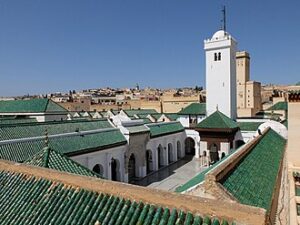
“Later on, Quarawiyyine transformed into a fully-fledged learning center and throughout the centuries it became a stop for many famous scholars, poets, jurists, astronomers, mathematicians and scientists. It welcomed students and teachers from all over the globe regardless of their country, religion and gender.
Early Algebra is believed to have been developed within the walls of this university. Its library is one of the oldest in the world housing thousands of ancient manuscripts. Just like any university of nowadays, Al-Quarawiyyine also had a captivating tradition named ‘The Caliph of One Hour’.”
In this tradition during spring, as explained by Research Gate, students of the university chose among themselves “The Governor of the Week”. “Any student who was finally selected as the chosen one, had the honor to sit and meet with the king and discuss with him for an hour all political affairs and express his own thoughts freely with no tyranny or oppression.”
Who are the famous scholars that attended the university? “Fatima herself studied at Quarawiyyine. Her diploma is actually still on display at the university’s library for everyone to see. Brilliant and famous scholars had the chance to study in this university, such as the well-known historian Ibn Khaldun. Abd Al-Rahman ibn Muhammad ibn Khaldun (1332-1406) is an Arab philosopher and historian who was considered as one of the brilliant thinkers and philosophers of the Middle Ages.
One of the famous writings of Ibn Khaldun is Al-Muqqadimah. This well-known writing deals with the philosophy of History, political theory, economics, Islamic theology, ecology and also historiography. Ibn Khaldun is considered the father of Sociology and the Science of History.”
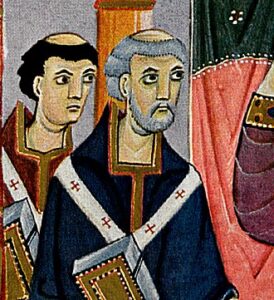
The Sufi philosopher Ibn Arabi, Abu Al-Walid Muhammad ibn Ahmad ibn Rushd (1126-1198), Ibn Rushd, the Jewish doctor Moise Maimonides, and Gerbert Aurillac also attended the university. Aurillac later on became Pope Sylvester the second. The pope is actually credited as the person who “introduced his knowledge of Arabic Numerals to the rest of Europe giving us eventually the number system that we use nowadays.”
“It is also reported that both, Leo Africanus (Hassan Al-Wazzan) who was educated at Fes-Morocco whose writings stayed for about 400 years one of Europe’s main sources of information about Islam and Mohammed Al-Idrissi who was the creator of Tabula Rogeriana, one of the most advanced medieval world maps, have attended the university of Quarawiyyine. Maimonides exercised medicine with great talent developing an experimental and clinical approach to medicine.”
International recognition
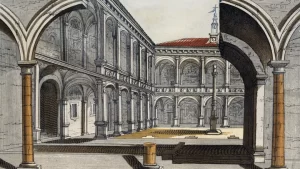
“It is highly primordial to mention that the Quarawiyyine University is actually recognized by the most credible sources. According to the UNESCO, The United Nations, The Guinness World Records and The Manchester University Press, Al-Quarawiyyine University is the first and oldest university of the world still in use today,” states Research Gate.
“The oldest existing, and continually operating educational institution in the world is the University of Karueein, founded in 859 AD in Fez, Morocco. The university of Bologna, Italy, was founded in 1088 and is the oldest in Europe. It is undeniable that Al-Quarawiyyine University was 100 years before Al-Azhar university in Egypt, 200 years before Oxford University and 400 years before Sorbonne University in France.”
In its 12 September 2024 article headlined “The University of al-Qarawiyyin in Morocco holds Guinness World Record for oldest higher learning institution”, Fox News says “The school centers around education in Arabic language and Islamic literature. The school’s curriculum also includes teachings in science, mathematics and foreign language [French and English].”
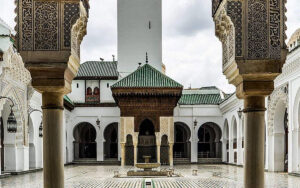
The Global Academy reports “The University of Al Quaraouiyine became a state university in 1963. It now awards degrees in Islamic, religious and legal sciences with an emphasis on classical Arabic grammar and linguistics and law.
Interestingly, teaching is still delivered in a very traditional manner; students are seated in a semi-circle around a Sheikh (Islamic scholar). The Sheikh prompts them to read sections of particular texts, asks them questions on aspects of grammar, law, or interpretation, and explains difficult points.”