By Editorial Staff
The Institute for Security Studies (ISS) in its 27 June 2024 article says “Better education in Africa could mean about 47 million fewer poor people by 2043. It could also add an extra US$368.4 billion (equivalent to 4.3%) to gross domestic product (GDP) and additional gains in GDP per capita of about US$240. This is according to a study by the African Futures and Innovation programme at the Institute for Security Studies. Other research shows that each additional year of schooling is associated with an increase of nearly 0.6% in long-term GDP growth rates.
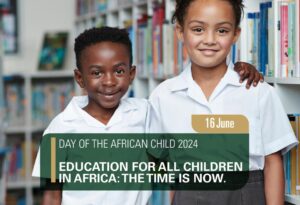
Despite the palpable benefits of education, Africa, especially sub-Saharan Africa, still struggles to improve educational outcomes. The 2022 progress report on implementing the African Union’s (AU) Agenda 2063 reveals that Africa failed to meet all the education targets, with an overall performance score of 44%. Access is still limited at the basic level, and many children of school-going age are not attending classes.”
Why does Africa, a continent brimming with potential, still lag in education despite its undeniable link to economic growth and poverty reduction? To answer the question, this article is based on these points:
- Status of education in brief in Africa
- What is Africa doing, to revolutionize its education system?
- Will Africa ever transform its education system, or will it remain in vows only?
Status of education in Africa
The United Nations Educational, Scientific and Cultural Organisation (UNESCO) points out a big number of children not studying in Africa. It states that more than 20% of children between six and 11 years, and over 33% of young people between 12 and 14 are not at school in sub-Saharan Africa. For those aged 15 to 17, the UNESCO says that figure is 60%. “Of all regions, sub-Saharan Africa has the highest rates of education exclusion.”
Although Life In Humanity has not yet found the latest updates on Africa’s children, data from Statista provides valuable insights into the trend. In 2021, Africa had approximately 207 million children aged 0-4 years. In total, the population under 18 years old amounted to around 650 million, while only about 48 million individuals were aged 65 years and older. Africa boasts the youngest population in the world. As of 2023, around 40% of Africa’s population was aged 15 years and younger, compared to the global average of 25%.
ISS highlights that education in Africa lacks quality. “The quality of education in Africa is also poor. The State of Global Learning Update says almost 90% of people in Africa cannot read with comprehension by the age of 10. A 2018 World Bank report identifies the four immediate causes of poor quality education in sub-Saharan Africa.
First, many children arrive unprepared to learn because of illness, malnutrition or income deprivation. Second, teachers often lack the necessary skills or motivation. Third, teaching and learning materials fail to reach classrooms at the right time or improve learning. Finally, poor management and governance undermine schooling quality.”
ISS adds that another problem in Africa’s education system is a considerable mismatch between the kind of education offered and that required by employers and the job market. “An African Development Bank report [May 2018] found that most people who finish school do not have the skills needed by available work opportunities. And young people generally lack the soft skills, social networks and professional experience to compete with older job applicants.”
What is Africa doing, to revolutionize its education system?
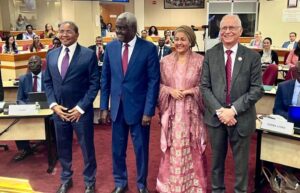
The African Union (AU) on September 25, 2024 held a high-level event dubbed “Investing in Tomorrow: The African Union Year of Education Catalyzing Progress for Africa and the World.” This union says that the event concluded with a strong commitment to building resilient quality education for all. According to AU, the event stressed the urgent need to transform education systems across the continent.
This “significant” gathering was hosted by Mohammed Belhocine— AU Commissioner for Education, Science, Technology, and Innovation; Jakaya Kikwete— Board Chair of the Global Partnership for Education; and Dr. Obiageli Ezekwesili— Chief Executive Officer of Human Capital Africa. The gathering brought together ministers, global policymakers, and educational stakeholders to reaffirm their commitment to transforming education systems in Africa.
Emphasizing the critical need to guarantee peace, Moussa Faki Mahamat—AU Commission’s Chairperson stated that education sectors notably health are the most affected by instability caused by conflicts among others. Faki Mahamat additionally underlined that education constitutes a beacon of hope and engine of progress. He explained that education empowers individuals, strengthens communities, builds nations, breaks the chains of poverty and creates the foundation for a prosperous and equitable society. “The African Union’s commitment to prioritizing education reflects our unwavering belief that knowledge provides the power to break barriers, challenge societal norms and create a more equitable world,” he said.
The former President of Tanzania— Kikwete underscored that investments in education constitute investments in securing a better future for Africa. He said “Achieving the Africa we want hinges on our commitment to invest in young Africans.” He however added “Too few governments are meeting the global benchmark of spending 15-20% of national budgets on education.
Yet the returns on education are immense: a 1% improvement in learning outcomes can translate to a 7.2% increase in annual economic growth. By 2050, an educated and skilled population could boost per capita incomes in Africa by 50% by 2050. To unlock this potential, we need focused investments, a relentless focus on learning – especially for the most marginalized children – robust support for our educators, and diverse and innovative partnerships. Only then we can ensure that our children—and our nations—thrive”.
AU contends that education has remained a cornerstone of Africa’s development agenda, as reflected in the African Union’s Agenda 2063 and global Sustainable Development Goal 4. AU dedicated 2024 year to education, officially declaring it the ‘Year of Education’ under the theme “Educate an African fit for the 21st Century: Building resilient education systems for increased access to inclusive, lifelong, quality, and relevant learning in Africa”.
The AU Summit, of Heads of State and Government in Addis Ababa which adopted the theme, called on all African governments to accelerate progress towards achieving quality education for all.
The September 2024 event also commemorated the Year of Education, though it didn’t furnish details on achievements attained by officially declaring 2024 the Year of Education. But again, AU says that through this theme, it spearheaded a series of initiatives aimed at increasing access to quality education across the continent.
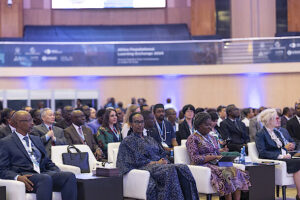
In addition to the event, in Rwanda was held another event— the 2024 Africa Foundational Learning Exchange (FLEX 2024) — from November 11 to 13, 2024. It concluded with an engagement to eradicate learning poverty as highlighted by the country’s Ministry of Education in its story headlined “African leaders commit to the decade of education to end learning poverty.”
Learning poverty refers to the situation where children or young people are unable to acquire basic literacy and numeracy skills despite being at school. It is often measured by the percentage of children who cannot read and understand a simple text by the age of 10. Learning poverty highlights the gap between enrollment in education systems and the actual quality of learning taking place. It proves issues like insufficient educational resources, poor teaching methods, and systemic inequalities which prevent children from fully benefiting from their education. This concept underscores the need for improvements in both access to education and the quality of learning outcomes.
This ministry reports that the event brought together more than 540 global African leaders and stakeholders from 34 countries. It adds that the participants discussed the continent’s urgent learning crisis in foundation learning, to secure a solution to it. The event culminated in a strong commitment to the African Union’s Decade of Education initiative, aiming to eliminate learning poverty by 2035, according to the ministry.
In her keynote address, Rwanda’s First Lady, Mrs. Jeannette Kagame, stressed the need to strengthen foundational learning, increase primary school completion rates, and prioritize support for vulnerable learners. She called for urgent action to ensure no child is left behind. “Reading and comprehension of simple texts is still an issue for 9 out of 10 children aged 10 and below in the majority of African countries.
What a loud alarm bell this statistic rings! Should we fail to strengthen foundational learning and critical thinking, increase primary education completion rates, and allocate more resources to education—specifically to vulnerable learners—what will be the long-term cost to the youth of this continent, their skills development, employability, and social welfare?”
This ministry says that the three-day conference ended, the participant countries having agreed to expedite five actions as a measure to enhance foundation learning across the continent. The activities include (1) eradicating Learning Poverty by 2035 through targeted investments and measurable progress, (2) fully supporting the Decade of Education initiative to drive long-term reforms, (3) enhancing Regional Collaboration to share best practices and foster innovation, (4) scaling up Proven Interventions to improve foundational learning outcomes, and (5) establishing Robust Data Systems for accountability and informed decision-making.
“This foundational learning gap threatens both economic and social stability, with potential losses of up to $17 trillion globally if no action is taken. However, leaders expressed optimism, recognizing the initiative’s potential to contribute $6.5 trillion in economic value by 2030 if executed successfully.
In addition African governments that participated, this event was organised in tandem with and key development partners, including the World Bank, UNICEF, USAID, and UNESCO, in a united effort to end learning poverty.”
Will Africa ever transform its education system, or will it remain in vows only?

As Faki Mahamat also mentioned, there are factors which need to be uprooted from Africa for various sectors including education to advance as desired. As already underscored by the two events organized in 2024, different sources affirm that it is now time for all relevant stakeholders to rise against the challenge of revolutionizing Africa’s education. This entails investing in cutting-edge education, fostering innovation, ensuring stability and peace, as well as addressing inequality and poverty. If Africa does so, it will defeat the barriers that have long hampered its education.
As it has underlined it in this article, Life In Humanity believes that no one can accurately answer the above question. In other words, right now, no person can affirm that Africa will never be able to change its education system or that it will absolutely revolutionize it.
Africa’s ability to transform its education remains an issue that only time will clarify. However, considering that even the most developed nations like China have faced similar challenges , Africa can overcome them as well. The only uncertainty especially pertains to when Africa will do so. Yet still, Life In Humanity doesn’t exclude the point that if actually devoted to it, African governments will succeed in translating their vows into action and reality.
In fact, Africa’s education system stands at a critical juncture, as highlighed in this above article. However, whether this transformation will materialize or remain a series of unfulfilled promises depends on how effectively Africa addresses the numerous systemic challenges it faces—such as inadequate funding, persistent conflicts, unequal access, and the mismatch between education outputs and job market demands.
The continent must shift from intention to action, prioritizing investment in both quality education and the development of practical skills, while also integrating innovative solutions like technology and localized approaches. If the collective will of governments, policymakers, educators, and communities remains steadfast, Africa will assuredly break free from its past stagnation and achieve meaningful educational transformation. But without sustained commitment and in light of Africa’s conflict-dominated atmosphere, the risk of remaining in unfulfilled vows persists or stays high.