By Jean Baptiste Ndabananiye
As Rwanda and Azerbaijan are among countries which marked World Environment Day 2026 with notable achievements in environmental protection, their experiences offer a reminder that effective action can yield tangible results. However, such progress does not diminish the gravity of environmental crises confronting the world today. From accelerating biodiversity loss and widespread deforestation to plastic pollution and rising global temperatures, numerous challenges are continuing to threaten ecosystems and human well-being. These realities stress the urgency of sustained global action to safeguard the planet.
Earth.Org—in its 9 January 2026 article “16 Biggest Environmental Problems of 2026” — reports “The world is grappling with a host of pressing environmental challenges that demand immediate attention and action. From climate change-induced disasters, biodiversity loss and plastic pollution to the rise of artificial intelligence, the 16 biggest environmental problems of 2026 paint a stark picture of the urgent need for climate change mitigation and adaptation.”
Rwanda

In Rwanda, the international day was organized by Rwanda Environment Management Authority [REMA] together with the country’s Ministry of the Environment. This day coincided with this Rwandan agency’s celebration of 20 years of existence.
Since its inception, REMA has been running various programs and projects designed to protect the environment and build communities’ climate resilience. Some of them include the Green Amayaga Project —Phase I officially closed on 30 May 2026 and the Green Amayaga Project —Phase II formally started on the same day. Exactly on this date, REMA ceremonially launched the Environment Week in the context of World Environment Day 2026 on 5 June.
Juliet Kabera works as REMA’s Director General. She then talked about replicable lessons from the closed project. The lessons are not confined to any country or region — they are ubiquitously relevant. She said “The first lesson is that community participation is crucial. The community members engaged actively in the implementation of the Green Amayaga Project, Phase I; the reason why, we immediately secured the second phase of the project—Green Amaya Project, Phase II; whereas we had not completed Phase I yet. To ensure citizens’ involvement, we first explained to them that the project belongs to them, that it didn’t just constitute REMA’s project—rather, it was designed first and foremost to benefit them.
The second lesson is local leaders’ commitment to the project. The authorities from the cell, sector, and district levels to the provincial one have fully supported the project; which has played a significant role in the successful execution of the project.”
Those lessons stand ubiquitously relevant because community participation and strong local leadership are important in environmental initiatives around the world. Indeed, the significance of these lessons reaches well beyond the environmental sector. Success in any field depends on securing the commitment of stakeholders, as initiatives are most effective when those whom they affect understand their purpose, embrace their goals, and contribute completely to their realization. Whether in governance, education, public health, business, or community development, lasting success is far more likely when stakeholders understand the initiative, take ownership of it, and actively support its implementation.

@REMA_Rwanda, in partnership with Plan Rwanda through @UrunanaDC, raised awareness on #ClimateAction & biodiversity conservation around lake & wetland ecosystems in Gashora, Bugesera District, as part of National Environment Week activities.”
Back to the World Environment Day, Kabera stressed the impact of climate change in Rwanda. Dr. Bernadette Arakwiye, Rwanda’s Minister of the Environment, emphasized upon accomplishments realized in the protection of the environment in the nation. The lessons shared by Kabera figure among critical reasons that have contributed to these accomplishments.
Kabera started, saying “It’s World Environment Day 2026 and it is a happy birthday to REMA, it’s 20 years. The theme for this day is: A Call for Global Action to Climate Change. This theme is very, very relevant to us in Rwanda because the impacts of climate change affect the regular Rwandan. We don’t need any more scientific explanation for this because we live it. This is the time to thank the UNEP who thought about such a theme. We’ve been having a week-long celebration — National Environment Week. Today is the International Environment Day but in Rwanda, we chose to celebrate this day throughout the week, because it gives us time to reach different communities, different partners, raise awareness on the importance of managing the environment.”
According to her, climate change began manifesting itself eminently in Rwanda in 2005; however, Rwanda has since refused to surrender to it. “That’s when we started to see the impacts of climate change more and more, [being] more repetitive, and it’s very clear to us that as a country with this kind of terrain, we are vulnerable to the impacts of climate change. But we refused to be defined by that. We always want to look for how best ‘can we can tackle these impacts? How do we build the resilience? And how do we contribute to mitigation, even when it is not so much of a big deal that we contribute to global warming?”
A stark reminder of the escalating human and economic toll of climate change, this statement underscores how a single day of flooding can translate into devastating loss of life and billions in economic damage, warning that inaction could cost even more in the decades ahead. Kabera stated “The statistics are clear now. But I want to draw your attention to a few of these. In just one day, on 1st May [2023] because of a flood, the landslide, we lost 131 lives. I think we all remember that horrible experience. Even when I don’t want to speak about money next to loss of life, but we also had to use more than $400 000 000 to resettle the people who had to be rehoused, a lot was going on, infrastructure was lost, so we lost $415 000 000.

And that’s not nothing to an economy like ours— it’s a huge setback, because ideally those are resources that were supposed to go for other development activities. I wish I had better news for us, but the World Bank study is showing us that this might be even worse by the year 2050, basically losing 5 t0 7% of our GDP, if we continue business as usual. I was trying to estimate what 5 to 7% of the GDP means, it looks like we would lose the entire sector —maybe agriculture sector; let me not say agriculture, maybe environment sector, but we would lose a full sector. This is really a wakeup call for us —action should be now.”
To counteract the situation, according to Kabera, nationally determined contributions —strategy to be implemented in all sectors — have been devised, with a cost of $15 billion.
Dr. Arakwiye who was the guest of honor said “There are so many milestones and achievements worth celebrating as we gather for the World Environment Day. Just a week ago, and REMA DG [Director General] mentioned it, we spent a week, celebrating the environment. So just a week ago, we were in Gicumbi, celebrating achievements of six years of Green Gicumbi project—a project that, in collaboration with local communities, has rehabilitated landscapes, built sustainable green settlements and created green jobs while benefitting so many communities.
The following day, we were in Gisagara [District], to celebrate six years of Green Amayaga Project that accomplished similar results as Green Gicumbi. But there [Gisagara] is also starting a second to take the project a step further, the project will be looking into value chains and will expand landscape restoration activities to more land. And just yesterday, we were in Huye [District] where we launched the first automatic upper air station in Rwanda.”

To explain the station, she said “This is a station that is going to provide us not only with data but allow us to translate this information into services that support informed decision so that we can enhance our confidence when we invest as a country, so that our investment isn’t lost due to climate change. I like to say there is no[thing] better in our climate action than having accurate and reliable data.
Yes, don’t get me wrong. Finance is also extremely necessary, but we spend it wisely, if we have the intelligence provided by robust data. That data that is going to be provided by the station in Huye will not only benefit Rwanda; it will also benefit many African countries in the region and even contribute to global meteorological models.”
Building on a growing body of successful environmental initiatives involving those already said, this following statement highlights how Rwanda’s experience has created a practical “toolbox” of innovations that now informs its key national priorities for sustainable development. “These examples [the aforesaid projects] are just shared in addition to those shared by REMA DG and so many examples show us what’s possible. We have piloted so many innovations that give us a comprehensive toolbox as a country to pick from when we design new projects. This experience has informed our key priorities that are programmatic in nature for our environment sector in Rwanda. I will just list them.
The first priority is sustainable landscape management, the second one is climate-smart agriculture, and the third priority is around sustainable cities —we are growing and as Rwanda urbanizes, economic growth must be accompanied by cleaner air, sustainable transport, responsible waste management and environmentally sound industrial development.”

Dr. Arakwiye praised the work by REMA for its 20 years. “Environmental compliance is necessary, and REMA has been leading us well on this front. Environmental regulations play a critical role. Regulations are sometimes perceived as obstacles to investment and development. But in reality, they help create conditions for sustainable growth. By setting clear standards and encouraging responsible practices, they [REMA] drive innovation and help ensure that today’s development does not create tomorrow’s cost.”
Azerbaijan
At the global level, this day was observed in Azerbaijan. “Azerbaijan is pursuing green growth and renewable energy at pace. As a Paris Agreement Party, it has committed to reducing emissions by 40% by 2035 (from 1990 levels). It also aims to increasing renewable energy to 30% by 2030. Large-scale projects are underway, including the 230 MW Garadagh Solar Plant and 240 MW Khizi–Absheron Wind Farm, with additional 1 GW+ capacity projects in development.
Urban sustainability is advancing in Baku with modern low- and zero-emission buses, EV infrastructure, and smart city solutions. The Garabagh and East Zangezur regions are being transformed into ‘zero-emissions’ zones, blending renewable energy, ecosystem restoration, and post-conflict development. Modernized water management and climate-resilient agriculture further strengthen adaptation in drought-prone areas,” says the UNEP.
It adds that Azerbaijan advanced its environmental policy dedicated to decreasing the negative impact of plastic packaging waste on the environment since 2019 by embracing Action Plan. “Through new legislative reforms it prohibited the import, production, as well as sale or provision to consumers in trade, public catering, and other service facilities of single-use plastics and polyethylene bags with a thickness of up to 15 microns.”
Furthermore, Azerbaijan boasts global cooperation in climate issues and has staged COP29; thus, carrying COP29 legacy. The UNEP explains “As host of COP29, Azerbaijan advanced the global climate agenda, securing landmark decisions on climate finance and carbon markets, while launching initiatives linking climate action with biodiversity, energy transition, water, agriculture, and societal impact.

Building on this momentum, Azerbaijan’s national campaign for World Environment Day 2026 highlights the planetary crises of climate change and ecosystem degradation and their interconnected impacts on people and nature. Under the theme ‘Inspired by Nature. For Climate. For Our Future,’ the initiatives emphasize that nature is not optional—it is central to climate resilience and our collective future.”
Moreover, according to the UNEP, Azerbaijan enhanced its contribution to global environmental and climate agenda with a series of other major events this year. These involve the 13th session of the World Urban Forum (WUF13) in May, held in in partnership with UN-Habitat; the third informal meeting of the UNFCCC [United Nations Framework Convention on Climate Change] Heads of Delegations in Shamakhi in July; and UNFCCC’s Baku Climate Action Week.
“Azerbaijan has made significant strides in protecting its natural heritage. Over 10% of the country’s territory is now under protection, including expanding national parks and reserves. A notable achievement is the safeguarding of the UNESCO-listed Hyrcanian Forests, some of the world’s oldest ecosystems, hosting over 3,000 plant species and diverse wildlife.
Marine and coastal ecosystems, particularly in the Caspian Sea, the world’s largest enclosed water body, are protected through reserves and conservation programs, even as the region faces alarming water-level declines. Species reintroduction projects further restore ecosystems, enhancing biodiversity resilience,” says the UNEP.
Problems needing urgent action, according to Earth.Org
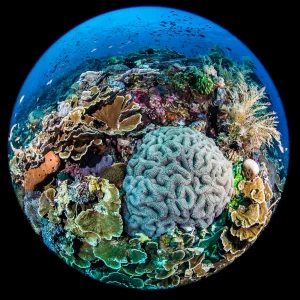
While countries such as Rwanda and Azerbaijan provide inspiring examples of environmental stewardship and climate action, many environmental challenges are continuing to intensify across the globe. Their efforts demonstrate that progress is possible when governments, communities, and institutions work together to protect nature and promote sustainable development. Yet these success stories stand in sharp contrast to the growing threats affecting many regions of the world.
The problems that demand urgent action are the 16 challenges: global warming from fossil fuels, the politicization of the climate crisis, biodiversity loss, plastic pollution, deforestation, air pollution, food waste, melting ice caps and sea level rise, ocean acidification, traditional agriculture, soil degradation, food and water insecurity, fast fashion and textile waste, artificial intelligence, overfishing and cobalt mining. The following environmental problems, which we have selected, illustrate why urgent action remains necessary despite the advances achieved in some countries.
Biodiversity loss, plastic pollution and deforestation
“The past 50 years have seen a rapid growth of human consumption, population, global trade and urbanisation, resulting in humanity using more of the Earth’s resources than it can replenish naturally. A 2020 WWF [World Wildlife Fund] report found that the population sizes of mammals, fish, birds, reptiles and amphibians have experienced a decline of an average of 68% between 1970 and 2016.
The report attributes this biodiversity loss to a variety of factors but mainly land-use change, particularly the conversion of habitats, like forests, grasslands and mangroves, into agricultural systems. Animals such as pangolins, sharks and seahorses are significantly affected by the illegal wildlife trade, and pangolins are critically endangered because of it,” explains Earth.Org.
It adds that biodiversity loss is occurring at an unusually alarming scale. “More broadly, a 2021 analysis has found that the sixth mass extinction of wildlife on Earth is accelerating. More than 500 species of land animals are on the brink of extinction and are likely to be lost within 20 years; the same number were lost over the whole of the last century. The scientists say that without the human destruction of nature, this rate of loss would have taken thousands of years. In Antarctica, climate change-triggered melting of sea ice is taking a heavy toll on emperor penguins and could wipe out entire populations by as early as 2100, according to 2023 research.”
This website featuring among leading environmental news outlets explains that the attainment of a goal set for 2030 is unlikely. “Under the 2022 Kunming-Montreal Global Biodiversity Framework, countries have pledged to protect and conserve at least 30% of the world’s land and water by 2030 (also known as the ’30 by 30′ target). Global protection currently falls short of this goal, with only 9.6% of the ocean effectively protected.”
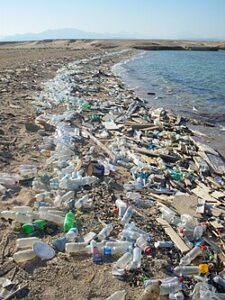
About plastic pollution, Earth.Org points out “In 1950, the world produced more than 2 million tons of plastic per year. By 2015, this annual production swelled to 419 million tons and exacerbating plastic waste in the environment. Currently, roughly 14 million tons of plastic make their way into the oceans every year, harming wildlife habitats and the animals that live in them. Research found that if no action is taken, the plastic crisis will grow to 29 million metric tons per year by 2040. If we include microplastics into this, the cumulative amount of plastic in the ocean could reach 600 million tons by 2040.
Some 91% of all plastic that has ever been made is not recycled, making it only one of the biggest environmental problems of our lifetime. Considering that plastic takes 400 years to decompose, it will be many generations until it ceases to exist. There is no telling what the irreversible effects of plastic pollution will have on the environment in the long run.”
The UN in 2022 undertook a journey to develop a legally binding international instrument to curb plastic pollution. Meanwhile, negotiators failed to reach a deal in a meeting in Busan, South Korea in November 2024. A subsequent meeting in Geneva, Switzerland, in August 2025, didn’t manage to produce a much-needed treaty either.
In terms of deforestation, Earh.Org sounds the alarm “Every hour, forests the size of 300 football fields are cut down. By the year 2030, the planet might have only 10% of its forests; if deforestation is not stopped, they could all be gone in less than a century. The three countries experiencing the highest levels of deforestation are Brazil, the Democratic Republic of Congo and Indonesia.
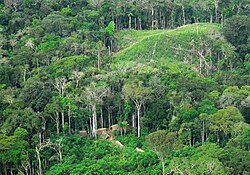
The Amazon, the world’s largest rainforest — spanning 6.9 million square kilometres (2.72 million square miles) and covering around 40% of the South American continent — is also one of the most biologically diverse ecosystems and is home to about three million species of plants and animals. Despite efforts to protect forest land, legal deforestation is still rampant, and about one-third of global tropical deforestation occurs in Brazil’s Amazon forest, amounting to 1.5 million hectares each year.”
Forests are vanishing at a shocking pace, sacrificed to expanding farms and growing global demand for agricultural commodities. Every acre of forest cleared for agriculture erases a natural shield against climate change and environmental degradation. As the world’s trees fall, so too do vital natural defenses against climate change, soil erosion, and landslides. The battle against climate change is being fought fiercely in conference halls, while in forests, destruction is continuing and they shrink day by day. “Agriculture is the leading cause of deforestation, another one of the biggest environmental problems appearing on this list. Land is cleared to raise livestock or to plant other crops that are sold, such as sugar cane and palm oil.
Besides for carbon sequestration, forests help to prevent soil erosion, because the tree roots bind the soil and prevent it from washing away, which also prevents landslides. COP30, which took place in the heart of the Amazon, delivered little on forest protection. Although Brazil’s Environment Minister Marina Silva pushed for strong language, the final agreement failed to mention deforestation,” specifies Earth.Org.
Global warming from fossil fuels and politicization of the climate crisis
“Another year marked by record-breaking heatwaves and catastrophic extreme weather events has just concluded, with 2025 set to be among the three warmest on record. This wraps up more than a decade of unprecedented heat globally fuelled by human activities, with each of the past 11 years (2015-2025) being one of the ten warmest years on record. Currently, 2024 tops the ranking, followed by 2023,” highlights Earth.Org.
“Undoubtedly among the biggest environmental problems of our lifetime is the rise in greenhouse gas emissions, which trap the sun’s heat in the atmosphere, raising Earth’s surface temperature and leading to longer and hotter heatwaves. Atmospheric concentrations of all three major planet-warming gases – carbon dioxide (CO2), methane, and nitrous oxide – have never been so high.”
The website quotes Ko Barret, Deputy Secretary-General of the World Meteorological Organization, as saying “The heat trapped by CO2 and other greenhouse gases is turbo-charging our climate and leading to more extreme weather. Reducing emissions is therefore essential not just for our climate but also for our economic security and community well-being.”
Earth.Org goes on, stating “The undeniable reality of the climate crisis failed to prevent its politicization. Particularly in more recent years, what was once just a scientific issue has been turned into a partisan battleground where views often align with political ideology, fueled by misinformation campaigns, economic interests tied to fossil fuels, and differing views on government intervention, making consensus difficult and hindering action.
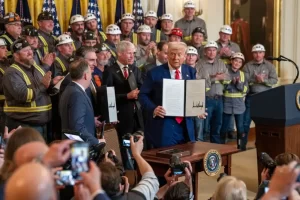
This has been particularly true in countries like the US, which under President Donald Trump has backpedaled tremendously on climate action. Since taking office in January 2025, Trump has implemented significant rollbacks of environmental policies and regulations, abandoned international organizations and climate treaties, dismantled climate research and sought to bring back destructive practices, from deep ocean mining and logging to fossil fuel production.”
This platform, Earth.Org, maintains that several bodies have adopted Trump’s behavior. “Dozens of companies, from social media platforms and energy companies to investment firms, airlines, big banks and even philanthropic organizations, have also backtracked on their environmental pledges to fall in line with the Trump administration’s anti-climate agenda. The US’s example reflects a broader change in the priority that governments around the world assign to climate change. The European Union is another good example of this, having recently backtracked on its climate agenda, which was once regarded as the world’s most ambitious plan to tackle the climate crisis.”
Consequently, “Globally, recent climate conferences have been criticized for failing to achieve anything meaningful as fossil fuel influence grows larger and more powerful. Last November’s COP30 ended without a mention of fossil fuels, despite pressure from more than 80 countries to include a phase out plan in the final agreement.”