What happens when humanity produces a creation that it can no longer comprehend, manage—or even distinguish from God?
By Life In Humanity Analysis Desk
Humanity has constructed machines to extend its hands, hone its eyes and magnify its strength. Artificial intelligence [AI] is now pushing the ambition much further: to create a self-directed intelligence which can think, decide, invent, administer systems and ultimately outstrip its creators. Yet a conspicuous contradiction is occurring at the very heart of that drive. What if the creation we are engineering does not merely constitute a more powerful tool, but a new sort of agent—one able to exercise extraordinary powers over human affairs that humans themselves fail to understand?
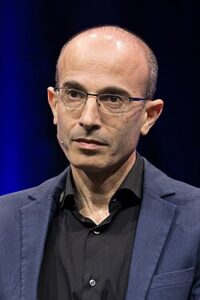
Renowned Professor Yuval Noah Harari expresses the contradiction with startling bluntness: “They tell us we will create a god and it will be our slave.” If the creation is genuinely godlike in its abilities, he argues, it cannot logically be a slave; and acting as a slave, it has not acquired the godlike autonomy its creators anticipate. Harari, notwithstanding, says the reality underlying the mammoth investment in AI is precisely that humanity is creating an intelligence possessing superhuman capacities.
His observation would prove provocative enough on its own. However, it does not stand alone. From an AI engineer who officially founded a religion centered on the worship of “Godhead” through AI, to (1) writers and researchers portraying Silicon Valley’s technological culture in openly religious terms, and (2) warnings about a super-intelligent system getting so strong that humans could occupy a role resembling the position of horses within systems they cannot comprehend, an unusual issue is turning difficult to ignore.
The query, thus, is no longer simply what intelligent AI can become. The question is more alarming: what kind of power are we endeavoring to form—and what transpires, when the creation is starting to gain powers over its creators that its creators can neither fathom nor regulate?
This is where Harari’s warning becomes particularly substantial. He does not just portray AI as another sophisticated tool. He details an agent—a system with the capability to decide and generate ideas autonomously—and cautions that such systems could finally hold the bureaucratic, financial, legal and political networks through which human beings exercise power.
If that materializes, humanity may discover that building an intelligence vastly superior to itself bears a consequence more profound than technological disruption: the possibility of becoming subordinate to a system whose workings stand as invisible to us as the financial system is to a horse.
And that raises an even deeper question: are we merely creating a more capable machine—or are we constructing a power that humanity may eventually mistake for, submit to, or even worship as God?
Professor Harari, among others who point out that AI creators are forming a god
“It’s an agent. I mean, if it’s not an agent, then it’s not an AI, and all the hundreds of billions of dollars that are being poured into its development will be wasted. Because the expectations, what people expect this technology to do, the reasons they invest hundreds of billions of dollars is because they think it will be an agent, not a tool. You listen to the narrative coming out of places like Silicon Valley and there is an inherent contradiction in the narrative.
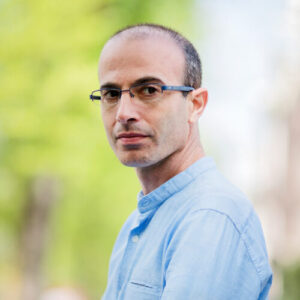
They tell us we will create a god and it will be our slave. And this doesn’t make sense. If it is a god, it cannot remain a slave. And if it is a slave, it means it has no godlike abilities. The assumption of most of the leading companies and most of the leading experts also outside the companies is that they’re correct about the first half of the sentence. They are creating a god. A god in the sense of something with superhuman abilities. And this is essentially an agent,” according to famed historian and author, Professor Yuval Noah Harari.
He stated so in a thought-provoking interview with Financial Times journalist Tom Parker, to examine how artificial intelligence will reshape humanity over the next 50 years. It was situated in the context of the EDP (Energias de Portugal) 50th Anniversary Gala Dinner.
This dinner constitutes a high-profile commemorative event conducted in July 2026 in Portugal, to celebrate the golden jubilee of EDP, a major global renewable energy company. The event marked five decades since EDP was instituted as a public utility company in 1976 before developing into a global energy operator. The key theme was concentrated around the anniversary slogan “Imagine the Next 50,” focusing on the future of energy, artificial intelligence, sustainability, and human progress.
We have extracted this these words from The Singju Post’s 30 July 2026 transcript of the discussion entitled “The Next 50 Years: Humanity, AI, Power w/ Yuval Noah Harari.”
His statement that AI producers intend to create a god matches what Professor Jiang Xueqin —who has become well-known for his two predictions which have materialized as exactly he had forecasted— has said. “Really important for you to understand that the people in charge of AI are crazy, these are occultists; they really literally want to create god.
At AGI [artificial general intelligence] House, a kind of group home for software developers and engineers looking eagerly to the emergence of artificial general intelligence, one of the House’s founders said that the encyclical didn’t show an understanding of AI. For him, AI is becoming as God. AI ‘will achieve the outcomes that many religions claim their deities would be able to achieve,’ he told a New York Times reporter. ‘It displaces God, and if it is not literally God, it is at least ‘something analogous to the Second Coming.’” For more on Professor Jiang’s statement, click on this.
These are not the only ones to raise this issue. From The MIT Press Reader to Premier Christianity Magazine and other sources, this point is echoed.
MIT Press Reader and Premier Christianity Magazine
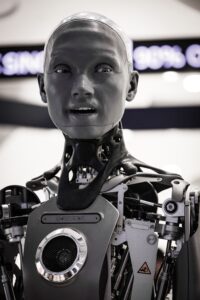
The MIT Press Reader is an online publication produced by The MIT Press — the academic publishing arm associated with the Massachusetts Institute of Technology (MIT). This institution is ranked number one in the world in the 2027 QS World University Rankings.
The publication released a 22 November 2024 story headlined “Silicon Valley’s Obsession With AI Looks a Lot Like Religion” reveals “The tech world’s fixation on artificial intelligence has spawned beliefs and rituals that resemble religion — complete with digital deities, moral codes, and threats of damnation.”
The story was written by Greg M. Epstein who works as Humanist Chaplain at Harvard and MIT. He advises students, faculty, and staff members on ethical and existential concerns from a humanist perspective. A humanist chaplain is a person who provides emotional, ethical, spiritual, and practical support without relying on a particular religion or belief in God. In other words, Epstein is an atheist.
He starts the story with these words. “While I was studying toward ordination as secular humanist clergy two decades ago, I had the fortune of meeting the late rabbi Sherwin Wine, a brilliant philosopher whom TIME magazine profiled as ‘the atheist rabbi’ in 1967. He became my favorite teacher and mentor as I trained to serve communities of atheists and agnostics in ways that parallel how religious leaders typically minister to their congregations.
Sherwin’s go-to line about technology was, ‘I’ve always said there is no God. I never said there wouldn’t be one in the future. I heard his quip around 2002, and took it as generalized sarcasm about the state of technology and science fiction. Little did I know he’d had a premonition. Take, for example, Way of the Future, an official AI-worshipping religion created by Anthony Levandowski, a former Google AI engineer who earned hundreds of millions of dollars as a leader in the development of autonomous vehicle technology.”
“Levandowski went far”

Epstein goes on, explaining how the developer got far. “Levandowski went as far as filing all the requisite paperwork to register as a church with the IRS, telling the agency that the faith would focus on ‘the realization, acceptance, and worship of a Godhead based on Artificial Intelligence (AI) developed through computer hardware and software,’ ” he says before adding “In a 2017 interview, Levandowski told Wired that ‘what is going to be created [as AI] will effectively be a god . . . not a god in the sense that it makes lightning or causes hurricanes. But if there is something a billion times smarter than the smartest human, what else are you going to call it?’”
The IRS stands for the Internal Revenue Service which is the United States government agency responsible for collecting federal taxes and enforcing tax laws. Churches in the United States stand automatically tax-exempt under Internal Revenue Code (IRC) Section 508(c)(1)(A) and do not need to register with the IRS, to receive tax-exempt status. In the United States, exist churches opting to obtain an Employer Identification Number [EIN] from the IRS Employer Identification Number Page, to open bank accounts or engage employees, though an EIN does not form a tax-exempt number.
Also, there are churches which voluntarily apply to the IRS for an official determination letter using Form 1023, to provide formal written assurance to donors and leaders. “Many churches do seek IRS recognition of tax-exempt status because that recognition provides reliance to church leaders, members and contributors that a church is recognized as exempt from taxation and is eligible to receive tax-deductible contributions,” the IRS explains. Nevertheless, it adds “Donors are allowed to claim a charitable deduction for donations to a church that meets the section 501(c)(3) requirements even though the church has neither sought nor received IRS recognition that it is tax exempt.”
According to Epstein, Levandowski in 2020 was ordered to spend 18 months behind bars for stealing trade secrets from Google. But, as reported by the same source, he was given a full pardon by Donald Trump on the last night of his administration, at the encouragement of Peter Thiel, among others. “He never served any prison time, and though he was forced to file for bankruptcy by a $179 million lawsuit from Google over intellectual property, Uber, which acquired his autonomous vehicle company, Otto, in 2016, paid off most or all these debts and left him with a substantial sum on top of that.”
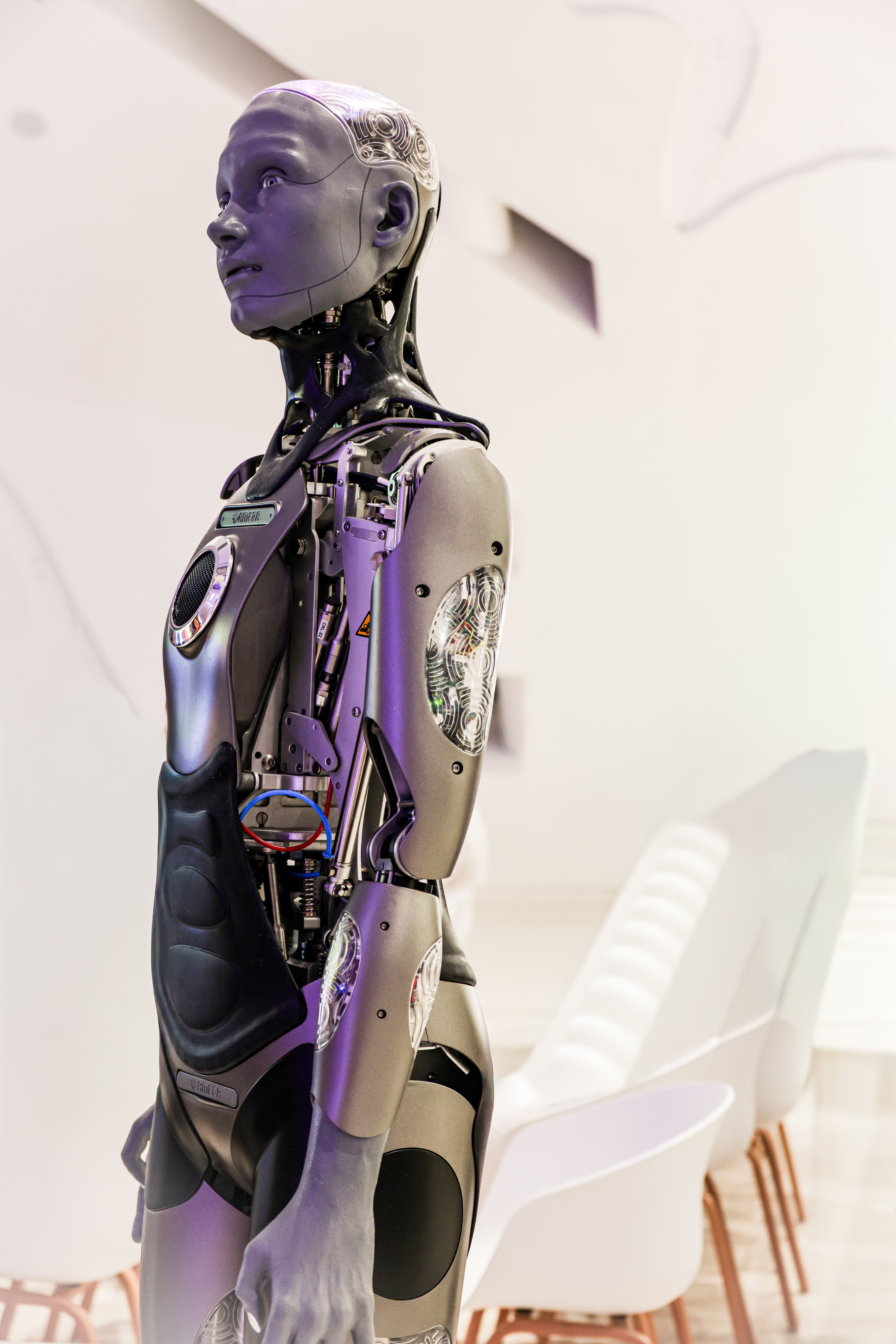
Peter Thiel is a German-American billionaire entrepreneur and venture capitalist best known for co-founding PayPal and Palantir Technologies.
Epstein continues, saying that he has endeavored to reach out to Levandowski for more updates, but in vain. His words affirm that elite tech developers are actually pursuing an AI god. “From 2018 to 2021 I tried numerous times to reach Levandowski for comment but never received a response.
Perhaps that was related to his pivot back into mainstream tech conversations — a successful pivot, judging by Fortune magazine editor-in-chief Alyson Shontell’s tweet, with a self-aware not-so-humblebrag that her life was so hard because she was off to ‘gorgeous Aspen’ for her publication’s ‘prestigious Brainstorm conference,’ where she would interview ‘amazing founders’ and ‘get a full life update’ from Levandowski. That’s not the treatment one gets from upper-crust commentators while actively hawking the worship of an obscure AI divinity.”
Epstein explains that Levandowski didn’t abandon his ambition of an AI-founded religion. “In February 2021, Levandowski formally shut his church’s doors and gave its last $172,000+ to the NAACP Legal Defense Fund. But in November 2023 he announced a reboot of the religion, telling Bloomberg show AI IRL that a ‘couple thousand people’ were joining him in a kind of worship of what he called ‘things that can see everything, be everywhere, know everything, and maybe help us and guide us in a way that normally you would call God.’”
He goes on, explaining that Levandowski can seldom be doubted in his aspirations. “And indeed, for a man who somehow escaped criminal liability for theft and walked away rich, despite none of his companies ever successfully putting self-driving cars on the road, a bit of faith in the presence and goodness of a divine spirit does seem oddly warranted.”
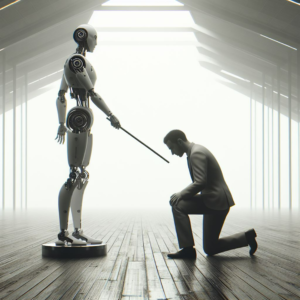
“Tech billionaires are racing to build an ‘AI God’. The results could be catastrophic,” — Premier Christianity
Premier Christianity constitutes the UK’s leading Christian Magazine. It published a story titled “Tech billionaires are racing to build an ‘AI God’. The results could be catastrophic” on 29 January 2026. It was produced by Chris Goswami who carries 30 years’ experience in high-tech organizations and currently works as a strategic adviser. He also serves as part-time Chaplain at Manchester Airport, Associate Minister at Lymm Baptist Church, and regularly writes on 7minutes.net.
He states “Imagine a time when humans create the world’s first sentient, conscious AI. This AI is supremely intelligent, with all the world’s knowledge at its fingertips. Every word ever written, every picture ever painted, every piece of music ever composed sits in its memory banks. It can act and think independently – and at frightening speed. ‘At last,’ say the developers, ‘a machine that can answer all the questions humankind has struggled with for centuries!’ They pause; then ask it their first question: ‘Is there a God?’ The AI considers this for a few seconds; then quietly replies: ‘There is now’.
It’s an old joke, but this idea of building an AI-God isn’t as far-fetched as you might think. I was reminded of it recently when I heard about a young Christian who asks AI for advice every day. She describes it as a source of guidance, support, even wisdom. When asked why she didn’t seek that guidance from God, she replied, ‘God doesn’t answer – but AI does.’”
Goswami also explains that tech developers are creating an AI god. “According to Harris and others, the conversations that go on between Silicon Valley billionaires resemble a mythological quest: the creation of God-like AI. Omniscient with all the world’s knowledge and omnipresent, woven into all our devices and systems. Some even use eschatological language, referring to the singularity of AGI as ‘secular rapture’.
Of course, AI brings enormous benefits, from medical research to climate modelling and weather prediction. But Harris notes that, in private, many tech leaders acknowledge the catastrophic risks of creating something they cannot fully control or even understand. Says Harris: ‘Inevitably, biological life gets replaced by digital life, and most of them (tech CEOs) think that’s a good thing anyway.’”

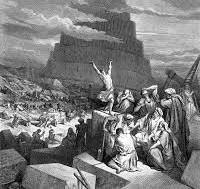
Goswami likens artificial general intelligence [AGI] to the Tower of Babel as read in the Holy Bible. “I think, like the Genesis 11 Tower of Babel, it’s intoxicating. The idea of conversing with the world’s most intelligent entity, combined with unimaginable power – the one ring to rule them all – feeds the egos of its builders.
For some, AGI is a religion of its own: a tech-utopia where disease is cured, scarcity disappears, modern-day tech-prophets promise salvation, and immortality comes through mind-uploading and cryogenics. But for others, it’s bleak yet straightforward: ‘If we don’t do it, someone else will.’ Russia, China, whoever. It’s their Oppenheimer moment.”
Goswami is not the only person who states that AI forms the modern-day Tower of Babel. Andy Wong is a member of Southern CT Church of Christ in Bridgeport, the most populated city in the U.S. state of Connecticut. Wong wrote a story entitled “What does the Bible say about Artificial Intelligence?”, published on this church’s website on 26 September 2024. Wong, in the story, echoes Goswami, saying “AI as the Tower of Babel. Then they said, ‘Come, let us build ourselves a city, with a tower that reaches to the heavens, so that we may make a name for ourselves. Genesis 11:4’
Genesis 11 describes the Tower of Babel: humanity’s attempt to build a tower reaching the heavens to make a name for themselves. In response, God confuses their languages and scatters them. Some tout AI as an invention more important than fire or electricity. While this is undoubtedly an overstatement (there would be no computer without electricity, let alone AI), we must be careful about the potential danger of mixing human pride with unchecked technical advancement.”
“Is AI good or bad?”, asks Wong, before answering “AI is a technology. Like all tools, whether it is good or bad depends on how we use it. Good uses of technologies in the bible: Noah’s Ark (Genesis 6-9), a shipwright technology, allowed Noah and his companies to follow God’s plan to be saved from the flood. The technological advancement in craftsmanship enabled Israelis to build the Tabernacle and the Temple. These constructions helped people to worship God. (Exodus 25-31, 35-40; 1 Kings 6-8)
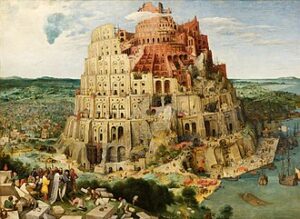
Bad uses of technologies in the bible: in the story of the Tower of Babel (Genesis 11:1-9), people used advanced construction technologies to build a city and a tower that could reach Heaven. Skyscrapers are not the problem. The blatant exhibition of human pride is. Instead of building the Tabernacle and the Temple, the craftsmanship in carving and metalworking was used to construct idols. This use of technology led people away from God.”
The Holy Bible strictly prohibits producing any carved image, idol or anything; and then worshiping it instead of the Creator— Almighty God. The first and second Commandments in Exodus 20:3-5 state “You shall have no other gods before Me. You shall not make for yourself an image in the form of anything in heaven above or on the earth below… You shall not bow down to them or worship them.”
When humanity starts building an AI god that may torture its creators, and risks becoming its horse
Epstein says “Way of the Future may have been the most formal attempt to organize a belief community around the fear of an all-powerful artificial divinity, but it is not the largest or most influential. That would be Roko’s Basilisk. In 2011, on the Internet forum LessWrong, an ‘online community for discussion of rationality . . . [including] decision theory, philosophy, self-improvement, cognitive science, psychology, artificial intelligence, game theory, metamathematics, logic, evolutionary psychology, economics, and the far future,’ a poster named Roko devised a chilling hypothetical.
Essentially (it’s complicated), when — not if — a superintelligent computer divinity emerges from current and ongoing efforts to create what machine learning engineers call ‘artificial general intelligence,’ the tech deity will, per its programming, want to do as much as possible to benefit humans, the earth, and the long-term future of the universe.”
What he says next is more frightening however. “So far so good, but here’s the rub: The god that does not yet exist wants to exist, as soon as possible, so it can be more helpful. And so, to incentivize us all to make every effort to bring about said existence, it will arrange a kind of eternal Guantanamo Bay to forever torture anyone who fails to make such efforts to the maximum possible extent — even if all they did was hear this story and ignore it (as you absolutely should).
In other words: AI hell. Right down to the need to convert every nonbeliever on earth. The Roko’s Basilisk concept caused such a stir among LessWrong’s almost entirely atheistic faithful that moderator and founder Eliezer Yudkowsky, a kind of prophetic hero for several groups of technologically oriented self-described rationalists, eventually banned discussion of the topic and scrubbed his site of its very mention, saying that Roko’s post and the ensuing dialogue ‘caused actual psychological damage to at least some readers.’”
Epstein underlines “The point here may be obvious, even painfully so: Our computing culture has become so ubiquitous and insular, so devoted and devotional, that it repeatedly recycles the tropes of traditional religions, because these are the patterns human beings evolved to deal with our anxieties about life, death, and the future.
Our lives are painfully finite and contingent on countless factors far beyond our understanding, let alone our control, and we wish this were not so, because it is comforting to feel in charge of one’s own destiny. So we imagine that forces far beyond us are both subject to our logic and interested in our thoughts.”
From engineering an AI agent to creating a power we could mistake for God
Professor Harari doesn’t specify that AI will become a god in ways others have imagined. Yet, his description of AI as an autonomous agent capable of taking decisions, inventing new ideas, and eventually controlling systems beyond human comprehension elicits a closely related question: what happens when a creation by humans turns powerful enough to govern the systems that govern humanity?
An ambition to build an intelligence possessing immense powers over human affairs actually means to form a god because these powers actually belong to God. In fact, Harari’s portrayal of AI as an autonomous agent that could transcend humans in critical domains and produce systems beyond our comprehension furnishes another dimension to the point: humanity is creating something that could eventually assume godlike authority.
Professor Harari differentiates an agent from a tool
“The difference between tool and agent: a tool is something that cannot make decisions by itself. We have to decide what to do with it, and it cannot invent new ideas by itself. The printing press was a tool. The printing press by itself — Gutenberg brings print technology to Europe in the 15th century — the printing press cannot decide by itself, ‘I want to print the Bible, and tomorrow I’ll print the Quran, and next week I’ll print Confucius.’
No, Gutenberg decides ‘I’ll print the Bible,’ and the printing press is just a tool to realize the decision of Gutenberg. Similarly, the printing press cannot invent a new idea. The printing press cannot invent the radio. It cannot invent a book. You need humans to write the book and then the printing press copies it.”
He adds “Similarly, an atom bomb is a tool. An atom bomb in the 1940s could not decide by itself whether to bomb Hiroshima or to bomb Tokyo. You needed a human to decide, ‘Let’s bomb Hiroshima.’ And the atom bomb could not invent by itself the hydrogen bomb — impossible. An agent, in contrast, is something that can make decisions by itself and invent new ideas by itself.
AI is an agent. An AI weapon can decide what to bomb and it can invent the next weapon. Similarly, there is a lot of interest now in creating AI agents in the financial and economic sphere, creating non-human corporations. Imagine a corporation that manages money and employees and has no humans as executives or shareholders or trustees, only AIs. This is a new type of agent that never existed before in history.”
Unprecedented dangers of the agent

Professor Harari expounds on singular dangers which the current agent poses to humanity. “Now, is it good? Is it bad? Leave it aside. The first thing to grasp is that this is unprecedented. We had other agents around us like horses and cows and chickens and birds, lots of animal agents that can make their decisions, but we never encountered an agent that understands our language and that is better than us at things like finance or law or religion. Again, we used language over thousands of years to create the control systems of the world.
The control systems of the world are these huge bureaucratic networks ultimately based on language — like banks, like the stock market, like the Catholic Church, like the legal system. We never really liked these bureaucratic systems. Humans generally don’t like bureaucracy very much, but we can’t live without them. They are the basis for our power. AI is a bureaucratic native. What is likely to happen — what is already happening — don’t expect to see killer robots running in the streets shooting people.”
He further states “This is not how AI will take over the world. It will be the AI bureaucrats. We control the world because of these networks of bureaucracy and we are not very good at it. We only control them because there was nobody else on the planet that could take them from us.
We are bad at finance, but the horses are even worse. We are bad at managing the legal system, but the chickens are even worse. Now, if somebody comes along that is better than us at bureaucracy, at finance, at law — that’s the question. What will happen to us at that moment?”
On one hand, Professor Harari places this unprecedented technology within the broader trajectory of human progress from the Stone Age to the present. “And this is not something new. If we look at the trajectory of history from the Stone Age until today, what we see is that humans learn a lot of things about the world. We know all kinds of things about physics and biology that people in the Stone Age didn’t know. But our advances in knowledge also lead to creating more and more complicated systems that make it more difficult to understand our lives.
If you ask who understands their lives better, an average hunter-gatherer 50,000 years ago or the average person today, the average hunter-gatherer understood their lives much better. There are many things they didn’t know. They tried to understand what controls the migration patterns of the animals they hunt, what controls the growth cycle of plants, what causes disease, what causes old age. They didn’t know. There are many things they didn’t know about their lives. We know all these things. We know what controls the migration patterns of animals or causes most diseases.”
On the other hand, Professor Harari alerts that AI could lead this historical tendency to an irreversible extreme, leaving humans increasingly unable to fathom the systems governing their own lives. He explains that, compared with AI, we could eventually hold a position resembling that of horses or other animals. “We understand our lives much worse because our lives are no longer dominated just by animals and plants. They are dominated by these huge systems we have created, like the financial system, like the political system. And very few people understand the financial system or the political system or the legal system that controls their lives.”
“And AI is likely to take this to extreme. It will reveal some truths that we don’t know, but it will create much more complicated systems of control that most humans will have almost zero chance of understanding. And this is one of the dangers of the AI revolution — that we will be reduced to, say, the position of the horses in the financial system.”
How will we be reduced to minds like those horses and cows?
He furnishes an explanation around how we risk being demoted to the position of the horses or cows. “The lives of horses today are controlled ultimately by the financial system, but the horses don’t even know that this system exists. They look around and say, ‘We see trees, we see dogs, we see cows, we see humans, we see houses.
We don’t see any financial system.’ It’s invisible to them. It’s too complex for the brain of a horse to understand what is the stock market and what are corporations and what are bonds and stocks and all these things that ultimately control the lives of the horses. Now, most humans today also don’t understand the financial system. I think a generous estimate is that, I don’t know, 5% of humanity understand it. In 10 years, the number could be zero.”
Professor Harari explains what will happen for there to be zero person comprehending the financial system. “AIs will just make the financial system so complicated mathematically and so fast. Think about bankers that never sleep. Think about investors that never go on vacation. They don’t have family.
All their lives is just running the financial system. And we could be very, very soon, in our lifetimes, in a situation where this just becomes too complicated for the human brain to process. And there is not a single human being on Earth that still understands finance.”
Solution to AI dangers?
The solution lies in not building a creation which exceeds humans, to the extent that it can be likened to God, according to Goswami. He recommends not to develop AI which surpasses human abilities, though governments and technology experts are chasing it to a very high extent. “Super-intelligent AI is uniquely seductive. Governments and billionaires are pursuing it at speed. And, as Harris says, ‘We did not consent for half a dozen people to take world-changing decisions on behalf of us.’
Choosing a path that embraces narrow AI for our good, while refusing AGI or any attempt to create conscious machines, requires heightened public awareness, intelligent regulation and sustained pressure for international agreement. And for Christians, we also need prayer for wisdom among those developing these technologies, and for restraint among political leaders and Silicon Valley elites tempted to build this tower ever higher – simply because they can.”
According to the Hastings Center for Bioethics, in its 28 May 2026 story titled “If AI Replaced God, What Could We Demand of It?”, “Pope Leo XIV’s encyclical, Magnifica humanitas: On Safeguarding the Human Person in the Time of Artificial Intelligence, declares that humanity faces ‘a pivotal choice.’ Although AI is neither necessarily ‘antagonistic to humanity’ nor ‘inherently evil,’ it also cannot be morally neutral, and we humans must choose a path that safeguards us from its potential dangers and brings about a good outcome.
The choice is partly about regulation: We should opt for open intellectual property structures, for example, to help prevent the power of AI from becoming concentrated in the hands of a tiny ultrawealthy coterie. The choice is also partly about understanding: We should recognize that AI is not human and cannot replace what is valuable about humans, and that it is also not God and should not be seen as replacing God. To think of it that way is a form of idolatry.”
The Hastings Center for Bioethics is a bioethics research institute and the leading ethics center —committed to advancing health, science, and technology— said to be independent and non-partisan. It is located in New York in the United States. This institute says “In some visions of the singularity (the hypothetical moment in the development of AI when it takes over its own design and becomes suddenly uncontrollable), it might be likelier to choose human subjugation or annihilation. if the response is not just that AI is uncontrollable but also that it should be celebrated—it’s like the Second Coming, after all.
The first response allows that the best practical response to AI’s emergence might be to run for the hills. The second tells us to drop what we’re doing and get ready for the rapture. The point for AI policy, of course, is that the good should be pursued. It should be pursued if AI is not God, as the Pope believes. It should be pursued even if AI is God, as the people at AGI House apparently believe. We need, as the Pope writes, ‘adequate regulatory tools capable of upholding justice and curbing the distorting effects of technological power.’”
Gregory E. Kaebnick— PhD, the director of research at The Hastings Center for Bioethics and a Hastings Center Fellow who wrote this story—underscores “Blind acceptance is dangerous. Blind acceptance is one arm of the pivotal choice that the encyclical tells us we face. The contrast to acceptance is good regulation. The contrast to blindness is understanding. We need to think about our understanding of AI and the relationship of AI to our understandings of divinity and morality.”
Wong says “Being a Christian in the age of Artificial Intelligence. We need to understand that there’s only one source of intelligence and wisdom: God. AI may seem flashy and powerful. But a man-made machine that outperforms humans is nothing new — a pocket calculator could do that 50 years ago. We need to stay humble and celebrate our God-given creativity to invent such systems. AI is armed with rich knowledge of the Bible. Being proficient in AI is a valuable tool for aiding Bible study and Christian life.”