By Jean Baptiste Ndabananiye
I have recently boarded a bus at Nyabugogo in Kigali, expecting nothing more than the ordinary journey home to Runda—but a chance encounter with a relative would remind me of a French book I had forgotten for five years. Inside the book, I surprisingly encountered a warning about “the personation of the dead”—a phenomenon strikingly similar to stories I had previously heard from people claiming to have met, interacted with, or even enjoyed intimate relationship with individuals whom they later discovered had died years earlier.
I had once filed such accounts under the category of things too strange and absurd to comprehend. However, the more I placed the testimonies beside what Ellen G. White had written several decades before they occurred, the more difficult it became to dismiss the link without investigating it. Could these stories represent encounters with the dead—or could something else be impersonating the dead so convincingly that the living cannot tell the difference?
A chance encounter in Kigali takes me back to a book already in oblivion
It’s on 18 September 2026 and I’m sitting in a bus in Nyabugogo Car Park in Kigali City. The bus is going to Bishenyi in Runda Sector, Kamonyi District, in Rwanda’s south. A relative of mine— who lent me a certain French book around five years ago—enters the bus and sees me. In fact, we chance to meet each other. Consequently, this encounter prompts him to immediately decide to come to retrieve his book whose core message and topic I no longer remember.
He asks me “There is a subject which I want to verify with the book ‘Evénements des Derniers Jours’ that I have given you? Do you still keep it?” I suddenly reply to him “Absolutely, I do. I never lose a book or a document which I have received.”
But, to be frank, I no longer recall where it is stowed. I surely know that it still lies at home, yet I can never locate it exactly since I have spent a very long period of time, without reading it. The last time I read it was immediately after he handed it to me. Then, I tried to process the content that I read, yet I could neither fully grasp nor believe it.
While on the way, I call my wife to seek it for me and instantaneously after I arrive at home, she passes it to me. I am then compelled to read it superficially and chance on a topic headlined “Evocation des Morts/Personation of the Dead”. I remember that I once read it, but I was then unable to comprehend it. Yet, on this date — 18 September 2026— I am exceptionally fascinated and feel baffled.
Unbelievable stories

“A gentle mother quietly asked me ‘Whom are you coming to see here?’ I told her ‘I was coming to see Assoumpta.’ She again asked me ‘What’s the last time when you were together with her?’ I answered ‘I was with her in the last few days. I usually come here, to visit her.’ She asked me ‘Is it here you used to come?’ I replied ‘Yes, it is precisely here.’ She additionally asked ‘Are the seats you used to find here exactly these ones?’
‘Yes, it’s accurately these seats which I used to see, except a photo which I view has changed. The place to which I used to come is unmistakenly here.’ The mother then called Ange [her daughter]. When she arrived, she told her ‘Ange, this person wants Assoumpta.’ And I noticed that they were both baffled. I wondered ‘What are they surprised at?’ I thought to myself ‘Perhaps the child is unmanageable, while I don’t know it. I even went to pray, and they [a prophet] prophesied to me ‘There exists a cat which comes, yet the cat is a girl who metamorphoses into the cat, but I didn’t dwell on this” Denas Niyomugabo recounted to Gerard Mbabazi on his popular YouTube Channel named, Rweme Mbabazi, in mid-2026.
He continues “I saw her picture while she was lying in a mortuary. I also viewed her photo during the time they were taking her body out of the mortuary. I saw a photo depicting her in a church while they were bidding farewell to her. I saw a photograph representing the ceremony for funeral. When I found these images, I was so frightened that I trembled and then failed to continue holding the album in my hands; lowering it little by little from the hands to a table.
Afterwards, they asked ‘Are you talking to us truthfully?’ I responded ‘I am truthful. Even on this Sunday, I and she carried an appointment to go to Gisenyi [Rubavu District’s city].’ They then asked me ‘What thing have you seen that it has never changed here?’ I told them ‘Did you find a bouquet of flowers here at home on Thursday?’ They replied ‘Yes, we did and wondered a person who had brought it; it actually bewildered us.’ I then told them ‘That constitutes a proof that I normally come here, since it’s I who brought it to her’.”

According to Niyomugabo in his story to Mbabazi, Assoumpta’s mother and sister failed to fathom this situation. “This also confounded them. Her mother told me ‘If you think I am lying to you, let’s go to catch a bus so I can go to show you where I have interred her’. Gerard, I was so unspeakably terrified that I was unable to understand it. I was experiencing love with a girl that had died 12 years before.
I explained to them that our love had been lasting for 6 years, whereas she had deceased 6 years before; totaling 12 years. They also confirmed that she had then expended 12 years after death. Gerard, in this world where we are walking lurk a lot of mysterious things.”
Mbabazi, extremely perplexed, said “Ah! Ahha! Does this your story really form a true story? It’s the first time that I have heard it.” Niyomugabo to answer him “My story is 100% accurate. If you still doubt, I can give you telephone numbers of 3 people with whom to check.”
Mbabazi jokingly and laughingly replied “No, don’t tell me the numbers, lest these people may take me to the hell.” But Niyomugabo told him “Don’t worry, those are ordinary people like me.” Mbabazi benefitted from this to ask Niyomugabo “Are you sure that you are here [truly alive]?”

Like Mbabazi who raised this question to Niyomugabo, the girl who fell in love with Niyomugabo also challenged him. Niyomugabo explains “She later related to me the whole story around my trip to their home. She told me ‘I surely know that you have come from our home and they have told you that I have passed away. Nevertheless, they have told you a lie. What assures you that it’s not they that have died rather than me? What demonstrates to you that the people you have met are really humans?’”
Similar stories
There is a man whom I know. I actually trust that he can’t tell a lie. In 2017, he told me “I once saw a young woman who had passed away. I personally viewed her with my own eyes there in Kigali Car-Free Zone. I was together with another man, and we were both so puzzled that we failed to fathom this event. I even saw her in her clothes which I already knew. She had been buried in Nyamirambo Cemetery in Kigali City, and I attended her funeral ceremony. I perfectly knew her. But we were certainly dumbfounded to an unimaginable extent, yet we correctly saw her.”
To be honest, at this moment, though I couldn’t doubt this man’s story, I couldn’t trust it because it stood inconceivable in any sense. How can you see a person who has died and been entombed? What normal or rational person can actually accept this? Is there any person who can’t hesitate to regard this as an absurd tale?
Those are questions which arose in my head, and I hope you can also raise the questions. But again, I asked myself “This is a normal person; besides, I know him. I strongly believe that he can’t lie to me to such an extent. Moreover, I neither see nor imagine a reason which can prompt him to do so; especially based on how I know him.”
Frankly speaking; though, I instantaneously classified this issue as a topic to abandon because it actually lies beyond my cognitive abilities. No reason to dwell on it.
Yet, around 9 years later, I encounter similar stories: the one told by Niyomugabo and another one which I am also going to share with you. Roughly two months ago, I listened to this other story on a YouTube channel, called “Beulah Uwashyingiwe”, addressing religion issues.
On this channel, a man—whose name I have forgotten, especially because I wasn’t then mesmerized, just because of immediately treating his story as impossible— also recounts a similar story. The following are some of his words that I still remember from this video. “There is my friend who had a girlfriend. I used to live with this young man in a same house, so that I was acquainted with his girlfriend because she frequently visited him. After a certain period of time, I and my friend parted.
One day, I encountered the girl and she came to pay me a visit. We then conducted sexual intercourse. To my dismay and puzzle, I met a person who told me ‘Did you know that the girl friend of the other guy died?’ I asked him ‘When did she pass away?’ He responded ‘6 years ago.’ I failed to comprehend this because we’d done sex very recently. Notwithstanding, with investigation, I detected that the story was true— she had died very long before we engaged in sexual intercourse.”
This man says that suddenly after this act, he developed abnormal, unexplainable and extremely uncomfortable behavior. For example, he explains that he feels an impetus— from nowhere justifiable—to throw his friends on the road for them to be killed by vehicles running. He supplies an instance of one of his friends he was on point of hurling into a road. “After I discovered this urge, I exerted strenuous effort in praying to God for him to always stop my arms from pushing him into the road, so that whenever I felt, I implored God to prevent me and fortunately he did. I even once talked about this to the friend, but he didn’t choose to sever our bond. We still walk together.”
Does there really exist anything that rationalizes these stories?
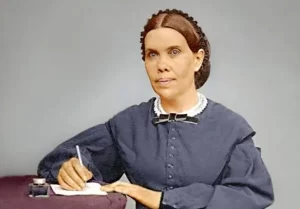
Ellen White Writings [ https://m.egwwritings.org] is the Ellen G. White Writings Website, the complete published writings of Ellen G. White. This website stands available online in several languages such as English, Chinese, French, Portuguese, Russian, and Spanish. Ellen Gould Harmon White, who was born on 26 November 1827 and deceased on 16 July 1915, was an American religious leader that figures among the initiators of the Seventh-day Adventist Church. Her prophecies and other guidance were vital to this denomination’s early growth.
The words “Evénements des Derniers Jours” in the aforementioned book are rendered into English as “Last Day Events.” This book’s “Chapter 11—Satan’s Last Day Deceptions” constitutes a key source which will assist us to provide a response to this question.
Meanwhile, it is important to note that there are individuals who do not accept Ellen G. White as a true prophet. But that does not form the question I am raising here. I am not requesting you to accept her religious authority, nor am I asking whether she has genuinely spoken on behalf of God. The question is narrower—and, possibly, more disturbing: what has she actually stated about experiences in which the dead appear to return to the Earth, speak, visit, or otherwise manifest themselves to the living?
And when a century-old religious warning appears to speak directly to experiences which people are continuing to recount today, can such a statement really be brushed aside without first investigating what it actually says?

This distinction matters. I am not requesting the reader to accept G. White as a prophet simply because she claimed prophetic authority. I am raising something much more basic: a statement which seems to precisely address the kind of phenomena described in these accounts deserves to be scrutinized before it is dismissed.
I have not shared these stories here to substantiate that the people who told them are right. Neither have I brought them to declare, without investigation, that the dead once literally returned to the world of the living. I have incorporated them into this piece because they confront us with a phenomenon which the narrators themselves experienced as real—and because, disconnected by years, circumstances and individuals; the accounts bear a striking resemblance to one another. Besides, the narrators themselves can’t explain the phenomenon.
That is indeed why the words I unexpectedly encountered in Événements des Derniers Jours on 18 September 2026 held my attention.
I had opened that book just because my relative had asked for it back. I had not been seeking an explanation of the stories I had heard. I did not even remember what the book contains. Yet, after years without reading it, I encountered the warning in French. As I searched more on it, I found that this caution features in the chapter entitled “Satan’s Last Day Deceptions”, in the book “Last Day Events”. There I encountered a warning concerning precisely the kind of phenomena that had previously appeared to me to belong beyond the boundaries of rational explanation.
White, in the chapter, foretold that these phenomena would eventually occur in a frequent way. According to her, the appearance of a deceased person does not establish that the deceased person has actually been resurrected. Her warning is that such an appearance instead represents a maximally sophisticated deception—an imitation of the dead intended to convince the living that they are communicating with those who have already passed away.
Instantly, the accounts which I had previously placed in the category of “things I cannot understand” acquired an entirely different vigor.
The question was no longer simply “How could a dead person appear to someone who sees them?” Another question arose: “What if the people’s stories are actually true, but the apparent identity of the person being precisely the most terrible possible deception?”

That distinction is huge. If the first interpretation is assumed—that the deceased person has genuinely come back—then the stories will demand an extraordinary explanation. But if the second possibility is chosen—that an experience can present itself convincingly as an encounter with someone who has died without that person actually being present—then the problem changes completely. It develops into a question about the nature and source of the appearance.
And this is where G. White’s warning becomes relevant to the stories I have recounted—because her words offer a remarkably specific interpretive framework for a phenomenon that otherwise leaves the witnesses, and even the listener, battling to comprehend what has transpired.
If a person foretells a future event and that event subsequently occurs in a manner corresponding to what was foretold, does that not at least deserve serious examination rather than immediate dismissal? Indeed, the Holy Bible itself states the fulfilment of what a prophet declares as significant evidence proving that the prophecy has come from God. The Bible declares that when a prophet speaks in the name of the Lord and the word does not come to pass, that is not the word the Lord has spoken (Deuteronomy 18:21–22).
Therefore, when a claimed prophecy appears to materialize in accordance with what was foretold, is it not reasonable—before accepting or rejecting the claim—to carefully examine what was predicted, when it was stated, and how closely the subsequent events correspond to it?
Examination of the prophecy by G. White
The preceding section has partly addressed the question “Does there really exist anything that rationalizes these stories?”. It has shown why these accounts cannot simply be dismissed as meaningless stories and why White’s statement deserves careful examination. But it has not yet given the utter answer to the question.

To answer it more fully, we now need to thoroughly examine what G. White wrote— what she claimed would happen, and—most importantly—whether the spectacles she described match the experiences told above. The following section therefore turns from the stories themselves to the prophecy, delving into its wording, its context, and the extent to which what was foretold corresponds to what people later claimed to experience.
More than a century ago, in 1901, G. White alerted that Satan would employ extraordinary “lying wonders” and deception. She underlined that he would even reach so far as to appear under a Christian guise and claim to be Christ Himself—a prediction recorded in Manuscript Releases, vol. 8, p. 346, and therefore worthy of examination alongside the phenomena described above. “We are approaching the end of this earth’s history, and Satan is working as never before.
He is striving to act as director of the Christian world. With an intensity that is marvelous he is working with his lying wonders. Satan is represented as walking about as a roaring lion, seeking whom he may devour. He desires to embrace the whole world in his confederacy. Hiding his deformity under the garb of Christianity, he assumes the attributes of a Christian, and claims to be Christ Himself.”
Few years after, G. White warned that demons would metamorphose into human beings. She however said that angels would regularly come to the Earth too. “Evil angels appear as human beings. Satan will use every opportunity to seduce men from their allegiance to God. He and the angels who fell with him will appear on the earth as men, seeking to deceive. God’s angels also will appear as men, and will use every means in their power to defeat the purposes of the enemy.—Manuscript Releases 8:399 (1903).
Evil angels in the form of men will talk with those who know the truth. They will misinterpret and misconstrue the statements of the messengers of God. We are engaged in a warfare against the hosts of darkness. Unless we follow our Leader closely, Satan will obtain the victory over us.—Selected Messages 3:411 (1903). Evil angels in the form of believers will work in our ranks to bring in a strong spirit of unbelief. Let not even this discourage you, but bring a true heart to the help of the Lord against the powers of satanic agencies. These powers of evil will assemble in our meetings, not to receive a blessing, but to counterwork the influences of the Spirit of God.—Mind, Character, and Personality 2:504, 505 (1909).”

More than 150 years ago, she said that it would come to pass for evil angels to masquerade as persons who have died. She indicated that this lie would be sophisticated in such a way that it would be impossible for people to discover that they are demons impersonating dead people. “Personation of the dead. It is not difficult for the evil angels to represent both saints and sinners who have died, and make these representations visible to human eyes. These manifestations will be more frequent, and developments of a more startling character will appear as we near the close of time.—Evangelism, 604 (1875).
It is Satan’s most successful and fascinating delusion—one calculated to take hold of the sympathies of those who have laid their loved ones in the grave. Evil angels come in the form of those loved ones and relate incidents connected with their lives, and perform acts which they performed while living. In this way they lead persons to believe that their dead friends are angels, hovering over them and communicating with them. These evil angels, who assume to be the deceased friends, are regarded with a certain idolatry, and with many their word has greater weight than the Word of God.—The Signs of the Times, August 26, 1889.”
She emphasizes “He [Satan] has power to bring before men the appearance of their departed friends. The counterfeit is perfect; the familiar look, the words, the tone, are reproduced with marvelous distinctness…. Many will be confronted by the spirits of devils personating beloved relatives or friends and declaring the most dangerous heresies. These visitants will appeal to our tenderest sympathies and will work miracles to sustain their pretensions. —The Great Controversy, 552, 560 (1911).”
As already written, G. White specified that Satan would imitate Jesus Christ so perfectly through miracles that it would be unlikely for people in general to detect the fake Christ. We will come back to this topic in one of our upcoming stories.

Back to the question
I therefore return to the question: does there really exist anything that rationalizes these stories?
The preceding evidence does not permit me to establish that every account literally proves true. A testimony, however sincere, does not automatically become independently verified evidence. Nor can the mere fact that several people relate similar experiences, by itself, allow us to validate those supernatural experiences.
But something else occurred—a realization that I could not achieve when I first heard the story in 2017. White did not merely express herself about mysterious supernatural phenomena. In statements published decades before the accounts presented here, she described a strangely specific scenario: evil beings would appear in human form; they would impersonate departed people; they would reproduce the familiar appearances, words and tone of those people; they would tell correct details linked with their former lives; and they would seek to persuade the living people that their deceased relatives or friends were brought back to life.
Now place that description beside the experiences recounted above
A man encounters a woman whom he knows and believes to be alive, only to finally realize that she had left the world years earlier. He knows her appearance. He recognizes the place where he trusts he has previously encountered her. He talks with her as though nothing extraordinary has happened. In another account, a man meets a woman he knows, interacts with her as a living person, and only afterwards discovers that she had departed from earthly life years before. In yet another account, a witness claims to see a deceased woman whom he had known personally, wearing clothes with which he was already familiar.
These accounts may not prove White’s explanation. But neither can the correspondence between the accounts and her earlier descriptions be trashed merely since the subject itself sounds weird.
Moreover, the chronology renders the question still more difficult to evade. The statements cited above were not written after the contemporary accounts I have furnished. White’s warnings concerning the personation of the dead go back to 1875, while other statements quoted here were published in 1889, 1901, 1903, 1909 and 1911. The latest stories I have recounted belong to a much later period.
Consequently, if the later experiences are acknowledged as genuine experiences demanding explanation, then White’s earlier statements deserve to be examined not simply as religious teaching. The statements also deserve to be explored as claims that can be compared chronologically and substantively with phenomena afterward reported by people who were not necessarily describing themselves as followers of her writings.
This is where the issue of prophecy gets unavoidable. If someone describes a phenomenon in advance with adequate specificity, and substantially similar phenomena are subsequently told, is the responsible response to discard the earlier statement immediately—or to dissect the prediction, its date, its wording and the later evidence side by side?
The Bible itself channels attention to the relationship between prophecy and fulfilment. Deuteronomy 18:21–22 instructs people to examine whether what a prophet says in the Lord’s name actually materializes. This passage particularly identifies the failure of a prediction as evidence that the Lord did not deliver it. This does not mean that every fulfilled prediction automatically proves divine inspiration, but it does establish a biblical reason for examining fulfilment rather than overlooking it.
If we agree that we should not cold-shoulder G. White’s writings and prophecies merely because their claims transcend ordinary explanation—particularly when subsequent occurrences are presented as lending them credibility—, then neither should we dismiss the accounts testifying to or corroborating those occurrences as stupidity or credulity. To do so would be to discard evidence not because it has been examined and found imperfect, but because it unsettles the boundaries of what we are accustomed to regard as possible.
Nevertheless, the intellectually honest response to a strange claim includes neither immediate belief nor reflexive contempt, but careful examination: since what appears inexplicable is not thereby proven false, and what lies beyond our current understanding should not be mistaken with what is inherently impossible.
In fact, such stories or claims merit being scrupulously and critically explored without prejudice, because an extraordinary claim does not turn worthless simply because it is difficult to comprehend. Rather, evidence surrounding it should determine how seriously it ought to be considered.
And this brings me back to the extraordinary circumstance through which I encountered these writings.
I did not search for Ellen G. White on 18 September 2026. I did not sit down that morning, intending to investigate apparitions of the dead. I had not even recalled the contents of the French book that had been sitting somewhere in my home for approximately five years. I encountered my relative by chance in a bus at Nyabugogo, he asked for his book back, I assured him that I still possessed it, my wife found it, and I opened it merely because I had been asked to return it.
Then I chanced on “Evocation des Morts / Personation of the Dead.”
That is the point where what had previously seemed to me to be disconnected pieces suddenly converged: a story I had been told in 2017; another story I heard years later; a third account encountered only weeks earlier; a French book I had almost completely forgotten — and within that book, a chapter containing warnings precisely about the kind of spectacles that had repeatedly left me unable to fathom what I was hearing.
I therefore cannot honestly claim that I have proved what happened to the people in these stories. But I can no longer honestly perceive the matter as something that can simply be mocked as an absurdity.
There now arises a specific hypothesis on the table. What appears to be a deceased person is not the deceased person at all. However, the appearance can reproduce the identity, manner, voice, memories and familiar characteristics of someone buried so convincingly that living people hold every reason, at first, to trust that they are conversing with the person they knew. And if that constitutes the case Ellen White was alerting about long before the contemporary accounts considered here, then the central mystery changes totally.
The question is no longer merely: “How can a dead person come back?” It becomes: “Could an entity other than the dead person so perfectly reproduce that person’s identity that the living would believe they were encountering the dead?”
That forms a deeply different question. And it precisely justifies why the prophecy merits meticulous examination.
I started this investigation, unable to comprehend these stories. I did not begin with an answer. I began with disbelief, confusion and a question. What I unexpectedly found in a book I had almost ignored did not eliminate the mystery—but it equipped the mystery with an explanation specific enough to demand serious consideration.
Whether the reader ultimately accepts that explanation is another matter.
But after the chronology, the specificity of the warnings, and their remarkable connection with the phenomena described in these stories have been put side by side, immediate dismissal is no longer an adequate response. The question deserves to be investigated.
But again, I am not sure that the investigation will attain an explanation that conforms to everything we presently understand — especially since the spiritual realm is rarely clarified through the categories and instruments by which we ordinarily study the physical world. Perhaps that is precisely why the mystery should not be hurried into either belief or disbelief.
I have encountered accounts that we cannot independently verify, a century-old warning whose language carries striking correspondence to those accounts, and a chain of circumstances that has forced a question I could not even formulate in 2017. I began with a story I could not understand; I encountered a prophecy I had almost forgotten; and I have ended with a question that neither credulity nor ridicule can adequately answer. The mystery remains—but it no longer represents a mystery I can honestly dismiss.
Journalism’s task is not always to close a question. Sometimes its greatest service is to prevent humanity from closing a question before the evidence has thoroughly been examined.
Therefore, I can argue that G. White’s claims rationalize these accounts which are being reported these days. They do not prove that every individual testimony stands factually true. They offer a coherent explanation for a phenomenon that the witnesses themselves have struggled to explain and that ordinary reasoning alone leaves unresolved.
More remarkably, the explanation was articulated decades before the contemporary experiences provided here— including the possibility that an apparent encounter with a deceased person could include an extraordinarily convincing impersonation rather than the return of the dead themselves. Thus, G. White’s writings cannot simply be treated as an irrelevant religious speculation in relation to these accounts. Whether one ultimately agrees on her prophetic claim or not, her description supplies a specific hypothesis against which these otherwise inexplicable reports can be critically examined.