By Jean Baptiste Ndabananiye
The African Union [AU] Commission’s statement delivered in tribute to the late Cheikh Hamidou Kane constitutes striking independent confirmation of the central argument developed in this Life In Humanity article. In describing L’Aventure ambiguë, the AU identifies among its enduring concerns “the encounter between cultures, the transmission of knowledge, education, and the difficult dialogue between heritage and modernity.”
AU’s statement
“The Chairperson of the African Union Commission, H.E. Mr. Mahmoud Ali Youssouf, learned with profound sadness of the passing of Cheikh Hamidou Kane, the eminent Senegalese writer and intellectual whose work has left an enduring mark on generations in Africa and far beyond.
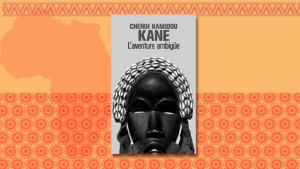
Through Ambiguous Adventure, Cheikh Hamidou Kane gave African literature one of its most profound works on the encounter between cultures, the transmission of knowledge, education, and the difficult dialogue between heritage and modernity. Through the destiny of Samba Diallo, he raised questions that remain, more than sixty years later, at the heart of Africa’s reflection on itself and on its relationship with the wider world,” reads the statement.
It continues “A man of letters, Cheikh Hamidou Kane was also a distinguished servant of the State and of Africa. Governor of Thiès on the eve of independence, High Commissioner for Planning, and subsequently Minister of Industrial Development and Handicrafts and Minister of Planning and Cooperation of Senegal, he also devoted an important part of his career to international development, notably through his service with UNICEF and the International Development Research Centre.”
“His journey thus reflected a common commitment, carried from thought into action: to advancing the emancipation and development of Africa. The AUC Chairperson pays tribute to the memory of a giant of African letters, a man of thought, action and transmission who, through the depth and elegance of his work, as well as through his commitment to the public good, profoundly shaped Africa’s intellectual and public life.
The Chairperson, on behalf of the African Union Commission and in his own name, extends his deepest condolences to his family, the Government and people of Senegal, and the wider African family of letters and culture. May his soul rest in peace.”
AU independently echoes the core argument developed in the Life In Humanity story

AU’s statement precisely forms the intellectual terrain explored throughout this story: Kane’s legacy cannot be reduced to a literary accomplishment or to a historical analysis of colonialism. It raises a continuing question about how societies can gain new knowledge and capabilities without permitting them to displace the cultural memory, values, knowledge systems and intellectual inheritance through which those societies understand themselves.
The connection stands particularly significant since the AU statement arrives independently of the argument developed here from Kane’s writings, Global Voices’ analysis and contemporary scholarship on indigenous knowledge. Where this article asks how education can reconcile external knowledge with locally rooted knowledge, the AU likewise positions education, knowledge transmission, heritage and modernity at the center of Kane’s enduring contribution. The convergence suggests that the tension pinpointed in The Ambiguous adventure does not merely represent an interpretation imposed retrospectively on Kane’s work. It forms part of the broader intellectual legacy now being recognized at the continental level.
The AU’s characterization also reinforces the argument that Kane’s message extends beyond Senegal and beyond the colonial encounter which molded his most famous novel. The questions he raised concern how cultures meet, how knowledge is transmitted, what education preserves or transforms, and how heritage relates to modernity. Then they remain relevant wherever societies face rapid technological, economic and cultural change.
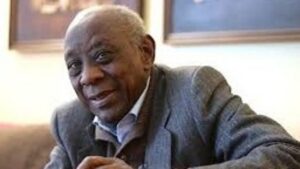
Kane’s enduring contribution therefore lies not simply in asking whether Africa should embrace modernity. The contribution is instead in persuading humanity to ask this: what kind of modernity it should build, what it should keep while building it, and what it risks losing when the pursuit of material or technological power becomes stronger than the mind and memory that must guide it.
In this regard, the AU’s tribute does more than honor the late Kane. It strengthens the quintessential lesson drawn in this story: the challenge is not to pick between the knowledge of the broader world and the knowledge acquired from one’s own community, but to produce a future in which new capacities enhance human possibilities without impoverishing cultural memory, identity, wisdom and meaning. That is why Kane’s legacy belongs not only to Senegal or Africa, but to the wider human conversation about education, development, identity and the kind of future that humanity opts to build.
As we have explained it in the article around the late Kane, we each have to endeavor to leave a positive legacy. This doesn’t necessarily need to be as large-scale as his or that of other towering figures. Even if your legacy were just restricted to your immediate family, it would constitute a huge contribution you provide for the world.