By Jean Baptiste Ndabananiye
A recent, seemingly small and innocuous incident at a local school in Kamonyi District—Rwanda’s Southern Province— became Life In Humanity’s reflection of the far-reaching consequences of unresolved family conflict. A family, embroiled in a violent dispute between the parents, found its children suffering in silence. In an attempt to manage their situation, the children resorted to brushing their teeth with salt—an unfortunate and damaging solution caused by their father’s refusal to provide basic necessities, including toothpaste, to punish his wife. The result was a foul odor that led to stigmatization from the children’s peers, further compounding their emotional distress.

Yet, this story is not just one of hardship; it serves as a powerful reminder of how the consequences of domestic violence often spill beyond the home, affecting innocent lives in profound ways. This situation, though rooted in Kamonyi District, resonates far beyond including the borders of Rwanda. Other districts, and even other countries, cannot vow to be exempt from such challenges, as conflict represents an inevitable part of human experience. It happens anywhere, at any time, touching the lives of individuals in profound and lasting ways.
However, where hardship exists, so too can hope. In Akabuga Village nestled in Kibayi Cell of Mugombwa Sector Gisagara District Elisabeth Nyiraneza, the village’s leader, has pioneered an initiative that offers a lifeline to those suffering conflict and can be emulated anywhere. Meanwhile, family conflict stands the leading challenge to cohesion in Rwanda, with 22.3% of families affected, according to the 2023 RGB (Rwanda Governance Board) Citizen Scorecard report.
Additional details about the case in the school
Life In Humanity has recently heard of this true case. However, we will not identify the primary school or the family, as we have adopted a conscious decision not to approach them directly. The case involves children, and their anonymity is of utmost importance. Protecting their identities ensures that their privacy and dignity are respected, especially given the sensitive nature of the issue at hand.
Furthermore, the most essential point of this article is not to focus on the individuals involved but to highlight the underlying message from the case—the profound impact of unresolved family conflict on innocent lives, and the importance of community-driven solutions like that initiated by Nyiraneza. The emphasis is placed upon raising awareness of the larger issue, rather than on specific personal details.
“We don’t want to sit with you or go near you, because your mouths stink” the children were told by their fellow students. The school’s leadership followed the issue up and summoned the man and admonished him to settle the issue. Fortunately, according to information that we now have, the children now wash their teeth with toothpaste.
“I don’t want to provide any money in any way that would enable my wife to benefit from it. I already possess enough money and property. If you agree to take my children into your home, I would welcome it. I’ll give you any amount you need to care for them, on the condition that my wife enjoy or gets no access to it,” the children’s father told a lady working as a students coordinator at the school.
After following this conversation between the man and the Students Coordinator, the Head Teacher urgently summoned him to his office and uttered “What kind of man, especially a wealthy one, are you, if you can penalize your children like this? From now on, resolve your conflict and meet your family’s needs, including providing toothpaste, so that your children can continue studying here. Otherwise, take them away.”
This is how the man was pushed to resolve the conflict with his wife, but the conflict itself has not truly been transformed. While the father was prompted to provide for his family’s basic needs, the underlying issues that caused the conflict — his refusal to support his wife and the emotional and psychological consequences for the children — have not been addressed in a meaningful way.
The father’s actions appear more as a reaction to avoid losing his children’s access to education rather than a genuine effort to resolve the deeper issues in his marriage. The core of the conflict — his punitive behavior towards his wife, likely rooted in power dynamics, control, or unresolved grievances — has not been openly confronted or addressed. His compliance with the head teacher’s demands does not indicate a transformation of his attitudes or behavior but rather a temporary solution to maintain the status quo, enabling his children to continue their education.
True conflict transformation would involve both parties engaging in a process of understanding, communication, and mutual resolution. It would require addressing the root causes of the conflict, fostering empathy, and creating a healthier, more equitable relationship within the family. The father’s actions suggest compliance rather than genuine change, indicating that while the immediate situation may have been alleviated, the conflict persists beneath the surface, untransformed.
Icyumba cy’Amahoro (Community Safe Peace Space)—a structure enabling conflict transformation

Icyumba cy’Amahoro (Community Safe Peace Space) is a place where Nyiraneza assembles members of the community, to help them peacefully resolve their disputes, promoting healing and preventing further damage. This initiative exemplifies the transformative power of conflict resolution, showing that when communities take ownership of their peace, the ripple effect can spread far beyond local boundaries.
Nyiraneza’s work demonstrates a key truth: while the challenges of conflict may be local, the solutions—when grounded in dialogue, peacebuilding, and empathy—hold global significance. Peace is not just a dream but a powerful, tangible solution.
She explains “I started this work in May 2024. Eh there are several people whom I have assisted to peacefully end their disputes! Among them are 5 families that had separated and other 17couples that were living in violent conflict. In total, I have helped 22 couples since then.
Additionally, I mediated a case involving a teenager who had just given birth and was experiencing conflict with her parents. Now that the conflict has ended, the families are now busy working and regularly get food. This constitutes a stark contrast to before, when they would pass nights without eating.”
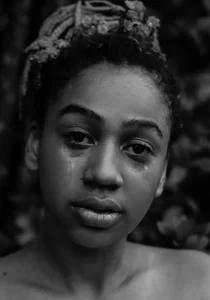
Behind tears and anger lies the truth, often shrouded in complexity. As emotions spill and raw frustrations surface, the journey of conflict analysis reveals startling realities—victims emerge as instigators, and assumptions of blame unravel to expose shared culpability. In the depths of emotional outbursts and cries for help, the true story of conflict begins to unfold. What appears to be the suffering of a victim often transforms itself into the startling revelation of a hidden perpetrator, reminding us that violence knows no single face or gender.
Nyiraneza recounts “One of tactics I use involves analysis for me to identify the root causes. I also create space for individuals to release their emotions. If anyone needs to cry, I let them. If another needs to vent their frustrations through insults, I allow it. On the second or third day, they start talking openly. Interestingly, conflict analysis uncovers unexpected dynamics. A person who initially presents themselves like a victim of unspeakable violence turns out to be the instigator of the conflict.

Such a person comes, telling you that they are suffering unspeakable violence while it is he or she that is perpetrating the violence or plays a major role in it. Both men and women experience violence, and this process has revealed that some women perpetrate violence against their husbands. While it is widely recognized that women often face violence from their husbands, it is important to acknowledge that the issue goes both ways.”
Rwanda’s situation of family conflicts
The New Times released a story, on 19 November 2024, entitled “Rwanda: Family Resilience – New Intervention to Address Intergenerational Trauma, Enhance Family Harmony.” In this story, this daily states “For Rwanda to achieve sustainable peace and development, it must prioritize healthy families, as they are the foundation of society.
However, many families face challenges that undermine cohesion and development. According to the Rwanda Governance Board (RGB) Citizen Scorecard report 2023, family conflict is the top challenge to family cohesion (22.3%), followed by extramarital affairs (17.2%), psychological violence (16.1%), and economic violence (14.4%). Additional issues include physical violence (8.8%) and juvenile delinquency (8.4%).”
The pervasive challenges faced by families in Rwanda are not only eroding their mental well-being but also contributing to a cycle of substance abuse, economic inactivity, and deteriorating livelihoods. The New Times reports “These problems negatively impact family members’ mental well-being, pushing some toward substance abuse, which further hinders their participation in economic activities, ultimately leading to poor livelihoods. The 2023 RGB Citizen Scorecard report identifies alcohol abuse as the leading cause of family dysfunction (85.4%), followed by poor communication between family members (81.3%) and poor parenting (58.9%).”
“A baseline study by Interpeace in 2022 on the societal healing programme revealed that poor communication, genocide-related trauma, and the intergenerational transmission of historical legacies, combined with inadequate parenting skills, are the primary drivers of family dysfunction. Notably, 98% of respondents recommended enhancing couples’ capacity for intrafamily dialogue to improve communication, while 96% suggested strengthening their conflict management skills.”
From village to globe: transforming family conflicts into global lessons for peace
The World Health Organization (WHO) in its 25 March 2024 article points out “Estimates published by WHO indicate that globally about 1 in 3 (30%) of women worldwide have been subjected to either physical and/or sexual intimate partner violence or non-partner sexual violence in their lifetime.
Most of this violence is intimate partner violence. Worldwide, almost one third (27%) of women aged 15-49 years who have been in a relationship report that they have been subjected to some form of physical and/or sexual violence by their intimate partner. Violence against women – particularly intimate partner violence and sexual violence – is a major public health problem and a violation of women’s human rights.”

This information above has been crafted to highlight the profound and universal nature of conflict, emphasizing that it is deeply embedded in the fabric of society—whether at the familial level or on a global scale. The link between GBV and conflict illustrates a pervasive truth: wherever GBV exists, conflict stands there, either in its overt manifestations or underlying currents.
Gender-based violence (GBV) highlighted by the WHO above and family conflict are deeply intertwined. GBV exacerbates family conflict by creating an environment where fear, intimidation, and manipulation replace healthy communication and cooperation. This violence disrupts family cohesion, leading to emotional, psychological, and physical trauma. As GBV increases, it pushes family members into conflict, destabilizing relationships, escalating tensions, and leaving lasting scars on both individuals and the broader family unit.
Life In Humanity is strongly convinced that GBV can rarely lack conflict as both the direct or underlying cause behind. In other words, GBV can be seen as a consequence of conflicting gender expectations, goals, or societal norms, even in peaceful contexts. Briefly, conflict means differing goals, expectations, views and ways of doing things.
From village to globe, the dynamics of family conflict mirror larger societal struggles, showing that these localized tensions are not isolated but are reflective of broader global issues. Transforming family conflicts into lessons for peace is not just an opportunity for personal growth but also a crucial step toward addressing the universal need for harmony and equity in the world.
The heartbreaking case in the school highlights a larger issue—the ripple effect that conflicts within families can produce on the well-being of the younger generations. Besides, any family can be caught in the throes of marital violence, as any person can be immobilized in the chains of violent conflict, regardless of a country. Thus, what begins in one village or district can inspire entire nations to embrace conflict transformation. Ultimately, the global community must recognize that no corner of the world is immune to the challenges we face as humanity.
Initiatives like Icyumba cy’Amahoro show that peace, while often challenging, is achievable, and that when we address these issues locally, we can create far-reaching impacts that transcend borders.

Conflict, in its many forms, remains a universal experience, unbound by geography or social class. Whether within households, communities, or nations, its presence is a shared reality, making the call for transformation urgent and universal. Initiatives like Icyumba cy’Amahoro demonstrate that local solutions hold the seeds of global change. If such peace spaces were developed and embraced worldwide, communities across the globe could possess tools to address disputes proactively, fostering healing and preventing cycles of violence.
The Community Safe Peace Space, a remarkable sanctuary for peacebuilding, offers community members a place to resolve their conflicts without violence. It prevents emotional and physical scars that often follow unresolved disputes. Through her leadership, Nyiraneza’s initiative is transforming the community, turning painful stories like that of the family into opportunities for healing and growth.
By providing a space for dialogue and understanding, she is not only addressing local conflicts but is also contributing to a broader global movement toward peaceful and sustainable conflict transformation. In a world where conflict is inevitable, initiatives like hers remind us that peace is not just a distant ideal but a tangible goal that begins with the courage to act locally.