By Jean Baptiste Ndabananiye
Diverse sources explain that biogas does not merely form an energy technology but also a means of converting wastes that might otherwise become environmental burdens into useful resources. Yet the availability of such materials does not automatically turn into successful biogas production, as their collection, management, availability, and proper utilization determine whether their energy potential can be realized.
This makes the question of adoption nondetachable from the realities of how households, farmers, communities, industries, and governments run resources from which biogas is made. Eventually, the promise of biogas lies not simply in the abundance of its feedstocks, but in humanity’s ability to change those resources into sustained energy, environmental, and socioeconomic benefits.
Rwanda’s Green Gicumbi Project offers compelling testimonies and evidence that the success of biogas interventions finally depends on whether households possess the resources, knowledge, commitment, and enabling conditions necessary to transform the technology into a reliable part of everyday life. For more on the initiative, open this article.
Biogas proceeds from various sources including animal manure, food rubbish, agricultural residues, sewage sludge, and organic industrial garbage. Food waste emanates from commercial kitchens, food processing plants, or city/town waste systems. Agricultural residues involve agricultural waste and crop leftovers like straw, corn stover, and grass silage. Industries such as breweries, distilleries, dairies, and food processors generate large amounts of industrial waste. Materials like whey, spent grain, and wash water are often high in sugar, fat, or starch content; which means high gas yields.
Beyond the technology: what determines whether communities embrace biogas
Biogas adoption relies on more than the technology itself. The Global Journal of Environmental Science and Management (GJESM) constitutes a quarterly, peer-reviewed, open-access academic journal founded in 2015 which covers different areas of environmental science, engineering, and management. This journal features a review paper entitled “A global perspective on sustainable pathways for biogas adoption” released in 2025. The paper was produced by four authors from four institutions in Thailand, Malaysia, and China.
This paper highlights both advantages of biogas and its challenges which have to be addressed, for this provider of energy to be exploited. “Biogas technology has been developed worldwide in recent decades to provide affordable, secure, and clean energy in rural and developing regions.
The technology presents various advantages, as it can be utilized for heating, generating power, and functioning as both a fuel and a raw material in the chemical manufacturing process. However, its widespread adoption remains hindered by complex social, economic, and environmental challenges. Local acceptance is increasingly becoming a critical factor for biogas projects and the transition to renewable energy.”
The study, according to its report, assessed connections among authors, disciplines, and geographic regions to contextualize the findings within the global framework. It adds that a visualization of similarities and Java-based software was utilized to map the trends in co-authorship, keyword co-occurrence, and thematic developments from 2013 to 2024. This broad mapping matters since it illustrates that the subject is not an isolated or localized concern — but a globally evolving field of inquiry cutting across disciplines, geographic regions, research communities, and interconnected themes.
It says “A total of 248 factors influencing the acceptance of biogas were identified and clustered along the three sustainability dimensions. Biogas projects are influenced by social, environmental, and economic factors in distinct ways depending on the country or region. The weight scores within each dimension were normalized and the overall score of the studies were calculated, allowing for a comparability of the studies.
The finding reveals that social factors are the most significant determinants of biogas adoption, including public trust, procedural justice, and community involvement, accounting for 45 percent of the total. Financial aspects, including incentives, operational costs, and market conditions represent 31 percent. The remaining 24 percent was comprised of environmental factors that received the lowest overall scores, including emission reduction, resource compatibility, and land use impacts. This indicates that the environmental drivers are less emphasized than the other two dimensions.”
The study thus stresses the critical significance of local governance, the engagement of stakeholders, and the implementation of strategic communication in facilitating the uptake of biogas. It additionally highlights perceived benefits, equity in decision-taking, and accessible financial mechanisms stand as key enablers; and geographic analyses show significant regional variation, with Europe prioritizing policy harmonization.
“Perceived benefits, equity in decision-making, and accessible financial mechanisms emerged as key enablers, while barriers included mistrust, lack of awareness, uneven decision-making, and cost constraints. The significance of tailoring strategies to local conditions is highlighted by regional disparities.
In Europe, the focus is on policy alignment, stakeholder governance, and sophisticated infrastructure, whereas developing regions emphasize affordability, education, and resource accessibility. The study highlights the necessity of an integrated approach that considers social, economic, and environmental dimensions, providing actionable insight to ensure equitable and sustainable biogas implementation.”
Green Gicumbi Project shows what it takes to turn biogas potential into household reality
For biogas interventions, success begins at home. Success at a large scale cannot be expected where success is not first happening within households. No national or community-wide biogas ambition can be sustained unless individual households are equipped, committed, and able to make the technology work in their daily lives. The point is substantiated by testimonies from a biogas intervention implemented by the Green Gicumbi Project.
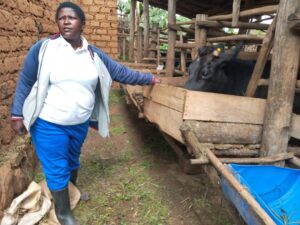
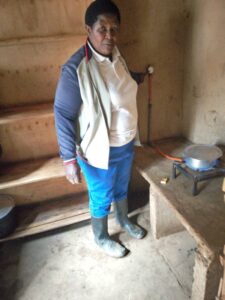
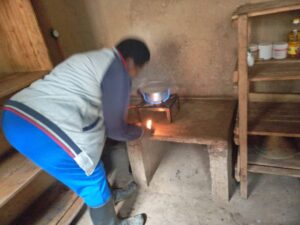
Alphonsine Mukarwego lives in Runyinya Village, Murindi Cell, Kaniga Sector in Gicumbi District, Rwanda’s North. She says “Biogas stands so crucial for me that I thank the Green Gicumbi Project for constructing me the biogas system here. Before, I used to purchase firewood to burn for cooking, and I was lazy cooking food so that this caused disputes between me and my husband since I failed to prepare meals in the morning. However now, in the morning, in just ten 10 minutes I already serve him a meal and a beverage that I cook with biogas.
I get so sufficient biogas that I never lack it. I prepare all food and drinks such as porridge, tea, Irish potatoes, and bananas with biogas. The only food I cook on a traditional firewood cooking facility is beans, because I then avoid consuming considerable gas lest I may lack it when I am going to use it. We don’t employ biogas to light our home; we use electricity supplied by REG.”
She explains that the use of biogas has extremely decreased the cost of firewood. “Before employing biogas, I burned three bundles of firewood costing 3000 Rwandan francs [RWF] a week. Currently, I use just one split of firewood per week which I buy at 200 RWF.”
Biogas carries a certain secret, according to her. “The issue is that there are people who don’t know the secret of biogas and then claim that a biogas system doesn’t work. A biogas system functions; instead, it is those who have been provided with it who do not work properly, because the secret to make biogas work is to collect cow dung and mix it in conformity to the standards they’ve prescribed to you.
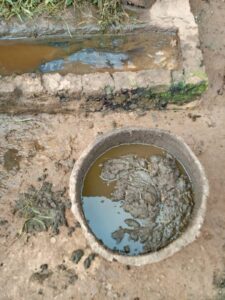
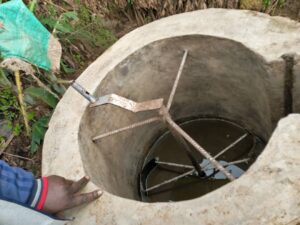
You mix it with water here in the mixing chamber; afterwards, you send the mixture into a pit [digester] where it produces biogas. I use three basins of cow dung and three jerrycans of water every day. Therefore, my biogas system always contains biogas. I cannot tell how much money was spent on constructing the system because it is the Green Gicumbi project that constructed it for me.”
Innocent Ntawukirabizi, a forestry technician in charge of Sustainable Forest Management and Sustainable Energy with Rwanda Green Fund, was a Green Gicumbi Project Officer. This project was concluded last May. He explains why biogas systems built by the project have not failed. “Biogas constitutes a great resource which contributes to the reduction of deforestation. Yet, for it to yield productivity, it entails certain requirements. First of all, a biogas facility is not designed for individuals with few means. It demands that a person furnished with the biogas system own at least two grown cows well cared for— it means those which are so well nourished that they are able to produce a lot of dung which will be collected and put into a biogas digester.
At least, the cows should generate 20 kilograms of dung which are daily added to the digester. The Green Gicumbi Project has employed a careful and scrupulous approach; the reason why biogas infrastructures it has installed are operating successfully, producing expected results. It has selected people who actually possess the capacity to successfully run the biogas facilities— those who own two well-fed mature cows, so that even if there happened a problem like an accident killing one of the cows, they will manage to immediately replace the cow which has died, so as for there not occur a gap.”
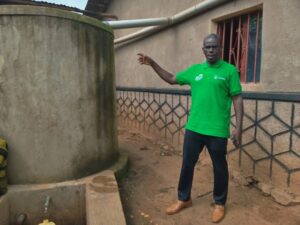
He continues, providing details on biogas tanks constructed by the project. “A project engineer in charge of construction has supervised the construction of the tanks, to ensure that they are well built, lest they may sustain damage. The project had initially planned to engineer so numerous biogas facilities but after the analysis, we just constructed the facilities for 10 households that possess the ability to manage them. All these facilities enable the households to get power to illuminate, cook.
People using biogas have to obtain water they blend with the dung every day, so this is a water tank that the Green Gicumbi Project has built for all the households, in order not to lack water. Such a tank has been constructed for other people not possessing biogas but it especially serves those who use biogas. Power from the biogas systems we have built for the households cannot light entire houses; they power lights in the kitchens and a few rooms while other parts of their houses are illuminated by solar energy panels, and of course REG [Rwanda Energy Group] electricity.”
He adds “For a biogas system to generate power to light an entire building, it needs to be huge and necessitates such a lot of dung which has to proceed from so numerous cows. However, the facilities we have built for the households are 6 cubic meters which don’t suffice to provide power to illuminate an entire house.”
Another factor enabling the success of biogas, according to Ntawukirabizi, is a user’s acceptance of this technology. “Possessing the means is insufficient, because a person may own the cows that suffice to produce the waste and their biogas can fail, if they aren’t committed to it. The biogas facility the project has provided for the beneficiaries has cost around 2 000 000 Rwandan francs; that investment failing, this could be a big loss. Another thing we have done is to connect the biogas digester to the toilet, so that waste from the toilet also feeds into the digester.”

Jean Paul Munyakazi serves as Imbaraga Farmers Organization’s Legal Representative. What he told Life In Humanity in May 2025 indicates that biogas can be turned into a success story. “Though biogas has not provided a great impact which the country expected from it, biogas plays a big role in protecting the environment especially since it assists to decrease solid fuels. As we have tried to install biogas systems in 6 districts, we have observed that if maintained, biogas facilities give a tangible yield. We are now building biogas infrastructures in Nyamagabe, Nyaruguru, Nyanza, Ruhango, Gatsibo and Rwamagana.
This is situated in the framework of urging citizens, especially we who are farmers, to feel that they don’t have to continue using solid combustible resources— charcoal and firewood, while we raise livestock. People possess toilets; toilets can also generate biogas even if biogas from toilets is not a huge quantity, but it can illuminate a household.”
Beyond cooking fuel: biogas unlocks fertilizer, forest and livelihood benefits
Ntawukirabizi says “Dung from the digester becomes a quality fertilizer which requires no further action; people instantaneously go to enrich their pieces of land with it.”
Dung that has passed through a biogas digester is known as digestate or bio-slurry. This forms a high-quality, nutrient-rich organic fertilizer which often outperforms raw manure.
Science Direct contains a research article entitled “Utilization of cow dung residues of biogas plant for sustainable development of a rural community” published in 2021. It also corroborates that dung which has gone through a biogas digester forms a great organic fertilizer. Its abstract reads “Ziala Village of Satkhira District in Bangladesh is well known for cow dung management and biogas production. Biogas plants produce huge quantities of organic residues and biogas. Cow dung is widely used in the plant as a part of waste management and biogas production.
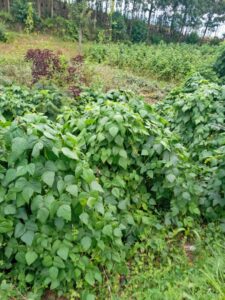
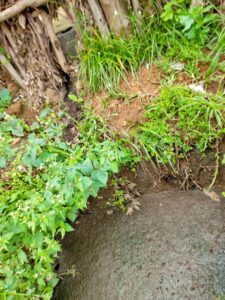
The residues are used as organic fertilizer and biogas is used as fuel in the Ziala Village. Therefore, the study was conducted to observe the effectiveness of using cow dung residues produced in biogas plants and its subsequent impacts on socio-economic profile. The study was based on face to face interview of randomly selected dairy farmers in 2014. Twelve representative samples of biogas plants were randomly selected for interviewing. Findings suggested that renewable energy transfer system in the form of biogas plant was successful in converting cow dung into energy and nutrient rich organic fertilizer, which reduced the cost of purchasing chemical fertilizer for plant owners.”
The research on Science Direct also points out that the success of biogas installations furnishes various advantages. “Renewable energy transfer plants noticeably improved the overall cooking environment of the biogas digesters and reduced the time needed to collect firewood.
This facilitates livestock management and preservation of forest resources. Biogas plants eventually contributed to elevate environmental condition and resource recovery which ultimately improved socio-economic profiles in terms of occupational distribution and educational attainment of the participating households. However, agricultural wastes and cow dung were not optimally managed by some households in surveyed area. This causes environmental degradation in terms of water and air pollution in the study area.”
From household fuel to a global force in the energy transition
For biogas to accomplish the larger role envisioned in the global energy transition, its expansion cannot be detached from the realities that determine whether individual systems actually work. The experience of the Green Gicumbi Project and the observations of Munyakazi indicate that such success hinges on more than installing infrastructure — it demands households to possess the resources, commitment, knowledge, and conditions necessary to sustain it. If these realities are not addressed at the household and community levels, global growth projected for biogas risks remaining an ambition on paper rather than becoming a transformation experienced in people’s lives.
In its 16 October 2025 story headlined “IEA [International Energy Agency] Report Highlights Rapid Growth in the Global Biogas Industry”, World Biogas Association [WBA] states “The IEA released its renewable energy market report, Renewables 2025, on 7 October 2025, highlighting that biogas and biomethane are becoming an integral part of the renewable energy success story.
They are emerging as strategic fuels for decarbonising sectors that electricity alone cannot easily reach, such as heavy industry, long-haul transport, and heating. While they are not delivering the scale of solar PV and wind, they offer much-needed system benefits of flexibility, storage, base load, and dispatchability. This makes them indispensable in the context of the global energy transition.”
This association adds “The report includes, for the first time, a comprehensive chapter on biogas and biomethane, emphasising an updated forecast of industry growth – global production of biogas and biomethane is expected to increase by 22% between 2025 and 2030, representing a 4% upward revision in the 2030 outlook compared to last year’s forecast. The sector experienced significant growth between 2021 and 2023. Europe is experiencing a shift from directly using biogas to upgrading it into biomethane (see image below).
To achieve the European Union’s 35 bcm target by 2030, the growth of biomethane must increase substantially. By 2030, the EU is expected to reach only 27% if it focuses solely on biomethane. Elsewhere, especially in markets with limited gas pipeline infrastructure, including major players such as China, India and Brazil, using biogas directly for electricity and CHP production continues to drive substantial growth in the sector. India’s biogas and CBG production is expected to increase by 21% by 2030, approximately 20 PJ higher than earlier estimates. Both India and Brazil have ambitious blending mandates, which are likely to lead to further growth in adoption and investments.”
It however notes “Tripling renewable energy generation remains unattainable under the current trajectory, highlighting the urgency to adopt readily available renewable technologies, such as biogas. Dr Fatih Birol emphasised during the report launch that ‘the pace of growth of renewables will be determined by governments’. WBA continues to promote government and private sector investment in the sector and advocates for best practices to maximise the economic, social, and environmental performance of biogas projects.”