By Jean Baptiste Ndabananiye and Phoibe Mukandayisenga
Vincentie Nyinawumuntu used to hesitate, her hands almost trembling as she faced the crowd. A few yeas ago, she wouldn’t have dared to stand before them, let alone speak. But today, she doesn’t just stand before them—she is the driving force behind transformative initiatives in her community. From legalizing marriages to securing safe workspaces for her fellow women, she has become a catalyst for change. Her presence commands attention, not just as a speaker, but as a leader reshaping lives. Her voice, steady and firm, shatters the doubts she once carried. “We are stronger than we believe. We can lead, and we do so,” she tells you when approach her about her transformation.

For years, Nyinawumuntu, now 46, lived in the shadows of self-doubt, fulfilling responsibilities in name only. As the Coordinator of the National Women’s Council (NWC) in her sector—Mbazi in Mbazi Sector in Huye District, Rwanda’s South, she attended meetings, nodded in agreement, but never truly participated. Leadership was something meant for others, not her. She watched as decisions were reached around her, feeling invisible in the very spaces where her voice should have mattered. Her story is not unique though. In several parts of the world, women, despite holding roles of influence, struggle with the unspoken belief that they are not meant to lead. But something has changed.
The turning point
Nyinawumuntu’s world had shifted drastically in October 2024. The shift materialized, owing to the Gender Equality and Women’s Empowerment Project (GEWEPIII), by offering training sessions on leadership, public speaking, and time management. The project has been funded by Care International Rwanda and implemented by Pro-Femmes Twese Hamwe with her partners. Nyinawumuntu walked skeptical into the first session, her confidence as fragile as glass. But with every lesson, every discussion, something inside her awakened.
In spite of her initial skepticism, she learned not just how to stand in front of a room, but how to own it. She additionally grasped how to structure her thoughts and how to command attention. Most importantly, she learned that leadership is not about perfection—it involves belief. And belief is powerful.
Within months, she took a leap no one, not even herself, imagined. She contested for the vice-presidency of COAIRWA, the Cooperative of Rwasave Marsh Rice Farmers. The once hesitant woman now stands before 958 members. She sought their trust and they gave it to her. She says “Before GEWEPIII, I never dared to stand before people and speak.
However, the project has rendered me so confident, and I stand firm in in public. Thanks to the capacity I gained from project interventions, I have contested, and been elected vice-president of COAIRWA. I’m now vice-president of the big cooperative of 511 women and 447 men.”
As suggested, the project intervened while Nyinawumuntu was serving as a NWC Coordinator. However, she was just fulfilling a formality. Like all other women involved in the project, it was through her involvement in the project that she was equipped and awakened to deliver on her responsibilities. The project has empowered 1986 champions like Nyinawumuntu who have, in their turn, transformed other 35 830 women.
“Before being trained and mentored on leadership, I never delivered any responsibility for which I had been elected; it was a mere formality. Changed drastically, I accomplish commendable work. The training armed me with optimally great lessons like time management. It taught us to fulfill women’s triple roles: household chores, economic activities for self-reliance and leadership duties to serve my community.
I normally rose at around 10h00 a.m. I now get up at 6h00 a.m., securing enough time to successfully navigate all my responsibilities— relating to my family, the NWC Coordinator and Vice-president as well as being an entrepreneur,” she says.
Beyond personal triumph— a community transformed
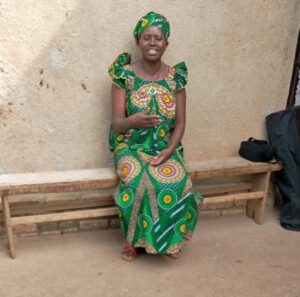
Nyinawumuntu’s transformation was not just personal—it sparked a movement. As NWC Coordinator, she no longer sit in silence. She initiated home visits, convincing 147 families to legalize their marriages, fostering stability in households where uncertainty once loomed. “Together with other women with whom I work in the context of the NWC, we have successfully accompanied the families to legalize their unions and improve their home relations so that those who were previously caught in conflict have now changed into peaceful vibrant families actively pursuing their progress.
These couples have chosen to get legally married voluntarily, after we demonstrated the benefits of legal marriage. We never pressured or forced them—especially since we don’t hold that authority.”
But, she didn’t stop there. Seeing struggles of street vendors—women and girls braving the harsh sun and rain as their livelihoods, she knew that they needed more than sympathy; they needed action. She mobilized them, raised their concerns with local leaders, and pushed for a permanent solution.
The result? A modern marketplace, built specifically for these vendors. No longer forced to sell in unsafe conditions, 25 women and girls now boast a dignified space to grow their businesses.
Her voice, once trapped in self-doubt, now also echoes through village savings and loan associations (VSLAs), where she has encouraged 173 members to believe in their potential, to invest and to lead. Several of them, just like her, had never seen themselves as capable of shaping their own futures. Now, these 173 women are stepping into leadership roles, reshaping their communities in ways they never thought. These VSLA members are embracing leadership, with several already holding decision-making roles within their communities.
She explains the process for the market to be constructed for the hawkers. “For the market to be built, we first raised the issue with the cell’s leaders who acknowledged the need for a dedicated space for women and girl hawkers. We then approached the sector’s authorities who advised us to formally present the request to the sector’s advisory council, by writing.
After reviewing our proposal, the sector’s advisory council submitted it to the district’s advisory council for approval. Today, the market can accommodate around 60 people, significantly improving their working conditions and economic stability, providing a safe and structured environment for vendors.”
Her impact is glaring. The former street vendors are now thriving, with 10 having advanced to the City Market of Butare, while 15 former hawkers have successfully transitioned to Mbazi Market.
The ripple effect of one woman’s courage
 Nyinawumuntu’s journey acts as a testament to the power of transformation. She once rose at 10 a.m., unsure of how to navigate the responsibilities that overwhelmed her. Now, she gets out of the bed at the dawn, balancing her duties as a mother, leader, and entrepreneur. What has changed? Not just training, but a realization: leadership is not given, it is claimed. One woman’s voice can ignite change. Nyinawumuntu’s story proves that when we break the silence of self-doubt, we do not just transform our own lives—we transform entire communities.
What about you?
How many talented voices remain unheard, stifled by self-doubt and lack of opportunity? Nyinawumuntu’s story constitutes a proof that empowerment begins with a single step—a training, or a mentor, a decision to step forward. If her journey resonates with you, consider taking that step yourself.
Nyinawumuntu, a strong beacon for anyone in a certain war
Nyinawumuntu’s journey is not just a personal triumph; it stands as a powerful beacon for anyone facing life’s challenges. Her transformation—from a woman paralyzed by self-doubt and who scarcely contributed to the development of her household to a dynamic community leader— illustrates that true empowerment begins with the courage to confront one’s fears.
Nyinawumuntu’s story resonates deeply in a world where many voices remain silent, stifled by insecurities and societal expectations. Her unwavering belief that “we are stronger than we believe” ignites a spark of hope, reminding us all that we can rise above our circumstances. She is not only an inspiration to women and girls, but also to men and boys who are now facing hardships.
Through the transformative training provided by GEWEPIII, Nyinawumuntu learned that leadership is not reserved for a few but is accessible to all who dare to claim it. She exemplifies how confronting challenges head-on can lead to remarkable change, not just for oneself but for entire communities. By advocating for legal marriage and safe working conditions, she has created ripples of positive change, empowering others to break free from the constraints of self-doubt.
Her story inspires us to recognize that every challenge presents an opportunity for growth and transformation. Just as Nyinawumuntu dared to step into the spotlight, we too can confront our fears and carry out decisive action in our lives. Her voice, once trembling, now resonates with strength and purpose, urging each of us to capitalize upon our potential and lead with courage. In doing so, we can ignite a movement of change that empowers others to follow suit, proving that together, we can face any challenge that life brings.
Nyinawumuntu is extraordinary
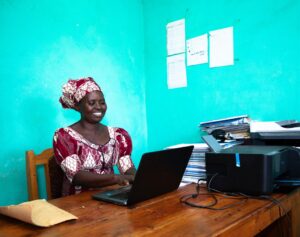
Life In Humanity is convinced that Nyinawumuntu is extraordinary. Extraordinariness is often measured by the scale, significance, and ripple effects of one’s actions. In this respect, extraordinariness is also relative in the sense that we can affirm that individuals are extraordinary just in their community and perhaps they can seem ordinary in some other communities.
Extraordinariness is relative to context. In a community where access to potable water and healthcare is scarce, individuals who bring about these changes stand out as extraordinary. However, in a highly developed society where such services are standard and provided by the government or large institutions, their efforts might seem less remarkable.
This relativity applies to numerous aspects of human achievement—what is groundbreaking in one setting may be routine in another. It also highlights the importance of recognizing and appreciating contributions within their specific contexts rather than applying a universal standard of extraordinariness.
While the term “extraordinary” is subjective, as already explained, Nyinawumuntu’s impact certainly sets her apart from the average community member, transforming her into a remarkable contributor to the societal well-being of her community.
We generally tend to look for extraordinary people among the wealthy, the most successful athletes, business leaders, and powerful politicians. But true extraordinary individuals often emerge from the most unexpected places, like local communities and grassroots movements.
Moreover, those who have attained incredible accomplishments on an extremely larger scale have also started here. That is why Life In Humanity is dedicating itself to featuring not only those who have already achieved the pinnacle of success but also those who are still on the path. These individuals, like Nyinawumuntu, may not possess fame or immense fortune, but they carry an unwavering spirit and the ability to inspire change.
Their stories remind us that greatness is not defined by wealth or status, but by the courage to confront challenges, the determination to uplift others, and the commitment to creating a difference in the world. It is often in these quiet, impactful acts of leadership that we find the true essence of what it means to be extraordinary.
People with astonishing success, after defeating fear

Several highly successful individuals, including those with incredible success at the global level, once struggled with fear of speaking or lacked confidence. They have been obliged to overcame these challenges, to achieve their remarkable success. Warren Buffet, the late Maya Angelou, Barbara Corcoran and even the wealthiest man—Elon Musk— are some of them.
Warren Buffett – the billionaire investor and CEO of Berkshire Hathaway was once frightened of public speaking. He even avoided courses in college that required presentations. To conquer his fear, he pursued a Dale Carnegie public speaking course which transformed his life. Today, he is one of the most influential voices in the business world.
Entrepreneur— in its 27 October 2024 article titled “Introvert Warren Buffett Was ‘Terrified’ of Public Speaking. Here’s the Secret That Helps Him Address 40,000 People at the Berkshire Hathaway Annual Meeting”— confirms it. It reports that this American 95-year-old billionaire chairman and CEO of the conglomerate, Berkshire Hathaway, admits that speaking in front of a crowd used to render him physically ill. “I was terrified of public speaking. You can’t believe what I was like if I had to give a talk. I was so terrified that I just couldn’t do it. I would throw up. In fact, I arranged my life so that I never had to get up in front of anybody.”
Entrepreneur recounts “After Buffet graduated from Columbia Business School, where he studied under investor Benjamin Graham, he returned to Omaha, Nebraska. There, he saw an advertisement for a public speaking course using the Dale Carnegie method. Buffet was familiar with Carnegie’s 1936 self-help book How to Win Friends & Influence People, and he’d even signed up for a Carnegie public speaking class in New York — before he backed out and stopped payment on the $100 check.”
“Buffet decided to give the course another chance in Omaha. And it worked,” Buffet says about psychological techniques that he acquired in his public speaking class numerous decades ago. “That’s the most important degree that I have.” Entrepreneur adds “Buffett’s certification of completion for the Carnegie course, dated January 1952, hangs above the sofa in his office, according to Schroeder’s account. Now, Buffett stands in front of an audience of 40,000 at Berkshire Hathaway’s annual shareholder meeting, where attendees line up hours before the event to listen to the Oracle of Omaha speak.”
Maya Angelou – the renowned poet, author, and activist stopped speaking for nearly five years as a child due to trauma. Despite this, she went on to become one of the most powerful voices in literature and civil rights, inspiring millions with her words.
Biography is a website— that hosts thousands of biographies of famous and influential people, from ancient history to modern-day figures. It confirms “Maya Angelou was a multitalented poet and author known for her acclaimed 1969 memoir, I Know Why the Caged Bird Sings. She had a difficult childhood. Her parents split up when she was very young, and she and her older brother, Bailey, were sent to live with their paternal grandmother, Anne Henderson, in Stamps, Arkansas.
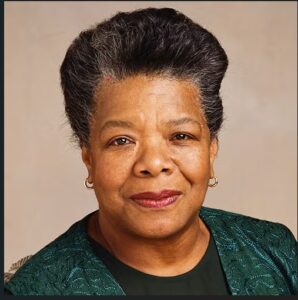
As an African American, Angelou experienced firsthand racial prejudices and discrimination in Arkansas. She also suffered violence at home when she was around the age of 7. During a visit with her mother, Maya was raped by her mother’s boyfriend. As vengeance for the sexual assault, her uncles killed the boyfriend. Young Maya was so traumatized by the experience that she stopped talking. She returned to Arkansas and spent about five years as a virtual mute.”
The American, Barbara Corcoran – the real estate mogul and “Shark Tank” investor, admits that she carried deep insecurities early in her career and feared to speak in public. She overcame self-doubt through persistence and resilience, eventually building a real estate empire.
The website, iHeart on June 19, 2018, published a story titled “Barbara Corcoran Reveals Her Secrets To Conquering Public Speaking”. It quotes her as saying “If you’re afraid of public speaking, you’re missing out on one of the biggest opportunities to grow your business. One of my jobs today is public speaking, and I do a lot of it and I’m good at it, but that wasn’t always the case. I used to hate it. Like too many people, I lost my voice the first time I spoke in front of a live audience. Although, I must have spent 100 hours or more preparing.
It’s always better to face it and force yourself to do what you’re afraid of, because, in the end, it’s easier than living with the failure. You can practice [public speaking] in front of your work peers or in front of friends or family. It makes very little difference, but you need to find some way to practice a lot in front of somebody, to get over your fear. It’s okay to tell your audience you’re scared, as almost everybody is afraid of public speaking, and they’ll identify with you.”
She reiterated her public speaking fear in her LinkedIn post where she pointed out “I remember the day like it was yesterday. It was my first-ever invitation to speak in front of a large crowd, and I was nervous but excited. However, as soon as I stepped up to the microphone, my voice disappeared. I was mortified. I stumbled through my speech, feeling embarrassed and ashamed.

At that moment, I could have easily retreated and hidden away with my embarrassment. But instead, I decided to face my fear and get better at public speaking. The next day, I hopped over to NYU and pitched a course on how to sell real estate, the only subject I knew. Over the next 10 weeks, I taught three-hour classes to a group of 11 students. It wasn’t easy, but it forced me to get comfortable speaking in front of others. And the reward was worth it.”
Beneath the sting of embarrassment, a spark lit—a moment so humbling but which cracked open the door to greatness. “One of my students was a young woman named Carrie Chiang, who soon became the number one salesperson in all of New York City. She obviously liked what I had to say and moved herself and her staff into my young business. Carrie sold real estate like hotcakes! Looking back, that moment of embarrassment and failure was actually a turning point in my life.
It forced me to confront my fears, get better at public speaking, and ultimately led me to meet one of my most successful protégés. So, if you’re feeling scared or embarrassed about something, remember that it’s never too late to face your fears and turn your setbacks into opportunities for growth and success.”
Elon Musk – known for his groundbreaking work with Tesla and SpaceX, Musk was once an introverted child who struggled with confidence. Over time, he worked on his public speaking skills and transformed into an influential leader in technology and business. For more on him, open Did you know Elon Musk’s journey is defined more by his extreme adversities than by his monumental successes? in which he admits “I was too shy to talk to anyone.”
These amazing individuals prove that confidence represents a necessary skill that is developed, and overcoming fear leads to extraordinary success.
Very good https://t.ly/tndaA
We are actually moved by your feedback.
Very good https://urlr.me/zH3wE5
Thank you a lot! we really appreciate your feedback.
Good https://rb.gy/4gq2o4
We appreciate your feedback.
Good https://rb.gy/4gq2o4
We thank you for the feedback.
Good https://rb.gy/4gq2o4
Thank you for your feedback.
Awesome https://rb.gy/4gq2o4
We are pleased that you have judged the article awesome. Thank you a lot indeed!
Very good https://is.gd/N1ikS2
Your feedback, Erin1829, is very inspiring!
Thank you, Jean B, for your insightful article. Your thorough research and clear writing made complex ideas easy to understand. I truly appreciate the effort and expertise you shared. May God bless your hard work 🙏
Dear Nkundimana, thank you so much indeed for your encouraging feedback! We truly appreciate your kind words—it’s great to know the article helped to clarify complex ideas. Your support motivates us to keep writing and sharing.