By Jean Baptiste Ndabananiye
“‘Humanity Edging Closer To Catastrophe’: Iconic Doomsday Clock moves one second closer to midnight as global existential threats rage. Clock factors include nuclear weapons, climate crisis, artificial intelligence, infectious diseases, and conflicts in Ukraine and the Middle East.”
Those are words featuring in the January 28, 2025 press release written by Adam Dombovari, an assistant director of digital operations at the Bulletin of the Atomic Scientists. “The Doomsday Clock was set at 89 seconds to midnight, the closest the Clock has ever been to midnight in its 78-year history.” This piece is composed of two parts:
- How the situation stands
- Conclusion and call-to-action
How the situation stands
The 2025 Clock time signals that the world stands on a course of unprecedented risk, and that continuing on the current path constitutes a form of madness. The clock time underlines that the current three superpowers bear the utmost role to play. It explains that the United States, China, and Russia bear the prime responsibility to pull the world back from the brink. “The world depends on immediate action.”
The Doomsday Clock’s time is set by the Bulletin of the Atomic Scientists’ Science and Security Board (SASB) in consultation with its Board of Sponsors which comprises nine Nobel Laureates. “Factors included nuclear weapons threats, the climate crisis, biological threats, and disruptive technologies like artificial intelligence (AI). The Clock’s time changed most recently in January 2023, when the Doomsday Clock was set at 90 seconds to midnight.”
Daniel Holz, PhD, SASB Chair, Bulletin of the Atomic Scientists, and professor at the University of Chicago stated “The purpose of the Doomsday Clock is to start a global conversation about the very real existential threats that keep the world’s top scientists awake at night.
National leaders must commence discussions about these global risks before it’s too late. Reflecting on these life-and-death issues and starting a dialogue are the first steps to turning back the Clock and moving away from midnight.”
The 2025 Doomsday Clock statement warns that in 2024, humanity edged ever closer to catastrophe. It highlights that trends that have always profoundly worried the Science and Security Board continued. It points out that despite unmistakable signs of danger, national leaders and their societies have failed to carry out what is needed to change course. “Consequently, we now move the Doomsday Clock from 90 seconds to 89 seconds to midnight—the closest it has ever been to catastrophe.
Our fervent hope is that leaders will recognize the world’s existential predicament and take bold action to reduce the threats posed by nuclear weapons, climate change, and the potential misuse of biological science and a variety of emerging technologies.”
Juan Manuel Santos, Chair of The Elders, former President of Colombia, and Nobel Peace Prize Laureate, who participated in the 2025 Doomsday Clock announcement, said “The Doomsday Clock is moving at a moment of profound global instability and geopolitical tension.
As the hands of the clock get ever closer to midnight, we make an impassioned plea to all leaders: now is the time to act together! The existential threats we face can only be addressed through bold leadership and partnership on a global scale. Cada segundo cuenta. Every second counts.”
This clock underlines that extremely dangerous trends in the nuclear aspect continue. Manpreet Sethi, PhD, SASB Member, Bulletin of the Atomic Scientists, and distinguished fellow at the Centre for Air Power Studies in New Delhi and Senior Research Adviser, Asia Pacific Leadership Network, said “The risk of nuclear use continues to grow due to capabilities building up and treaties breaking down.
Russia has suspended compliance with the New START treaty and withdrawn ratification of the Comprehensive Nuclear Test Ban Treaty. China is rapidly increasing its nuclear arsenal. And, the US has abdicated its role as a voice of caution. It seems inclined to expand its nuclear arsenal and adopt a posture that reinforces the belief that ‘limited’ use of nuclear weapons can be managed. Such misplaced confidence could have us stumble into a nuclear war.”
Disruptive technologies, according to the bulletin of the Atomic Scientists, represent another horrendous issue underscored by this organ. Herb Lin, ScD is a SASB Member, Bulletin of the Atomic Scientists. Lin is also a senior research scholar for cyber policy and security at the Center for International Security and Cooperation and Hank J. Holland Fellow in Cyber Policy and Security at the Hoover Institution at Stanford University. Lin said “Proposals to integrate artificial intelligence into weapons of war raise questions about the extent to which machines will be allowed to make or support military decisions—even when such decisions could kill on a vast scale.
Even if a human always make the final decision on the use of nuclear weapons, how and when, if at all, should AI be used to support such decision making? How should we think about lethal autonomous weapons, which identify and destroy targets without human intervention? Meanwhile, ever-increasing dysfunction in the world’s information ecosystem disrupts society’s capacity to address difficult challenges, and AI has great potential to accelerate the chaos and disorder.”
Climate change with its devastating impacts and insufficient progress form another issue of extremely high concern. Robert Socolow, PhD, SASB Member, Bulletin of the Atomic Scientists, and professor emeritus in the Department of Mechanical and Aerospace Engineering at Princeton University pointed out “2024 was the hottest year on record. Extreme weather and other climate events—floods, tropical cyclones, extreme heat, drought, and wildfires— devastated societies, rich and poor, as well as ecosystems around the world.
Yet the global greenhouse gas emissions that drive climate change continued to rise. And investments to adapt to climate change and cut fossil fuel emissions were way below what is needed to avoid the worst impacts. There were formidable policy headwinds globally: particularly worrisome, electoral campaigns showed climate change to be a low priority in the United States and many other countries.”
Suzet McKinney, DrPH, SASB Member, Bulletin of the Atomic Scientists, and principal and director of Life Sciences for Sterling Bay, said: “Infectious diseases are a constant threat to mankind, but unfortunately the collective experience with COVID-19 has increased skepticism about the recommendations of public health officials, especially the use of medical countermeasures to mitigate disease spread.
Concern is also growing over the proliferation of pathogen laboratories around the world, as well as nefariously using AI in biological research and development. Collectively, leaders must establish knowledgeable authorities to provide trustworthy information, increase reporting of changing disease patterns as the climate changes, decrease the number of high-containment laboratories, and curtail active biological weapons programs.”
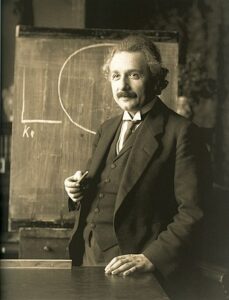
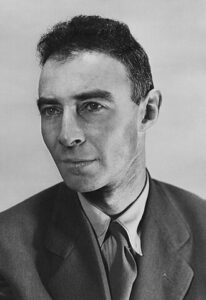
The Bulletin of the Atomic Scientists was established in 1945 by the late Albert Einstein, J. Robert Oppenheimer and University of Chicago scientists. These are minds who helped to develop the first atomic weapons in the Manhattan Project. The Bulletin created the Doomsday Clock two years after, to convey man-made threats to human existence and the planet. The Clock has turned into a universally recognized indicator of the world’s vulnerability to global catastrophe.
Conclusion and call-to-action
The Doomsday Clock constitutes a stark warning, yet history shows that warnings, no matter how urgent, are often ignored until a disaster strikes. Year after year, scientists, experts, and Nobel laureates come together to adjust the Clock, setting it closer to midnight as existential threats multiply and intensify. And yet, despite the ever-increasing urgency, humanity is continuing to walk a perilous path, seemingly indifferent to its own looming catastrophe. The 2025 setting—89 seconds to midnight—isn’t just a symbolic gesture; it is a deafening alarm, signaling that the margin for error has all but disappeared. But is anyone truly listening?
The Clock serves as a measure of how perilously close we are to self-destruction. Nuclear escalation, climate crisis, artificial intelligence, pandemics, and global conflicts are no longer distant possibilities; they are pressing realities. Leaders of major powers—particularly the United States, China, and Russia—hold the heaviest responsibility to pull humanity back from the brink.
Yet, instead of collaboration, we see posturing, rivalry, and an alarming disregard for the mounting dangers. Arms control treaties are being abandoned, nuclear arsenals are expanding, and geopolitical tensions are deepening, while climate change and disruptive technologies accelerate unchecked. The world is sleepwalking toward disaster.
Warnings like these have been issued before, but history reveals a tragic pattern: inaction, denial, and misplaced confidence. Nuclear powers are continuing to expand their capabilities while dismissing the real possibility of catastrophe. Climate agreements are signed with great fanfare, yet emissions are continuing to rise. Artificial intelligence is being integrated into military decision-making with little oversight, raising terrifying ethical and security concerns.
Even after the devastation caused by COVID-19, trust in science and public health has eroded, making the world even more vulnerable to future biological threats. The Doomsday Clock does not move forward because scientists want to incite fear—it moves because humanity refuses to change course.
Yet, the situation is not hopeless. The Clock’s purpose is not only to warn but also to spur action. The only way to move the hands away from midnight is through immediate and decisive global cooperation. Countries must recommit to arms control and nuclear de-escalation. Urgent climate action must replace empty pledges. AI and biotechnology must be regulated to prevent catastrophic misuse. Governments and societies must work to restore trust in science, truth, and responsible governance. These are not unattainable goals; they are choices waiting to be made. The question is “will they be made before it’s too late?”
This is not just a task for world leaders—it is a call to action for every individual, every organization, and every community. Pressure must be placed on governments to take these threats seriously. The public must demand policies that prioritize long-term survival over short-term political and economic gain.
Scientists, journalists, and thought leaders must persist in exposing the gravity of the situation. Businesses and institutions must take responsibility for their role in shaping a sustainable and secure future. Every second that passes without action brings humanity closer to the irreversible.
Albert Einstein, one of the minds behind the Bulletin of the Atomic Scientists, once warned that humanity’s problems “cannot be solved at the same level of thinking that created them.” This is the moment for new thinking, bold action, and unprecedented cooperation. The Doomsday Clock will continue to tick toward midnight until the world finally acknowledges its message. The choice is clear: we either heed the warning now or face the devastating consequences of our neglect.
The time for action is not tomorrow. It is now. Every second counts.