By Jean Baptiste Ndabananiye
Life is an unpredictable journey filled with triumphs and challenges. Every individual experiences moments of pain, loss, and hardship. However, what differentiates those who emerge stronger from their struggles from those who remain trapped in their suffering is the ability to transform pain into wisdom.
 Oprah Winfrey, a living testament to resilience, once said “Turn your wounds into wisdom.” This profound statement encapsulates the essence of personal growth, urging individuals to use their struggles as a ladder to success rather than stumbling blocks. This article explores the significance of turning wounds into wisdom through four major aspects:
- Understanding pain as a teacher,
- Developing resilience through adversity,
- Cultivating self-awareness and growth,
- Using wisdom to empower others.
Understanding pain as a teacher
Pain, whether emotional or physical, constitutes an unavoidable aspect of life. However, rather than seeing it as a mere affliction, pain should be perceived as a powerful teacher. Every challenge, heartbreak, or failure holds valuable lessons. The key is to shift our perspective and recognize that suffering is not meant to break us but to shape us into wiser, more evolved individuals. “Comfort softens us, but hardship strengthens us,” states William Carey Bible Institute.
Several of the world’s most successful people with incredible success have endured profound pain before reaching their peak. Oprah Winfrey herself overcame a traumatic childhood marked by abuse and poverty, yet she transformed her painful experiences into fuel for her success. Her struggles have taught her empathy, resilience, and the value of perseverance. Instead of allowing pain to consume her, she has extracted wisdom from her wounds and built a platform that empowers millions.

Adversity provides insights that success often does not. A failed relationship teaches us about love, boundaries, and self-worth. A job loss might reveal our true passions and lead us to a more fulfilling career. Every hardship carries hidden wisdom—it behooves us to uncover it. By acknowledging that pain does not merely form suffering but a teacher, we can start to extract its lessons and grow beyond our struggles.
The late Jean de La Bruyère once stated “Out of difficulties grow miracles.” He was a French philosopher and moralist, best known for his work Les Caractères (The Characters), which was published in 1688. The book is a satirical portrayal of French society and its various types of people, offering insightful commentary on human nature, manners, and social behavior. He was born in August 1645 and died in May 1696.
More than two decades or approximately three decades later, the late C.S. Lewis echoed it, saying “Hardships often prepare ordinary people for an extraordinary destiny.” Clive Staples Lewis— as his full name—lived from 29 November 1898 to 22 November 1963. He was a British writer, literary scholar, and Anglican lay theologian. He occupied academic positions in English literature at both Magdalen College, Oxford, and Magdalene College, Cambridge.

He is best known as the author of The Chronicles of Narnia, but he is also noted for his other works of fiction like The Screwtape Letters and The Space Trilogy, and for his non-fiction Christian apologetics, including Mere Christianity, Miracles, and The Problem of Pain.
Developing resilience through adversity
Resilience is the bridge that transforms wounds into wisdom. When faced with hardships, individuals often encounter two choices: succumb to despair or use the experience to strengthen their resolve. Resilience does not mean ignoring pain; rather, it involves acknowledging suffering while refusing to be defined by it.
The greatest minds and leaders throughout history have demonstrated resilience in the face of adversity. Thomas Edison failed thousands of times before inventing the light bulb, but he regarded each failure as a lesson leading to eventual success. Nelson Mandela endured 27 years of imprisonment yet emerged as a symbol of peace and unity rather than harboring bitterness.
“Strength does not come from physical capacity. It comes from an indomitable will,” once said the late Mahatma Gandhi widely regarded as a symbol of nonviolent resistance, peace, and the power of civil disobedience. He led India to independence from British rule through methods of nonviolent protest— including boycotts, hunger strikes, and peaceful marches—which became key principles of his philosophy.
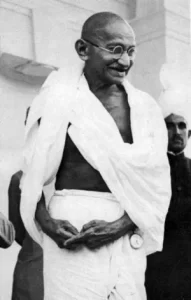
Gandhi, having arrived on the Earth on 2 October 1869 in India and passed away 30 January 1948, is also seen as a symbol of social justice. In this field, his work included advocating for the rights of marginalized communities, including the untouchables (whom he called Harijans or ‘children of God’). He also promote the importance of self-reliance and simple living. His unwavering commitment to truth, justice, and nonviolence has inspired countless movements for civil rights and freedom worldwide.
Resilience requires cultivating a mindset that views failure and pain as stepping stones rather than dead ends. It is built through practice—by facing challenges head-on, maintaining a growth-oriented mindset, and recognizing that adversity stands temporary. One of the most effective ways to foster resilience is to reframe struggles as opportunities for learning and incomparable transformation.
Emotional resilience, in particular, is vital. Developing the ability to process emotions constructively rather than repressing or being consumed by them allows for greater self-understanding. Emotion and feeling acknowledgement rather than stifling them, therapy, and engaging in meaningful conversations can help individuals navigate their wounds with clarity. Ultimately, resilience turns painful experiences into moments of self-discovery and strength.
It is a universal truth that without rain, nothing grows. We therefore have to learn to embrace the storms of your life. Hard times are like a washing machine—they twist, turn, and knock us around, but in the end, we come out cleaner, brighter, and better than before. “Fire is the test of gold; adversity, of strong men,” Martha Graham once said.

Graham who was born in 1894 and died in 1991 was a pioneering American dancer and choreographer, widely regarded as one of the most influential figures in modern dance. She is best known for revolutionizing dance by emphasizing the emotional and expressive aspects of movement, in contrast to the more formal and structured classical ballet. Her style, the Graham technique, has reshaped American dance and is still taught worldwide.
Cultivating self-awareness and growth
Pain, when acknowledged and analyzed, fosters self-awareness. It forces individuals to reflect on their choices, desires, and limitations. Self-awareness acts as the cornerstone of wisdom, as it allows us to understand our motivations, patterns, and reactions. By looking inward, we gain clarity about what we need to change and improve.
People who have undergone significant hardship later attribute their success to the self-awareness they developed during difficult times. A person who has endured toxic relationships might become more conscious of red flags and develop healthier relationships in the future. Someone who has struggled with financial hardship might become more disciplined and strategic about money management. Through pain, individuals gain insights that help them to make better decisions in the future.
Self-awareness also leads to personal growth. Painful experiences push individuals outside of their comfort zones, compelling them to adapt, innovate, and evolve. Growth is uncomfortable, but it is necessary for transformation. Those who embrace the lessons embedded in their wounds ultimately become wiser, stronger, and more equipped to handle future challenges.
One of the most profound ways to cultivate self-awareness is through introspection. Asking questions— such as “What has this pain taught me?” “How can I use this experience to improve myself?” and “What steps can I take to ensure I grow from this?”— can provide meaningful insights. With time, wounds become the foundation upon which wisdom is built.

“A smooth sea never made a skilled sailor,” the late Franklin D. Roosevelt who lived from January 30, 1882 till April 12, 1945 once declared. Roosevelt was the 32nd President of the United States, serving an unprecedented four terms from 1933 until his death in 1945. He is widely regarded as one of the most powerful leaders in American history. Roosevelt led the nation through two of its most significant challenges: the Great Depression and World War II.
Using wisdom to empower others
Wisdom gained through adversity is not meant to be hoarded—it is meant to be shared. Those who have transformed their wounds into wisdom often find fulfillment in helping others to navigate similar challenges. This act of giving back not only benefits others but also reinforces the lessons learned.
Throughout history, individuals who have endured significant hardships have employed their experiences to inspire and uplift others. Winfrey, through her media empire and philanthropic efforts, has dedicated her life to empowering those who have faced adversity. Her wisdom, derived from her struggles, has helped countless individuals to find hope, healing, and purpose.
Sharing wisdom can take many forms. Some find purpose in mentoring others, offering guidance to those who are experiencing struggles they once faced. Others use their voice through writing, speaking, or creating platforms that advocate for change. By sharing personal stories and insights, individuals create a ripple effect, enabling others to heal, grow, and thrive.
Moreover, assisting others provides a sense of fulfillment and purpose. When individuals see that their pain was not in vain—that it wields the power to guide, uplift, and inspire—they realize that suffering can be turned into something meaningful. In this way, wisdom transcends personal growth; it becomes a tool for collective empowerment.
Conclusion: the transformation from pain to wisdom
Winfrey’s words remind us that pain, though inevitable, does not have to define us negatively. Instead, it can serve as a catalyst for wisdom, resilience, self-awareness, and empowerment. Every wound carries the potential to teach us invaluable lessons, shape our character, and lead us to greater heights.
By understanding pain as a teacher, cultivating resilience, embracing self-awareness, and using our wisdom to uplift others, we transform suffering into strength. The journey from wounds to wisdom is not easy, but it is one of the most profound transformations that a person can undergo. Life will present hardships, but how we choose to respond determines whether we remain wounded or emerge wiser.
In the end, wisdom is not merely about knowledge—it is about experience, reflection, and growth. Those who turn their wounds into wisdom do not just survive adversity; they thrive because of it. And that, as Winfrey suggests, is the key to leading a truly meaningful and impactful life. “The struggle you’re in today is developing the strength you need for tomorrow,” — Robert Tew.
Tew is an author, motivational speaker, and personal development writer known for his thought-provoking quotes and insights on resilience, strength, and overcoming challenges. His work has inspired numerous people around the world. His focus is often on positivity, perseverance, and finding strength in the face of adversity.