By Jean Baptiste Ndabananiye
First of all, Life In Humanity grabs this opportunity to tell you that mental health constitutes a fundamental aspect of well-being that affects or concerns you—every person, regardless of age, profession, or social status needs good mental health for them to operate smoothly and succeed in life. Whether one is facing personal struggles, workplace stress, or the emotional toll of global crises, mental health plays a crucial role in daily life. Even those who feel mentally strong today are not insulated from future challenges that could touch their psychological well-being. Therefore, understanding, prioritizing, and advocating for mental health forms a responsibility shared by all; which justifies that you should heed such a piece of writing.

Meanwhile, Science Direct on 8 July 2024 received a study titled “Interaction Effects of Mental Health Disorders and Labour Productivity on Economic Growth in Africa.” This world’s leading online database of scientific, medical, technical and academic research published the revised version of the study online on 24 September 2024. The study underscores a critical reality: mental health disorders represent a major public health crisis, affecting millions not just in Africa, but also beyond.
Analyzing data from 45 African countries between 2002 and 2019, the research highlights a troubling conclusion—mental health disorders, when intertwined with labor productivity, exert a significantly negative impact on economic growth. The authors, a team of nine researchers from eight institutions, stress the urgent need to enhance both awareness and investment in this sector for access to quality mental healthcare. While this study sheds light on the long-term economic consequences of mental health challenges in developing countries, it also raises an equally pressing question: what is missing in public awareness on mental health in Africa?
The issue—mental health disorders— itself is not new, nor is public awareness. Yet, the workforce across the continent remains vulnerable, and the economic toll is continuing to rise. If knowledge of the problem exists, then what is actually lacking? What unseen gaps are preventing Africa from breaking free from these persistent barriers to economic resilience? Before responding to those questions, Life In Humanity is first going to address the status of the issue and initiatives already underway in Africa in a bid to tackle the problem. This article consists of these major parts:
- Status of the issue—what is actually lacking?
- Initiatives already underway in Africa in a bid to tackle the problem
- Action required for efficacious treatment to be ensured
- What unseen gaps are preventing Africa from breaking free from these persistent barriers to economic resilience?
- A call to action: prioritizing mental health in Africa
Status of the issue—what is actually lacking?

The study report reads “Based on economic growth and demand for health theories or models, respectively, human capital is a determinant of economic growth, and health is a major component of human capital. The implication is that, rising mental health disorders will negatively affect economic growth due to labour productivity losses.”
Relief Web published a story headlined “Mental health a human right, but only 1 psychiatrist per 1,000,000 people in sub-Saharan Africa – UNICEF/WHO” on 10 October 2023. It also underlines the crucial role of mental health, but that this part of health is extremely neglected. It reads “Mental health — though often neglected — is an intrinsic component of good health.
Human resources for child and adolescent mental health services are dire in many parts of the world, with an average of 0.3 psychiatrists per 100,000 population at the global level and 0.1 per 100,000 for the 47 countries across WHO African Region.”
In its 10 October 2022 story, the World Health Organization (WHO) pointed out “Across the African Region, more than 116 million people were already estimated to be living with mental health conditions pre-pandemic. Inadequate financing for mental health continues to be the biggest limitation, negatively impacting efforts to expand Africa’s mental health workforce. As things stand, there are fewer than two mental health workers for every 100 000 people, the majority of whom are psychiatric nurses and mental health nursing aids.”
The WHO then sounded the alarm that the situation was worse in rural regions. “With these scarce resources concentrated at large psychiatric institutions in urban areas, people at community and primary care levels are left critically underserved. For example, while two-thirds of Member States report having guidelines to integrate mental health into primary health care, fewer than 11% are providing pharmacological and/or psychological interventions at this level.”
Life In Humanity has been unable to find any updates about the current number of people in Africa suffering from mental health disorders. This figure from the WHO seems to remain the most recent comprehensive assessment available. However, it is important to note that mental health statistics in Africa must be underestimated, according to African Researchers which also echoes the issue of underfunding.
In its August 2024 article “Addressing Africa’s Mental Health Crisis: Innovative Solutions and Community-Based Initiatives”, African Researchers says “Africa has the world’s highest suicide rate, driven primarily by depression and anxiety. According to the World Health Organization, Africa records approximately 11 suicides per 100,000 people, significantly higher than the global average of 9 per 100,000.

African men are particularly vulnerable, with suicide rates soaring to 18 per 100,000, well above the global male average of 12.2 per 100,000. These statistics are likely underestimates, as mental health data collection in Africa is often inadequate. The challenges are exacerbated by a severe shortage of community health workers and facilities, which are critical in preventing mental health conditions from deteriorating further.”
African Researchers adds “Despite the severity of the crisis, mental health services across Africa remain grossly underfunded. In 2020, Africa spent less than $1 per capita on mental health, in stark contrast to Europe’s $46.49 per capita expenditure. This underinvestment correlates directly with higher suicide rates and poorer mental health outcomes across the continent.
Africa’s average of one mental health worker per 100,000 people pales in comparison to the global average of nine, creating a significant treatment gap. As a result, many Africans who need mental health care do not receive it. The annual rate of mental health outpatient visits in Africa is a mere 14 per 100,000 people, far below the global rate of 1,051.”
“Tanzania: a microcosm of the continental crisis”— African Researchers
“Recent high-profile suicides in Tanzania have cast a harsh light on the nation’s deepening mental health crisis, reflecting a wider struggle across Africa. On May 16, 2024, Archbishop Joseph Bundala of the Methodist Church in Tanzania was tragically found dead, having taken his own life inside his church in the Dodoma Region.
Just days later, on May 21, 25-year-old Rogassion Masawe, a Roman Catholic seminarian, was discovered hanged in his room at a seminary. These incidents are emblematic of a larger, pervasive issue—a continent in the throes of a mental health emergency.”
Tanzania’s mental health workforce reflects the broader continental challenges. “With just 1.31 mental health workers per 100,000 people—including 38 psychiatrists, 495 mental health nurses, 17 psychologists, and 29 social workers for a population of 65.5 million—the country is ill-equipped to meet the growing demand for mental health services. Community-based mental health services are sparse, and despite policies aimed at integrating mental health into primary healthcare, resources remain woefully inadequate, particularly for children and adolescents.”
Tanzania’ mental health hospital’s current environment represents an example sufficient to clarify the extent to which mental health is suffering extremely. “The situation at Tanzania’s only mental health hospital, Mirembe National Mental Health Hospital in Dodoma, is dire. Perched on the rolling hills outside the capital, the facility struggles with overcrowding and limited resources. With only 600 beds in the capital and an additional 300 in satellite buildings, Mirembe is overburdened and under-resourced.
Patients’ recovery and discharge times average six weeks, but many relapse due to long distances from the hospital, financial difficulties, and the side effects of antipsychotic medications. The lack of preventive services at the community level often results in patients with mental health issues ending up in prison, where conditions can be harsh and inhumane.”

Mirembe Hospital’s struggle extends beyond medical treatment to a deeper social crisis: rejection of fully healed patients by their own families. “Beyond the immediate care challenges, Mirembe Hospital faces another troubling issue: some fully recovered patients remain on the hospital grounds because their families refuse to take them back. Without familial support, these patients remain in limbo, unable to reintegrate into society. This abandonment not only increases the hospital’s costs but also prevents it from caring for new patients who desperately need help.”
At Isanga Correctional Facility, a unit designated for convicted criminals with mental health issues, the situation remains bleak too. “Aggressive patients are sometimes chained to metal beds, a practice defended by officials as necessary to prevent violence, though it is a stark reminder of the systemic inadequacies in Tanzania’s mental health care.”
The Lancet in December 2022 published the report of a study titled “Quantifying the global burden of mental disorders and their economic value”. The study highlights the staggering statistics of loss which is brought by mental health disorders. It reads “We estimate that 418 million disability-adjusted life years (DALYs) could be attributable to mental disorders in 2019 (16% of global DALYs)—a more than three-fold increase compared to conventional estimates.
The economic value associated with this burden is estimated at about USD 5 trillion. At a regional level, the losses could account for between 4% of gross domestic product in Eastern sub-Saharan Africa and 8% in High-income North America.”
Initiatives already underway in Africa in a bid to tackle the problem
Various nations on the continent are devising ways to address the problem. Tanzania and some countries in West Africa figure among those which are trying to create innovations to deal with the issue.
African Researchers reports that the Health Ministry in Tanzania is exploring innovative solutions to bridge the mental health care gap. “One promising approach involves leveraging mobile technology to connect patients with health workers, potentially reducing the need for patients to physically visit hospitals.
A recent feasibility study conducted by Perpetua Mwambingu at the University of Dodoma suggests that an ICT/mobile phone-driven platform could significantly improve mental health service delivery by allowing patients to receive medical advice, medication reminders, and therapeutic interventions remotely.”
Grassroots interventions
African Researchers reports that in response to the mental health crisis, several grassroots initiatives have emerged across Africa. The Friendship Bench (FB) project, an innovative mental health initiative in Zimbabwe, exemplifies how community-based approaches can bring a significant impact, according to African Frontiers. “The FB project employs ‘grandmothers’ as lay health workers who provide problem-solving therapy to individuals suffering from anxiety and depression.
Since 2006, the project has trained over 600 grandmothers who have provided free therapy to more than 30,000 people in over 70 communities. This model has expanded beyond Zimbabwe to Malawi, Zanzibar, and even New York City, demonstrating the potential of low-cost, community-driven mental health interventions.”
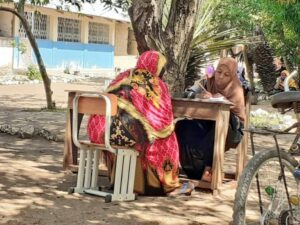
Image Source & Credit: Health Policy Watch
Ownership and Usage Policy”— African Researchers. The photo, from African Researchers, pertains to Zanzibar in Tanzania.
African Frontiers explains that in Zanzibar, the Zanzibar Mental Health Shamba (ZAMHS) has been effective in enhancing mental health services, particularly in rural areas. “Established in 2014 by UK mental health nurses, ZAMHS has provided consistent support for mental health care, including medication delivery to remote areas. Despite limited resources, these initiatives have made significant progress, but the challenges remain immense.”
Hairdressers in West Africa are being involved in the struggle to fight this problem. Le Monde with its 31 August 2024 story titled “In West Africa, hairdressers are on the front line, helping clients with mental health problems”, it reports “Over 150 hairdressers in Togo, Cameroon and Côte d’Ivoire have benefited from a short educational course set up by the NGO Bluemind Foundation. The aim is to become ‘the first link in the care chain’ in a region where therapists are sorely lacking.”
“Valérie da Silveira has been a haircare specialist for two decades. From morning to night, she braids, weaves, combs and straightens in her hair salon, located down a dirt alley in Lomé, the capital of Togo. Over the past year, the 42-year-old has developed a new skill – caring for troubled minds and hearts. As soon as she senses that her customers are going through a rough patch, she encourages them to confide in her in the familiar surroundings of her small premises, among the packets of wicks, bottles of nail polish and shampoo.”

She narrated to Le Monde “Before, when some of them told me about their problems, I didn’t know what to tell them except to go and see the pastor. I’m not a doctor, but I’ve learned to listen to them, calm them down and, when necessary, recommend that they see a real doctor.”
Mali’s traditional theater, according to Associated Press (AP) in its 10 October 2024 story, provides psychiatric patients with room to appear on the stage. Citing a 2022 report by the World Health Organization, AP points out that Mali employs fewer than 50 mental health professionals for a population of more than 20 million. “People with mental illnesses are often left without treatment and excluded from society.”
“Though the use of koteba as therapy hasn’t been formally studied, Souleymane Coulibaly, a clinical psychologist at the Point G hospital, said the traditional form of theater is uniquely positioned to help people in the psychiatric ward work through their problems.” Coulibaly told AP “Patients who attend koteba leave the hospital more quickly than those who refuse to attend the theater session.”
Koteba is a traditional form of theater practiced by Mali’s largest ethnic group, the Bambara. Normally performed in villages as an outlet to work through problems and an open space for satire, koteba combines acting, singing and dancing. But at Point G, one of the biggest hospitals in Bamako, koteba also constitutes a way of providing support and a sense of community for people receiving psychiatric care.
Adama Bagayoko— 67, the director of the visiting theater troupe— said that weekly performances on every Friday at Point G represent a rare space where patients feel heard and respected. “We talk to each other, we dance together, we laugh together,” Bagayoko said. “To touch someone shows that we are equal, to listen to them shows that they are important, and what they say is important.”
Bagayoko was part of a troupe that brought koteba to the Point G psychiatric ward in 1983, as mental health workers looked for a way to use Mali’s cultural practices to help people receiving psychiatric care.
He says that the first performance was so effective that patients asked the doctors, if the actors could return the next day. Patients and actors have been meeting for koteba performances every Friday since then.
Bagayoko explains that the koteba performances at Point G unfold in three phases. First, the troupe plays music to invite patients into the courtyard. Then the troupe asks what the topic or theme of that day’s performance should be. After the performance, they sit in a circle and give the floor to any patients who wish to speak.
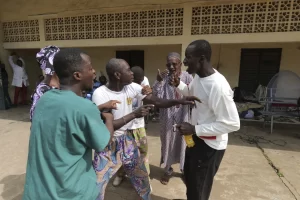
According to Bagayoko, because the patients feel at ease, they often tell the actors details about their lives they are not comfortable sharing with their family or doctors. He underlines that this can help doctors to get to the core of any issue they might be dealing with.
Action required for efficacious treatment to be ensured
Emphasizing that of some of common mental health disorders include schizophrenia, depression, dysthymia, bipolar and anxiety; Science Direct-published research report contends that the coverage of efficacious treatment is very low. “Partly because of lesser awareness about mental health disorders, as well as few mental health workers. For instance, in Africa, the number of mental health workers per 100, 000 people is 1.4, which is far below the world average of 9.0, coupled with low number of hospital beds for mental illness patients and few psychiatrists.”
The report suggests the following action, to address the problem. “There is therefore the need to increase investment to enhance mental health awareness as well as access to effective treatment and quality healthcare for mental health patients. In particular, building the capacity of healthcare providers who are not specialists using an integrated method that will advance mental health at all levels as outlined in the World Health Organization (WHO) Mental Health Gap Action Programme (mhGAP) cannot be overemphasised.
In addition, social support for individuals with mental disorders in terms of developing and keeping social, family and personal relationships as well as offering housing, employment and educational opportunities remain essential towards reducing the burden of mental disorders and their enormous negative effect on economic growth.”
African Researchers underlines that socioeconomic factors and cultural stigma play a significant role in suicide rates in Africa. It specifies that socioeconomic crises, including unemployment, failed relationships, and domestic abuse, are strongly correlated with suicide rates on the continent. “In Tanzania, poverty and unemployment are major contributors to the mental health crisis, leading to chronic stress, anxiety, and depression. The lack of basic needs and uncertainty about the future exacerbates these conditions, with inadequate nutrition further compromising brain function and development, increasing vulnerability to mental health disorders.
Cultural stigma also plays a significant role in the mental health crisis. Traditional beliefs and societal expectations often prevent individuals, particularly men, from seeking help for mental health issues. Mental illness is frequently perceived as a sign of weakness or a failure to conform to societal norms, leading many to suffer in silence.”
A huge number of the population in South Africa is affected by depression, leading to significant economic impacts due to mental health-related absenteeism. EAPASA says “Recent data shows that mental health disorders are prevalent, with depression affecting over 27% of South Africans. The economic impact is considerable, with mental health-related absenteeism costing the economy billions annually.”
Investec in its 27 Feb 2023 piece entitled “The Economic Impact of Mental Health in South Africa” reports “Unaddressed mental health conditions (including depression and anxiety)are costing the South African economy an estimated R161 billion [ around $8 771 602 000]per year.”

“The right to mental health is a necessity not a luxury in Africa,” the UNICEF— United Nations Children’s Fund— Regional Director in West and Central Africa, Dr. Felicité Tchibindat said on 10 October 2023. “The only way we can enable greater realisation of this right is through more significant investment in mental health and psychosocial support. This includes better policies and systems, including in the community, and integration of mental health services into education, protection and health interventions,” added Dr. Tchibindat now serving as the African Renaissance and Diaspora Network (ARDN)’s Regional Director for Central Africa.
African Researchers’ proposed path forward is founded on experts emphasizing the need for long-term strategies to build a robust mental health support system in Africa. These strategies include policy reform to prioritize mental health, workforce development to increase the number of mental health professionals, and infrastructure expansion to improve facilities and services.
“Community-based care initiatives, education campaigns to reduce stigma, and increased research and innovation are also crucial. Improved data collection and policy advocacy will be essential to guide these efforts effectively and address the diverse mental health needs of Africa’s population.
In a region where the mental health crisis is deepening, innovative solutions and strong community-based initiatives offer a glimmer of hope. However, without significant investment and a commitment to integrating mental health into primary healthcare systems, Africa will continue to face the devastating consequences of its mental health crisis.”
What unseen gaps are preventing Africa from breaking free from these persistent barriers to economic resilience?
All the above details especially those pertaining to action to take, so as to handle the crisis are compelling. However, there exists another organization which affirms that those suggestions will remain fruitless, unless a certain mechanism is applied especially in Africa. What is that mechanism? This is a topic of our next article on this subject.
A call to action: prioritizing mental health in Africa
The evidence is clear—mental health is not a secondary issue but a fundamental pillar of human well-being, economic growth, and societal stability. Yet, millions across Africa and the world are continuing to suffer in silence, burdened by stigma, inadequate resources, and systemic neglect. It is time for action. Governments, policymakers, healthcare institutions, and communities must unite to:
Invest in mental health services – increase funding for mental health infrastructure, integrate mental health into primary healthcare, and ensure access to affordable treatment.
Break the stigma – launch nationwide awareness campaigns to challenge misconceptions, normalize seeking help, and empower individuals to speak openly about their struggles.
Train more professionals – expand the mental health workforce by training psychologists, psychiatrists, and counselors to meet the growing demand for services.
Strengthen community support systems – encourage community-based mental health programs, peer support groups, and crisis intervention initiatives to provide localized care.
Leverage technology – embrace digital mental health solutions, including teletherapy and mobile applications, to reach remote populations and bridge the treatment gap.
The time for conversations has passed. Action is needed now. Leaders must prioritize mental health in national policies, businesses must promote employee well-being, and individuals must become advocates in their communities. A healthier Africa is possible—but only if we commit ourselves to making mental health a priority today.