By Jean Baptiste Ndabananiye
The leaders of Africa Union (AU) countries have recently elected a new chief for the branch managing the organization’s daily operations. In their annual summit in Addis Ababa, Ethiopia, the organization’s members voted for Djibouti Foreign Minister Mahmoud Ali Youssouf as the next chairperson of the AU Commission for four years’ term, renewable once. Youssouf has replaced the outgoing Chairperson, Moussa Faki Mahamat, from Chad who served for two consecutive terms since 2017.
The Chairperson of the AUC works as the Chief Executive Officer, legal representative of the AU and the AU Commission Chief Accounting Officer. The Chairperson’s duties involve, among others, overall responsibility for the Commission’s administration and finances, promoting and popularising the AU’s objectives and enhancing its performance, among others. Youssouf wins this position, while the continent is grappling with difficulties which can’t allow the continent to realize real progress, unless they are successfully handled. Among them are persistent wars, education and health challenges in Africa. Will he demonstrate unmatched leadership in overcoming these difficulties?
Wars
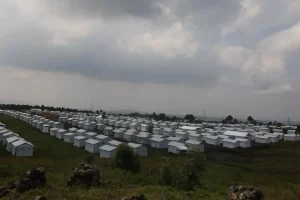
Crisis Group (International Crisis Group) is an organisation working to prevent wars and shape policies, to build a more peaceful world. On 12 February 2025 it conducted an online discussion over the topic: Big Priorities for the African Union in 2025: Zooming in on Sudan, DRC and Cameroon. This organization states that its experts then discussed eight priorities that Crisis Group has identified for the African Union in the year ahead. It adds that this online event acted as an opportunity for the experts to address what this organization can do to help solve the crises in Sudan, DRC and Cameroon.
Crisis Group says “The African Union (AU) will face important challenges in 2025. Catastrophic wars such as those in Sudan and the Democratic Republic of Congo have escalated over the past few months.
Meanwhile, neglected conflicts such as those in Cameroon’s Anglophone regions continue unabated. The economic context is equally difficult. With a distracted U.S. and the EU preoccupied with the wars in Ukraine and Gaza, the AU will need to take a more front-footed approach to try and pursue a resolution to conflicts on the continent.”
Education
As at Life In Humanity —through these articles: article 1 , 2 , and 3 among others—we have indicated it, Africa’s education sector remains in a dire state, demanding urgent and strategic interventions. The continent struggles with high dropout rates, inadequate infrastructure, and a severe shortage of qualified teachers, all of which hinder meaningful progress. While some countries have made commendable strides in expanding access to education, the quality remains a pressing concern, with millions of students lacking basic literacy and numeracy skills.
The AU Commission’s new chairperson, Youssouf, steps into office at a time when education reform does not just constitute a necessity but a prerequisite for Africa’s long-term development. Without addressing systemic deficiencies, the continent risks perpetuating cycles of poverty, unemployment, and underdevelopment. Wars and conflicts, particularly in Sudan, DRC, and Cameroon, further exacerbate educational disruptions, depriving children of learning opportunities.
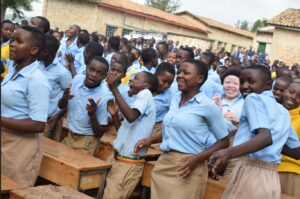
Additionally, underfunding in the education sector leaves many schools ill-equipped, forcing students to learn in overcrowded and resource-starved environments. The AU must take decisive action, fostering partnerships to enhance teacher training, digital learning access, and vocational education tailored to Africa’s economic needs.
Youssouf’s leadership will be tested by how effectively he prioritizes education alongside other critical challenges. His ability to push for transformative policies and secure substantial investments in education will determine whether Africa can cultivate a skilled and competitive workforce for the future.
Health
Also, as at Life In Humanity —through this article for exapmle—we have elucidated it, Africa’s health system remains fragile, burdened by inadequate funding, weak infrastructure, and a severe shortage of medical professionals. Several countries struggle to provide even basic healthcare services, leaving millions vulnerable to preventable diseases. Frequent outbreaks of malaria, cholera, and other infectious diseases continue to claim lives due to limited access to quality treatment.

The situation is further aggravated by conflicts in regions like Sudan, DRC, and Cameroon, where health facilities are often targeted or rendered inoperative. Meanwhile, non-communicable diseases such as diabetes and hypertension are on the rise, straining already overstretched health systems. Africa’s dependency on external aid for vaccines and essential medicines underscores the urgent need for self-sufficiency in pharmaceutical production.
The AU Commission’s new chairperson faces the daunting task of championing policies that strengthen healthcare resilience across the continent. Addressing health crises requires strategic investments in research, workforce training, and universal healthcare coverage. Without decisive action, healthcare disparities will continue to widen, deepening social and economic inequalities. Youssouf’s leadership will also be measured by how effectively he mobilizes resources and forges partnerships to transform Africa’s health system into one that is robust, inclusive, and sustainable.
Will he demonstrate unmatched leadership?
While we can’t accurately say whether he will be able to rise above the challenge and then prove to be an unparalleled leader or not, we underline that he will be unmatched, if he successfully addresses Africa’s most pressing issues. These include escalating conflicts, a struggling education system, and an overburdened healthcare sector.
We also emphasize that some of these challenges are extremely complicated and difficult to solve. Wars in Sudan, the DRC, and Cameroon demand urgent AU intervention, yet achieving peace will require exceptional diplomatic dexterity, political will, and the ability to navigate global power dynamics. Similarly, the education crisis in Africa necessitates large-scale reforms, innovative funding mechanisms, and stronger political commitment. On the health front, addressing both communicable and non-communicable diseases, strengthening health systems, and ensuring self-sufficiency in pharmaceutical production present additional hurdles.
If Youssouf can effectively mobilize resources, rally African nations around collective solutions, and push for policies that deliver tangible results, he will indeed have demonstrated that he actually possesses unrivaled leadership. However, given the magnitude of these challenges, his success will depend on bold decision-making, strategic alliances, and the ability to inspire trust among AU member states.