By Life In Humanity Analysis Desk
The late Helen Keller’s timeless words “When one door of happiness closes, another opens; but often we look so long at the closed door that we do not see the one which has been opened for us,” are a poignant reminder of human tendency to focus on what we’ve lost rather than what lies ahead. In life, we all encounter setbacks—moments when things don’t go as planned, or we face obstacles that seem insurmountable. These challenging times can feel like closed doors, locking away our happiness and leaving us disheartened and uncertain. Yet, as Keller’s words suggest, there is always a new door of opportunity waiting to be discovered.
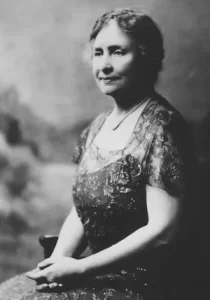
Keller (1880 – 1968), herself a remarkable example of resilience, faced unimaginable adversity from birth. Born both blind and deaf, she lived in a world where communication seemed impossible. But instead of being defeated by her circumstances, she persevered, broke through barriers, and ultimately became a symbol of strength, determination, and hope. Her life teaches us that even when doors of happiness seem to close, the key to finding joy lies not in staring at those doors but in shifting our focus toward the new ones that open before us.

This article will explore Keller’s profound wisdom by reflecting on how adversity often presents new opportunities, how to recognize these opportunities when they arise, and how to cultivate a mindset that allows us to embrace change and move forward with hope. By examining the importance of perspective, resilience, and the power of looking forward, we will see how even the most difficult moments can lead to new, brighter beginnings.
Our focus determines our future
When we face difficult moments in life, it’s natural to fixate on what we’ve lost. Whether it’s a job, a relationship, or a dream that has been dashed, the closed door often occupies our thoughts, leaving us unable to advance. However, this intense focus on what stands behind us prevents us from recognizing possibilities that lie ahead. In Keller’s quote, the key is in the shift of focus—from the closed door to the open one.
Adversity clouds our judgment, making it difficult to see beyond our immediate frustrations and disappointments. But as Keller teaches us, the act of looking toward what lies beyond the door we feel we’ve lost constitutes a critical step in finding our next opportunity. This shift in perspective is not easy, especially when we are emotionally invested in what was lost. However, by acknowledging that there is always something new awaiting us, if we are willing to see it, we can learn to transcend the closed doors and find hope in the unknown.
One of the greatest tools in overcoming adversity is the ability to reframe our thinking. Reframing allows us to view challenges not as insurmountable walls but as opportunities for growth and transformation. It’s a mindset shift that encourages us to ask: What can I learn from this? How can this experience propel me forward? When we embrace this perspective, we open ourselves to the possibility that the end of one chapter might signal the beginning of another, even more fulfilling one.
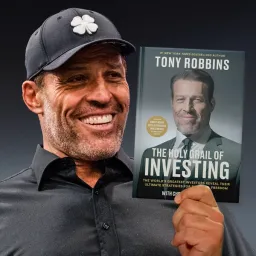
This is underlined by the American Tony Robbins in his book “Awaken the Giant Within”. He says “We all have dreams… We all want to believe deep down in our souls that we have a special gift, that we can make a difference, that we can touch others in a special way, and that we can make the world a better place. At one time in our lives, we all had a vision for the quality of life that we desire and deserve. Yet, for many of us, those dreams have become so shrouded [buried] in the frustrations and routines of daily life that we no longer even make an effort to accomplish them.
For far too many, the dream has dissipated—and with it, so has the will to shape our destinies. Many have lost that sense of certainty that creates the winner’s edge. My life’s quest has been to restore the dream and to make it real, to get each of us to remember and use the unlimited power that lies sleeping within us all.”
As Tony Robbins soared above Glendale in his jet helicopter, a profound realization struck him—he was no longer working as the janitor who feared that his car might break down during the daily commute. Hovering over the building where his dreams once seemed impossible to accomplish, he marveled at how a decade of struggle and self-doubt had paved the way for the extraordinary success he then lived. “I´ll never forget the day it really hit me that I was truly living my dream. I was flying my jet helicopter from a business meeting in Los Angeles, traveling to Orange County on the way to one of my seminars. As I flew over the city of Glendale, I suddenly recognized a large building, and I stopped the helicopter and hovered above it. As I looked down, I realized this was the building that I’d worked in as a janitor a mere twelve years ago!”
“In those days, I had been concerned whether my 1960 Volkswagen would hang together for the 30-minute trip to work, my life had been focused on how I was going to survive; I had felt fearful and alone. But that day, as I hovered there in the sky, I thought, ‘What a difference a decade can make!’ I did have dreams back then, but at the time, it seemed they’d never be realized. Today, though, I’ve come to believe that all my past failure and frustration were actually laying the foundation for the understandings that have created the new level of living I now enjoy.” For more about Robbins, you can read Tony Robbins’ hardships: proof that with adversity, you are on the right path to incredible success and transformation.
Resilience— bouncing back from setbacks
Keller’s own life is a testament to the power of resilience. Born into a world without sight or sound, she faced barriers that seemed insurmountable. Yet, instead of allowing these limitations to define her, she built a life of purpose and impact. She became an educator, an advocate for people with disabilities, and an author. Her story reminds us that resilience—the ability to bounce back from setbacks—is essential in transforming adversity into opportunity.
The National Women’s Hall of Fame constitutes an organization in the United States that honors and celebrates the achievements and contributions of women who have created a significant impact on the nation and the world in various fields. This organization was officially recognized as a charitable organization by the government in 1969. It states that it is the nation’s first and oldest nonprofit organization and museum dedicated to honoring and celebrating the achievements of distinguished American women. It reports “When she was nineteen months old, an illness left Helen deaf, blind, and mute.

An excitable, energetic child, she showed such signs of great intelligence that her mother sent for a private teacher. The teacher, young Anne Sullivan, herself formerly blind, managed to break through to communicate with Helen. The child loved to learn, and her remarkable achievements in reading, writing and speaking soon made her internationally famous.”
This organization adds that Helen obtained a bachelor’s degree from Radcliffe College, where Anne Sullivan accompanied her to every class and “spelled the lectures into her hand. Keller wrote poetry, toured on the Chautauqua lecture circuit, and published an autobiography, The Story of My Life. Helen became a member of the Socialist Party. She also supported groups like the Industrial Workers of the World, the American Civil Liberties Union, the National Association for the Advancement of Colored People, and Margaret Sanger’s birth control crusade.
In the 1920s, the newly established American Foundation for the Blind asked Helen Keller to help raise funds. She was a living testimony to the capabilities of a group once assumed to be dependent and vulnerable, and she spent the rest of her life as the most prominent advocate for the needs and rights of people with disabilities. She lobbied for measures to aid the blind, including reading services and Social Security acceptance.”
As illustrated by the organization, Helen Keller’s life forms a testament to the power of resilience and determination in overcoming unimaginable obstacles. Despite her disabilities, she defied expectations, earning a degree, writing, speaking out on behalf of marginalized communities, and championing the rights of people with disabilities. Her work is continuing to inspire, showing that with perseverance, even the most difficult challenges can lead to profound social change and advocacy for those who are often overlooked.
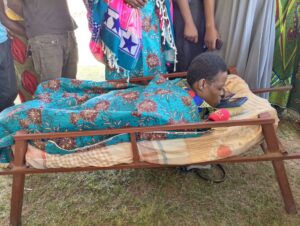
Her case reminds us of Agathe Hagenimana, as explained in these articles: Lying on her belly throughout life: Agathe Hagenimana’s unbreakable spirit and journey of resilience against all odds— and Agathe Hagenimana: a testament to human potential beyond limits. These two articles also feature an amazing lady, Brenda Michaels, who is another irresistible example demonstrating that we should not allow any obstacles to dominate us.
Resilience doesn’t entail avoiding pain or hardship; it instead includes learning how to adapt and thrive despite them. It’s about finding the strength to keep progressing, even when the path is unclear. In times of struggle, resilience permits us to view challenges as temporary and surmountable. It helps us to believe that we possess the inner resources to rebuild, reinvent, and create new opportunities, no matter how difficult the circumstances.
For example, imagine someone who has lost a job. It’s easy for them to become demoralized and fixate on the closed door—the job that has ended, the career that may feel over. But resilience teaches us to regard this setback as an opportunity for growth. Perhaps it’s time to explore a different career path, return to school, or develop a new skill set. When we approach setbacks with resilience, we turn the closed door into a stepping stone toward something greater. In other words, we don’t have to stop.
The late Dr. Martin Luther King Jr.’s powerful words strongly recommend us “If you can’t fly; then, run, if you can’t run then walk, if you can’t walk then crawl, but whatever you do you have to keep moving forward”. These words serve as a timeless reminder that persistence, in any form, forms the key to achieving our goals. For more about this, click on this piece.
Back to Keller’s story, in addition to the other stories and quotes, shows that even in the most limiting circumstances, resilience can lead to extraordinary outcomes. Her journey was glutted with apparently insuperable challenges, but she continuously adapted and embraced new opportunities, transforming her life into an extremely powerful example of how resilience fuels the ability to find and open new doors.
The importance of self-reflection and mindfulness
Sometimes—if not almost always, the closed doors in our lives are not just physical but emotional or psychological. We might be holding on to past failures, relationships, or dreams that no longer serve us. In these moments, we must turn inward, practicing self-reflection and mindfulness to understand where we are and where we want to go. By doing so, we can better recognize new opportunities that are opening around us.

Self-reflection helps us to understand our desires, strengths, and weaknesses. It encourages us to evaluate whether the doors over which brood were ever truly the right ones for us. Mindfulness, on the other hand, allows us to stay present and grounded, reducing the tendency to ruminate on the past and instead focus on the opportunities of the present moment. Both practices assist us to build the emotional clarity needed to notice the open doors that are waiting for us.
In times of hardship, self-reflection offers the chance to re-evaluate our goals and priorities. Does there occur a new path we can pursue? Are there strengths or interests we haven’t fully explored yet? Sometimes, when we disengage ourselves from what’s no longer serving us, we create the space for new beginnings. This is where mindfulness becomes crucial—it helps us to remain aware of the present moment, enabling us to free ourselves from the past and adopt the future with open arms.
For example, consider a person who has experienced the end of a relationship. It’s easy to stay stuck in the grief and pain of that loss, dwelling on what has been shut off. But through self-reflection and mindfulness, one realizes that this represents an opportunity for self-discovery and growth. Perhaps it’s time to focus on personal passions, reconnect with friends, or even explore new romantic possibilities in the future. In these moments of reflection, we gain the clarity to glimpse or discover the doors— of happiness and even incredible success still open— which could otherwise elude you.
The role of hope in new beginnings
Hope constitutes the spark that ignites the journey toward new doors. Without hope, it is easy to succumb to despair and feel that there exists nothing left to look forward to. Yet hope acts as the driving force behind every new beginning, no matter how small it may seem at first. Keller’s ability to persevere through her challenges and ultimately achieve incomparable greatness was fueled by her unshakable hope that something better was always possible.
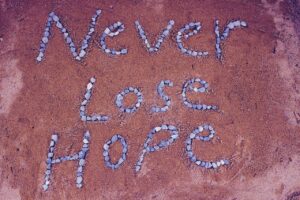
Hope allows us to maintain faith that we carry capabilities and that our future will eventually brighten, even when the way forward seems unclear. It motivates us to keep trying, even when the road appears too long and filled with obstacles. Hope is what helps us to see beyond the immediate pain of the closed door, focusing instead on the potential that lies behind the open one.
In the face of adversity—how insurmountable it seems, hope can also be cultivated by surrounding ourselves with supportive relationships, engaging in positive self-talk, and focusing on the possibilities that the future holds. Sometimes, hope grows from small actions—taking a step forward, setting a new goal, or simply believing that something better is on the horizon.
All the information above teaches us that hope is not passive; it is an active, intentional force that drives us to explore new paths and unlock new doors. Hope is the belief that, no matter what happens, there is always something better waiting for us, if we are willing to search for it.
Turning the page
Keller’s wisdom is continuing to resonate today, reminding us that even when one door of happiness closes, another one opens. However, in order to see that new door, we must shift our focus, build resilience, practice mindfulness, and nurture hope. Life abounds with challenges, but it is also filled with opportunities for new beginnings. As we navigate adversity, let us embrace the lessons which Keller has imparted: adversity is not the end but the beginning of new possibilities, and by looking forward with hope, we open ourselves to the doors of happiness that are waiting for us.
When life confronts us with problems that seem impossible to handle, it is not the problem itself but our response to it that defines our future. Just as Keller shattered every limitation placed upon her and Robbins revolutionized despair into dominance, we too must summon an unwavering will that refuses to be subdued by adversity. In the darkest moments, it is this supreme inner resolve that becomes the key—unlocking doors not just to recovery, but to a new, greater version of ourselves.
Best partnership https://shorturl.fm/A5ni8
We admire the comment!
Cool partnership https://shorturl.fm/FIJkD
Thanks! Glad you think so. It’s a partnership we’re really excited about. Feel free to check it out and let us know what you think—would love to hear your thoughts!