By Editorial Staff
In the unpredictable theater of global politics where power often hides behind a mask of misdirection, one statement has ignited a storm of speculation. Russian President Vladimir Putin’s recent claim of supporting Democratic candidate Kamala Harris has sent shockwaves through international circles, drawing the attention of major global media organizations and sparking a frenzy across social media platforms.
As debates rage on about whether Putin’s endorsement is genuine or a masterstroke of political chess, former President Donald Trump has added fuel to the fire by probably feigning disappointment, all while whispers grow louder that Putin’s real loyalty lies elsewhere. This tangled web of intentions and alliances underscores one undeniable truth: politics, at its core, is a puzzling game where reality and perception blur in a contest of global influence. Major parts which form this article:
- Some rationale in Putin’s claim
- Various sources contend the opposite of Putin’s statement
- Trump’s response to Putin raises suspicion too
- Conclusion
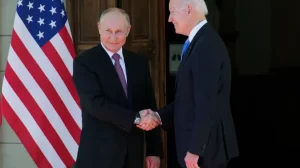
“We had the current president, Mr. Biden, as our favorite but he was taken out of the race. He recommended all his supporters back Mrs. Harris, so we will too,” Putin said with “a wry smile and an arched eyebrow,” according to The Associated Press (AP) in its September 5, 2024 article headlined “Russians mock US election allegations as Putin teasingly says he supports Harris.”
This headline alone suggests that Putin is not serious in his statement. The use of words like “mock” and “teasingly” implies that the statement is meant to provoke or amuse, rather than be taken as a genuine endorsement of Kamala Harris. It reflects a sarcastic or playful tone, rather than a sincere political stance.
With its 6 Sep 2024 article, Al Jazeera said “For two decades, Russian President Putin has stirred the US election pot, including by signalling support for candidates. The nature of Putin’s comments suggests he was joking, or trolling the Harris campaign, at a time when the US government under the Joe Biden administration has levelled new allegations that Russia is seeking to interfere in the November vote, to favour former President Donald Trump.
Yet whatever Putin’s motivations for the comments on Harris, they are the latest iteration of the Russian leader’s attempts to inject Moscow into the US electoral process.”
As soon as Life In Humanity learned that Putin declared that he stands behind Harris, the first impression which formed was that Putin could not be genuine. Unsurprisingly all mega media houses that Life In Humanity consulted align with it.
AP and Al Jazeera already suggest that Putin’s statement isn’t truthful. The Economic Times ran an article on 6 September 2024 in which it said “Was Putin teasing? Russian President Vladimir Putin made a playful comment suggesting that Russia supports the U.S. Vice President Kamala Harris in the upcoming presidential election. His remark centered on her ‘infectious’ laugh, saying it made her a preferable candidate compared to Donald Trump.”
On this subject of attractive smile, Putin said that Harris boasts an “expressive and infectious laugh,” which shows “she’s doing well,” according to AP.
If Harris is doing well, then “perhaps she will refrain” from imposing more sanctions on Russia, Putin said. “Some members of the audience were pictured laughing at his remarks.”
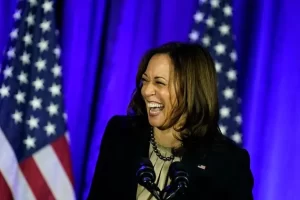
Al Jazeera underlines that the audience’s laughter was immense. “The audience broke into scatted [scattered] laughter as he said that if Harris is doing well, maybe she would not impose sanctions on Russia.” Putin was then in the Russian Far East port of Vladivostok for an economic forum on September 5, 2024.
One of the justifications for Putin’s choice of Harris sounds groundless. While other different media industries seem to imply the justification, The Economic Times direcly clarifies it, reporting “Putin explained his choice to bring up Harris by praising her animated and expressive laugh and hinting that it was a sign of her upbeat disposition. He continued, speculating that her behavior would indicate that she would refrain from putting additional sanctions on Russia.
Drawing a comparison between this and Trump’s administration, Putin pointed out that the latter had imposed more sanctions on Russia than any other American president.”
Justifying a political endorsement based on someone’s laugh or future assumed behavior as an indicator of their future policies can appear unconvincing. Putin’s explanation that Harris’ “infectious laugh” suggests that she might be less likely to impose sanctions upon Russia, especially when compared to Trump, seems an overly simplistic and non-compelling reason for political support.
Given Putin’s long-standing political experience, it is highly unlikely that a politician of Putin’s caliber would genuinely base geopolitical decisions just on laugh or assumptions. Instead, his statement could be seen as a strategic or humorous remark meant to distract from more complex political motivations. Putin is known for using humor and seemingly offhand comments to mask deeper intentions or to deflect attention from serious issues.
His political maneuvering, especially in foreign relations, typically involves more calculated and strategic reasoning than what he expresses publicly. It is likely that his support for Harris, if sincere, is rooted in a broader political calculation regarding U.S.-Russia relations rather than her demeanor.
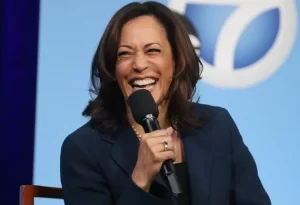
In this case, the comment about Harris’ laugh might serve as a public relations tactic, possibly aimed at softening his image or downplaying the significance of Russia’s involvement in U.S. elections. This kind of justification can easily be viewed as a strategic maneuver.
Some rationale in Putin’s claim
Nevertheless, it is affirmed that Trump was the hardest on Russia. Founded in 1999 at the University of California, the American Presidency Project (APP) constitutes a comprehensive online resource giving access to a wide range of documents pertaining to the U.S. presidency.
In its 20 October 2020 article, APP states “While Joe Biden failed to stand up to Russia during his 47 years in office, President Trump has taken tougher action against Russia than any past Administration. Trump and his administration have been tougher on Russia than any past administration.
[Former] President Obama’s Secretary of Defense Robert Gates says it’s ‘true’ that President Trump’s administration has been the toughest on Russia. President Trump has repeatedly pushed back against Russian attempts to threaten American institutions, including imposing sanctions on hundreds of individuals and entities suspected of attempted election interference.”
The following are instances or actions, according to APP, which are proofs of both Biden’s inability to resist Russia for his 47 years. APP also points a finger at the former President Obama, also a Democrat, under whom Biden served as the Vice-President. “Before the 2003 invasion of Iraq, Biden tried to buy Putin’s support for the war by promising him that profits from seized Iraqi oil would go to Russia. Within weeks of becoming Vice President in 2009, Biden suggested a reset with Russia and a closer relationship.
In 2011, Biden strongly supported Russia’s bid to join the World Trade Organization. When President Obama traded “flexibility” on missile defense for Russia’s help in winning the 2012 election, Biden defended it. In 2012, Biden mocked the idea that ‘Russia is still our major adversary,’ saying Russia was ‘working closely with us.’ In 2013, Obama and Biden failed to enforce their ‘red line’ in Syria, which ultimately emboldened Russia. When Russia invaded Crimea in 2014, Obama and Biden failed to provide lethal aid to Ukraine.”
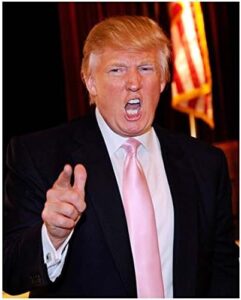
Nonetheless, according to the same source, “To hold Russia accountable for their repeated violations, President Trump withdrew the United States from both the Intermediate-Range Nuclear Forces (INF) Treaty and Open Skies Treaty. The Trump Administration imposed harsh penalties in response to Russia’s evasion of sanctions against North Korea, Syria, Iran, and Venezuela. President Trump placed strong sanctions on the Nord Stream 2 pipeline, warning Germany and other nations about the dangers of relying on Russian energy.”
The Arms Control Association (ACA) constitutes a non-profit organization based in Washington, D.C. It is devoted to promoting effective arms control policies and disarmament. Its article last reviewed in August 2019 elucidates the issue of the INF Treaty.
The Treaty obliged the United States and the Soviet Union to abolish and permanently renounce all nuclear and conventional ground-launched ballistic and cruise missiles with ranges of 500 to 5,500 kilometers. “The treaty marked the first time the superpowers had agreed to reduce their nuclear arsenals, eliminate an entire category of nuclear weapons, and employ extensive on-site inspections for verification. As a result of the INF Treaty, the United States and the Soviet Union destroyed a total of 2,692 short-, medium-, and intermediate-range missiles by the treaty’s implementation deadline of June 1, 1991.
The United States first alleged in its July 2014 Compliance Report that Russia was in violation of its INF Treaty obligations ‘not to possess, produce, or flight-test’ a ground-launched cruise missile having a range of 500 to 5,500 kilometers or ‘to possess or produce launchers of such missiles.’”
ACA further highlights that subsequent State Department assessments in 2015, 2016, 2017, and 2018 repeated these allegations. Obama and Biden took no action. “In March 2017, a top U.S. official confirmed press reports that Russia had begun deploying the noncompliant missile. Russia has denied that it is in violation of the agreement and has accused the United States of being in noncompliance.
On Dec. 8, 2017, the Trump administration released an integrated strategy to counter alleged Russian violations of the treaty, including the commencement of research and development on a conventional, road-mobile, intermediate-range missile system.”
Russia denied that it had violated the agreement, instead expressing its own concerns about Washington’s compliance. ACA said “Moscow charges that the United States is placing a missile defense launch system in Europe that can also be used to fire cruise missiles, using targets for missile defense tests with similar characteristics to INF Treaty-prohibited intermediate-range missiles, and making armed drones that are equivalent to ground-launched cruise missiles.”
According to ACA, on October 20, 2018, Trump announced his intention to terminate the INF Treaty, citing Russian noncompliance and concerns about China’s intermediate-range missile arsenal. On 4 December 2018, Secretary of State Mike Pompeo announced that the United States found Russia in “material breach” of the treaty and would suspend its treaty obligations in 60 days if Russia, did not resume compliance in that time.
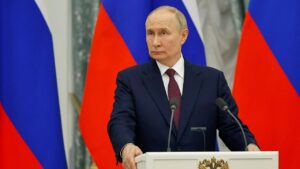
“After repeatedly denying the existence of the 9M729 cruise missile, Russia has since acknowledged the missile but denied that the missile was tested or is able to fly at an INF Treaty-range. Russian President Putin responded Dec. 5 by noting that Russia would respond accordingly to U.S. withdrawal from the treaty.
On March 4, 2019 Russian President Vladimir Putin signed a decree officially ending Russia’s participation in the treaty. Six months later, on Aug. 2, 2019, the United States formally withdrew from the INF Treaty.”
Various sources contend the opposite of Putin’s statement
In spite of all this, there prevail claims which underline that there exists no rift between Putin and Trump.
Meanwhile, before winning in 2016, Putin acclaimed Trump as “outstanding” and “talented,” according AP. It however adds that earlier this year, Putin suggested that Biden’s reelection would benefit Russia as he is “more experienced” and “predictable.”
Notwithstanding U.S. intelligence officials are among those who maintain that Moscow still bears a preference for Trump who has praised Putin and recommended to cut aid to Ukraine.
In July, U.S. officials within the Office of the Director of National Intelligence (ODNI), the FBI and the Department of Homeland Security indicated that Russia was working to boost Trump’s candidacy in this election cycle, as it reportedly did in 2016 and 2020, though they did not directly name his campaign.
“We have not observed a shift in Russia’s preferences for the presidential race from past elections, given the role the U.S. is playing with regard to Ukraine and broader policy towards Russia,” an ODNI official said in a July 9 election security update.
AP through its mentioned article says “Russian commentators on Thursday [5 September 2024] mocked allegations that Moscow was meddling again in the U.S. presidential election, and President Vladimir Putin appeared to bolster the teasing tone by wryly claiming he supported Vice President Kamala Harris.
On Wednesday, the U.S. Justice Department said the Russian state-owned broadcaster RT (Russia Today) is carrying out a covert campaign to influence the American public ahead of the election. Two state media employees were charged, and 10 people and two entities were sanctioned, with Kremlin-run websites seized.”
The Justice Department did not specify a candidate whom the propaganda campaign was meant to promote. “But internal strategy notes from participants in the effort released by the Justice Department make clear that former President Donald Trump was the intended beneficiary, even though the candidates’ names were blacked out.”
The recent USA’s actions including the charges against two Russian state media employees, among others, are designed to neutralize what they call Russia’s influence operations and propaganda efforts.
The two employees were accused of involvement in manipulating public opinion and promoting misleading narratives that support Russian geopolitical goals. The individuals and entities sanctioned are reportedly involved in efforts to spread Russian propaganda, and interfere in foreign political processes, especially in relation to the ongoing conflict in Ukraine and other geopolitical tensions. The seized Kremlin-run websites were allegedly disseminating disinformation and misinformation, often allegedly masquerading as independent news outlets.
ABC News in its 4 September 2024 story reports “The Biden administration seized Kremlin-run websites and charged two Russian state media employees in its most sweeping effort yet to push back against what it says are Russian attempts to spread disinformation ahead of the November presidential election.
The measures, which in addition to indictments also included sanctions and visa restrictions, represented a U.S. government effort just weeks before the November election to disrupt a persistent threat from Russia that American officials have long warned has the potential to sow discord and create confusion among voters. Washington has said that Moscow, which intelligence officials have said has a preference for Republican Donald Trump, remains the primary threat to elections.”
ABC News furnishes more details which assist to understand these charges. “One criminal case disclosed by the Justice Department accuses two employees of RT, a Russian state media company, of covertly funding a Tennessee-based content creation company with nearly $10 million to publish English-language videos on social media platforms including TikTok and YouTube with messages in favor of the Russia government’s interests and agenda, including about the war in Ukraine.
The two defendants, Kostiantyn Kalashnikov and Elena Afanasyeva, are charged with conspiracy to commit money laundering and violating the Foreign Agents Registration Act.”
All this casts doubt on Putin’s statement truth, as CNN’s 5 September 2024 article entitled “Vladimir Putin trolls US presidential race with ‘endorsement’ of Kamala Harris” also doubts the veracity of the claim. CNN says that despite the Russian leader’s vocal support of the Democrats, US Deputy Attorney General Lisa Monaco said on Wednesday that three Russian companies employed fake profiles, promoting false narratives on social media and that these companies acted at Putin’s direction. AP says “Internal documents produced by one of those Russian companies show one of the goals of the propaganda effort was to support Trump’s candidacy or whoever emerged as the Republican nominee for president, according to an FBI affidavit.”
“So what is Putin trying to accomplish? If the past is any guide, Putin is simply stirring the pot of US domestic politics. In December 2015, Putin praised Trump, calling him the front-runner months before the businessman secured the Republican nomination.” [Putin said] He [Trump] is a bright and talented person without any doubt. An outstanding and talented personality.”
AP notes “Putin’s view of the American political system makes even more sense when we are reminded of an insight from exiled Russian political journalist Mikhail Zygar, the author of ‘All the Kremlin’s Men.’ Zygar noted in an interview that Putin loved ‘House of Cards’ – the darkly cynical television series about Washington politics – and even recommended it to his ministers. ‘That’s his American politics textbook’.
It’s possible that Putin was simply trolling Harris by winking at a consistent insult from Trump about the way she laughs. So if Putin’s take on US election politics is seen through the lens of ‘House of Cards’, then, Putin’s support of Harris is a sort of Frank Underwood move: A kind of endorsement poisonous to its recipient.”
In its September 5, 2024 story, CBS News reported that a meeting of the Election Threats Task Force involved FBI Director Chris Wray and other top officials in the Justice Department. It further said that the Attorney General Merrick Garland said that RT being financed by Russia, had executed a scheme to fund the Tennessee-based company. Garland specified that the scheme’s purpose was to produce and propagate content “consistent with Russia’s goals of pushing division within U.S. society”, among others.
Garland stated that the Justice Department had seized 32 internet domains that “pro-Russian actors and the Russian government had used to engage” in a “covert campaign to interfere and influence the outcome of our country’s elections.”
CBS News said that Russia had initiated projects to reduce President Biden’s reelection campaign. “According to documents submitted by the Justice Department, one of the Russian campaigns, called the “Good Old USA Project,” aimed to reduce President Biden’s confidence rating among Americans before he dropped his reelection bid. The document appeared to have been prepared in late 2023.
Targets for the propaganda included residents of ‘conservative states where traditional values are strong who more often vote for candidates of’ an unidentified political party. Though redacted, the document appears to refer to the Republican Party.”
CBS News continued, saying “Documents about another Russian campaign, called the ‘U.S. Social Media Influencers Project,’ described the Republican Party as ‘currently advancing a relatively pro-Russian agenda’ that can be ‘exploited by posing as ardent [Republicans] and relaying the part of their agenda that coincides with ours.”
Trump’s response to Putin raises suspicion too
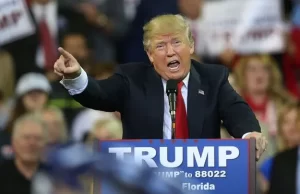
“I don’t know if I’m insulted or he did me a favour,” Republican challenger Trump responded at a campaign stop at the New York Economic Club on the same date when Putin pronounced the statement.
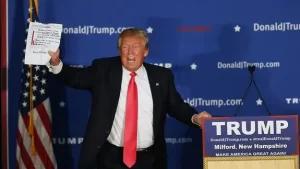
Trump is known for his aggressive and combative demeanor, particularly when faced with criticism or challenges. Throughout his career, both as a businessman and a politician, he has exhibited a confrontational style in various ways.
Trump’s response does suggest that he might not have been entirely surprised at Putin’s comment. His ambiguous reaction—stating he doesn’t know whether he feels insulted or favored—could imply that there lies some underlying understanding or prior awareness of Putin’s stance. The fact that Trump didn’t react with his typical aggressive style when challenged or insulted also hints at the possibility that this could be part of the plan that has generated Putin’s statement.
If Trump had genuinely been targeted, his reaction might have been more forceful or combative. Instead, his somewhat casual dismissal suggests that this could be a strategic move, one where the two are engaging in a form of political theater, where statements are delivered for public consumption, but with a deeper mutual understanding behind the scenes.
Conclusion
In the intricate dance of global politics, the recent spectacle involving Russian Putin’s purported endorsement of Harris and Trump’s measured reaction vividly demonstrates why politics is often described as a puzzling game. This complex interplay of statements and responses highlights the multi-layered nature of political maneuvering.
Putin’s comments about Harris, which all media outlets referenced suggest were sarcastic or teasing, illustrate how political endorsements can be used as strategic tools rather than genuine expressions of support. These outlets have pointed out that Putin’s remarks might form part of a broader strategy to influence public perception rather than a sincere endorsement of Harris.
Similarly, Trump’s subdued reaction to Putin’s statement adds another layer to this puzzle. Known for his aggressive and combative style, Trump’s lack of a forceful response implies possible calculated approach or strategic engagement between the two leaders. This restrained demeanor suggests that Trump might be playing along with a broader political theater, where the public display of reactions is designed to serve deeper, behind-the-scenes strategies.
The interplay between these two figures—Putin’s playful or strategic commentary and Trump’s ambiguous response—underscores the enigmatic nature of international politics. The global implications of their interactions reflect a broader truth: politics is a puzzling game where public statements and reactions often mask more complex strategic considerations.
The key proofs from the article—ranging from media analyses suggesting that Putin’s remarks were not serious, to the restrained response from Trump—demonstrate that political dynamics are rarely as straightforward as they appear. Instead, they are shaped by layers of strategic calculation and manipulation, highlighting the true nature of politics as an intricate and often perplexing game.
Moreover, even if Putin were truthful in his claim, the USA’s allegations like the one that Russia is meddling in its presidential election could justify that politics constitutes a bewildering game.
The interplay between Putin and Trump, along with the potential impact on the upcoming US election, underscores the broader implications for international relations. The issues between the US and Russia, particularly involving their top leaders, play a crucial role on the world stage. As these two global powerhouses navigate their complex relationship, their actions and statements ripple through international politics, affecting global stability and alliances. It is particularly felt in today’s world where modern technologies have transformed the latter one into a global village.