“Anxiety affects 284 million people in the world. Depression affects 264 million people. Alcohol use disorder affects 107 million people. Drug use disorder affects 71 million people. Bipolar disorder affects 46 million people. Schizophrenia affects 20 million people. Eating disorders affect 16 million people,” says SingleCare with its January 24, 2024 article headlined “Mental health statistics 2024.” Life In Humanity has observed that SingleCare’s data is based on 2018 statistics, but the information remains valid today.
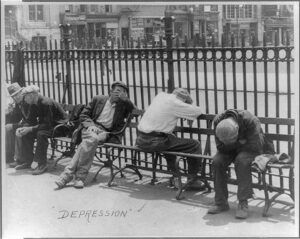
Statista Research Department’s report entitled ‘Mental Health Worldwide-Statistics& Facts’ published on January 8, 2024 reads “Mental health and substance use have become areas of increasing importance worldwide as they contribute to a high burden of disease as well as loss of life. A survey of people from 31 different countries around the world found that mental health was the biggest health problem respondents said was facing their country in 2023. Other health problems reported by respondents included cancer, stress, and obesity.” Life In Humanity believes that this report furnishes the latest information on this particular aspect of health. Major parts of the article:
- Some illustrative stories of mental health issues
- Success story of mental illness healed
- Most and least stressed countries/regions worldwide
- Causes of stress, its impact and action, according to Statista
SingleCare is a company implementing a prescription discount card program to help consumers save money on prescription medications. Employing the SingleCare card or app, individuals can obtain discounts on prescription drugs at “major” partner pharmacies across the United States such as CVS Pharmacy, Walmart, Walgreens and Kroger.
Meanwhile, Statista says that the release date of the survey report is September 2023, while it published the final report this year as already mentioned. This means that the survey report was first available in September 2023, probably as a draft or in a pre-final version, to provide early access to its findings or for review and feedback. Thus, the official publication of the final version took place this year. The discrepancy could also be due to some other strategic reasons of the organization.
Statista constitutes a German online platform specializing in data gathering and visualization, rated as a leading online statistics, data, and market research platform. It aggregates statistical data from over 22,500 sources, providing users with access to a wide range of information, including market trends, consumer behavior, and industry insights, among others.
Statista says that the survey was conducted from July 21 to August 4, 2023 worldwide, with 23,274 respondents, the age group being 16 to 74 years, through online panel as a method. These respondents were asked to select what they considered the biggest health problems affecting people in their country in 2023.
As mentioned, 44% of respondents indicated that mental health was the top health problem. This was followed by cancer, with 40% of respondents citing it as a major issue. Stress was ranked third by 30% of respondents. Other significant health problems identified by the survey included obesity (25%), drug abuse (22%), diabetes (18%), alcohol abuse (17%), and heart disease (15%).
Statista further states that as of 2017, 970 million people suffer from any mental health or substance use disorder worldwide.
Some illustrative stories of mental health issues
On 4 April 2014, The Guardian ran a story headlined “You are not alone: student stories of mental health.” The story starts with these words. “When I asked students to share their experiences of mental health at university, I had no idea of the reaction it would receive. Over five days we received over 200 stories. Many entries we weren’t able to include, for legal reasons or because the experiences described were too harrowing to publish.
Originally planned to stay open for two weeks, we decided to close the project early because there wasn’t the capacity to moderate the influx of entries. Each morning we were met with more stories – from students who opened up about their anxieties and struggles. If you are reading this and are dealing with a mental health issue yourself – you are not alone.”
Yet, Life In Humanity has not seen anywhere The Guardian identifies the person who says “When I asked students….” This unidentified person goes on, narrating that students shared stories of depression, anxiety, self-harm and suicidal thoughts. “Some spoke of diagnosed conditions such as obsessive compulsive disorder and bipolar disorder, and the distructive [destructive] effect these conditions sometimes have on their education.

When it came to lesser-known issues such as borderline personality disorder, students spoke of a lack of understanding about what they were going through. Others talked about the embarrassment they felt about asking for help. Some were as yet undiagnosed but clearly struggling: ‘I stay up all night crying’ was a common phrase.”
This story features some of the students’ poignant stories, but keeps them anonymous, so as to protect their personal information and privacy. One student said “My depression and anxiety started some time before I came to university, but leaving home, being in an extremely taxing social environment and being under large academic pressure all took their toll on me.”
Another one said “I always had a burning, itching, tormenting anxiety bubbling in my chest. At the time, my boyfriend had no comprehension of mental illness and would regularly tell me panic attacks didn’t exist, that I was stupid and that I had no friends.”
“Panic attacks followed by depression meant things rapidly spiralled out of control,” said another student. “I found I simply couldn’t think straight and my short term memory became terrible. The best description I could muster was that it felt as though the entire world had been rotated very slightly and nothing was the same anymore.”
Another one said: “I’m absolutely terrified of being in social situations in which I don’t know the people I’m speaking to – seminars are a nightmare. I’ve often missed my contact hours because I’ve been up all night crying and stressing and can’t face going in. I don’t feel like I can tell my tutors why I’m missing their classes, because I feel like they won’t believe me as I haven’t been officially diagnosed.”
Success story of mental illness healed
Life In Humanity has taken this success story from Massachusetts Medical Society (MMS)’s website. MMS, established in 1781, is a professional association of physicians and medical students based in Massachusetts, the United States of America. It is one of the oldest and most respected medical societies in the country.
“The onset of the disease was insidious, but even today, I still vividly remember the painful episode in my life. I completed high school, college, and medical school with great success. Everything seemed set, and I was about to start a residency program at a prestigious institution. It seemed as if my hard work had paid off and my dreams were realized.”
Very short time after this person not named too entered the institution, things changed. “However, six weeks into my residency, I was in trouble. I was repeatedly unable to complete my work in a timely fashion. In fact, I did almost everything, including walking down the hall and going to the bathroom, at a very slow pace.
In addition, I had trouble concentrating on even the simplest of tasks. Having always been blessed with an excellent memory, I noted with dismay that I was often unable to recall basic facts I had read. It was a frustrating time, since it had always been very important to me to do my work in a conscientious manner.”
This person performed every endeavor to overcome this adversity on their own but found it impossible. “Despite the demoralizing effect the ensuing negative feedback had on me, I resolved to overcome the hurdle. It was a very frustrating struggle, because no matter how hard I tried, I could not improve. I remained slow, inefficient, disorganized, and was almost always late — very late. It seemed as if my mind was paralyzed and I was condemned to play the role of the worst resident in the program. Slowly I began to wonder if I was contracting some sort of dementia.”
This resident finally discovered that they were experiencing a mental disease, which they had not suspected and was detected through a medical consultation. “Eventually I decided to schedule a medical workup to rule out any disease that could possibly be causing my symptoms. I desperately almost hoped that I would be vindicated by the diagnosis of some physical ailment. Instead, I was diagnosed with depression.”
When people know a curable disease from which they are suffering, they feel relieved. This person should also have felt soothed, after learning that they were facing depression as a treatable disease, but it didn’t constitute the case. This person instead felt that depression, unlike a visible or more traditionally accepted illness, is not seen as a valid reason or excuse for his/her shortcomings. They thought that while a physical illness might be more easily understood and accepted as a legitimate reason for poor performance, depression does not receive the same level of understanding or empathy. They said “Curiously, the diagnosis did not come as much of a relief. My condition proved to be a very isolating experience, and the isolation only intensified the disease and its accompanying shame and loneliness. I knew that many people — even some in the health profession — regarded depression as a character flaw rather than a true illness.
Depression would not exculpate me for my dismal performance as a resident in the same way, for example, a brain tumor would. Depression would not relieve me of the guilt about having failed at my job in the same way a diagnosis of hypothyroidism would. Most importantly, I could not talk to my peers about the pain of depression as I could if I suffered from migraine headaches or a bleeding stomach ulcer.”
This person however shares that the diagnosis did allow them to eventually receive proper treatment with medication and psychotherapy. “It was at this time that I found out about Physician Health Services (PHS) in Massachusetts. My participation in the weekly meetings at PHS as well as my sessions with my counselor played a very important role in my road to recovery.
For the first time in my life, I was surrounded by people who understood what it was like to go through life with depression. Though I am shy by nature, I was able to share my experiences with fellow physicians and find comfort and empathy instead of judgment.”

This former depression patient reveals a tactic used by the physicians, to treat him or her. “In turn, their inspiring stories gave me hope and strength, and I began forming friendships. The kind, helpful, and understanding individuals at PHS gave me the chance to see myself as a person with depression rather than a worthless resident, and allowed me to trade in the sentiment of shame for a sense of accomplishment and pride in battling the pain of depression.
The PHS contract was another valuable element of my professional rehabilitation, because it provided me with a structured program through which I could formally document my recovery under the guidance of my PHS associate director and designated monitors at work. The contract validated my illness, and I considered the successful completion of the contract a major milestone in my recovery.”
Unfortunately, this person was tested colon cancer-positive, two years after his initial diagnosis of depression. “While cancer provided me with another very unexpected hurdle in life, I also got the chance to experience, in juxtaposition, society’s starkly different reactions to mental and physical disease.
The same individuals who regarded my depression somewhat skeptically reacted with shock and ensuing full-hearted support in response to my cancer diagnosis, and I never had to explain to anyone that I was in pain. Interestingly enough, so far, my depression brought me far worse pain and suffering than the colon cancer has, yet, unlike the latter, the former leaves no visible scars on the body for others to see.”
This person commends PHS and similar organizations. “The wonderful people at PHS provided me with a lot of help and support, promoting my recovery at no cost to me. To the many health professionals who face illnesses that leave them impaired at work, organizations such as PHS represent one of the few avenues in our society through which they can achieve recovery and themselves promote the healing of others.”
Most and least stressed countries/regions worldwide
“Surveys fielded in 2023 in 142 countries around the world found that the countries/regions in which people were most likely to state that they experienced stress in the previous day were Northern Cyprus, Israel, and Nigeria.
In Israel, around 62 percent of respondents reported feeling stressed in the day prior to being surveyed,” says Statista. The information below presents countries/ regions which were the most stress-affected on the day prior to being surveyed.
|
Country |
Percentage of respondents |
|
Northern Cyprus |
65% |
|
Israel |
62% |
|
Nigeria |
59% |
|
Egypt |
58% |
|
Greece |
58% |
|
Lebanon |
58% |
|
Tanzania |
58% |
|
Türkiye |
58% |
|
Malta |
55% |
|
Sri Lanka |
54% |
|
Bolivia |
54% |
|
Cyprus |
53% |
|
Sierra Leone |
53% |
Statista highlights “Stress is a major health problem around the world. In 2023, a survey of adults from 31 countries asked what the biggest health problems facing their country were, and stress was the third most common response, behind cancer and mental health. The countries most likely to report stress as the biggest health problem in their country were South Korea, Turkey, and Switzerland.
At that time, around 44 percent of people in South Korea felt stress was their country’s biggest health problem, compared to just 15 percent of people in India and Great Britain. Young people worldwide are more likely to report moderate to severe symptoms of stress, but still, a quarter of those aged 65 years and older reported having moderate to severe symptoms of stress in 2022.”
With thorough investigation, you find that information provided by various sources differs especially on the most stressed countries in the world. For example, the CEOWORLD Magazine with its March 26, 2024 article says “Unsurprisingly, Afghanistan has been named the world’s most stressed country. Afghanistan is closely followed by South Sudan and then Burundi, Central African Republic and DR Congo.”

Notwithstanding, Statista mentions Northern Cyprus, Israel and Nigeria, among others. Life In Humanity has not been able to pinpoint reasons for the divergence, but it suspects that it may be due to the time factor and other issues. While Statista considered the day prior to the survey, CEO World Magazine could have assessed more days. Furthermore, it investigated subjects like work-related aspects which Statista didn’t.
CEOWORLD Magazine is said to be the world’s leading business magazine for CEOs, CFOs, high-level executive professionals, business leaders, and high net worth individuals. It addresses topics from leadership and innovation to health, wellbeing and life-changing travel.
CEO World Magazine says “April is Stress Awareness Month, and last year, money, the economy, and health issues emerged as the biggest sources of stress.”
This magazine adds that in efforts to assist people to take better care of their mental health, its report on the most and least stressed countries for 2024 represents a key resource. “This report helps identify which countries are doing well in terms of mental health and which ones need improvement. CEOWORLD magazine compared 211 countries and territories across four categories: work-related stress, money-related stress, family-related stress, and health- and safety-related stress.”
“In the present world scenario, several regions are grappling with numerous issues such as malnutrition, displacement, political corruption, social isolation, religious discrimination, prejudice, racist abuse, crime, unemployment, and underemployment. However, there are a few nations that provide a near-perfect experience with low levels of stress and high-quality living standards. These countries include Luxembourg, Liechtenstein, Ireland, Singapore, and Monaco.”
CEO World Magazine gives some clarifications on sources enabling Luxembourg to be almost stress-free. These explanations also help to understand factors contributing to the stress levels in other countries. “With the highest score of 97.79, Luxembourg tops this list as the least-stressed country in the world for 2024.
Luxembourg’s upscale, peaceful environment contributes to its stress-free status. Luxembourg attracts with its picturesque landscapes, medieval castles, cosmopolitan city life, financial hub status, multicultural ambiance, and high quality of life. Luxembourg is closely followed by Liechtenstein, Ireland, Singapore, and Monaco.”
Least stressed countries in the world in 2024_CEO World Magazine
| Rank | Country | Region | Total Score | Work-Related Stress Rank | Money-Related Stress Rank | Family-Related Stress Rank | Health- & Safety-Related Stress Rank | GDP (nominal) | GDP (nominal) per capita |
|---|
|
|
|
|
|
|
|
|
|
|
|
|---|---|---|---|---|---|---|---|---|---|
| 1 | Luxembourg | Europe | 97.79 | 97.93 | 97.59 | 97.65 | 97.99 | 89,095 | 135,605 |
| 2 | Liechtenstein | Europe | 97.7 | 97.89 | 97.44 | 97.64 | 97.83 | 6608 | 184,083 |
| 3 | Ireland | Europe | 97.51 | 97.88 | 97.29 | 97.36 | 97.49 | 589,569 | 112,248 |
| 4 | Singapore | Asia | 97.29 | 97.53 | 97.23 | 97.18 | 97.23 | 497,347 | 87,884 |
| 5 | Monaco | Europe | 97.1 | 97.51 | 97.18 | 96.61 | 97.08 | 8596 | 234,317 |
| 6 | Qatar | Asia | 96.88 | 97.11 | 97.14 | 96.32 | 96.94 | 235,500 | 81,968 |
| 7 | Macau (China) | Asia | 96.7 | 97.07 | 96.88 | 96.27 | 96.57 | 38,480 | 54,296 |
| 8 | Bermuda | Americas | 96.55 | 96.9 | 96.64 | 96.22 | 96.44 | 7551 | 118,846 |
| 9 | Switzerland | Europe | 96.04 | 96.49 | 96.15 | 95.18 | 96.33 | 905,684 | 102,865 |
| 10 | United Arab Emirates | Asia | 95.91 | 96.39 | 96.06 | 94.86 | 96.31 | 509,179 | 50,602 |
| 11 | San Marino | Europe | 95.65 | 96.1 | 95.72 | 94.66 | 96.13 | 1,998 | 58,541 |
| 12 | Norway | Europe | 95.38 | 95.83 | 95.03 | 94.53 | 96.12 | 546,768 | 99,266 |
| 13 | United States | Americas | 95.07 | 95.53 | 94.94 | 93.97 | 95.82 | 26,949,643 | 80,412 |
| 14 | Denmark | Europe | 94.82 | 95.32 | 94.31 | 93.85 | 95.8 | 420,800 | 71,402 |
| 15 | Cayman Islands | Americas | 94.68 | 95.19 | 94.12 | 93.71 | 95.68 | 5809 | 88,476 |
| 16 | Netherlands | Europe | 94.34 | 95.11 | 93.51 | 93.44 | 95.28 | 1,092,748 | 61,770 |
| 17 | Hong Kong (China) | Asia | 94.09 | 94.89 | 93.33 | 93.27 | 94.87 | 385,546 | 51,168 |
| 18 | Brunei | Asia | 93.8 | 94.44 | 93.28 | 92.8 | 94.68 | 15,153 | 34,384 |
| 19 | Taiwan | Asia | 93.5 | 94.26 | 93.25 | 92.77 | 93.72 | 751,930 | 32,339 |
| 20 | Iceland | Europe | 93.44 | 94.1 | 93.21 | 92.75 | 93.7 | 30,570 | 78,837 |
| 21 | Austria | Europe | 93.24 | 94.03 | 92.91 | 92.37 | 93.64 | 526,182 | 58,013 |
| 22 | Saudi Arabia | Asia | 93.01 | 93.54 | 92.54 | 92.36 | 93.6 | 1,069,437 | 32,586 |
| 23 | Andorra | Europe | 92.77 | 93.51 | 91.88 | 92.2 | 93.48 | 3,692 | 44,107 |
| 24 | Sweden | Europe | 92.52 | 92.94 | 91.66 | 92.04 | 93.43 | 597,110 | 55,216 |
| 25 | Germany | Europe | 92.22 | 92.84 | 91.36 | 91.93 | 92.73 | 4,429,838 | 52,824 |
| 26 | Belgium | Europe | 91.87 | 92.66 | 90.92 | 91.27 | 92.63 | 627,511 | 53,657 |
| 27 | Australia | Oceania | 91.6 | 92.25 | 90.6 | 91.16 | 92.39 | 1,687,713 | 63,487 |
| 28 | Malta | Europe | 90.97 | 91.57 | 89.44 | 90.91 | 91.96 | 20,311 | 38,715 |
| 29 | Guyana | Americas | 90.58 | 91.48 | 89.28 | 89.63 | 91.93 | 16,329 | 20,565 |
| 30 | Bahrain | Asia | 90.11 | 91.33 | 88.77 | 88.6 | 91.73 | 44,994 | 28,464 |
| 31 | Finland | Europe | 89.69 | 91.26 | 88.56 | 87.29 | 91.64 | 305,689 | 54,507 |
| 32 | Canada | Americas | 89.51 | 90.78 | 88.39 | 87.26 | 91.62 | 2,117,805 | 53,247 |
| 33 | France | Europe | 89.29 | 90.24 | 88.24 | 87.19 | 91.5 | 3,049,016 | 46,315 |
| 34 | United Kingdom | Europe | 89.14 | 90.19 | 88.11 | 87.17 | 91.07 | 3,332,059 | 48,912 |
| 35 | South Korea | Asia | 88.69 | 89.34 | 87.83 | 86.96 | 90.64 | 1,709,232 | 33,147 |
| 36 | Israel | Asia | 88.36 | 88.41 | 87.75 | 86.93 | 90.35 | 521,688 | 53,196 |
| 37 | Italy | Europe | 88.18 | 88.27 | 87.72 | 86.7 | 90.04 | 2,186,082 | 37,146 |
| 38 | Cyprus | Asia | 87.96 | 87.94 | 87.49 | 86.48 | 89.91 | 32,032 | 34,791 |
| 39 | New Zealand | Oceania | 87.52 | 86.74 | 87.46 | 86.21 | 89.65 | 249,415 | 48,072 |
| 40 | Japan | Asia | 87.17 | 86.39 | 87.3 | 85.64 | 89.35 | 4,230,862 | 33,950 |
| 41 | Kuwait | Asia | 86.84 | 86 | 86.73 | 85.32 | 89.29 | 159,687 | 32,215 |
| 42 | Slovenia | Europe | 86.73 | 85.96 | 86.7 | 85.18 | 89.08 | 68,394 | 32,350 |
| 43 | Aruba | Americas | 86.42 | 85.94 | 85.76 | 84.98 | 89 | 3,827 | 35,718 |
| 44 | Spain | Europe | 86.31 | 85.74 | 85.73 | 84.85 | 88.91 | 1,582,054 | 33,090 |
| 45 | Lithuania | Europe | 86.06 | 85.5 | 85.62 | 84.61 | 88.51 | 79,427 | 28,482 |
| 46 | Czech Republic | Europe | 85.96 | 85.43 | 85.6 | 84.5 | 88.29 | 335,243 | 30,475 |
| 47 | Poland | Europe | 85.63 | 85.36 | 84.95 | 84.1 | 88.11 | 842,172 | 22,393 |
| 48 | Estonia | Europe | 85.47 | 85.26 | 84.85 | 84.05 | 87.73 | 41,799 | 30,998 |
| 49 | Portugal | Europe | 85.22 | 85.03 | 84.83 | 83.86 | 87.14 | 276,432 | 26,879 |
| 50 | Bahamas | Americas | 84.96 | 85 | 84.69 | 83.68 | 86.47 | 13,876 | 34,371 |
Causes of stress, its impact and action, according to Statista
While this article has already covered them with CEO World Magazine, Life In Humanity has deemed it necessary to come back to them briefly.
Mental illness forms a complex and highly individualized experience, and its impact on daily functioning and work capacity differs immensely from person to person. Some individuals can execute daily tasks, while experiencing mental illness. However, others may qualify for disability due to their mental illness.
It means that for some individuals, mental illness may be well controlled by means of medication, therapy, or lifestyle adjustments enabling them to perform daily duties, including work, effectively. Others may find that their symptoms severely thwart their ability to work or manage daily responsibilities. As mentioned in the stories, the consequences of mental illness on daily life can include difficulties with concentration, motivation, emotional regulation, and social interactions. These challenges can vary in intensity and frequency, affecting an individual’s overall ability to function.

Statista states “Although stress is a global problem, the causes of stress can vary from country to country. In the United States, some common sources of stress include personal finances, politics and current events, relationships with family and friends, and work.
How stress manifests itself also differs, but common symptoms of stress include headache, fatigue, feeling nervous or anxious, feeling sad or depressed, and a loss of interest, motivation, and energy. A recent survey of U.S. adults found that around 36 percent stated that their mental health is negatively impacted when they feel stressed, while 32 percent said stress impacts their physical health. Some healthy ways to cope with stress include avoiding possible stress triggers like reading the news too often, exercising, eating healthy, talking to others, and avoiding drugs and alcohol.”
To obtain this information, Statista says that it conducted face-to-face interviews and telephone interviews with around 142, 000 18-year and older people in 142 countries.
Statista adds that primary causes of mental illness are classified into three major categories: biology, psychology and social ones. “Biology: genetics and family history may be a cause of mental illness. It’s also possible that exposure to alcohol or drugs in the womb was a factor.
Psychology: stressful events, like a traumatic experience, in a person’s life can alter their psychology and lead to a mental illness. Social: social factors like a person’s home environment, community, relationships, employment status and more can affect a person’s mental health.”
Statista recommends people to comprehend this model, because “It can lead to better treatment and understanding of a person’s mental illness. For example, a person may have symptoms of anxiety and depression after losing a job, which is treated differently than someone who may be struggling with depression due to biological factors.”
Your article helped me a lot, is there any more related content? Thanks!
Thank you for your sharing. I am worried that I lack creative ideas. It is your article that makes me full of hope. Thank you. But, I have a question, can you help me?
Dear Binance Signup, thank you a lot for your comment and we’d be delighted to learn more about the question and you can also employ the email which is on this website.
Your point of view caught my eye and was very interesting. Thanks. I have a question for you.
Your point of view caught my eye and was very interesting. Thanks. I have a question for you.
Thanks for sharing. I read many of your blog posts, cool, your blog is very good.
Can you be more specific about the content of your article? After reading it, I still have some doubts. Hope you can help me. https://accounts.binance.com/fr/register?ref=GJY4VW8W
I don’t think the title of your article matches the content lol. Just kidding, mainly because I had some doubts after reading the article.
I don’t think the title of your article matches the content lol. Just kidding, mainly because I had some doubts after reading the article.
I don’t think the title of your article matches the content lol. Just kidding, mainly because I had some doubts after reading the article.
Can you be more specific about the content of your article? After reading it, I still have some doubts. Hope you can help me.
Can you be more specific about the content of your article? After reading it, I still have some doubts. Hope you can help me.
Thank you for reading the article and for sharing your feedback—we really value it. We’d be delighted to help clear up any doubts you have. Could you let us know which points you’d like us to expand on so I can give you the most useful and specific clarification?
I don’t think the title of your article matches the content lol. Just kidding, mainly because I had some doubts after reading the article.
We are actually excited with your joke and are already prepared to eliminate your doubts, if you clarify them.
Your point of view caught my eye and was very interesting. Thanks. I have a question for you.
Thank you so much indeed. Please, ask the question so we can respond to it.
Thanks for sharing. I read many of your blog posts, cool, your blog is very good.
Thank you so much indeed.
Your point of view caught my eye and was very interesting. Thanks. I have a question for you.
Thank you a lot indeed. Please, ask your question.
Thanks for sharing. I read many of your blog posts, cool, your blog is very good.
We are extremely pleased to learn that.
Your article helped me a lot, is there any more related content? Thanks!
We’re truly glad to know that our article was helpful to you! Thank you for taking the time to share that with us. Yes, we do have more related content. You can explore similar stories on our platform.
Can you be more specific about the content of your article? After reading it, I still have some doubts. Hope you can help me.
Thank you for your feedback. We truly appreciate your interest in our article. Could you please let us know which parts you’d like us to clarify or elaborate on? We’ll be glad to provide more specific details to address your doubts.
We appreciate your thoughtful feedback. It would help us to know which aspects of the article left you with doubts so that we can provide more precise explanations or additional context. Our goal is to ensure that the content is as clear and informative as possible.
Your article helped me a lot, is there any more related content? Thanks! https://www.binance.info/ru/register?ref=V3MG69RO
We are thrilled with the help that the article has furnished for you; yes there is more related content.
Your article helped me a lot, is there any more related content? Thanks!
Yes, the website features more related content and we are very happy to hear that it has helped you a lot.
Thanks for sharing. I read many of your blog posts, cool, your blog is very good.
Thank you very much indeed!
Thanks for sharing. I read many of your blog posts, cool, your blog is very good. https://www.binance.info/bg/register?ref=V2H9AFPY
Thrilled to learn that!
Thank you for your sharing. I am worried that I lack creative ideas. It is your article that makes me full of hope. Thank you. But, I have a question, can you help me?
Thank you for your sharing. I am worried that I lack creative ideas. It is your article that makes me full of hope. Thank you. But, I have a question, can you help me? https://www.binance.info/sl/register?ref=I3OM7SCZ
We are delighted to learn that it is our article that fills you with hope. As we are here for our esteemed community to which you belong, we will be truly pleased to receive your question and address it.
Your point of view caught my eye and was very interesting. Thanks. I have a question for you.
Thanks so much! We’re really delighted that our point of view has caught your eye. We’d love to help—what’s your question?
I don’t think the title of your article matches the content lol. Just kidding, mainly because I had some doubts after reading the article.
While we consider your joking, we are also serious at addressing your doubts as soon as you elucidate them to us.
Your article helped me a lot, is there any more related content? Thanks! https://www.binance.com/register?ref=IXBIAFVY
We thank you a lot. Yes, there is more related content.
Your article helped me a lot, is there any more related content? Thanks!
Happy to learn that. Yes, there is more related content.
Your point of view caught my eye and was very interesting. Thanks. I have a question for you.
We are delighted with the feedback. Please, ask the question.