By Life In Humanity Analysis Desk
The veteran diplomat Dennis Ross, in a striking analysis of America’s changing global role, paints a sobering picture of a country constrained by both external rivals and internal doubts. Once acknowledged as the undisputed lion of global power, could the United States now be likened to an old lion in the geopolitical jungle—still fearsome, but no longer unchallenged? Ross, a former special assistant to President Barack Obama, is the counselor and William Davidson Distinguished Fellow at The Washington Institute.
To better understand the basis for this comparison, we invite you to explore Ross’ piece, as published by The Washington Institute on 4 March 2025: Here’s Why the U.S. Is No Longer the World’s Only Superpower.
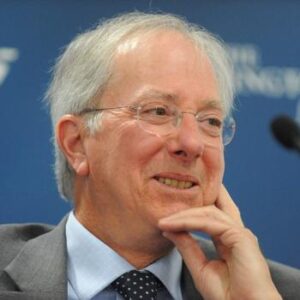
Ross about the USA’s current power
The article is opened by these words “Mismatching objectives and means has repeatedly produced failure and undermined consensus, but Washington no longer has the luxury of bad statecraft on pressing issues like Iran’s nuclear program.”
“Over the past several decades, the world order has shifted. Today, the United States is no longer a unipolar uber-power, and this shift has dramatic implications for those inside, and outside, of our borders. I have long been a student and practitioner of statecraft. For four decades, I worked for both Democratic and Republican Presidents, including as the head of Policy Planning for President George H.W. Bush and as a Special Envoy for President Bill Clinton, as well as a member of the National Security Council staff for Presidents Ronald Reagan and Barack Obama.”
He adds “In 2006, I wrote a book about statecraft to explain what I felt was missing from the foreign policy of George W. Bush. Statecraft involves using all the tools that we have—diplomatic, economic, military, intelligence, management, information, organization—to advance our interests, deter threats, and defend the country. At the time, I felt that the Bush policies, especially the decision to go to war in Iraq, reflected little understanding about what the U.S. was getting into—and we paid the price with a very costly war, with very limited gains, as a result. One of the ironies of writing a new book on statecraft is that I was able to analyze how President Bush changed during his second term, particularly with regards to Iraq.”
“In deciding to go to war in Iraq in 2003, the president presided over a groupthink that assumed away the prospect of failure. There was no real debate about the pros and cons of going to war, and those who did raise questions were increasingly excluded from the decision-making process. But by 2007, our policy was failing and Iraq was disintegrating into a sectarian war,” highlights Ross before adding “It was President Bush who raised hard questions about our strategy, and his national security advisor, Steve Hadley, made sure there was a systematic review of all options.
The processes could not have been more different—and so were the results. Bush made the decision to surge forces which restored some security to Iraqis, stopped the sectarian violence, and produced greater stability. While it was interesting to see how the same administration applied statecraft far more effectively in its second term, I chose to do a new book on statecraft not simply to take another look at history and draw lessons about how to do it well. I wrote a new book because the world is so different today from the one I was describing nearly 20 years ago.”
The air of that era carried a peculiar certainty—a sense that the arc of history bent neatly toward American design. Yet beneath the surface, faint tremors were already hinting at the tectonic shifts to come, ripples that would swell into the geopolitical storms of today. “Back then, the world was a unipolar one. American power dwarfed all others. We had no real competitors. China was using the institutions we built internationally—like the World Trade Organization—to accelerate its economic growth even as it did not always play by the rules for mutual trade and investment.
The U.S. tolerated China’s violation of those rules, in no small part because we very much dominated the world. Russia was not challenging us yet—though in 2007 at the Munich Security Forum, Vladimir Putin signaled what would be coming when he decried the idea of a unipolar world and said the Russians and others could not accept it. At the time, his assertion did not change the reality of U.S. hegemony.”
The stage on which America strides is no longer bathed in the clear spotlight of unquestioned dominance. The lights have fractured, casting long shadows where rivals gather and old allies hesitate, as the chorus of challenges swells both beyond her shores and within her own walls. Ross underlines “But the reality is different today. Internationally, we face China and Russia as global competitors—with China posing both an economic and military challenge. Regionally, we face challenges from Iran and North Korea. America may still be the world’s strongest power—economically, technologically, and militarily—but we must now operate in a multipolar world in which we face constraints. And the constraints are not only international, they are also domestic.
The rise of populist and nationalist policies, embodied by [US] President Donald Trump and Vice President JD Vance, are raising basic questions about the U.S. role in the world. In 2006, I was writing about an America that was debating our role in Iraq but still believed in U.S. leadership internationally. Wars in Iraq and Afghanistan raised basic questions about the cost of our role in the world and eroded the consensus that America must lead.”
In the unforgiving calculus of geopolitics, ambition without alignment constitutes a recipe for disaster, according to Ross. He emphasizes that every goal the USA sets on the world stage becomes a wager—one measured not only in resources and resolve, but in the clarity with which she rallies others to her side before the time runs out. “The lesson is to think carefully about our stakes and the feasibility of the objectives we adopt. The higher our stakes, the greater the means we should be ready to apply to achieve them. How we frame or explain our objective is also essential not just to win domestic support but also to gain international backing. President Trump has not prioritized strengthening connections with our allies, and yet allies have means that could augment our own. Similarly, smart and early framing of objectives can win greater international support and backing for what we seek.
Take the issue of Iran and its nuclear program. If Iran gets a nuclear bomb, the Saudis, Egyptians, and Turkish will likely feel they must have one as well, and a region characterized by conflict will become far more dangerous. And yet, the Iranians are moving closer to having such a weapon by accelerating the program and enriching 30 kilograms a month of uranium to 60%, very close to weapons grade. With Iran now accumulating more than 10 bombs worth of highly enriched uranium, the danger of it moving relatively quickly to a bomb is real—as is the likely Israeli belief that it must act militarily against Iran before that happens.”
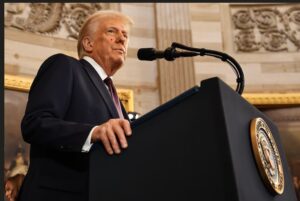
The following is advice that he provides for Trump. “What should Trump’s objective be? It is not enough to stop Iran from producing a nuclear bomb; the goal must be to prevent it from preserving the option of producing one later. For that he must put pressure on Iran that the Iranians find meaningful: it needs to be political, as isolation is something the Iranians seek to avoid; it needs to be economic so that Iran feels the increasing alienation of its public; it needs to be military so that the Iranians know that they could lose their entire nuclear infrastructure, one they have been investing in for nearly 40 years, if diplomacy fails.
The Trump Administration will need to frame the issue, explain the danger of what Iran is doing, and mobilize the world to isolate the Iranians and demonstrate that there is an option for a diplomatic outcome, one in which Iran is permitted civil nuclear power, provided Iran takes it. The instinct to go it alone will leave us without partners and reduce the prospect of succeeding without the use of force—something President Trump clearly prefers. The art of statecraft is adopting the right objective and maximizing all our tools to get others to join with us in achieving it. Can the Trump Administration do that? If President Trump wants to ‘win’ he will have to make sure it does.”
Can this advice materialize?
Implementing this advice—especially while key powers like China and Russia are pursuing divergent interests—is extremely difficult, if not impossible.
The Asan Forum is an online publication for in-depth interpretation of rapid changes across the Asia-Pacific region. It released a 12 May 2025 article headlined “The Collapse of the US-led World Order: China Gains Ground but Not Ready to Replace It”. The article reads “The Rise and Fall of the US-led Postwar Order. The United States led the construction of the postwar order comprising the UN and the US-led global alliance system. Commanding the world’s largest economy, most capable military, and arguably strongest geographic position, the US made an exceptional commitment to becoming a world leader in defending liberal norms and creating a thriving free world economy.”
It further points out “Using both carrots and sticks to entice other countries to join the international order, the US sometimes compromised or ceded to other countries’ interests to maintain the liberal order. The US-led alliance protected countries thousands of miles away and cultivated democracy in distant lands. War persisted, but great power war and outright territorial conquests became artifacts of an earlier age. The postwar order produced unprecedented global prosperity and relative peace, notwithstanding many faults, mistakes, hypocrisies, and contradictions of US leadership.
The global power balance shifted significantly in the 21st century. As the US share of global GDP declined from roughly half of global GDP after World War II to about 25% today, the US can hardly sustain global leadership. Although American hubris continued to costly, humiliating wars in Afghanistan and Iraq, well before Trump’s ascent, many Americans had developed fatigue with key aspects of American global leadership, unwilling to pay the high costs to pursue the liberal order, provide public goods, and protect distant allies.” Hubris, according the Cambridge Dictionary, means a way of talking or behaving that is too proud—an extreme and unreasonable feeling of pride and confidence in yourself.
The result is the election of Trump twice, according to this publication. “Trump has long maintained that the costs of US global leadership outweigh the benefits, saddling it with the burden of policing the globe and enabling its allies to play it for a sucker”. As his Secretary of State Marco Rubio notes it, continues The Asan Forum, “The postwar global order is not just obsolete, it is now a weapon being used against us.”
The New York Times ran an opinion by John Rapley on 3 September 2023. Rapley and Peter Heather have authored the book “Why Empires Fall: Rome, America and the Future of the West.” This opinion is entitled “America Is an Empire in Decline. That Doesn’t Mean It Has to Fall.”
Rapley says “Like modern America, Rome attained a degree of supremacy unprecedented in its day. But the paradox of great imperial systems is that they often sow the seeds of their own downfall. As Rome grew rich and powerful from the economic exploitation of its peripheries, it inadvertently spurred the development of territories beyond its European frontiers. In time, the larger and politically more coherent confederations that emerged acquired the ability to parry — and eventually roll back — imperial domination.
In the same way, America’s decline is a product of its success. Although developing countries grew more slowly in the postwar period than their Western counterparts, they still grew. By the end of the century, they had started to convert that expanding economic clout into political and diplomatic power. Not only had they begun to acquire the capacity to negotiate better trade and financial agreements, but they also had a crucial bargaining chip in the form of two resources Western businesses now needed: growing markets and abundant supplies of labor.”
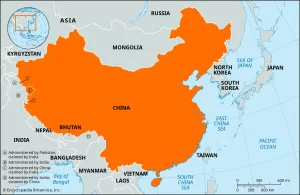
For instance, the USA has played a significant role in China’s rise as an advanced nation, particularly through economic, technological, and educational interactions over the past few decades. This involves USA-China trade relations, foreign investment with U.S companies investing heavily in China, technological transfer and collaboration, and educational exchange, among others. For example, thousands of Chinese students have studied in the U.S., particularly science, technology, engineering, and mathematics fields. Several of these students have returned to China, carrying advanced knowledge and skills which have been instrumental in China’s development.
Rapley says “The USA still has sources of power that nobody can seriously rival: a currency that faces no serious threat as the world’s medium of exchange, the deep pools of capital managed on Wall Street, the world’s most powerful military, the soft power wielded by its universities and the vast appeal of its culture. And America can still call upon its friends across the globe. All told, it should be able to marshal its abundant resources to remain the world’s leading power.”
However he advises to this country “To do so, though, America will need to give up trying to restore its past glory through a go-it-alone, America First approach. It was the same impulse that pushed the Roman Empire into the military adventurism that brought about its eventual destruction. The world economy has changed, and the United States will never again be able to dominate the planet as it once did. But the possibility of building a new world out of a coalition of the like-minded is a luxury Rome never had. America, whatever it calls itself, should seize the opportunity.”
The point is also supported by Joseph Nye—Harvard University Distinguished Service Professor, Emeritus— in his piece of writing entitled “The Rise and Fall of American Hegemony From Wilson to Trump”. The abstract of this piece published on Harvard Kennedy School’s website reads “Now with less preponderance and a more complex world, American exceptionalism in terms of its economic and military power should focus on sharing the provision of global public goods, particularly those that require ‘power with’ others.”
The advice Ross provides—pressuring Iran politically, economically, and militarily while rallying international partners—remains theoretically sound but practically fraught. Reports, including U.S.-based fact-checks, indicate that Trump’s claims of having “obliterated” Iran’s nuclear program were exaggerated or debunked, highlighting the gap between ambition and reality. The Asan Forum, The New York Times, and experts like Rapley and Nye all emphasize that America can no longer rely on unilateral dominance to achieve global objectives. U.S. power, though still formidable, must now be exercised in collaboration with allies and in alignment with broader international systems if it is to produce sustainable outcomes.
Ambition alone does not secure victory; in today’s multipolar world, American objectives risk total failure unless pursued in collaboration with major global players, particularly Russia and China— through careful framing and alignment of means with achievable ends.
Response to the question proper
Reading Ross’s analysis and other available pieces, one can’t help but see the United States as an old lion in the geopolitical jungle: still fearsome, but no longer undisputed. Surrounded by rising predators and weakened by its own internal wounds, it now survives more on reputation than invincibility. In this new world, brute strength isn’t enough — cunning persuasion, cooperation especially with other major global players such as China and Russia, coordination, and clarity of purpose are remaining as the lion’s only path forward.
Lee H. Hamilton— with his 22 May 2024 article titled “Hamilton on Foreign Policy #245: The U.S. is no longer the dominant superpower” published on News at IU [Indiana University]—points out “It was an article of faith, through most of my life, that the United States was the world’s dominant power. We had the most powerful military, the biggest and most vibrant economy and the most influential culture. For better or worse, we were the envy of the world.”
“If we’re honest, we have to admit that’s no longer the case. It’s not that America has grown weak. Rather, the world has changed in multiple ways. The rise of China, the unification of Europe, the changing global economy and other factors have reshaped the dynamics of power.”
From the ashes of global wars, the United States once emerged not just as a survivor, but as the architect of a new world order—yet today, safeguarding that legacy demands far more than past glories. It demands wise choices and stronger alliances, as Hamilton reminds us. “This has implications for American foreign policy. To protect our national interests and to be a positive force in the world, we’ll have to make wise decisions and make the most of alliances. Historians often mark the rise of the U.S. as a world power to the Spanish-American War of 1898 and, later, to America’s entry in World War I.
We became dominant with World War II, which left much of Europe and Asia in ruins and left the United States stronger than ever. Those of us who are over 50 came of age in a bipolar world. On one side were the United States and its allies; on the other were the Soviet Union and China. Other nations aligned with one side or the other. The Cold War was contentious, but there was no doubt America was the greatest power. With the collapse of the Soviet Union in 1991, the world became unipolar, with one superpower.”
“Today we live in a ‘G-Zero’ world, a nonpolar world without global leaders, in the words of political scientist and author Ian Bremmer,” Hamilton adds, before asking “How did this happen?”
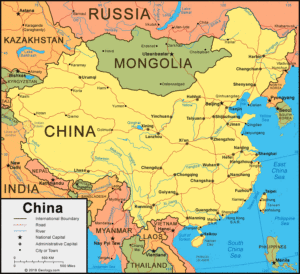
To respond to this question, he states “The rapid rise of China was certainly a factor. Starting in the late 1970s, China adopted economic reforms and began prioritizing trade. The results were remarkable: hundreds of millions of Chinese were lifted out of extreme poverty. Under Xi Jinping, an aggressive China has promoted its model of state-controlled capitalism and expanded its influence in Asia and Africa.
The creation of the European Union in 1993 consolidated Europe’s economic and political power. With 27 member states, the EU is aligned with the United States but provides an alternative to American power. India, Brazil, Saudi Arabia and other nations have grown their influence. Russia is no superpower; but, under Vladimir Putin, it has threatened and bullied its neighbors. It has a vast nuclear arsenal, and its war in Ukraine looks like an attempt to regain some of the fearsome power that it lost with the breakup of the Soviet Union.”
For decades, the United States has wrestled with the weight of its superpower status—pride in its might tempered by the exhaustion of endless wars and the uncertainty of its global role. Hamilton says “Finally, many Americans became uncomfortable with the superpower role, arguably starting with the failures of the Vietnam War. We grew weary of never-ending wars in Iraq and Afghanistan and skeptical of our ability to shape world events. Donald Trump’s ‘America First’ slogan echoes the isolationists who opposed U.S. entry in World War II.
It’s true that, by most measures, the United States remains the most powerful nation. We still have the largest economy, the most effective military and the greatest cultural influence. But we may never again have the kind of dominance we once had. We ought not assume that we will. Regardless, we should do what we can – as citizens and as voters – to keep America strong. We should encourage our leaders to engage with the world, to support and lead military and economic alliances, and to contribute to the world’s peace and prosperity. We may not be quite the dominant superpower we once were, but we can and should be a formidable force for good.”
While Hamilton argues that the US has not become weak, there exist sources that blatantly say so. The Hoover Institution at Stanford University, Le Monde and Pew Research Center are some of them.
The Hoover Institution, in its 31 March 2016 article titled “America the Weak” reported “We’re losing our wars because our enemies do not fear us and our allies don’t trust us.”
“We invaded both Afghanistan and Iraq with inchoate [nascent/not fully developed] plans and inadequate forces to establish post-war security and governance. After winning the first battle in both countries, President George W. Bush offhandedly decided to build democratic nations, a task for which our State Department and US Agency for International Development had no competence or interest. By default, the mission fell to our military, also without competence but with unflagging devotion and determination.
In both countries, our true enemies were rabid warriors determined to win or die. For us, the wars were limited—fought with few forces and many restraints. When the Islamists proved dedicated to an unlimited struggle, we reversed course and withdrew. True, President Bush did increase US forces in Iraq in 2007 and that stabilized the country. However, in 2008 he agreed with the sectarian, serpentine Prime Minister Nouri al-Maliki to withdraw all American troops by 2011. He threw away his success.”
Le Monde— in its 12 April 2025 piece entitled “Thomas Piketty: ‘The reality is the US is losing control of the world’”— states “ The United States is no longer a reliable country. For some, this is nothing new. The Iraq War, launched in 2003 – resulting in over 100,000 deaths, lasting regional destabilization, and the return of Russian influence – had already shown the world the wrongdoings of American military hubris. But the current crisis is new because it challenges the very core of the country’s economic, financial, and political power. The US appears disoriented.”
The following are words that open this piece of writing. “The American president wants the ‘Pax Americana’ to be sustained by tribute payments from the rest of the world in order to endlessly fund US deficits. But with American power already in decline, we must begin to imagine a world without it, the economist writes in his column.”
The piece adds “If Trumpists are pursuing such a brutal and desperate policy, it’s because they don’t know how to respond to the country’s economic decline. Measured in purchasing power parity – meaning the real volume of goods, services, and equipment produced each year – China’s GDP surpassed that of the US in 2016. It is currently more than 30% higher and will reach double the US GDP by 2035. The reality is that the US is losing control of the world.”
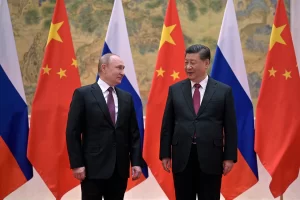
“More serious still, the accumulation of trade deficits has pushed the country’s public and private external debt to unprecedented levels (70% of GDP by 2025). The rise in interest rates could lead the US to have to pay substantial interest flows to the rest of the world, something it had so far escaped thanks to its grip on the global financial system. It is in this context that we should interpret the explosive proposal by Trumpist economists to tax interest payments to foreign holders of US securities. More directly, Trump wants to refill his country’s coffers by seizing Ukrainian minerals, along with Greenland and Panama.”
It adds “From a historical perspective, it is worth noting that the enormous US trade deficit (about 3-4% of GDP on average each year from 1995 to 2025) has only one precedent for an economy of this size: It correspondents roughly to the average trade deficit of the major European colonial powers (United Kingdom, France, Germany, and the Netherlands) between 1880 and 1914. The difference is that those countries held vast external assets which brought in so much interest and dividends that it was more than enough to fund their trade deficit while continuing to accumulate claims in the rest of the world.”
With the last paragraph, it stands clear that historically, the United States’ large trade deficit—averaging 3–4% of GDP annually from 1995 to 2025—is nearly unmatched for an economy of its size. The only comparable case involves the major European colonial powers during the period. However, since those nations owned extensive overseas assets that generated ample income, it allowed them to cover their trade deficits comfortably. Unlike them, the U.S. lacks such vast external holdings, making its situation structurally different and potentially more precarious.
A trade deficit occurs when a country imports more goods and services than it exports. This means it is spending more on foreign products than it is earning from selling its own goods abroad. The difference between the value of imports and exports is called the balance of trade—and when this balance is negative, it constitutes a deficit. A persistent trade deficit can lead to borrowing from other countries or selling national assets to cover the gap.Bottom of Form
Pew Research Center in its 1 May 2025 essay entitled “The United States’ standing in the world” states that Americans generally see their country as respected and powerful on the world stage, but “they think the United States’ global influence is waning. While 91% say it is important for the U.S. to be respected around the world, a much smaller share (56%) say it is respected.
52% of Americans say their country’s influence in the world is getting weaker, roughly the same share as in 2024. But compared with last year, Democrats are much more likely – and Republicans less likely – to say U.S. influence is declining.”
Thus, the United States remains a lion—powerful, respected, and feared—but no longer the undisputed ruler of the geopolitical jungle. It is an older lion, relying on experience, strategy, and alliances to maintain its influence amid rising challengers. Will this lion ever rejuvenate or not? While we cannot accurately predict it, one truth stands: only time will tell. And in the realm of possibility, nothing can be declared impossible with certainty.