By Jean Baptiste Ndabananiye
Various researchers, policymakers, and journalists have explored this issue: Why do millions of people worldwide still lack access to basic healthcare despite advances in medical technology?
Yet, the problem persists. Why do billion-dollar medical innovations fail to reach those who need them most?What exactly is missing to finally eradicate this crisis? What if fixing global healthcare isn’t about more technology, but about changing power structures? More importantly, what unconventional strategies could successfully address it? This article is designed to thoroughly address those questions, beginning with the status of the problem.
Status of the problem
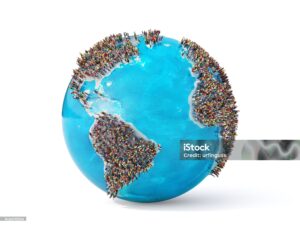
In its August 16, 2024 story headlined “3 ways the world can move from ‘health crisis’ to ‘care for all”, the World Economic Forum (WEF) states “More than half the world’s population, that’s 4.5 billion people, do not have full healthcare access.
Among them, around 1.3 billion people are being forced deeper into poverty, or extreme poverty, by financially devastating payments for health services. Efforts to ensure each of the world’s 8 billion people has health cover have made little overall progress in recent years.”
The World Health Organization (WHO) published an article titled “Close to one billion people globally are served by health-care facilities with no electricity access or with unreliable electricity” on 14 January 2023. The article was generated by details from a report by the WHO, the World Bank, the International Renewable Energy Agency (IRENA), and Sustainable Energy for All (SEforAll).
The article specifies that those people are those living in low- and lower-middle income countries. WHO nevertheless says “Access to electricity is critical for quality health-care provision, from delivering babies to managing emergencies like heart attacks, or offering lifesaving immunization. Without reliable electricity in all health-care facilities, Universal Health Coverage cannot be reached.”
The staggering reality outlined by the WEF and the WHO underscores an undeniable truth—global healthcare remains deeply inequitable, despite medical and technological advancements. With 4.5 billion people lacking full healthcare access and 1.3 billion falling deeper into poverty due to medical costs, it is clear that the current system is failing those who need it most. Furthermore, the fact that nearly one billion people rely on healthcare facilities without reliable electricity highlights a fundamental infrastructure crisis that technology alone cannot solv.
These are not just numbers; they represent lives lost, futures derailed, and a widening gap between medical progress and real-world accessibility. Without decisive action, the promise of universal healthcare will remain just that—a promise unfulfilled.
Why do billion-dollar medical innovations fail to reach those who need them most?

Billionaires like Jeff Bezos, SamAltman and Peter Altiel are investing heavily into the longevity sphere. New York Post released a story titled “Behind the billionaire-backed longevity business — and the innovations that could help us live longer” on January 7, 2025.
The story reads “Jeff Bezos, Sam Altman and Peter Thiel can buy whatever they want — even eternal youth? Tech billionaires are pouring massive amounts of their fortune into the bitter battle to be the best Benjamin Button, propelling the market for life-extending therapeutics into a $25 billion business.”
Despite such billions of dollars being spilled into cutting-edge medical technologies, access to basic healthcare remains out of reach for the billions as already indicated. Tech moguls like Bezos, Altman, and Thiel are driving the longevity industry into a $25 billion market, funding groundbreaking research that promises to extend human life.
Yet, while the ultra-wealthy invest into reversing aging, the billions of people worldwide struggle to access essential healthcare services. This stark contrast raises urgent questions: who truly benefits from these medical breakthroughs? Why do vast sums flow into high-tech innovations while fundamental health needs go unmet? Without addressing these disparities, medical progress risks deepening global healthcare inequalities rather than solving them.
Billion-dollar medical innovations fail to reach those who need them most, for a number of reasons including economic disparities and market forces, profit-driven healthcare systems, infrastructure and distribution barriers, inequality in research focus, and regulatory and policy gaps. Persistent conflicts and poverty constitute major reasons behind the entire crisis.
Economic disparities and market forces
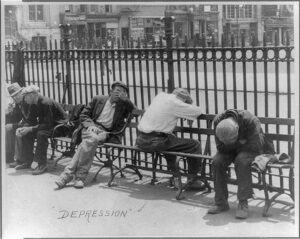
Billion-dollar medical innovations often cater to wealthier markets, due to the high costs of development, production, and distribution. These advancements, particularly in areas like personalized medicine or longevity therapies, are usually designed with high-income populations in mind.
The price tag for such treatments often remains prohibitive, ensuring that only those with substantial resources or healthcare coverage can afford them. As a result, a vast majority of people in low- and middle-income countries—who are most in need of basic healthcare—remain excluded.
Profit-driven healthcare systems
In many cases, medical innovations are developed by private companies that prioritize profitability over universal access. While billion-dollar investments in healthcare technologies can bring substantial returns, they are not always aligned with public health goals.
Health systems in wealthier countries, for instance, might focus on high-margin treatments rather than more affordable, essential healthcare that could benefit the most vulnerable populations. This profit-driven model limits the broader distribution of life-saving innovations.
Infrastructure and distribution barriers
Even when breakthroughs in medical technology are made, the global healthcare infrastructure is often ill-equipped to handle the distribution of such technologies to underserved areas. For example, many low-income regions still struggle with basic infrastructure like electricity, reliable transportation, and qualified healthcare personnel—factors critical to ensuring that new technologies, such as life-extending therapeutics, reach those who need them most.
Inequality in research focus

Billion-dollar investments in medical innovations often prioritize diseases or conditions that prevail in wealthier populations, like cancer or genetic disorders. Rural and marginalized populations in developing nations face diseases like malaria, tuberculosis, and maternal complications, but research funding does not always address these issues with the same urgency.
Wars and poverty
Moreover, relentless wars often devastating infrastructure render it even more difficult to deliver medical aid and technology to conflict zones. In war-torn regions, hospitals are destroyed, supply chains disrupted, and access to medicines severely limited, all of which exacerbate healthcare disparities.
Wars also contribute to these imbalances where for instance resources which ought to be injected into research are diverted toward treating injuries from conflict or diseases arising in post-conflict environments, while the routine healthcare needs of vulnerable populations are neglected.
Wars and poverty are profoundly interlinked. Wars and poverty create a vicious cycle where one exacerbates the other. Conflict destroys infrastructure, disrupts economies, and forces mass displacement, plunging affected populations into deeper poverty. Meanwhile, poverty itself fuels instability, making societies more vulnerable to conflict as people struggle for scarce resources or fall prey to extremist groups.
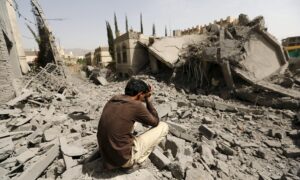
A prime example is how ongoing wars in countries like Yemen, the Democratic Republic of Congo, and Syria have devastated livelihoods, pushing millions into extreme poverty. On the other hand, economic hardships and inequality often breed resentment, increasing the likelihood of civil unrest and war.
The World Bank in its Poverty, Prosperity, and Planet Report 2024 Report states “Today, almost 700 million people (8.5 percent of the global population) live in extreme poverty – on less than $2.15 per day. Progress has stalled amid low growth, setbacks due to COVID-19, and increased fragility. Poverty rates in low-income countries are higher than before the pandemic.
In 2024, Sub-Saharan Africa accounted for 16 percent of the world’s population, but 67 percent of the people living in extreme poverty. Two thirds of the world’s population in extreme poverty live in Sub-Saharan Africa, rising to three quarters when including all fragile and conflict-affected countries.”
People in extreme poverty generally struggle to afford even the most basic healthcare. Limited financial resources mean they may not be able to pay for medical consultations, essential medicines, or life-saving treatments. Even when healthcare services are technically free or subsidized, hidden costs—such as transportation to a clinic, lost wages from missing work, or the need to buy medical supplies—aggravate the difficulty of accessing treatment.
As a result, several people in extreme poverty rely on traditional medicine, self-treatment, or delay seeking care until their condition worsens, sometimes with fatal consequences.
Shortage of healthcare staff
The shortage of healthcare staff is a critical issue hindering access to essential medical services, particularly in low-income and conflict-affected areas. Several regions struggle with an insufficient number of trained medical professionals, leading to overburdened healthcare systems and compromised patient care.
This shortage is exacerbated by factors such as brain drain, where skilled workers migrate to wealthier nations, and the impact of wars which displace medical personnel and destroy healthcare infrastructure. As a result, even when advanced medical technologies become available, there are simply not enough healthcare workers to effectively implement them, leaving vulnerable populations without the care they need.
What exactly is missing to finally eradicate this crisis?
What is truly missing in the effort to eradicate the healthcare crisis is not just technological advancements or even increased investment in healthcare infrastructure, but genuine, comprehensive mechanisms to address poverty and the root causes of wars. Poverty remains one of the biggest drivers of poor health, and without addressing the economic disparities that trap billions in cycles of deprivation, we cannot hope to provide equitable access to healthcare.
Similarly, conflicts that devastate entire regions undermine health systems, displace millions, and create long-term barriers to basic medical care. To realize real progress, there needs to be a concerted effort to reduce poverty and prevent wars—through sustainable development, peacebuilding, and international cooperation—that allows healthcare to reach those who need it most. Until these root causes are tackled, medical advancements, no matter how groundbreaking, will continue to be out of reach for many.
Back to the WEF’s article, it states “Artificial intelligence [AI] can address healthcare challenges. A severe shortage of healthcare workers is a significant factor limiting access to healthcare. The WHO estimates a deficit of 10 million health workers by 2030, mostly in low- to middle-income countries.”
The WEF’s research, according to the WEF, has found that generative AI could enhance productivity of healthcare workers, allowing them to get more done with the same number of people. As an example, the white paper says “AI models can create images and text sufficiently human-like to automate many of today’s manual tasks—everything from transcribing doctor-patient visits and drafting emails to summarizing clinical studies and dispensing general health information.”
The WEF adds that generative AI can expedite the analysis of unstructured datasets to help medical staff gain more accurate insights. “AI-powered chatbots could also be used to hold ‘more intuitive, human-like conversations with patients and caregivers that can help inform care decisions and spur action’. Another significant enhancement AI is poised to bring is a more comprehensive level of engagement between patients and healthcare services”.
While the WEF’s research on generative AI’s potential to enhance healthcare productivity is compelling, it risks oversimplifying the complex, multifaceted nature of the healthcare crisis. While AI may indeed streamline certain tasks, such as transcribing doctor-patient visits or summarizing clinical studies, it does not directly address the fundamental issue of access—especially in regions where healthcare infrastructure is lacking or already overwhelmed.
Generative AI could improve efficiency in settings where healthcare professionals are already present, but it does little to resolve the shortage of healthcare staff in underdeveloped or conflict-affected regions. AI-powered chatbots, for instance, might assist in providing general information, but they cannot replace the human empathy and expertise required for effective patient care, particularly in underserved areas where patient needs are complex and individualized.

Moreover, AI alone cannot address the root causes of healthcare inequities, such as poverty, lack of education, or the devastating impact of wars. In fact, without addressing these systemic issues, AI might exacerbate existing inequalities by benefiting wealthier populations with better access to technology, while leaving the most vulnerable populations further behind.
True progress in healthcare must involve not just the deployment of advanced technologies, but also meaningful interventions to reduce poverty, prevent conflict, and build sustainable healthcare systems that reach everyone, not just those with access to cutting-edge tools.
What if fixing global healthcare isn’t about more technology, but about changing power structures?
Power structures refer to the systems, hierarchies, or frameworks that determine how power is distributed and exercised within a society, organization, or group. These structures define who holds authority, makes decisions, and influences others.
- In governments, power structures include political institutions, leaders, and policies that shape laws and governance.
- In corporations, they involve executives, managers, and employees, dictating decision-making and control.
- In society, power structures can be seen in economic systems, social classes, or cultural norms that maintain influence over people’s lives.
To truly fix the global healthcare crisis, it’s not enough to focus solely on technological advancements; the root of the problem lies in the power structures that perpetuate inequities in access. While billion-dollar innovations can push the boundaries of medical progress, they often cater to wealthier populations, leaving the most vulnerable behind.
These disparities are driven by profit-driven healthcare systems, where corporate interests prioritize high-margin treatments for the wealthy over essential services for the poor. Additionally, wars and global economic systems exacerbate the issue by diverting resources away from healthcare to military spending, deepening the gap between the haves and have-nots.
A shift in power is essential—one that reimagines healthcare as a universal right, not a commodity to be bought and sold. This involves dismantling the corporate monopolies, redistributing resources, and refocusing on public health systems that prioritize the needs of the most marginalized. Only by addressing these power dynamics can we ensure that medical innovations benefit everyone, not just the privileged few.
More importantly, what unconventional strategies could successfully address it?
Unconventional strategies to address the global healthcare crisis must challenge the existing power structures and prioritize equity. One approach could involve adopting a universal healthcare model that emphasizes collective ownership and community-based solutions, shifting power away from profit-driven private entities.
For example, establishing public health networks where local communities control the distribution of healthcare resources and services could ensure more equitable access. Furthermore, governments and international organizations could partner with local grassroots movements to address social determinants of health—such as poverty, education, and nutrition—by investing in long-term, sustainable development initiatives rather than short-term, reactive responses.
Another unconventional strategy might involve the democratization of medical knowledge and technology. By open-sourcing healthcare innovations, such as diagnostic tools or medical research, marginalized regions could gain access to cutting-edge treatments and technologies, bypassing the traditional gatekeepers of global healthcare.
Additionally, innovative funding models like social impact bonds or cooperative healthcare funding, where wealthier nations and corporations contribute to global healthcare development based on their profits, could redistribute financial resources in a way that ensures equity across regions.
Finally, integrating alternative healing systems alongside conventional medicine—especially in regions with limited access to formal healthcare—could improve health outcomes. Acknowledging and supporting indigenous health practices, as well as focusing on prevention and holistic care, might offer innovative, culturally appropriate solutions that better resonate with local populations. The WHO also supports this point.

In its 10 August 2023 story headlined “Traditional medicine has a long history of contributing to conventional medicine and continues to hold promise”, the WHO says “Tapping nature and indigenous knowledge to advance modern medicine. Leveraging ancient practices to eradicate global diseases. In addition to learning from how ancient cultures tapped natural resources for health, we have also looked to traditional community-based health practices for answers to modern diseases.
With remarkable and rapid modernization of the ways traditional medicine is being studied, new technologies and technological innovation could show the way and provide a deeper understanding of the tangible benefits of traditional medicine. It is an exciting time in research about traditional medicine products and practices, which are increasingly used by people around the world. With increased use comes more research and more evidence to establish what works and what doesn’t. And the research looks really promising.”
To conclude, all those unconventional strategies require global cooperation and a fundamental shift in how healthcare is perceived: not as a luxury for the few, but as a right for all.
The global healthcare crisis is not a failure of medical progress but a failure of power structures that dictate who benefits from innovation. While billion-dollar investments push the boundaries of science, from longevity research to AI-powered diagnostics, these advancements remain inaccessible to billions immobilized in the bondage of poverty, conflict, and systemic neglect. The reality stands stark—modern medicine may be extending the lives of the wealthy, but it is failing to save those struggling for survival.
If true healthcare equity is to be realized, the solution does not lie in more technology alone. It demands a paradigm shift—the restructuring of economic priorities, healthcare policies, and global development strategies to ensure that no one is left behind. Wealthier nations and industry leaders must be held accountable for ensuring that breakthroughs are not confined to luxury but serve the fundamental right to health for all. Efforts must go beyond charity and corporate social responsibility; they must dismantle the barriers that keep billions in the shadows of medical progress.
Ultimately, the question is not whether humanity possesses the means to provide healthcare for all—it does. The question is whether we ooze the collective will to change the systems that decide who lives and who is left to suffer. The future of global health depends not on what we invent next, but on who we choose to uplift today.