By Jean Baptiste Ndabananiye
Africa stands at a crossroads—its rich resources and youthful population position it as one of the most promising regions for global growth. Yet, despite its immense potential in the creative, digital, and green sectors, the continent’s narrative has often been overshadowed by the weight of its challenges. While storytelling can be a powerful tool to reshape perceptions, the story of Africa’s future cannot be one-sided. It’s not enough to merely highlight the opportunities; we must also confront the obstacles that stand in the way.
Beyond attracting global investment, the true power lies in recognizing and empowering the innovative solutions and leadership emerging from within the continent. As Africa takes ownership of its own narrative, balancing both its current struggles and transformative potential will be the key to unlocking a future shaped by its own vision.
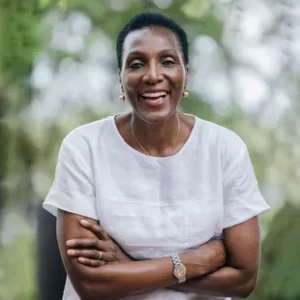
That is a point eloquently raised by Moky Makura— the executive director of Africa No Filter, an advocacy organization that is shifting “stereotypical narratives” about Africa through storytelling. She emphasizes that Africa’s future hinges not only on external investments but also on its ability to harness and amplify the voices and solutions already rising from within. She shared her insights with the platform—SEMAFOR, in a piece of writing headlined “Analysis: Reframing an optimistic Africa” published on 28 April 2025.
The dual nature of Africa’s story: challenges and opportunities
Makura calls for reframing Africa’s narrative to focus on its potential, specifically in the creative, digital, and green economies. “We’ve been warned about the danger of a single story, but I would argue that maybe that’s not such a bad thing if that single story is deliberate. The world’s perception of Africa is fragmented — caught between images from charity campaigns, wildlife, Afrobeats, and emerging market potential.”
The phrase “danger of a single story” refers to the idea that when a complex situation, culture or group of people is understood or represented from only one perspective, it leads to a narrow, incomplete, and often misleading understanding. This concept was popularized by the Nigerian author Chimamanda Ngozi Adichie in her TED Talk and subsequent writings.
Adichie argues that when we only hear one narrative about a person, place, or issue, it can perpetuate stereotypes and prevent a deeper understanding of the diverse realities that exist. For example, focusing solely on poverty in Africa or on violence in the Middle East creates a one-dimensional portrayal of these regions, ignoring the rich cultures, achievements, and positive developments occurring there.
The “danger” lies in the fact that when only a single story is told, it limits our perceptions and can lead to misinformed decisions, prejudice, or discrimination. By embracing multiple stories and perspectives, we can form a more balanced, nuanced, and accurate understanding of the world.
Makura points out “Soon to be published research from Professor Adam Hahn of the University of Bath, commissioned by Africa No Filter, shows that many people still associate Africa with hostile, uninhabitable environments; societal problems like political instability, disease, corruption; and more worryingly, a perceived lack of culture and advancement in contrast to Europe’s rich history and modernity.
The research proved that these negative perceptions are directly linked to a lower interest in African products, culture, and engagement opportunities. As a result, the 1,000 participants in the study showed a clear preference for European products over African ones, with a particular bias against ‘serious’ items like medicine and technology.”
Makura furthermore states “But there is a solution. The study tested the theory that if participants were shown stories that highlighted the continent’s progress, perceptions would shift significantly, and interest in African products and culture increased. So, what if stories of Africa’s progress were framed around a concept so simple, compelling, and universally understood that they could shift the narrative, trigger more global investment, and unleash the continent’s full potential?”
She emphasizes that Africa’s true opportunity lies in a candid framing that reveals not only the continent’s challenges but also its boundless potential for growth and transformation. “Opportunity is a framing that doesn’t sugarcoat the continent. On the contrary, it exposes both its challenges and its immense potential. It’s a telling of our story that not only elevates Africa today but also speaks to a better continent tomorrow — one fueled by optimism. If we focused on just three sectors where Africa holds a natural advantage; the creative, digital, and green economies, we could unlock one of the most exciting growth stories of our time. With our youthful talent, Africa is a creative powerhouse.”
Africa stands at the brink of a transformation, poised to harness its immense untapped potential and redefine its future, according to Makura. She says that from vibrant beats of its music to sweeping landscapes that cradle its natural resources, the continent offers boundless opportunities waiting to be unlocked. In the creative, green, and digital sectors, she argues, Africa’s next chapter is ready to be written, and with the right investment, it can become the world’s most dynamic force for innovation and progress.
She says “The opportunity to invest in creative infrastructure — film studios, music distribution platforms, intellectual property protection — is vast and untapped. With our rich natural assets, Africa can lead the global shift to a green economy. And in the digital space, we’ve shown what’s possible by leapfrogging into mobile telephony. We can do it again.
This is a once-in-a-generation opportunity for investors, philanthropists, donors, and the business community. It will take a small shift in the way we frame our stories, but the building blocks are there. Africa is, after all, the world’s greatest untapped opportunity — and that’s a powerful story.”
While Makura acknowledges the importance of reframing Africa’s narrative to focus on its potential, she does not merely support a single story approach. Instead, she advocates for a deliberate, balanced portrayal that recognizes both the continent’s challenges and opportunities.
Rather than ignoring the complexities, Makura’s vision is to highlight Africa’s progress and immense potential in sectors like creativity, digital innovation, and green economies—ultimately reshaping perceptions through a story that is both realistic and forward-looking. This nuanced approach ensures that the narrative does not sugarcoat Africa’s realities but instead empowers the continent to redefine its future on its own terms.
Other sources confirm abundant opportunities on the continent
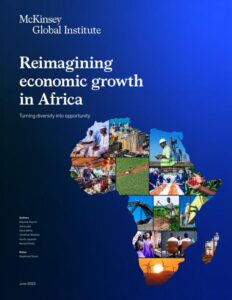
McKinsey Global Institute is an organization established in 1990, with the mission to provide a fact base to aid decision-making on economic and business issues most critical to the world’s companies and policy leaders. On 5 June 2023, this institute published an article headlined “Reimagining economic growth in Africa: Turning diversity into opportunity”.
It says “Africa has the human capital and natural resources to accelerate productivity and reimagine its economic growth, which is, more than ever, vital for the welfare of the world. Africa is home to the world’s youngest and fastest-growing population, burgeoning cities, and bold innovations in everything from fintech to clean energy. With its population expected to nearly double to 2.5 billion people by 2050, the continent presents myriad opportunities for robust, inclusive growth that harness its rich natural resources and abundant human potential to increase prosperity not only in Africa but around the world.
These strengths and assets present a chance for the continent to vastly improve its productivity and reverse the economic deceleration it endured from 2010 to 2019. GDP [Gross Domestic Product] growth fell 35 percent over that period—and then the COVID-19 pandemic took hold, followed by the Russian invasion of Ukraine. Those events set off shifts that are still working their way through the global economy. Today, 60 percent of Africa’s population lives in poverty, the result of per capita income growth that has averaged just 1.1 percent a year for the past several decades.”
This institute indicates that across the vast tapestry of Africa, stories of resilience and ingenuity flicker like stars against a night sky too often clouded by sweeping generalizations. It underlines that beneath the surface of daunting headlines, countries, cities, and sectors pulse with vibrant energy, carving new pathways toward prosperity. It adds that it is within these shining examples of innovation and growth that Africa’s true economic promise reveals itself—a promise that contains vital lessons not just for the continent, but for the world.
It explains “Yet the continent-wide statistics obscure successes in many of its constituent countries that can serve as models to establish productivity as the foundation of Africa’s economic growth. Over the past decade, certain countries, cities, sectors, and companies have been beacons of innovation, productivity, and growth—there is no ‘one Africa.’ In those beacons lie lessons and innovations that can reinvigorate the African economy. Our new research indicates that abundant growth and development are still possible in Africa, still happening—and, more than ever, vital for the welfare of the world.”
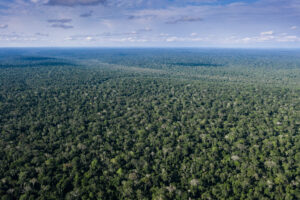
The World Economic Forum is another source maintaining that Africa is endowed with abundant opportunities. For example, in its 28 February 2024 story entitled “Green finance: The Key to unlocking Africa’s vast potential and combating climate change”, it states “The African continent is central to global efforts to combat climate change. The continent’s geography — from forests to sweeping coastlines — positions it as a potential major player in renewables and carbon abatement.
Africa’s vast solar and wind energy potential offers a path to reduced emissions and economic development. Additionally, the continent’s forests play a crucial role in carbon sequestration, potentially generating revenue through carbon trading if challenges like market development and regulation are addressed.”
The following are articles which address Africa’s challenges and opportunities: Africa at the fiscal crossroads, If Chinaseeks to strengthen talent development, why can’t African nations do the same?, Reforming Africa’s education ,and Colossal issues awaiting the African Union Commission’s new boss.
Awesome https://is.gd/N1ikS2
Thank you! We’re really glad that you’ce found it awesome. We appreciate you taking the time to check it out!
Good https://is.gd/N1ikS2
Thank you, Cayden2536, for your feedback.