By Jean Baptiste Ndabananiye
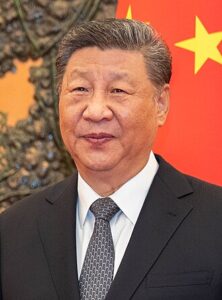
Xi Jinping and Shri Narendra Modi both lead the world’s two most populous nations—giants that together shape nearly every global equation. China’s Xi Jinping and India’s Narendra Modi stand as symbols of modern power, steering neighboring countries whose ambitions stretch across continents. Yet behind their commanding presence on the world stage lies a striking similarity: both men have risen from remarkably humble beginnings. From hardship to the highest office, their personal journeys mirror the very transformation of their nations—stories of endurance, discipline, and the unyielding pursuit of greatness.
“The Prime Minister of India is an example of a world leader who had extremely humble beginnings,” according to Global Citizen on 22 October 2015. BBC on 19 October 2015 reported “As a teenager Xi Jinping lived in a cave in the isolated village of Liangjiahe.” “Xi, then 15, was sent to Liangjiahe where he spent seven years hauling grain and sleeping in a cave home,” echoes South China Morning Post (SCMP), with its 13 November 2016 story titled “Chinese village where Xi Jinping lived as a teen hosts thousands of Communist pilgrims each day”.
As we have always emphasized in our various thorough pieces in this particular beat of Hardships, it stands true that the only impossible journey is just the one you never begin. These super-powerful leaders, Jinping and Modi, are other living testimonies that greatness does not sprout from privilege, but from perseverance. They remind the world that humble origins are no barrier to towering influence—that adversity, when met with resilience and purpose, forges leaders capable of shaping nations and redefining destiny itself. True power, as their stories show, is not inherited but earned through endurance, vision, and an unyielding spirit—insatiable hunger— to rise above one’s circumstances.
Modi: : from Vadnagar’s tea stall to India’s pinnacle of power
In this two-part exploration, Life In Humanity delves into how extraordinary leaders emerge from not only humble beginnings, but also extraordinarily humble ones. The first series focuses on India’s Prime Minister, Modi—a man whose journey from a tea stall in Vadnagar to the top office of one of the world’s leading economic powers—a nation, among the top five largest economies in the world, whose rapid growth is continuing to reshape global markets and influence international policy, embodies determination shaped by hardship.
The second series turns to China’s President Jinping, whose formative years in a remote cave village reveal how endurance amid adversity can sculpt a leader’s resolve. Together, their stories transcend borders, reminding us that greatness generally germinates in the soil of struggle.
And while both men embody the triumph of will over want, Modi’s rise—from a modest tea stall in Vadnagar to the commanding seat of India’s premiership—offers one of the most striking portraits of transformation in modern leadership.
“A little background on PM Modi—leader of the Bharativa Janata Party he was elected as to be the 15th Prime Minister of India in May 2014. Modi grew up in Northern India in Vadnagar as one of six children to parents. Modi was part of the Modh-Ganchi caste in India, which is one of the Other Backward Castes (OBCs) or disadvantaged castes. The Modh-Ganchi caste is known as ‘oil pressers’ and Modi grew up working before school with his father who ran a tea shop and his mother at the oil mill,” according to Global Citizen in its 22 October 2015 story headlined “5 Influential People Who Faced Adversity Growing Up”.
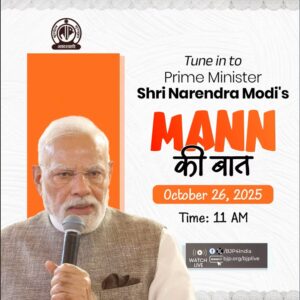
Modi was born in Gujarat, to Damodardas Mulchand Modi and Hiraben Modi. After his father’s passing, his mother worked as a domestic helper in neighborhood homes to support the family.
The Statesman in its 16 September 2023 story entitled “As PM Modi turns 73, a look back at his journey from a tea seller to India’s PM” points out “Narendra Damodardas Modi, the current Prime Minister of India, turns 73 on September 17, 2023. His party BJP has decided to celebrate his birthday in a grand way by organizing bike rallies, and other programs across India. Coming from a very humble background, PM Modi’s journey from a tea seller to India’s Prime Minister has been an inspiration to many. The prime minister has inspired a new generation of Indians with his vision for a strong and prosperous India.
Modi is the third of six children born to Damodardas Mulchand Modi and Hiraben Modi. His father ran a small tea stall at Vadnagar railway station where he would help him during his childhood. After his father’s death, his mother brought him up by working as a house help in neighbourhood homes. Despite his humble beginnings, Modi was a bright student, who was destined to do great things for his country.”
It was in the mid-1990s that Modi began scripting the unimaginable history that would reconfigure India’s political landscape. After years of quiet dedication behind the scenes, his strategic brilliance during the 1995 Gujarat Assembly elections propelled him from party organizer to a rising force within the BJP. That victory marked the turning point—when Modi’s ascent from a modest background to the corridors of power truly began.
The Statesman explains “Although Modi was active in politics since his early 20s, he came to prominence after 1990s. He was appointed as the general secretary of the Gujarat BJP. He played a crucial role in BJP’s victory in 1995 Gujarat Assembly elections. This was the moment his stature started growing manifolds in the BJP’s state unit. In 2001, PM Modi was appointed as Chief Minister of Gujarat. From that day onwards, PM Modi has never looked back. As CM of Gujarat, Modi oversaw a period of rapid economic growth in the state.
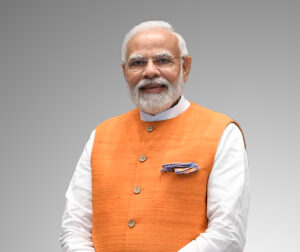
The impact of PM Modi’s leadership on India has been significant as the country moved to 5th place among the world’s largest economies. The Prime Minister has now vowed to make India’s world’s third-largest economy by 2030.Despite the criticism from Opposition over a host of issues, Narendra Modi remains the most popular politician in India and the world. Modi is seen as a leader capable of taking tough decisions in the interest of the country. While his legacy is still being written, there is no doubt he has been a transformative figure in Indian politics.”
Modi himself has described his childhood home as a “tiny house”. According to Hindustan Times’s 30 December 2022 story titled “Heeraben’s life and principles: What PM Modi wrote about his mother in a blog”, Modi in a blog published in 2022 wrote “In Vadnagar, our family used to stay in a tiny house which did not even have a window, let alone a luxury like a toilet or a bathroom. We used to call this one-room tenement with mud walls and clay tiles for a roof, our home. And all of us – my parents, my siblings and I, stayed in it.
My father made a machaan from bamboo sticks and wooden planks to make it easier for Mother to cook food. This structure was our kitchen. Mother used to climb on the machaan to cook, and the entire family would sit on it and eat together. Usually, scarcity leads to stress. However, my parents never let the anxiety from the daily struggles overwhelm the family atmosphere. Both my parents carefully divided their responsibilities and fulfilled them. Like clockwork, my father used to leave for work at four in the morning. His footsteps would tell the neighbours that it is 4 AM and Damodar Kaka is leaving for work. Another daily ritual was to pray at the local temple before opening his little tea shop.”
Before destiny lifted him onto the world stage, Modi’s story was also characterized by the quiet strength of his mother. In a humble home that often leaked under monsoon rains, she embodied resilience—rising before dawn, working tirelessly, and turning hardship into lessons of endurance and ingenuity. Watching her patch the roof, collect rainwater, and face every challenge without complaint, young Modi absorbed the values that would one day define his leadership and vision for India.
To clarify it, Modi in the blog he says “Mother was equally punctual. She would also wake up with my father, and finish many chores in the morning itself. Mother used to wash utensils at a few houses to help meet the household expenses. Mother never expected us, children, to leave our studies and assist her with the household chores. She never even asked us for help. However, looking at her work so hard, we considered helping her our foremost duty. I used to really enjoy swimming in the local pond. So, I used to take all the dirty clothes from home and wash them at the pond. The washing of clothes and my play, both used to get done together.
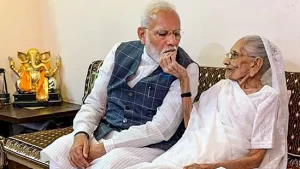
Monsoons would bring their own troubles for our mud house. However, Mother ensured that we faced minimum discomfort. In the searing heat of June, she would clamber over the roof of our mud house and repair the tiles. However, despite her valiant efforts, our house was too old to withstand the onslaught of the rains. During the rains, our roof would leak, and the house would flood. Mother would place buckets and utensils below the leaks to collect the rainwater. Even in this adverse situation, Mother would be a symbol of resilience. You will be surprised to know that she’d use this water for the next few days. What better example than this of water conservation!”
The official website of the Prime Minister’s Office— PM India— in its undated story titled “Personal Life Story”— echoes “Mr. Modi comes from a family of humble origins and modest means. The entire family lived in a small single storey house which was approximately 40 feet by 12 feet. Narendra Modi’s formative years taught him early tough lessons as he balanced his studies, non-academic life to spare time to work at the family owned Tea Stall as the family struggled to make ends meet.”
What inspired Modi to pursue his path and succeed?
Different spheres certainly constitute the roots of Modi’s vision. PM India reports “His school friends remember that as a child also he was very industrious and had an affinity for debates and a curiosity to read books. Schoolmates recollect how Mr. Modi used to spend many hours reading in the local Library. Mr. Modi’s thoughts and dreams as a child were quite removed from how most children of his age thought. Perhaps it was the influence of Vadnagar which once used to be a vibrant center of Buddhist learning and spirituality many centuries ago. As a child also he always felt a strong urge to make a difference to society.
He was highly influenced by the works of Swami Vivekananda which laid the foundation of his journey towards spiritualism and which inspired him to pursue the mission to fulfill Swamiji’s dream of making India a Jagat Guru. At the age of 17 he left home to travel across India. For two years he travelled across the expansive landscape of India exploring various cultures. When he returned home he was a changed man with a clear aim of what he wanted to achieve in life.”
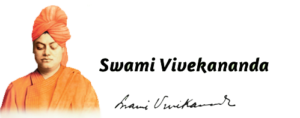
Vivekananda emphasised that true spirituality must go hand-in-hand with service to humanity (not just isolated contemplation) — encapsulated in the motto “Atmano Mokshartham Jagat Hitaya Cha” (for one’s own liberation and for the welfare of the world”.
He wanted India and humanity to awaken their spiritual potential, overcome division and ignorance, and combine material progress with inner strength. He said that India’s spiritual heritage should be used not just for itself but as a “message to the world”.
VIF (Vivekananda International Foundation) India—in its 12 January 2024 piece entitked “The Unique Message of Swami Vivekananda” states “Swami Vivekananda is yugacharya, the prophet of this age, not only for India but for the whole world. Swamiji says that the one central idea of Vedanta is oneness. A life led according to the truth of Advaita is a life where one differentiates least between oneself and others.
With the passage of time, these grand ideas remained confined to ideas alone amongst us. Vivekananda came to show us how to make Vedanta practical, how to live Vedanta, that is, how to manifest the inherent divinity within us in every walk of life, for ‘religion is the manifestation of the divinity already in man’.”
The Statesman in its 21 September 2022 story entitled“ From an ordinary man to ‘Vikas Purush’, Narendra Modi’s inspirational journey” explains “Born into a poor family in Gujarat and rose from an ordinary person to serve as the Prime Minister of the country, Narendra Modi has earned the sobriquet of ‘Vikas Purush’ through perseverance and dedication. The dynamic decision, and dedication towards work whenever you think about it, the first name that comes to your mind is the 14th Prime Minister of India Narendra Modi. We can’t get a better example than this.
Since his family was very poor, PM Modi’s childhood was full of struggle. While helping his father in his chores at the tea stall, Modi carried on his studies with dedication, spending hours with books in the library. He did his higher secondary education from Vadnagar in 1967. An avid reader, Narendra Modi is a devotee of Swami Vivekananda since childhood. He got his inspiration from Swami Ji’s works. As an ardent follower of Swami Vivekananda, he stuck to his path till date. It’s Swami Ji’s personality that instilled the spirit of patriotism in him.”
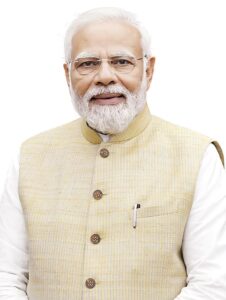
India’s Prime Minister, Modi, has emerged as one of the country’s most influential leaders, with many considering him to surpass even the greatest leaders in India’s history. His widespread popularity and the respect he commands reflect a stature comparable to, and for some even greater than, that of iconic prime ministers like Jawaharlal Nehru, Indira Gandhi, and Atal Bihari Vajpayee. The Statesman says “The popularity of PM Modi can be gauged from the fact that people see his stature in the mould of illustrious prime ministers of the country such as Jawaharlal Nehru, Indira Gandhi, and Atal Bihari Vajpayee. Many consider him a bigger leader than these leaders. It is the result of his hard work.”
Call-to-action
If (1) Modi was able to rise from a tiny tea stall in Vadnagar, shaped by the quiet strength of his mother and the vision of Swami Vivekananda, and (2) Jinping was able to endure years in a remote cave to emerge as a global leader; then there exist no dream too distant, no ambition too audacious for you.
Today, the routines, frustrations, and doubts that obscure your goals are not obstacles—they are the soil in which your resilience, discipline, and determination can take root. Awaken your inner giant: embrace hardship as a teacher, pursue your vision with unyielding resolve, and start shaping your destiny now—because the world does not wait for hesitation, and greatness belongs to those who dare to begin.
Like Elon Musk and other visionaries who have reached the pinnacle of success, Modi and Jinping have transformed their dreams into reality by heeding the core truth Tony Robbins highlights: that each of us carries a unique gift and the power to shape our destiny, but only those who awaken and pursue it relentlessly rise above circumstances to leave a mark on the world. In his book “Awaken the Giant Within”, Robbins—about whom you can learn more through “Who would have guessed that this decision would bring me to such an incredible moment?” Robbins. Never give up—states “We all have dreams… We all want to believe deep down in our souls that we have a special gift, that we can make a difference, that we can touch others in a special way, and that we can make the world a better place. At one time in our lives, we all had a vision for the quality of life that we desire and deserve. Yet, for many of us, those dreams have become so shrouded [masked/buried] in the frustrations and routines of daily life that we no longer even make an effort to accomplish them.
For far too many, the dream has dissipated—and with it, so has the will to shape our destinies. Many have lost that sense of certainty that creates the winner’s edge. My life’s quest has been to restore the dream and to make it real, to get each of us to remember and use the unlimited power that lies sleeping within us all.”
If leaders like Modi, Jinping, and Elon Musk could rise from humble beginnings to transform the world, your dreams are also within reach. Don’t let daily frustrations, doubts, or routines bury your potential—your unique gift and power to shape your destiny are waiting to be awakened. Start today: pursue your vision with determination, embrace challenges as lessons, and take the steps that will turn your dreams into reality.