By Jean Baptiste Ndabananiye
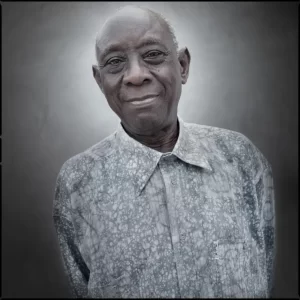
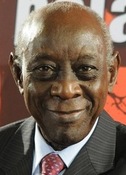
Senegalese Cheikh Hamidou Kane, who was born on 2 April 1928 and passed away on 3 October 2026 in Senegal’s capital — Dakar — at the age of 98, left a profound legacy. He’s recognized as a towering pillar of African and Francophone literature, thoughtful public administrator, and philosophical voice examining the clash between traditional African spirituality and Western modernization.
His enduring honors include, among others, national recognition: Senegal honored his lifetime of service and writing by renaming the Digital University of Senegal the Université Numérique Cheikh Hamidou Kane (UNHC). His death marked the loss of one of the last founding giants of postcolonial African thought.
This piece dedicated to the late Kane is, among other sources, built upon Global Voices’ 28 July 2023 story headlined “A 1961 Senegalese novel shows the enduring wealth of African literature—Exploring African identity through Cheikh Hamidou Kane’s novels”.
When material power is too strong, inner peace risks being lost
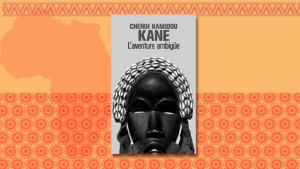
“Cheikh Hamidou Kane, the renowned Senegalese writer, has captivated readers and scholars alike with an enduring legacy spanning nearly six decades. Despite having published only two novels, namely ‘L’Aventure ambiguë’ (The Ambiguous Adventure) (1961) and ‘Les Gardiens du temple’ (The Guardians of the Temple) (1995), Kane’s literary contributions have achieved classic status, resonating with audiences worldwide.
His novels — penetrating explorations of the deep-seated unease within Africa’s intellectual class amid French colonization — have been translated into myriad languages and incorporated into academic curricula worldwide,” says Global Voices.
“In his seminal work, ‘L’Aventure ambiguë,’ he weaves a poignant narrative centered around the life of Samba Diallo, a young man raised in the devout Quranic traditions of Diallobé, a fictitious nation modeled after Senegal’s northern region, Fouta Toro. Diallo’s life takes a dramatic twist as he enters the ‘school of the Whites’ and confronts the notion of success without righteousness, an experience that profoundly impacts his identity.”
Global Voices says that in “L’Aventure ambiguë,” the late Kane poignantly articulated the discomfort which occurs with excessive materialism, stating “Man has never been as unhappy as he is now when he accumulates so much.”
“This statement resonates deeply in our current society, where the relentless chase for material gain often results in an overwhelming feeling of hollowness and discontent. In today’s hyper-connected world, people are continuously exposed to messages that equate material wealth with happiness, leading to an endless pursuit of possessions without real contentment,” highlights this platform.
The late Kane, in L’Aventure ambiguë, states “Lorsque la main est faible, l’esprit court de grands risques car c’est elle qui le défend ….mais aussi l’esprit court de grands risques lorsque la main est trop forte.” This quote is translated in English as “When the hand is weak, the mind takes great risks as it is the hand that defends it … but the mind also takes great risks when the hand is too strong.”
Global Voices interprets it as meaning that spiritual and emotional dimensions should not be overlooked in favor of hording wealth. “This quote underlines the fine balance required between the physical and spiritual realms of life. Amid the pressures of the modern world, people strive to find an equilibrium between their material accomplishments and inner peace. An excessive focus on material wealth, while neglecting emotional and spiritual aspects, can result in a deep imbalance and discomfort.
To highlight this, consider how our fast-paced, consumer-driven society often equates happiness with material wealth. Many people spend considerable time and energy collecting possessions, seeking approval and validation from others. However, as possessions pile up, the initial thrill fades, leading to the realization that genuine happiness isn’t merely about material abundance. This revelation often sparks a renewed focus on finding purpose and meaning beyond material possessions.”
This source adds “In our societies where economic growth, competition, and material success are upheld as major goals, people may start to understand the necessity of balancing material pursuits with personal satisfaction. They may turn towards cultivating their inner selves, exploring spiritual activities, mindfulness, and introspection to restore harmony in their lives. By prioritizing experiences, relationships, and personal development over sheer material accumulation, they may aim to lead a more fulfilling and purposeful life.”
Deep link between the late Kane’s warning on material power and the novel’s universal resonance
The novel has generated a penetrating impact both in Africa and globally. L’Aventure ambiguë (Ambiguous Adventure), published in French in 1961, became a cornerstone of post-colonial African literature. Then, as already said, it was extensively translated and taught across the continent and worldwide.
This novel won the Grand prix littéraire d’Afrique noire [Great Literary Prize of Black Africa] in 1962. Katherine Woods rendered it into English in 1963, and later entered global curricula through editions like the Heinemann African Writers Series, alongside translations into languages such as German, Spanish, Italian, and Chinese.
The late Kane’s warning, therefore, was never confined to the world of Samba Diallo or to the historical encounter between African tradition and Western modernity. The tension he delved into — between material power and the preservation of the inner life — constitutes a human dilemma that transcends geography, culture and historical period.
That may help explain why L’Aventure ambiguë has travelled so far beyond Senegal: its literary influence grew not simply because readers encountered an African story, but because they recognized in it a question concerning humanity itself — what does material advancement mean if it comes at the cost of the mind, the spirit and the sense of meaning that make life worth living?
It is against this broader human question that the novel’s extraordinary international reception becomes significant. Its journey from a Senegalese novel that appeared in French in 1961 to a work translated, taught and debated across continents mirrors the universality of the dilemma Kane placed at its heart.
In fact, what renders the late Kane’s insight especially enduring is that the dilemma he addressed did not vanish with colonialism. A world increasingly arranged around economic growth, consumption, technological power and competition has made the question even more urgent: can humanity become materially stronger without becoming inwardly poorer?
The late Kane’s answer does not suggest a rejection of material progress, but a warning against allowing the “hand” to become so powerful that it overpowers the “mind.” In that sense, L’Aventure ambiguë speaks beyond Senegal and Africa — to a civilization still struggling to reconcile what it can acquire with what it should become.
The breadth of the novel’s reception provides striking evidence of that universality. Its journey from a Senegalese novel published in French in 1961 to a work translated, taught and debated across continents indicates that Kane’s core concern reached far beyond the historical circumstances in which he first expressed it.
Eulogizing him, Senegal’s President Bassirou Diomaye Faye also came back to his works and their immense influence not only in his country. “His works now belong to the heritage of our nation and to all Africa,” Faye said on his Facebook page, according to Eyewitness News [EWN].
“Relationship between education and societal transformation”
Global Voices quotes the late Kane as having said “In the school where I send our children, it will kill within them what we presently cherish and carefully preserve, rightfully so. Perhaps even our own memories will perish within them. When they return to us from school, there will be some who won’t recognize us. What I propose is that we accept the idea of dying within our children and allow the strangers who have dismantled us to occupy the space we have willingly left behind.”
Commenting on the quote, Global Voices says “In the troubled times of colonial rule that still cast a shadow over Africa, this moving quote reflects the worries and fears that people faced. It brings attention to the crucial role of La Grande Royale, who is Samba Diallo’s mother in the story. Diallo is the main character of the book, and La Grande Royale’s impact on his life and the book’s overall message is profound. Although she disagrees with the foreign education system, she feels compelled to send her children there because she believes there are no better options for them.
African literature, exemplified by Cheikh Hamidou Kane’s “L’Aventure ambiguë,” delves into universal themes of the human condition, cultural identity, and societal transformation. It juxtaposes African traditions against foreign influences, exploring moral dilemmas arising from this clash. Relating these themes to contemporary realities, we see how African literature transcends cultural borders, highlighting universal questions that provoke deep reflection, thereby enhancing our understanding and appreciation of its relevance.”
The late Kane’s warning does not amount to a rejection of knowledge from the outside world. It raises a more difficult question — how can societies acquire external knowledge and capabilities without allowing them to displace the local knowledge, memory, values and expertise through which those societies understand and sustain themselves?
The late Kane’s conflict highlighted in the quote can be resolved by implementing recommendations from a 31 January 2025 paper titled “The Role of Indigenous Knowledge in Modern Education: A Cross-Cultural Analysis”. It was produced by Jasjit Kor Sandhu from the Institute of Social Sciences, Department of English Language and Literature, Istanbul Aydın University, United Kingdom. It appeared on the Journal of International Social Research / Uluslararası Sosyal Araştırmalar Dergisi.
In other words, a key aspect of the late Kane’s legacy for today’s society is this: the relationship between education and societal transformation must not be construed merely as a choice between safeguarding the past and adopting the future. It must instead understood as a question of how education can equip societies with new knowledge and capabilities while preserving, reinforcing and transmitting the local knowledge, memories, values and expertise giving them their identity and capacity to shape their own future.
The paper reads “Indigenous knowledge (IK) has been a fundamental part of human societies for centuries, providing practical solutions to environmental, social, and economic challenges. However, in modern education systems, indigenous knowledge is often overlooked or marginalized in favor of Western paradigms. Education serves as a crucial vehicle for transmitting knowledge across generations, shaping societies, and preparing individuals for the future. In many parts of the world, however, educational curricula predominantly reflect Western scientific and philosophical traditions, often at the expense of indigenous knowledge systems.
Indigenous knowledge is an accumulation of cultural wisdom, skills, and practices developed over centuries within specific geographical and social contexts. It encompasses traditional ecological knowledge, spiritual beliefs, oral histories, and practices related to agriculture, medicine, and governance. Despite its relevance, indigenous knowledge has been marginalized in mainstream education, particularly in countries where colonial legacies persist. This exclusion undermines the cultural identity of indigenous communities and limits the diversity of perspectives in global education.”
The paper highlights the crucial importance of valuing indigenous knowledge in the field of education. “Recognizing the value of indigenous knowledge in education can contribute to cultural preservation, environmental sustainability, and more inclusive pedagogical approaches. Indigenous knowledge plays a vital role in maintaining and transmitting cultural heritage. Including IK in education fosters a sense of pride and belonging among indigenous students, making learning more relatable and meaningful.
Schools that integrate indigenous perspectives encourage cultural continuity and respect for diverse worldviews. Indigenous communities have historically practiced sustainable living, utilizing natural resources in a manner that ensures long-term ecological balance. Traditional ecological knowledge (TEK) offers valuable insights into biodiversity conservation, climate change adaptation, and sustainable agricultural practices.”
The paper argues that incorporating TEK into modern education can complement scientific approaches and supply innovative solutions to environmental challenges. “Indigenous knowledge systems often emphasize interconnectedness and holistic learning, blending science, philosophy, spirituality, and social structures. Unlike the compartmentalized nature of Western education, IK promotes interdisciplinary thinking and experiential learning, encouraging students to engage with knowledge practically and contextually.
Indigenous education often occurs within communities, where elders and local experts serve as educators. This approach fosters a strong sense of community involvement and responsibility. Modern education can benefit from incorporating community-based learning models that prioritize lived experiences and contextual understanding over standardized testing.”
According to the paper, one of the primary challenges in including IK in modern education is the epistemological divide between Western scientific knowledge and indigenous ways of knowing. It also proposes how to address the challenge. “Western education often prioritizes empirical evidence and standardized methodologies, whereas IK relies on oral traditions, intuition, and spirituality. Bridging this gap requires a shift towards epistemic pluralism—recognizing multiple ways of knowing as valid and complementary. Many educational policies do not adequately support the inclusion of indigenous knowledge in curricula. Bureaucratic resistance, lack of funding, and standardized assessment criteria often hinder efforts to integrate IK. Policy reforms that acknowledge and legitimize IK within educational frameworks are necessary to facilitate meaningful inclusion.
The underrepresentation of indigenous scholars and educators in academia contributes to the marginalization of IK. Promoting indigenous leadership in educational institutions, creating scholarships for indigenous students, and fostering collaborations between indigenous communities and academia can help address this issue. Some educators and students may resist the incorporation of indigenous knowledge due to preconceived notions about its validity or relevance. Addressing these biases requires professional development programs that equip teachers with the necessary skills and knowledge to teach IK effectively.”
It further says “Developing curricula that incorporate IK alongside Western knowledge systems can provide students with a well-rounded education. This approach requires collaboration between educators, indigenous communities, and policymakers. Providing professional development opportunities for educators is crucial for the successful integration of IK.
Training programs should focus on culturally responsive teaching methods and the inclusion of indigenous perspectives in various subjects. Schools should actively engage indigenous communities in the educational process. Elders, knowledge keepers, and indigenous scholars should be involved in curriculum design, teaching, and decision-making. Conducting research on indigenous knowledge and its applications in education can help bridge the gap between traditional and modern learning. Universities and research institutions should support studies on IK and create platforms for knowledge exchange.”
It indicates that there already exist nations that have realized concrete progress in integrating indigenous knowledge and expertise. “Cross-cultural analysis demonstrates that countries such as New Zealand, Canada, Australia, and various African nations have made strides in incorporating IK into education. By embracing indigenous knowledge systems, education can become more inclusive, holistic, and responsive to the needs of diverse societies. Future efforts should focus on strengthening policies, increasing indigenous representation in academia, and fostering global collaborations to promote epistemic diversity in education.”
Call to action: Kane’s core lesson and legacy
Kane’s legacy exhorts us to ask not only what education can teach our children, but what kind of people and societies that education is helping them to become.
Let us therefore pursue knowledge from every part of the world, without allowing the acquisition of external knowledge to erase the memories, values, languages and wisdom through which communities understand themselves.
Let schools become places where scientific and technological knowledge meets indigenous knowledge, rather than places where one is treated as progress and the other as an obstacle to it.
Let educators, policymakers and communities acknowledge that the knowledge carried by elders, farmers, healers, artisans, storytellers and local custodians of the environment can support modern science and strengthen society’s ability to deal with contemporary challenges.
Let us reform curricula so that children can inherit the intellectual accomplishments of the wider world while, remaining attached to the knowledge and values of the communities into which they were born.
Let governments invest not only in buildings, technology and examinations, but also in maintaining the cultural memory and locally rooted expertise that education can either impart or eliminate.
Let universities and researchers treat indigenous knowledge not as a relic of the past, but as a living body of experience which merits rigorous documentation, respectful examination and meaningful integration.
Let societies measure educational progress not merely by how many graduates they produce or how much material power they acquire, but by whether education reinforces their capacity to think, create, cooperate and preserve what is worth preserving.
Kane’s enduring message to Senegal, Africa and the world is therefore not to choose between tradition and modernity, but to build a future in which the hand becomes stronger without allowing it to overpower the mind.
The responsibility now belongs to us: to ensure that the knowledge we pass to the next generation expands humanity’s capabilities without impoverishing its memory, identity, wisdom and sense of purpose.