“First of all, I have always recommended farmers to also change the mindset that they are to be respected. Let farmers work hard and become wealthy. Do you respect a rich person in your locality because they have asked you to respect them? We, farmers, have to dissuade ourselves from that thinking. I tell farmers ‘Let’s work hard; as a result, others will find themselves obliged to respect us?’” Jean Paul Munyakazi, the Legal Representative of Imbaraga Farmers’ Organization representing Rwandan farmers’ interests, has told Life In Humanity in an exclusive interview.
Munyakazi says so, reacting to this article thoroughly addressing the issue of generalized farming disrespect raised by different Rwandan farmers. The latter ones castigate individuals who pour scorn on this field while it constitutes the enabler of every person’s life and the spine of every nation’s economy. One of the farmers, Pontien Niyonambaza, has said “In Rwanda, while counting people who hold jobs, they [citizens/people in general, not the government]say that those who are remaining [don’t occupy any formal positions] are farmers while they are roamers, thieves and so on. I wish a law, to be voted, which recognizes farmer as a professional person like others so that the law will contribute for all people to know that those who don’t occupy jobs are just classified as unemployed people.”
Munyakazi also agrees that farming is disdained
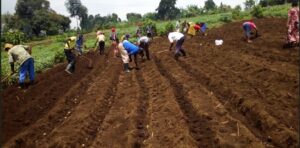
Munyakazi also highlights that it is true that farming is generally disregarded. He however underscores that farming has turned into a noble field. “I know that agriculture constitutes a despised field; it proceeds from culture. A person who lost a job used to say ‘I’m returning to the hoe.’ This job loser worked with little effort, failing to transform their life. So this has tarnished our image and stained us, but things are changing since today farming represents expensive business.
While you don’t own means, can you purchase today’s land? If you are poor, can you manage to secure selected seeds of beans which cost 2000RWF a kilo and then farm a hectare? Which would you prefer today between becoming a sector executive secretary and a successful professional farmer? I don’t doubt that you could choose to be a successful professional farmer.”
He underlines that contempt toward agriculture prevails not only in Rwanda but also in some other places. “By the way, disrespect towards farmers does not just occur in Rwanda. I once visited farmers in Lorraine in France, there farmers account for 3%. I asked one of the farmers ‘Can you succeed in marrying a daughter of a minister?’
He replied ‘I own means to wed her, but she cannot accept me because I’m fully immersed in my farming business that I lack time for distractions, entertainment, going out to enjoy life; otherwise, the business can die. Such children nevertheless want this life which we don’t enjoy, things like going out, distractions. Others reject us, just because of thinking that we are unable people. ’”
Agriculture buttresses every other sector
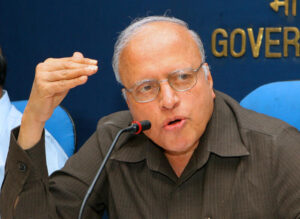
The late Monkombu Sambasivan Swaminathan was an Indian geneticist and international administrator. He once said “If agriculture goes wrong, nothing else will have a chance to go right. Agriculture is the backbone of the livelihood security system of nearly 700 million people in the country and we need to build our food security on the foundation of home grown food.”
He’s renowned for his leading role in India’s Green Revolution, a program under which high-yield varieties of wheat and rice seedlings were planted in the fields of poor farmers, according to Britannica. He was educated in India and at the University of Cambridge where he acquired Ph.D. in 1952 as a geneticist. He helped to ensure greater acceptance of modern farming methods in India. He is therefore credited as the father of Indian Green Revolution.
He occupied various top-level positions in the agriculture sector, such as the Director General of the Indian Council of Agricultural Research, the Principal Secretary of the Indian Ministry of Agriculture and Irrigation, the Director General of the International Rice Research Institute (1982–88) and the President of the International Union for Conservation of Nature and Natural Resources, among others. His incredible experience and undisputable expertise in the field suffice for people to trust his statement.
John Salazar is a former Colorado Commissioner of Agriculture. He is a former Democratic member of the United States House of Representatives, representing the 3rd District of Colorado. He once said “I have always said there is only one thing that can bring our nation down – our dependence on foreign countries for food and energy. Agriculture is the backbone of our economy.”
The late Daniel Webster was a statesman who represented New Hampshire and Massachusetts in the U.S. Congress and also worked as the 14th and 19th U.S. Secretary of State under Presidents William Henry Harrison, John Tyler, and Millard Fillmore as a senator. He once declared “When tillage begins, other arts follow. The farmers, therefore, are the founders of human civilization.” Webster also established himself as one of the most prominent American lawyers of the 19th century, an orator and politician who served prominently as a lawyer before the U.S. Supreme Court.
Meanwhile, the Food and Agriculture Organization in its 03/04/2023 article said “Of the 3.83 billion people reliant on agrifood systems for their livelihoods, 2.36 billion live in Asia and 940 million in Africa.”
“I felt I needed to highlight the importance of our farmers, especially in terms of the positive role agriculture plays in our country’s GDP. Farmers Feed Us. I thought I should start off with the most obvious one. Without farmers, we would have no reason to go to the supermarket where we have access to a variety of foodstuff to choose from. We would have no food to feed our families. At all scales, starting from a smallholder to a commercial farmer, farmers play a significant role in feeding the world,” says Portia Phohlo who- in the past- acted as a researcher within the organization, Trace and Save, working in South Africa on agriculture. She is now a consultant. She is skilled in Sustainable Agriculture, Natural Resource Management, Agronomy, Pasture and Soil Management, and Soil Sampling. She possesses a Bachelor of Science in Agriculture where she’s majored in crop and soil science at the University of Fort Hare. She has additionally obtained her honors and master’s degree in soil science at the University of the Free State.
This strong consulting professional now studying at Stellenbosch University, for a Doctor of Philosophy – Ph.D. focused in Soil Science and Agronomy adds “Farmers provide raw materials for most products we use in our daily lives. The finished goods from the furniture, paper, pharmaceutical, textile, energy, health and beauty sectors all depend on agricultural raw materials.
The list of industries dependent on farming is much longer than this. These were just from the top of my head. Imagine what would happen to these industries if the farming sector collapsed. Farmers need not only to be thanked for the food they produce but also for the clothes we wear, and the furniture we use daily. Paper money is produced from cotton pulp which is grown on farms. Human society is completely reliant on agricultural produce.”
Actions being taken to make agriculture a respected sphere
On the side of Rwanda, Munyakazi explains that Imbaraga Farmers’ Organization is conducting advocacy for this sector to be respected. “We are advocating for a farmer to be recognized as so. We have even written to the government, suggesting a law which responds to questions like ‘Who is a farmer?’
Around 4 years ago we gave to the parliament a draft which suggests key issues that the law has to address such as how conflict between a seed manufacturer who has produced seeds not satisfying standards and farmers will be resolved. There exist laws that govern traders, veterinaries and physicians, we also move that there be a law governing this sphere. We trust that the parliament will work on it and we will continue talking to them.”
It’s not only in Rwanda that relevant institutions strive for farming to be a highly respected sector. For example, NFU is urging the UK government to truly value UK food and environmental security by increasing agriculture budget. NFU stands for the National Farmers’ Union. Calling itself the voice of British farming, NFU constitutes the largest farmers’ organization in the United Kingdom, representing the interests of farmers and growers.
In its 11 September 2024 story, it says “Government must take action. The call comes on the 9th annual Back British Farming Day (11 September), the day we ask politicians, the public, retailers, food processers and manufacturers to celebrate and champion British agriculture and its importance to the UK economy.”
Addressing Members of Parliament in the Parliament, the NFU President Tom Bradshaw stated “British farmers and growers are proud to produce the raw ingredients that underpin our essential food and drink sector, the largest manufacturing sector in the UK, worth a huge £148 billion, and employing more than four million people.
Our farmers and growers are much loved and valued by the public who rank our job as one of the most important and well-respected professions, second only to nursing. 91% also believe farming is important to the UK economy, with 85% believing we should increase our self-sufficiency in British food.”
The ranking was attained through an online survey of 2000 adults in England and Wales, responding to a OnePoll online survey for the NFU between 30 May and 6 June 2023. Out of 10 occupations, farmers were selected favorably by 47% of respondents—up from the 4th place in 2022—while nursing held the top spot with 65% of respondents. This article doesn’t however supply details like reasons behind this ranking.
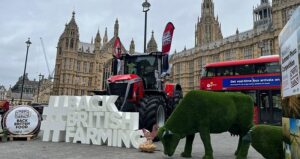
Notwithstanding, Bradshaw highlighted that the UK’s agriculture is facing difficulties; the reason why he requested for urgent action. “But there are huge challenges. Over the past 18 months we have seen a collapse in farmer confidence, driven by record inflation, falls in farm income and a changing climate with unprecedented weather patterns delivering relentless rain which left thousands of acres of farmland under water.
While in opposition we heard consistently from Labour that food security is national security. The Prime Minister, speaking at NFU Conference last year, pledged that Labour “aspires to govern for every corner of our country, and will seek a new relationship with the countryside and farming communities on this basis, a relationship based on respect and on genuine partnership”.
He seized the opportunity to appeal to the government to convert its engagements into concrete actions, while also asking the parliamentarians for their immense role. “We now need to see those ambitions realised. Today we’re calling on government to truly value UK food security by delivering a renewed and enhanced multi-annual agriculture budget of £5.6 billion³ on the 30 October. This budget is essential in giving Britain’s farmers and growers the confidence they desperately need to invest for the future and deliver on our joint ambitions on producing more sustainable, affordable homegrown food while creating more jobs and delivering for nature, energy security and climate-friendly farming.”
“On this Back British Farming Day, we are at a tipping point, so we call on government, all MPs, to also show their unstinted support. Seize this opportunity to harness the passion and the drive of British farmers and growers to ensure a thriving future – a future that is good for shoppers, good for the environment and good for a secure supply of British food.”
Agriculture public education suggested worldwide
Phohlo right now recommends public education on the unmatched importance of farming. “There is no time like the present when it comes to educating the public about agriculture and the role it plays in our lives. It cannot be overstated how crucial it is for more people to understand agriculture and not be influenced by common misconceptions, for example, that cows cause global warming.
On the contrary cows might actually be the solution to global warming and that cows can be carbon neutral. There is no doubt in my mind that the public needs to become more knowledgeable about agriculture, as well as more aware of just how much it impacts all our lives.”
Different institutions concur perfectly with Phohlo. Some of them include Crop Care, Agricultural Recruitment Specialists, also known as Global Agriculture Recruitment Experts, and Issuu, Inc.
Issuu, Inc, a Danish-founded American electronic publishing platform based in Palo Alto in California in the United States of America says “There is no doubt that the general public needs to be more knowledgeable about agriculture, as well as more aware of just how much it impacts all of our lives.”
Agricultural Recruitment Specialists states- an organization which is said to connect the finest agricultural and farming talent throughout the world with the best brands and organisations- says “Agriculture has always been the basis of every society throughout history because of how fundamental it is for our survival. However, our academic institutions have moved further and further away from considering it a necessary discipline.
While it exists as an academic discipline for undergraduate studies, most students don’t get the opportunity to learn about it at the school level. Given the increasing focus on food production and sourcing, changing the academic structure to include agricultural education is important.”
This organization underlines that young people should be equipped with agriculture knowledge at their youth age. It contends that this can help young people to choose agriculture and farming as their career choice. “There are many young people in the UK that have hardly any knowledge on this sector of the industry and what it entails. Most are unlikely to come from farming families that can educate them. So, by being educated in schools on this vital part of the economy, it may aid them to consider this sector in career choices, whereas they may never had of considered it before, without having being educated on it and what it entails.”
“Overall, agriculture and farming are an integral part of our lives and it is practical for people of all ages to have a basic understanding of the disciplines. Agricultural education can do wonders for children’s development, and it can help them grow up to become responsible, energetic, and self-sufficient adults, as well as contributing to a key part of our overall economy.”
Crop Care is an organization that manufactures small to midsize agricultural sprayers and specialty vegetable equipment designed to assist in good crop yield and quality of life. It also produces content on the protection and management of crops to improve agricultural productivity and sustainability. It also recommends agricultural education, touting it as an important aspect.
To explain it, it is founded on the number of the world population. “The United Nations predicts the population will increase to 10.4 billion by 2100. Because the population is steadily growing, so is the demand for food, which is why agricultural education is vital. Through agricultural education, generations can have a thorough knowledge of where their food comes from, and more people may be inclined to become employed in agriculture to help meet the needs of a growing population.”
Agriculture, the most respected sphere in some places
AgriBusiness Trading Group is an agency based in Washington. It says “Farming and agriculture were recently named Gallup Inc.’s most respected profession, a first in the poll’s twenty-year history. Gallup, an international polling and consulting company, polled Americans on their overall view of several business sectors. Respondents were asked whether their overall view of a business sector was very positive, somewhat positive, neutral, somewhat negative, or very negative.
Overall, food was top-of-mind for respondents who ranked farming and agriculture first, followed by the grocery industry and restaurants. Gallup reported that ‘the public is expressing greater appreciation for the work of…industries that are critical to people’s well-being’. Many farmers believe that the increased appreciation for the food sectors reflects a healthy eating movement as people want to be healthier and subsequently want to know where their food comes from and how it is produced.”
Life In Humanity has not managed to know when this data was published but it suspects that it could be in 2020.
The Canadian Federation of Independent Business (CFIB) in its 19 December 2019 article said “Farmers are one of the groups Canadians respect the most, well ahead of government, unions and large companies, found a recent public opinion poll by the CFIB.” “Farmers make significant economic contributions to Canada and produce some of the safest and highest quality food in the world. It is not a surprise then that 96 per cent of everyday Canadians give top marks to farmers in terms of the groups they respect the most,” said Marilyn Braun-Pollon, CFIB’s then vice-president of Western Canada and Agri-business.
Life In Humanity has not been able to know whether or not Braun-Pollon still occupies the position. We cannot surely confirm whether farming and agriculture still stay the most respected aspects in these countries or not, but they are likely to be so.
The respect accorded to agriculture can vary significantly between regions due to a combination of cultural, economic, historical, and social factors. For instance, regions that depend heavily on agriculture for their economy often carry a higher level of respect for farming. For example, in rural areas where farming provides the primary source of livelihood, there tends to be a greater acknowledgment of farmers’ contributions. In contrast, urban areas with diversified economies may prioritize other industries over agriculture, leading to less respect for farming roles.
Nevertheless, as even underscored by different personalities featured in this article, it remains Life In Humanity’s viewpoint that farming and agriculture have to be esteemed everywhere, till food gets its substitute. Every human takes food, to live.