By Jean Baptiste Ndabananiye
A new frontier of defense, in the shadow of nuclear deterrence, is emerging—one that stretches beyond the earth’s atmosphere and into the vast expanse of space. With President Trump’s “Golden Dome” strategy, the United States must be embarking on the next arms race: space-based defense. As tensions rise with China and Russia, both nations being said to be increasing their space-based and anti-satellite arsenals, the stakes are higher than ever. The possibility of weaponizing space could beget destabilizing consequences, with various American high-ranking personalities who are emphasizing that a big issue is already happening.
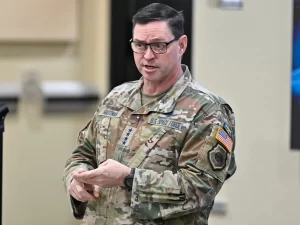
According to them, China and Russia’s investments in hypersonic weapons and anti-satellite capabilities signal a growing threat that demands a response. “It’s time for the U.S. government to step up,” says the USA’s Chief of Space Operations, the General Chance Saltzman, calling for decisive action to protect American citizens from these “emerging dangers”. As the world is turning its attention to the skies, Life In Humanity channels its attention into:
- Is space-based defense the next global arms race?
- Russia and China in space weaponizing—justification for USA’s massive action in this field
- What do Russia and China declare on space weaponizing?
- Conclusion
This article is situated within the context of our reporting project on this arena of Space Arms Race as we highlighted it in our first piece: Shifting superpower strategies? The probable hidden realities of global nuclear politics. Are superpowers rethinking their arms race?
Is space-based defense the next global arms race?
Lockheed Martin constitutes one of the largest defense, aerospace, and security companies in the world. Headquartered in Bethesda, Maryland, USA, it specializes in advanced military technology, space exploration systems, and security solutions.
The company is a major contractor for the U.S. government, particularly the Department of Defense, and is known for developing fighter jets, missile defense systems, satellites, and hypersonic weapons. It also carries significant involvement in space projects with NASA—National Aeronautics and Space Administration and other organizations for high-profile missions.
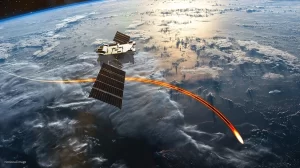
Lockheed Martin points out “Golden Dome for America. Revolutionizing U.S. Homeland Missile Defense. Golden Dome stands as an impenetrable shield, safeguarding the American homeland with unwavering precision, ensuring the security and resilience of our nation.”
“Golden Dome for America is a revolutionary concept to further the goals of peace through strength and President Trump’s vision for deterring adversaries from attacks on the homeland. This next generation defense shield will identify incoming projectiles, calculate trajectory and deploy interceptor missiles to destroy them mid-flight, safeguarding the homeland and projecting American Strength.”
This giant space-engineering business adds “THE CHALLENGE: Mobilize American industry and innovation to deliver the first Golden Dome for America defenses by the end of next year [2026]. While we deploy that combat-proven foundation, we will bring in the best and brightest of American innovation to rapidly develop game-changing tech – like space-based interceptors and hypersonic defenses – that will ensure America’s Golden Dome stays well ahead of adversary threats.
THE APPROACH: the fastest, most efficient path to a Golden Dome for America is to bring the best of the defense and commercial industries together as a whole of industry approach. This is a Manhattan Project-scale mission, one that is both urgent and crucial to America’s security.”
Lockheed Martin affirms its readiness to partner with the best in industry, emerging and large technology companies together to protect “our nation. We’ve proven our ability to work across industry to bring the best of the best to the warfighter, and we have existing partnerships with defense, commercial tech companies and newer contractors to bring both proven and next-generation capabilities to the fight.”
The War Zone—TWZ— was established in 2016. It is said to be a full-spectrum defense news and analysis website having turned into a primary resource for the defense industry, the national security community, and the interested public. This platform addressing air, sea, land, space, and cyber domains of warfare with an infusion of geopolitical context and technological analysis published a story headlined “Putting Missile Interceptors in Space Critical to Defending U.S. Citizens: Space Force Boss” on 20 March 2025.

TWZ reports “The large-scale weaponization of space appears to be imminent as competition in orbit heats up between the U.S. and its adversaries.” Citing the U.S. Space Force’s top officer—General Saltzman, TWZ says “New space-based interceptors called for in President Donald Trump’s Golden Dome missile defense initiative are all about addressing threats as quickly and as far away from the U.S. homeland as possible. The Golden Dome (formerly known as Iron Dome) plans come amid broader discussions and concerns about the weaponization of space.”
“It’s not just that we want space-based interceptors, we want them in [the] boost phase. We want them to achieve their effects as far from the homeland. So they’ve got to be fast, they’ve got to be accurate,” General Saltzman states.
TWZ recounts that the U.S. army suggested producing and fielding space-based anti-missile capabilities multiple times in the past, but that it just forsook those ambitions because of technical complexities and high costs. “Space-based weapons were a particularly key element of the Reagan-era Strategic Defense Initiative (SDI), infamously dubbed ‘Star Wars’ by its critics, and which never came close to achieving its ambitious goals. Speaking today, Saltzman acknowledged those challenges, but also made clear that he felt they were surmountable.”
He says “I think there’s a lot of technical challenges. I am so impressed by the innovative spirit of the American space industry. I’m pretty convinced that we will be able to technically solve those challenges. We’ve got a pretty amazing space industrial base and I’m pretty sure they’re going to solve most of those technical problems. So, from that standpoint, I think it’s just about how fast you want to go, you know, how fast can we leverage the technology, and put it in place and test it, [and] get a demo out there so you can see what’s possible.”
Russia and China in space weaponizing—justification for USA’s massive action in this field
Talking about broader concerns on the potentially destabilizing consequences of weaponizing space, the U.S. Space Force’s top officer challenged the accusation, by stressing examples of how this is already happening. He particularly named China and Russia as nations possessing “significant and still-expanding arsenals of space-based and terrestrial anti-satellite capabilities.”
“Depends on where you sit, right, you know? But to say that it’s the responsibility for the U.S. government to protect its citizens from emerging threats makes perfect sense to me,” Saltzman said. “And we clearly see a country like the PRC [People’s Republic of China] investing heavily in these kinds of threats, whether it’s hypersonic [weapons], whether it’s threats from space. And so now it’s time for the U.S. government to step up to the responsibilities to protect American citizens from those threats.”
Saltzman’s comments came after remarks of his deputy— General Michael Guetlein— at the McAleese and Associates annual Defense Programs Conference on 7 March 2025, according to Breaking Defense— in its 18 March 2025 story “5 Chinese satellites practiced ‘dogfighting’ in space, Space Force says.” He underlined that China is expanding its ability to ‘dogfight’ in space.

“There are five different objects in space maneuvering in and out around each other, in synchronicity and in control. That’s what we call dogfighting in space. They are practicing tactics, techniques and procedures to do on-orbit space operations from one satellite to another,” he explained to the conference.
Breaking Defense adds that the General Guetlein did not clarify countries to which the five satellites belong, but that a Space Force spokesperson later elucidated to reporters that the demonstration was Chinese. “Gen. Guetlein referenced Chinese satellite maneuvers observed in space. China conducted a series of proximity operations in 2024 involving three Shiyan-24C experimental satellites and two Chinese experimental space objects, the Shijian-6 05A/B. These maneuvers were observed in low Earth orbit. These observations are based on commercially available information,” the spokesperson explained in an email to Breaking Defense.
Air & Space Forces Magazine reports that Guetlein also highlighted “Unfortunately, our current adversaries are willing to go against international norms of behavior, go against that gentleman’s agreement, and they’re willing to do it in very unsafe and unprofessional manners.”
According to Breaking Defense, Guetlein underscored “The environment has completely changed. There used to be a capability gap between us and our near peers, mainly driven by the technological advancement of the United States. That capability gap used to be massive. That capability gap is significantly narrowing, and we’ve got change the way we’re looking at space or that capability gap may reverse not be in our favor anymore.”
What this general says may match Dmitry Suslov’s point. Suslov is one of Russia’s “foremost experts” on strategic security issues, according to Sputnik News— a Russian state-owned news agency and radio broadcaster. This Russian media house released a story “Trump Floats Denuclearization Since US Can’t Win Arms Race With Russia, China Without Going Bankrupt” on 8 March 2025. The story only features this deputy-director of research at the Russian Council on Foreign and Defense Policy.
He told Sputnik News that Trump “wants to channel competition into some other areas, into the areas where the United States largely have advantages,” from high-precision conventional arms to his “Golden Dome” proposal for a space-based SDI 2.0. “This is an attempt to reduce competition in the area where the United States is not competitive and to channel the competition into the areas where the United States is competitive, has comparative advantages, technological advantages, in the opinion of the Trump administration.”
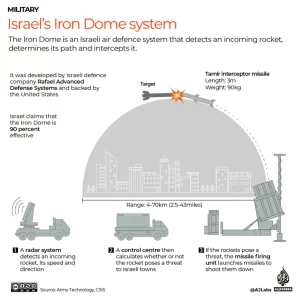
Inspired by Israel’s success with the Iron Dome, US President Donald Trump sought to replicate Israel’s defense success by proposing an American version of the Iron Dome,”—Eurasia Times. Image from Al Jazeera.
Breaking Defense reports that Guetlein’s use of the evocative air warfare term highlights the Space Force’s escalating rhetoric about the need for the service to upgrade its capabilities “to establish ‘space superiority’ in any future conflict, including via ‘space control’ operations that include not just defensive measures such as to avoid hostile actions but also offensive operations to take out adversary satellites.”
General Saltzman, addressing the annual Air and Space Forces Association Warfare Conference in Colorado on March 3 2025, said “Space superiority is the reason that we exist as a service, and the vagaries of warfighting must inform everything we do if we are going to succeed.” “Space superiority is our prime imperative.”
He stressed that space control is how the Space Force can attain space superiority and that it constitutes the service’s newest “core function.” “Put simply, Space Control encapsulates the mission areas required to contest and control the space domain — employing kinetic and non-kinetic means to affect adversary capabilities through disruption, degradation, and even destruction, if necessary,” Saltzman elaborated, before adding “It includes things like orbital warfare and electromagnetic warfare, and its counterspace operations can be employed for both offensive and defensive purposes at the direction of combatant commands.”
Meanwhile, last year Russia as a permanent member of the Security Council, opposed a space arms race resolution. The United Nations in its 6 May 2024 story entitled “General Assembly debates Russia’s veto of space arms race resolution” says “Due to the negative Russian vote, the Security Council failed to adopt last month’s text, which received 13 votes in favour, with China abstaining.”

In reply, Dennis Francis, President of the General Assembly expressed concern that the Council could not achieve consensus on addressing weapons of mass destruction in outer space. The Assembly Vice-President Ahmad Faisal Muhamad opened the debate by reading the message from Francis. The message read “Outer space does not belong to individual nations.
Its peaceful and sustainable use is not subject to national appropriation and must be a place of peace and cooperation for the benefit and in the interest of all countries. The militarisation of outer space is a very concerning trend. Besides further deepening mistrust and divisions, this inevitably threatens life on Earth and could have catastrophic consequences.”
The draft resolution was proposed by the United States and Japan and co-sponsored by over 60 nations.
The Assembly President underlined that the 1967 Outer Space Treaty “clearly prohibits” States parties from placing, installing or stationing in orbit around Earth, or anywhere else in the cosmos, spacecraft carrying nuclear weapons or any other weapons of mass destruction.
CNN with its 16 March 2025 story headlined “Pentagon is closely monitoring Russia and China test military capabilities in space” reports “The US, Russia and China are all signatories to the 1967 Outer Space Treaty, which bans weapons of mass destruction in space. But with growing concern of an outer space arms race, the treaty appears increasingly like a relic of the past. Last April, Russia vetoed a UN Security Council resolution that would have reaffirmed the opposition to nuclear weapons in outer space.”
What do Russia and China declare on space weaponizing?
Life In Humanity has not managed to access any statements by the two nations around their actions in space weaponizing. We have instead found accusations by the USA against these countries. The latter ones nonetheless reject the allegations.
For example, in its 22 May 2024 story titled “Russia denies US charge that it put anti-satellite weapon in space”, the Voice of America recounted “ Russia’s top arms control diplomat dismissed as ‘fake news’ on Wednesday an assertion by the United States that Russia had launched a weapon into low-Earth orbit that was capable of inspecting and attacking other satellites. The Kremlin has flatly denied assertions by U.S. officials that Moscow is developing a space-based anti-satellite nuclear weapon.”

The Interfax news agency cited Russian Deputy Foreign Minister Sergei Ryabkov, as saying “I don’t think we should respond to any fake news from Washington. The Americans can say whatever they want but our policy does not change from this.” He added that Moscow had “always consistently opposed the deployment of strike weapons in low-Earth orbit.”
The 16 March 2025 CNN story also emphasizes that US military officials believe that Russia and China are aggressively testing new offensive space capabilities. But, it doesn’t contain any statement where the countries admit the claims. These officials highlight a series of satellite training missions “conducted by both countries in recent months as growing evidence of an effort to weaponize outer space”.
CNN reports that a US defense official said “Russia wants to take away our advantages in space and they don’t care about collateral damage.”
According to CNN, China has already displayed its rapidly advancing technological prowess in space. “The test of a space-launched hypersonic missile in 2021 caught the US by surprise. The top US general [Gen. Mark Milley] at the time called it a ‘very significant technological event’.” “They’re expanding rapidly in space, in cyber and then in the traditional domains of land, sea and air. China is very significant on our horizon,” Milley added.
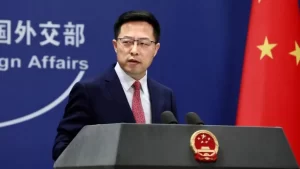
Nevertheless, China’s then Ministry of Foreign Affairs spokesperson Zhao Lijian told Financial Times report that the August 2021 test was “a spacecraft, not a missile.” “This test was a routine spacecraft experiment to verify the reusable technology of spacecraft, which is of great significance for reducing the cost of spacecraft use. It can provide a convenient and cheap way for humans to use space peacefully. Many companies in the world have carried out similar experiments.”
Conclusion
The debate over space-based defense has undeniably intensified, with major global powers maneuvering to secure strategic advantages beyond Earth’s atmosphere. While the United States pursues space superiority through initiatives like the Golden Dome, China and Russia are also said to continue advancing their own space-based capabilities, raising concerns about an impending arms race.
The failure of the UN Security Council to reach a consensus on preventing the weaponization of space underscores the complexity of the issue. As geopolitical tensions rise and technological advancements accelerate, the question remains: will space become the next battlefield, or can diplomacy and international agreements prevent a new frontier of military confrontation?
Meanwhile, the most probable answer is that space is indeed becoming the next global arms race.
All the evidence above suggests that while diplomatic efforts exist to some extent, they appear largely ineffective at preventing the militarization of space. Life In Humanity is convinced that the U.S., China, and Russia are all actively developing space-based defense systems including anti-satellite weapons and missile interceptors. The narrowing technological gap between the U.S. and its rivals, as highlighted by General Guetlein, further fuels the competition.
Moreover, the failure of the UN Security Council to adopt a resolution against a space arms race—due to Russia’s veto and China’s abstention—demonstrates the lack of global consensus to avert this trend. Unless a binding international agreement emerges with strong enforcement mechanisms, space will likely become an extension of terrestrial military conflicts, with nations racing to secure dominance in orbit.