By Jean Baptiste Ndabananiye
Domestic violence often coincides with gender-based violence in a world increasingly marred by domestic strife and crumbling family structures, but stories of healing and transformation shine like beacons of hope. Domitille Nyiramanzi, a 52-year-old woman in Muganza Sector in Rwanda’s Nyaruguru District in the Southern Province, is one such a beacon. Once trapped in a cycle of utter despair caused by marital conflict and abandonment, Nyiramanzi’s life was transformed through the power of peaceful conflict resolution and empowerment. Her journey—from being marginalized and hopeless to becoming a respected community leader—offers not only a personal victory but also a potent example of how addressing family-level conflict can lead to societal resilience.
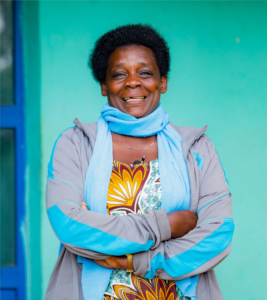
Her story resonates far beyond the hills of Nyaruguru. Across Rwanda, families are grappling with complex, deeply rooted challenges that threaten the cohesion and development of communities. Furthermore, these challenges are not unique to Rwanda. According to the World Health Organization (WHO), more than 33% women globally have experienced intimate partner violence, underscoring a global crisis of family dysfunction and gender-based abuse. The ramifications go beyond personal trauma; they ripple outward—fueling cycles of substance abuse, economic stagnation, social instability and mental health conditions.
“Violence against women – particularly intimate partner violence and sexual violence – is a major public and clinical health problem and a violation of women’s human rights. It is rooted in and perpetuates gender inequalities. Globally 1 in 3 women experience physical and/or sexual violence in their lifetime, mostly by an intimate partner. This is a stark reminder of the scale of gender inequality and discrimination against women,” WHO points out while quoting the UN, The Associated Press in its 26 November 2024 story reported “The deadliest place for women is at home and 140 women and girls on average were killed by an intimate partner or family member per day last year.” This article is subdivided into these essential sections:
- Bright case of Nyiramanzi
- Rwanda and global situation
- Why conflict transformation, not just management, is the key to ending domestic violence
- Four major lessons
Bright case of Nyiramanzi
The United Nations defines violence against women as “any act of gender-based violence that results in, or is likely to result in, physical, sexual, or mental harm or suffering to women, including threats of such acts, coercion or arbitrary deprivation of liberty, whether occurring in public or in private life.”
“Intimate partner violence refers to behaviour by an intimate partner or ex-partner that causes physical, sexual or psychological harm, including physical aggression, sexual coercion, psychological abuse and controlling behaviours.”
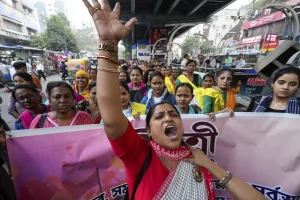
This aligns with the intimate partner violence that Nyiramanzi has faced in her marriage. This connection underscores the universal nature of such violence which is not confined to one region but constitutes a global issue affecting millions of families, as highlighted by the statistics on intimate partner violence. By showcasing Nyiramanzi’s journey from despair to empowerment, the article demonstrates the transformative power of concurrently addressing gender-based violence and peaceful conflict resolution. It illustrates how peaceful interventions can shatter the cycle of violence and foster stronger, more resilient communities.
As conflict is contagious, so too is healing. The transformation of families like Nyiramanzi’s shows how training, dialogue, and empowerment can rebuild trust and spark renewal. With strengthened communication and conflict resolution skills, individuals not only restore their own families—they ignite change in their communities.
This narrative reminds us that resilient families are not merely private triumphs; they represent the seeds of national stability and even global peace.
Because of conflict with her husband in the past, Nyiramanzi reached the final stage of hopelessness. The entire family was then languishing in unspeakably dire living conditions. “Before GEWEP III, I felt that it would be better, if I died. My husband had abandoned us, living with a concubine. I couldn’t then go to any public event, especially since I was so broke that I always wore tattered clothes and I lacked any motivation to reach where others were.”
“I unreservedly praise GEWEPIII training, it has rescued me. My confidence was colossally boosted, enabling me to start working. Among others, I’ve used conflict resolution skills from the training, to restore and enhance my relations with my husband. We now call each other ‘sweet heart’. We extremely love each other. He formed the relationship with the woman, especially since I didn’t work, failing to contribute to the household’s progress. When I changed and worked hard, he also changed, ending the relationship with the woman. I accepted three children he has with her, they are at home and I treat them in the same way as mine.”
It is rare—not only in Rwanda but almost everywhere in the world—to find a woman who willingly accepts children fathered by her husband with another woman. When this does occur, it serves as an unquestionable testament to the excellent relationship between the woman and her husband. This also highlights the exceptionally good relationship between Nyiramanzi and her husband.
Her unexpected success has not ended with there. “I emboldened myself to propose my candidature for the President of Imbere Heza [Bright Future]— a cooperative farming rice and Irish potatoes and comprising 329 women and 238 men. I was elected. I am now leading affluent men too!”
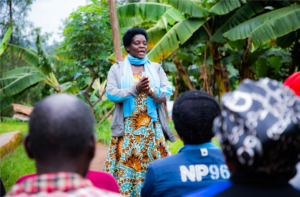
Nyiramanzi now serves the community as a champion dwelling in Muganza Sector in Nyaruguru, within the context of GEWEPIII—Gender Equality and Wome,’s Empowerment Project III (meaning the third project named so) implemented by Pro-Femmes/Twese Hamwe. The latter one forms an umbrella of more than 50 Rwandan member organizations. The five-year project executed with funding from Care International/Rwanda in Nyaruguru, Gisagara, Huye and Nyamagabe districts was concluded at the beginning of this year.
Nyiramanzi is actively employing her conflict transformation skills to assist women and their husbands in peacefully resolving disputes in her community. Through careful mediation and the promotion of mutual understanding, she fosters an environment where couples can work through their differences without resorting to violence. Her efforts have proven transformative, enabling families to rebuild trust and focus their energy on the development and well-being of their households.
“I have a team—established through the project—comprising around 60 women and girls across the entire sector, with each cell represented. We are carrying out commendable work.Since I joined the project, we have helped no fewer than 60 families to peacefully resolve their conflicts.
Besides, we have encouraged more than 200 informal couples to legalize their unions. We take time to educate these couples, guiding them to marry voluntarily and dedicate themselves to building peaceful and thriving families. All the families—those that had sunk into violent conflict and the couples that weren’t recognized by the law—are now flourishing, owing to our work since they are fully occupied with work to develop,” she told Life In Humanity on 4 April 2025.
By working hard together with her husband, Nyiramanzi is contributing to tangible progress in her family and helping to improve their living conditions. Life In Humanity won’t spend much time on this aspect, especially as her leadership of the cooperative already stands as a powerful testament to that progress.
Rwanda and global situation
Rwanda
The New Times released an article entitled “Rwanda: Family Resilience – New Intervention to Address Intergenerational Trauma, Enhance Family Harmony” on November 19, 2024. It highlighted that sustainable peace in Rwanda cannot be accomplished without first reinforcing the very foundation of society: the family. The 2023 Rwanda Governance Board (RGB) Citizen Scorecard reveals that family conflict in Rwanda tops the list of threats to cohesion, followed closely by extramarital affairs, psychological and economic violence, and juvenile delinquency.
“For Rwanda to achieve sustainable peace and development, it must prioritize healthy families, as they are the foundation of society. However, many families face challenges that undermine cohesion and development.

According to the Rwanda Governance Board (RGB) Citizen Scorecard report 2023, family conflict is the top challenge to family cohesion (22.3%), followed by extramarital affairs (17.2%), psychological violence (16.1%), and economic violence (14.4%). Additional issues include physical violence (8.8%) and juvenile delinquency (8.4%),” reported The New Times.
While Nyiramanzi was still mired in the dispute, it had kept her in abject poverty as she even indicates. A person wallowing in violent conflict as Nyiramanzi did finds it nearly impossible to move forward, as the constant turmoil drains their energy and focus. With emotions consumed by fear, anger, or grief, there occurs little or no room for hope, planning, or constructive action.
In such an environment, progress and personal advancement become extremely distant dreams, overshadowed by the daily struggle for survival. A dispute between a woman and her husband disrupts the entire family, sometimes metastasizing to involve other people from the extended family.
The New Times reports “These problems negatively impact family members’ mental well-being, pushing some toward substance abuse, which further hinders their participation in economic activities, ultimately leading to poor livelihoods.”
The world
On 25 November 2024, The Associated Press ran a story headlined “An average of 140 women and girls were killed by a partner or relative per day in 2023, the UN says”. This story highlights that two UN agencies said that globally, an intimate partner or family member was responsible for the deaths of approximately 51,100 women and girls during 2023— an increase from an estimated 48,800 victims in 2022. The agencies are UN Women and the U.N. Office of Drugs and Crime.
The report released on the International Day for the Elimination of Violence against Women indicated that the increase was largely due to more data available from countries and not more killings. However, the two organs underlined “Women and girls everywhere continue to be affected by this extreme form of gender-based violence and no region is excluded.” They disclosed “the home is the most dangerous place for women and girls.”

Africa features among the most affected regions. The report shows that the highest number of intimate partner and family killings was recorded in Africa where an estimated 21,700 victims were reported in 2023. It also reveals that Africa also experienced the highest number of victims relative to the size of its population — 2.9 victims per 100,000 people.
As for other places, the report says there also occurred high rates in the Americas with 1.6 female victims per 100,000 and in Oceania with 1.5 per 100,000. Rates stood significantly lower in Asia at 0.8 victims per 100,000 and Europe at 0.6 per 100,000. The report highlights that intentional killing of women in the private sphere in Europe and the Americas is largely perpetrated by intimate partners.
Why conflict transformation, not just management, is the key to ending domestic violence
The New Times’ story “A baseline study by Interpeace in 2022 on the societal healing programme revealed that poor communication, genocide-related trauma, and the intergenerational transmission of historical legacies, combined with inadequate parenting skills, are the primary drivers of family dysfunction. Notably, 98% of respondents recommended enhancing couples’ capacity for intrafamily dialogue to improve communication, while 96% suggested strengthening their conflict management skills.
The 2023 RGB Citizen Scorecard report identifies alcohol abuse as the leading cause of family dysfunction (85.4%), followed by poor communication between family members (81.3%) and poor parenting (58.9%).”
Most sources involving those being very powerful like the UN affirm that domestic and gender-based violence is mainly due to stereotyping and gender social norms. Nevertheless, at Life In Humanity, we argue that the primary driver is the inability to peacefully address conflicts.
Conflict resolution skills are crucial in preventing violence, as they help individuals to amicably resolve their disagreements in healthy ways, reducing the likelihood of escalation into harm or violence.
This aspect is even supported by the baseline by Interpeace in 2022. According to it, 98% respondents advised to improve couple’s capacity for intra-family dialogue to enhance communication. It is important to note that dialogue and constructive communication reach the extent where they turn impossible, just because of the lack of conflict transformation skills.
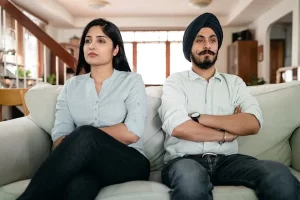
In other words, conflict escalates to the point where you become unable to talk to each other. Meanwhile, conflict is neutral—being neither bad nor good. It becomes bad, because of bad or negative approaches being used, to end it. It gets violent, while violent approaches are being employed—such as beating, fighting, insulting, denying necessities to your spouse, and refusing to talk to them or whatever they give you, among others. So, that percentage above justifies the immense importance of peaceful conflict resolution skills.
So, focusing on enhancing conflict resolution skills becomes essential to addressing the root causes of domestic and gender-based violence. Conflict handled poorly—through violence, insults, or avoidance— degenerates into harm. It is not surprising that all 96% respondents recommended conflict management skills. Yet still, the concept “conflict management” sounds inappropriate.
The term “conflict management” implies that someone—usually an external party—will control or direct the conflicting individuals or parties, as if to say, “You must settle this now, in this way.” This authoritative approach assumes that the parties involved can be managed like problems or objects and animals, rather than thinking creatures capable of transforming their own situation—who instead need to empowered.
Such an approach is inappropriate, especially in personal or domestic contexts, because it overlooks the importance of mutual understanding, emotional healing, and voluntary dialogue. Telling people to settle their conflict doesn’t address the deeper causes of their pain, mistrust, or miscommunication. Instead of managing people, what is truly needed is to build their capacity for peaceful dialogue through the concept called “conflict transformation”, allowing them to navigate their dispute in an authentic, respectful, and lasting way.
Conflict transformation skills are so indispensable to the degree that they hold the capacity to deal successfully with the problems raised by the 2023 RGB Citizen Scorecard : alcohol abuse and poor parenting. We won’t come back to poor communication as it has already been addressed.
The couple of Bibiana Uwitonze and Michael Nkurunziza residing in Cyuve Sector in Musanze District in Rwanda’s Northern Province can assist to comprehend the point better. This couple has passed 11 years in an extremely harsh violent conflict. It’s a Rwandan organization, Haguruka, that has helped them to peacefully handle the dispute. The key reason for the dispute was the lack of peaceful conflict resolution skills—especially right communication skills to constructively raise an issue.
“One day, I was going to kill him [Nkurunziza]; he came home, inebriated and I took a hoe so as to smash his head but I renounced it when I thought that I could make my children orphans and that I could be jailed. His behavior had emboldened me not to fear anything because he wasted all money he got and we often lacked food,” Uwitonze told me in the past. “In fact the major reason was an inappropriate language. When a wife addresses an issue without anger or insults, you really listen to her, but when she confronts you, you immediately engage in the competing style,” Nkurunziza said.
Haguruka has taught them to use appropriate communication and language to foster collaboration to reach consensus. This enabled them to settle their disagreements so that Nkurunziza eventually stopped squandering the household’s property; which he used to do through alcohol abuse.
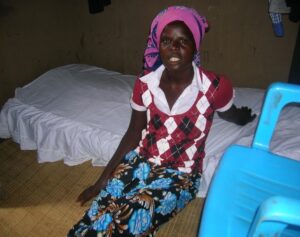
Even this article “ Social health, equally vital as other types of health such as physical and mental health”which involves the couple of Jacqueline Murekatete and Jean de Dieu Habiyambere in Tabagwe Sector, Nyagatare District in Rwanda’s East also corroborates the point.
Murekatete said that their dispute was resolved, thanks to the project’s Common Ground Approach. “Oh, God. Thanks for the project’s Community Resource Person (CRP), Anna Batesi and a group of women who accompanied her to assist us in getting out of the violent conflict. They performed a fabulous achievement.”
The women clarified to her that she claimed her rights aggressively, instead of peacefully or non-violently. “The woman, Batesi and the other women managed to show me that the conflict wouldn’t have escalated into violence if I had used constructive and peaceful dialogue to defend my rights; they emphasized that the conflict was actually aggravated by the destructive approach I applied.” “I was convinced I’d not been humble towards my husband, because I couldn’t fear that we even beat each other and I felt I was right.”
The women advised her to go to Uganda to initiate a peaceful interaction with her husband, and request him to come back. “After elucidating me that I have to show respect/ honor to my husband and clearly explaining the mistakes I committed, the women suggested that I should ask my husband for pardon and that he should also request me for pardon.” “Consequently I immediately decided to meet him in Uganda while I neither knew where he was nor possessed money to use to reach there since I was then cultivating people’s land for food; I didn’t have any other source of income.”
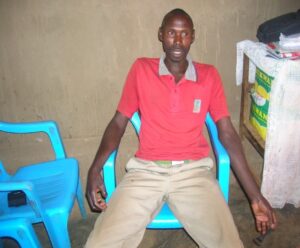
Habiyambere sincerely recognized the gross mistake that he had committed. “I asked her for the pardon; I’d wasted our jointly owned property and you’ve learnt the huge loss we’ve experienced because of my behavior. So, I sincerely begged her for pardon for that.”
If you have not been convinced yet, read this article too: Beyond toothpaste: unmasking the hidden scars of domestic conflict.
Four major lessons
1. Peaceful conflict resolution transforms lives and communities
The story of Nyiramanzi represents another success story that powerfully illustrates that when individuals are equipped with conflict resolution skills, they can overcome despair, rebuild relationships, and even lead communities. Her journey from abandonment to leadership underscores the transformative impact that peaceful dialogue, understanding, and reconciliation can produce—not just at the personal level, but within entire communities.
2. Domestic and gender-based violence stands as a global crisis with deep social and economic consequences
Nyiramanzi’s case aligns with global statistics showing that more than one-third of women worldwide have experienced intimate partner violence. These forms of violence destabilize families, negatively affect mental health, hinder economic participation, and perpetuate poverty—proving that the issue is both a personal tragedy and a widespread development challenge. This type of violence constitutes one of the most pressing issues of the modern world which has to be handled urgently.
3. Empowerment, especially of women, is essential to breaking cycles of violence and promoting resilience
Nyiramanzi’s empowerment—through training and leadership opportunities—enabled her not only to restore her marriage but also to support others in resolving their disputes. This shows that when women are empowered socially and economically, they become agents of change, capable of healing wounds within families and driving progress in their communities. Moreover, though Life In Humanity has only superficially touched on it, the peaceful resolution of the conflict has permitted her to achieve astounding progress.

4. Conflict transformation must be embraced as a critical global development sector
The case clarifies that conflict itself is not inherently bad—it becomes harmful when mismanaged. What the world needs is a shift in mindset: treating conflict transformation as a key sector for national and international development. As long as families, communities, and nations lack the tools to address disputes constructively, violence will persist. Like education and health, conflict transformation deserves investment, integration into policy, and widespread implementation.
In the meantime, Rwanda’s ADR model stands as a promising mechanism capable of achieving transformative outcomes in conflict resolution; it must therefore be vigorously reinforced and elevated to reach its full potential.
As someone who loves outfit inspiration, super helpful — much appreciated.