By Jean Baptiste Ndabananiye
The West must also give weight to the alarms raised by Putin and Russia since the beginning of the war in Ukraine. Just as then US President Truman in 1945 was not swayed by the devastation of Hiroshima, Putin may remain undeterred. Feeling cornered, he would unleash weapons of unparalleled destruction namely nuclear weapons. Truman also felt pressured by Russia’s entry into the war and the introduction of Japanese kamikaze tactics. In response, he issued a grim warning that Nagasaki would face a similar fate. This article includes these key parts:
- The USA first disseminated a warning, as Russia is now doing
- Russia’s entry into World War II
- Why the USA was dragged into World War II
- What could have happened, if the nuclear bombs had not been employed?
- Kamikaze, another potential factor which has caused the USA to feel cornered
- The West should not currently behave like the former Japanese emperor
The USA first disseminated a warning, as Russia is now doing
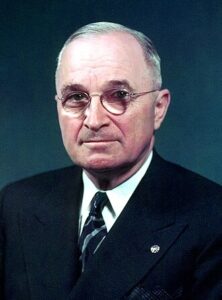
on December 26, 1972 (aged 88).
Office of Scientific and Technical Information (OSTI) is part of the U.S. Department of Energy (DOE). Its mission is to promote science and support the DOE’s research by providing access to scientific and technical information. OSTI reports “At 11:00 a.m. , August 6 [1945] (Washington D.C. time), radio stations began playing a prepared statement from President Truman informing the American public that the United States had dropped an entirely new type of bomb on the Japanese city of Hiroshima — an ‘atomic bomb.’
Truman warned that if Japan still refused to surrender unconditionally, as demanded by the Potsdam Declaration of July 26, the United States would attack additional targets with equally devastating results.”
OSTI additionally reports that by August 9th 1945, American aircraft were showering leaflets all over Japan, informing its people “We are in possession of the most destructive explosive ever devised by man. A single one of our newly developed atomic bombs is actually the equivalent in explosive power to what 2,000 of our giant B-29s can carry on a single mission.
This awful fact is one for you to ponder and we solemnly assure you it is grimly accurate. We have just begun to use this weapon against your homeland. If you still have any doubt, make inquiry as to what happened to Hiroshima when just one atomic bomb fell on that city.”
Sachiko Matsuo who was living in Nagasaki at 1.3 kilometers from the central point of the atomic bomb’s explosion. Matsuo is one of Hiroshima and Nagasaki bombing survivors whom Time Magazine has approached, to narrate their heart-breaking stories around the bombing. Matsuo’s narrative confirms that the U.S first poured the leaflets alerting the Japans, but that the empire concealed these leaflets. Matsuo has started, saying “Peace is our number one priority.” The following is Matsuo’s testimony.
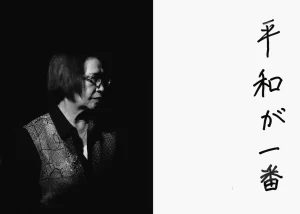
“American B-29 bombers dropped leaflets all over the city, warning us that Nagasaki would ‘fall to ashes’ on August 8. The leaflets were confiscated immediately by the kenpei (Imperial Japanese Army). My father somehow got a hold of one, and believed what it said. He built us a little barrack up along the Iwayasan (a local mountain) to hide out in.We went up there on the 7th, the 8th. The trail up to the barrack was rugged and steep. With several children and seniors in tow, it was a demanding trek.
On the morning of the 9th, my mother and aunt opted for staying in the house. ‘Go back up to the barrack,’ my father demanded. ‘The US is a day behind, remember?’ When they opposed, he got very upset and stormed out to go to work.”
The impact of the atomic bomb on the lives of those who experienced it firsthand is profoundly captured in the reflections of this survivor. In the aftermath of the atomic bomb’s devastation, one family’s story illustrates the delicate balance between survival and loss, revealing the profound emotional scars that lingered long after the explosion. As memories of that fateful day continue to haunt survivors, their poignant narratives shed light on the human cost of war and the enduring bonds of family in the face of unimaginable tragedy.
Matsuo says “We changed our minds and decided to hide out in the barrack, for one more day. That was a defining moment for us. At 11:02am that morning, the atomic bomb was dropped. Our family – those of us at the barrack, at least – survived the bomb.We were later able to reunite with my father. However, he soon came down with diarrhea and a high fever. His hair began to fall out and dark spots formed on his skin. My father passed away – suffering greatly – on August 28.
If it weren’t for my father, we may have suffered severe burns like Aunt Otoku, or gone missing like Atsushi, or been lodged under the house and slowly burned to death. Fifty years later, I had a dream about my father for the first time since his death. He was wearing a kimono and smiling, ever so slightly. Although we did not exchange words, I knew at that moment that he was safe in heaven.”
Russia’s entry into World War II and its meaning for the USA and Japan
OSTI says that on 8 August 1945, the Soviet Union declared war on Japan, attacking Japanese forces in Manchuria. This ruined American hopes that the war would end before Russian entry into the Pacific theater.
However, the U.S. desired the war to end but leaving the impression that it was this giant which ended the war. While confirming the point, the City of Hiroshima explains why the USA hurled the two bombs on Hiroshima and Nagasaki Cities. “The US wanted to force a quick surrender by the Japanese to reduce the number of American lives lost. In addition, it was secretly decided at the Yalta Summit in February 1945 that the Soviet Union would enter the war against Japan. Using the atomic bomb before that entry was intended to assure U.S. supremacy in the post-war world order. The U.S. also wanted to test the world’s first atomic bomb in actual combat to ascertain its effectiveness.
Hiroshima was supposed to be targeted because, the city’s size and layout made it a suitable test site for the bomb’s destructive power, and the concentration of military and munitions facilities was another factor in the decision, while most of Japan’s other major cities had already been destroyed by air attack at the last stages of the war.” For more on indescribable consequences of the atomic bombs thrown at both cities, click on this article.
Why the USA was dragged into World War II
Harry S. Truman Library and Museum with its article entitled “Decision to Drop the Atomic Bomb” says that the Japanese bombed Pearl Harbor on December 7, 1941. It highlights that it was this bombing that prompted the United States to engage in World War II. “In the surprise attack, Japan sunk several ships, destroyed hundreds of planes and ended thousands of lives. The Japanese goal was to cripple the U.S. Pacific fleet, and they nearly succeeded. President Franklin Roosevelt called the attack ‘a day which will live in infamy,’ and the American people were shocked and angered.
The ensuing war was costly. Years of fighting brought the US armed forces closer and closer to Japan as they ‘hopped’ from one island to another. The Japanese were vicious fighters, however, and every victory cost more time, material, and, sadly, lives. The last major battle, the fight for Okinawa, lasted almost three months and took more than 100,000 Japanese and American lives.”
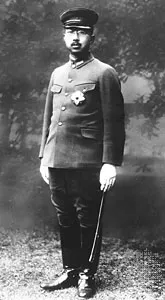
This museum further states that after President Roosevelt passed away on April 12th, 1945, it behooved Truman to decide how to end the war. It adds that the war had demonstrated that the Japanese were fighting for the Emperor who persuaded them that it was better to die than surrender. “Women and children had been taught how to kill with basic weapons. Japanese kamikaze pilots could turn planes into guided missiles. The cost of invasion, they knew, would be high.”
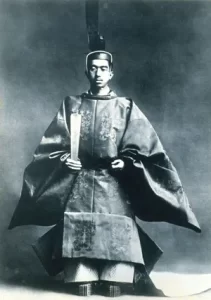
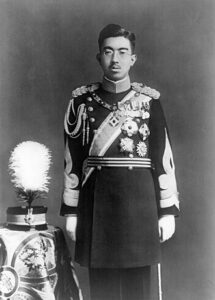
The emperor’s name is Hirohito. His reign title was Shōwa, so he is often referred to as Emperor Shōwa in Japan. Internationally and historically, he is widely known as Emperor Hirohito. He reigned from 1926 until his death in 1989.
The museum says that on becoming president, Truman heard about the Manhattan Project, a secret scientific effort to create an atomic bomb. According to it, after a successful test of the weapon, Truman issued the Potsdam Declaration demanding the unconditional surrender of the Japanese government, warning it of “prompt and utter destruction.” “Eleven days later, on August 6, 1945, having received no reply, an American bomber called the Enola Gay left the Tinian Island in route toward Japan.
In the belly of the bomber was ‘Little Boy,’ an atomic bomb. At 8:15 am Hiroshima time, ‘Little Boy’ was dropped. The result was approximately 80,000 deaths in just the first few minutes. Thousands died later from radiation sickness.”
What could have happened, if the nuclear bombs had not been employed?
The Museum says “Today, historians continue to debate this decision. Was there another way to end the war?” However, The Atlantic magazine shows that the Japanese could have never surrendered, if the two bombings had not been used to convince them.
Its December 1946 Issue was headlined “If the Atomic Bomb Had Not Been Used.” The story was written by Karl T. Compton. He said “About a week after V-J Day, I was one of a small group of scientists and engineers interrogating an intelligent, well-informed Japanese Army officer in Yokohama. We asked him what, in his opinion, would have been the next major move if the war had continued.”
According to Compton, the officer responded “You would probably have tried to invade our homeland with a landing operation on Kyushu about November 1. I think the attack would have been made on such and such beaches.” The group asked him “Could you have repelled this landing?” He replied “It would have been a very desperate fight, but I do not think we could have stopped you.” The group raised this question “What would have happened then?” He answered “We would have kept on fighting until all Japanese were killed, but we would not have been defeated.”
Compton therefore says “It is easy now, after the event, to look back and say that Japan was already a beaten nation, and to ask what therefore was the justification for the use of the atomic bomb to kill so many thousands of helpless Japanese in this inhuman way; furthermore, should we not better have kept it to ourselves as a secret weapon for future use, if necessary? This argument has been advanced often, but it seems to me utterly fallacious.”
I had, perhaps, an unusual opportunity to know the pertinent facts from several angles, yet I was without responsibility for any of the decisions. I can therefore speak without doing so defensively. While my role in the atomic bomb development was a very minor one, I was a member of the group called together by Secretary of War Stimson to assist him in plans for its test, use, and subsequent handling.”
He added that then, shortly before Hiroshima, he was attached to General MacArthur in Manila—capital and chief city of the Philippines, and lived for two months with his staff. He further said that in this way he knew “something of the invasion plans and of the sincere conviction of these best-informed officers that a desperate and costly struggle was still ahead. Finally, I spent the first month after V-J Day in Japan, where I could ascertain at first hand both the physical and psychological state of that country. Some of the Japanese whom I consulted were my scientific and personal friends of long standing.”
Compton contended that the use of the nuclear weapons played a significant role instead. “From this background I believe, with complete conviction, that the use of the atomic bomb saved hundreds of thousands—perhaps several millions—of lives, both American and Japanese; that without its use the war would have continued for many months; that no one of good conscience knowing, as Secretary Stimson and the Chiefs of Staff did, what was probably ahead and what the atomic bomb might accomplish could have made any different decision. Let some of the facts speak for themselves.”
Kamikaze, another potential factor which has caused the USA to feel cornered
Britannica says “The military situation in the Pacific — when Truman became president, a long and bitter military campaign in the Pacific, marked by fanatical Japanese resistance and strongly held racial and cultural hostilities on both sides —was nearing its conclusion.
In February 1945, about a month after he was sworn in as vice president, American troops invaded the small island of Iwo Jima, located 760 miles (1,220 km) from Tokyo. The Americans took four weeks to defeat the Japanese forces and suffered nearly 30,000 casualties.”
Britannica adds that on April 1, 12 days before Truman became president, the United States invaded Okinawa located just 350 miles (560 km) south of the Japanese home island of Kyushu. Britannica highlights that the battle of Okinawa was one of the fiercest of the Pacific war. “The small island was defended by 100,000 Japanese troops, and Japanese military leaders attempted—with some success—to mobilize the island’s entire civilian population.
Offshore, Japanese kamikaze planes inflicted severe losses on the American fleet. After nearly 12 weeks of fighting, the United States secured the island on June 21 at a cost of nearly 50,000 American casualties. Japanese casualties were staggering, with approximately 90,000 defending troops and at least 100,000 civilians killed.”
Britannica further says that the Americans considered Okinawa a dress rehearsal for the invasion of the Japanese home islands, for which the United States was finalizing a two-stage plan. “The phase, code-named Olympic, was scheduled for late October 1945, with a landing on Kyushu, defended by an estimated 350,000 Japanese troops backed by at least 1,000 kamikaze planes. Olympic entailed the use of nearly 800,000 American assault troops and an enormous naval fleet.”
PBS is the Public Broadcasting Service, an American public broadcaster and non-commercial free-to-air television network based in Arlington, Virginia in the US. It points out “Five million German soldiers surrendered to the Allies in Europe. In the Pacific, less than 5% of Japanese forces surrendered. They considered it a disgrace to their families, and instead fought to the death.
Although Allied troops were acquainted with their enemy’s sacrificial nature, they were unprepared for what came out of the sky during the Battle of Leyte Gulf in October 1944. Japanese pilots flew their planes and themselves directly into American warships, causing massive damage. So attacked, the U.S.S. St. Lo sank with 114 hands — the first, but far from the last, victims of the kamikazes.”
PBS explains that the concept was devised by Vice Admiral Onishi Takijiro. “Japanese air forces were no longer competitive, so Takijiro proposed turning planes into human missiles. The pilots needed little training — takeoffs, but no landings — and a sacrificial dive-bomber would be hard to shoot down. They were called kamikazes, or ‘divine wind’ — typhoons that saved Japan in 1274 and 1281 by driving off Kublai Khan’s invasion fleet. Those at home would be inspired by the kamikaze sacrifice. The enemy would be terrified.”
PBS adds that kamikaze pilots often involved university students, motivated by obligation and gratitude to family and country. “They prepared by holding ceremonials, writing farewell poems, and receiving a ‘thousand stitch belt’ — cloth into which 1,000 women had sewn one stitch as a symbolic uniting with the pilot. Then, in planes wrapped around 550 pound bombs, they would fly off to die.”
PBS affirms the most effective use of kamikazes in the battle for Okinawa. It specifies that up to 300 aircraft at a time dove at the Allied fleet. “Just the anticipation of kamikaze attacks drove some American sailors insane. The destroyer Laffey was attacked by 20 planes at once. Her gunners got nine kamikazes, but six others severely damaged the ship.”
This broadcaster says that the kamikazes represented a reason for which the two atomic bombs were hurled at Hiroshima and Nagasaki cities. “By war’s end, kamikazes had sunk or damaged more than 300 U.S. ships, with 15,000 casualties. Several thousand kamikaze planes had been set aside for the invasion of the Japanese mainland that never came.
Ironically, the kamikaze — and the sacrificial philosophy behind them — were one of the reasons President Truman decided to drop the atomic bombs. On the eve of the Japanese surrender, Onishi Takijiro committed suicide, leaving a note apologizing to his dead pilots because their sacrifice had been in vain.”
The West should not currently behave like the former Japanese emperor
The West ought not to act like Japan’s Emperor. “The day after the attack on Nagasaki, the emperor of Japan (Hirohito) overruled the military leaders of Japan and forced them to offer to surrender (almost) unconditionally,” says OSTI.
Harry S. Truman Library and Museum also affirms that as soon as the USA threw Fat Man at Nagasaki, the Japanese emperor capitulated. “On August 9, 1945, another bomber was in route to Japan, only this time they were heading for Nagasaki with ‘Fat Man,’ another atomic bomb.
After the first minute of dropping ‘Fat Man,’ 39,000 men, women and children were killed. 25,000 more were injured. Both cities were leveled from the bombs and this, in turn, forced Japan to surrender to the United States. The war was finally over.”
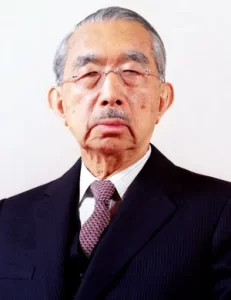
Britannica says “In August 1945, when Japan was facing defeat and opinion among the country’s leaders was divided between those advocating surrender and those insisting on a desperate defense of the home islands against an anticipated invasion by the Allied Powers, Hirohito settled the dispute in favour of those urging peace.
He broke the precedent of imperial silence on August 15, when he made a national radio broadcast to announce Japan’s acceptance of the Allies’ terms of surrender. In a second historic broadcast, made on January 1, 1946, Hirohito repudiated the traditional quasi-divine status of Japan’s emperors.”
A nation which loses a war is dominated, not only affecting ordinary citizens but also elite ones from the top. That’s what happened to Japan. Britannica states “Under the country’s new constitution, drafted by U.S. occupation authorities in 1946 and in effect from 1947, Japan became a constitutional monarchy. Sovereignty resided in the people—not in the emperor, whose powers were severely curtailed.”
The Japanese emperor’s standing was extremely reduced, though it also generated another positive impact. Britannica writes “The emperor was designated the ‘symbol of the state and of the unity of the people.’ In an effort to bring the imperial family closer to the people, Hirohito began to make numerous public appearances and permitted publication of pictures and stories of his personal and family life. Those actions increased Hirohito’s popularity and helped preserve the Japanese imperial system.”