By Editorial Staff
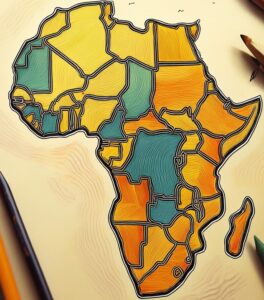
Africa’s quest for total independence remains a daunting journey, deeply entangled in the legacies of colonialism and the enduring grip of neocolonialism. Africa’s pursuit of true independence has been a continuous struggle, deeply rooted in the consequences of colonialism and exacerbated by neocolonial forces. Despite the formal end of colonial rule, the remnants of exploitative policies have left several African nations impoverished, politically fragile, and economically dependent on foreign powers. Colonial powers not only imposed artificial borders that splintered and scattered ethnic groups and sowed seeds for internal conflicts, they also restructured African economies to serve their imperial interests, creating lasting developmental challenges.
Today, neocolonialism with neocolonial forces— the subtle yet pervasive control of African resources and policies by international financial institutions, transnational corporations, and powerful foreign governments —exerts control over African resources and policies, stifling the continent’s growth. These external actors frequently influence decisions regarding national budgets, military affairs, and key economic policies, constraining African nations’ ability to exercise true sovereignty. Ethnic divisions, political instability, and economic dependency further complicate Africa’s journey toward complete autonomy.
The issues highlighted above are not the words of Life In Humanity, but rather a synthesis of key concerns raised by various authoritative sources featured in this piece. This persistent interplay between historical injustice and modern global power structures prompts the pressing question: will Africa ever achieve full independence? In this article, part of a series by Life In Humanity, we delve into the complex dynamics of Africa’s struggle for autonomy, exploring both past and present challenges.
The dissertation entitled “THE RESPONSIBILITY TO PROTECT: NEOCOLONIALISM, POVERTY AND MASS ATROCITY CRIMES IN AFRICA (2018)” reads “In former colonies the matter of responsibility is complicated by the residual effects of colonial policies that often leave former colonies impoverished, dependent, socially fragmented and with a limited capacity [to] protect their populations.
In addition, foreign and international entities such as global financial institutions and transnational corporations often hold significant power in former colonies and even make decisions regarding national budgets and the use of the military.” The thesis by Eileen Brino was submitted to the University at Albany, State University of New York and was released by the university in 2018. Brino says that this thesis employed a postcolonialist approach to analyze cases involved in the thesis, these being cases of mass atrocity crimes in Rwanda, Sudan, Ivory Coast and Nigeria.
The University at Albany, part of the State University of New York (SUNY) system, is a respected institution in the world, particularly known for its research programs, public affairs, and the social sciences. However, it is not typically considered among the very top tier of global universities like Harvard, Stanford, or MIT (Massachusetts Institute of Technology). This university ranks among the top 1000 universities in the world, according to various university ranking systems.
Three African universities jointly conducted research titled “The effects of neocolonialism on Africa’s development” published by African Journals Online on November 29, 2023. It was specifically performed by Obikwelu Ifeanyi John from Pan African University of Governance, Humanities, and Social Sciences ; Gérard-Marie Messina of the University of Yaoundé in Cameroon ; and Odumegwu Andy Chukwuemeka from Nnamdi Azikiwe University Awka in Nigeria.

Ifeanyi described, as a dedicated educator with a background in teaching and administration and holding a Bachelor’s degree in Philosophy, was pursuing a Master’s in Governance and Regional Integration.
Messina, an Associate Professor, is a prolific author in humanities and governance, chairs the African Roots and Heritage Foundation and directs a notable laboratory on political semiotics and African civilizations’ history.
Chukwuemeka is said to be a highly accomplished civil servant in Nigeria, with a distinguished career with academic achievements in Philosophy and expertise turning him into a valuable asset in the Nigerian Civil Service.
Their research points out that colonialism ravaged Africa, but that neocolonialism is thwarting the seed of African growth and development. “Many scholars, as well as historians who wrote on colonialism, focused more on the facts that Africa was and is inordinately exploited of their human (slavery) and natural (raw materials) resources as well as endure brutal and tyrannical control of the imperialist’s power.
The Europeans scrambled Africa without consulting Africans, created artificial boundaries without due consideration of traditional boundaries, displaced Africans and separated language groups from each other, merged independent villages and communities, and turned African colonies into plantations and mineral mines. This is why one ethnic group in Africa can be located in various African countries.”
The study provides some typical examples explaining the devastation of Africa by colonialism, a focus placed upon ethnic groups scattered. “For instance, the Yoruba tribe can be found in Nigeria, Ghana, Benin, and Togo; the San tribe can be found in South Africa, Zimbabwe, Lesotho, Mozambique, Swaziland, Botswana, Namibia, and Angola; the Berbers tribe can be found in Morocco, Algeria, and Libya; Somali tribe can be found in Somalia, Djibouti, Ethiopia, and Kenya; and Chewa tribe can be found in Botswana, Malawi, Mozambique, Namibia, Tanzania, Zambia, and Zimbabwe (Saylor, 2011).

The scrambling of Africa explains, to a greater extent, the reason behind many internal conflicts and development crises within African countries to date. To be specific, most of these conflicts circulate around tribal and ethnic struggles as well as state boundary crises. While there may be other reasons, this explains the rationale behind Africa’ s stunt development.”
Colonial borders divided and dispersed a single ethnic group across multiple countries. Colonial powers often drew arbitrary boundaries that ignored the traditional territories of ethnic groups, leading to their geographical scattering across different newly formed states.
For example, the Berlin Conference of 1884–1885 split Africa into colonial territories, without considering existing ethnic, linguistic, or cultural groups. This resulted in ethnic groups being separated by borders, now living in different countries.
That is why various ethnics like the Yoruba found themselves dispersed in different nations. For example, the Yoruba tribe being dispersed across modern-day Nigeria, Ghana, Benin, and Togo is partly a result of the Scramble for Africa and the arbitrary borders determined by European colonial powers. Before colonialism, the Yoruba people inhabited a unified or unbroken region, with their kingdoms like Oyo and Ife being well-established.
However, during the late 19th century when European powers partitioned Africa, they paid little attention to the ethnic and cultural boundaries that had existed for centuries. This caused the Yoruba to be separated by colonial borders. The Yoruba homeland was divided primarily between British-controlled Nigeria and French-controlled territories like Benin and Togo, with smaller populations also found in Ghana. Thus, the scattering of the Yoruba people across these countries constitutes a direct consequence of colonial boundary-making during the Scramble for Africa.

Oliver Whelan is Editor-in-Chief of The Science Survey. The latter one is an award-winning student newspaper of the Bronx High School of Science. It has been published continuously since the school was established in 1938. The school is located in the Bronx in New York City. On July 21, 2023 he produced a story headlined “Neocolonialism: The Remnants of Foreign Exploitation in Africa” published by the newspaper.
He says “Half a century after Europe liberated its colonies in Africa, a new form of foreign oppression has emerged that threatens the sovereignty of the African nations. Western countries like to believe that they have equipped the African continent with the capability to achieve freedom.
But today, more than 60 years after the last European countries relinquished their colonial claims in Africa, the continent is still riddled with corruption, poverty, and turmoil. These problems only exist because the old colonial relationships between Western powers and African nations never truly went away – they are still alive today and just as relevant as ever, only now they are under a new title: neocolonialism.”
He points out that the term “neocolonialism” surfaced while the world was experiencing massive changes in the mid- 20th century, being the modern dynamics between Western and African entities that “perpetuate exploitation and oppression. In this period, new international treaties and organizations like the United Nations and the The Vienna Convention on Diplomatic Relations meant countries became a part of a global network and were therefore accountable for their actions. The years of crusades, conquests, and coups which had defined European foreign policies since the Middle Ages were replaced by gray areas between diplomacy and war.
Power blocs composed of multiple countries that acted as one meant engaging in traditional forms of conflict – invasion, colonialism, and annexation – guaranteed economic and political ruin for the aggressor. For many European countries, especially those whose economies relied heavily on Africa, this meant they needed to find a way to continue to control its former colonies.”

Christin Nichole is actively engaged in various initiatives related to African issues, culture, and development. She has founded Pan African Think Tank, an international 501(c)(3) non-profit organization. Nichole is a businesswoman, author, and singer-songwriter based in the United States of America. She has obtained the opportunity to study abroad twice and venture to 79 countries during her sabbaticals. This has enabled her to hold numerous conversations with Pan-Africans from different places and all walks of life. But she highlights that the word “Pan-African” and the principles behind it never penetrated her mind until her November 2018 trip to Rocinha, the largest favela in Rio de Janeiro, Brazil.
She learned that not all schools taught History and World Geography, according to Pan-African Think Tank’s website adding that at that moment she thought, “You can’t plan for your future and thoroughly understand your present, without knowing and acknowledging your past.” The website adds “That event gave birth to Pan African Think Tank; a charitable entity with the purpose to educate, while helping eliminate prejudice throughout Africa and the African Diaspora; coming together as one.”
Pan-Africanism represents a movement seeking to unify and uplift peoples of African descent worldwide. It emphasizes shared history, culture, and interests among Africans and those in the diaspora. The principles often include solidarity, self-determination, and economic cooperation aiming to address the historical injustices faced by African nations and communities. “In 1961, the All African People’s Conferences (AAPC) described neocolonialism as the deliberate and continued survival of the colonial system in independent African states by turning these states into victims of political, mental, economic, social, military, and technical forms of domination carried out through indirect and subtle means that did not include direct violence,” she once said. “In the short definition, neo-colonialism is the use of economic, political, cultural, or other pressures to control or influence other countries, especially former colonies.”
Life In Humanity has not been lucky to find a credible source explaining what AAPC are, but we think that they constitute significant gatherings focused on promoting Pan-African unity, solidarity, and cooperation among peoples of African descent. These conferences might serve as platforms to discuss key issues confronting African nations and communities, including political, economic, and social challenges.
Whelan says “Neocolonialism was initially a natural step forward for newly-independent countries. Logically, some sort of dependency on the parent country would linger since the African colonies had political and economic structures that were geared towards the needs of its colonizers. This meant that frequently, the best opportunities available to the new countries was to allow the previously existing corporations and governments to continue their operations. However, decades later, neocolonialism remained and African countries never truly escaped imperial control.”
Nichole says “African countries started fighting for independence, but the European countries still needed resources to sustain their country economically. Coup d’états included ending the leaderships of African presidents and prime ministers whose policies didn’t align with European powers. African countries still rely on military protection and financial assistance (foreign aid), which allows European countries to indirectly maintain their hand over African countries.”
The universities’ research was intended to examine effects of “neocolonialism” on Africa’s development, exploring potential strategies to neutralize its negative impact. “The legacy of colonialism has cast a long shadow over the continent, with neocolonial practices posing significant obstacles to sustained socio-economic growth and self-determination.”

The study indicates that the analysis underscores the intricate dynamics of neocolonial control in Africa, including economic dominance, political interference, cultural subjugation, and power imbalances. “Moreover, it sheds light on the role of foreign aid and trade, multinational corporations, and international financial institutions in perpetuating neocolonial practices. These means and mechanisms enable the former colonial powers to exert indirect influence over Africa’s economic and political landscape, impeding genuine progress. Findings reveal that Africa’s nominal and flag independence following decolonization has not translated into genuine autonomy and self-sufficiency.
Instead, the continent continues to face economic dependence, corruption, and stunted development due to unequal ongoing struggles. To address these challenges, the article proposes tentative strategies and solutions.”
While this study proposes strategies and solutions to counteract neocolonialism in Africa, there are people who persist and sign that Africa will never be completely liberated. They base their claim on the premise that Western nations maintaining neocolonialism overwhelmingly overpower this continent virtually in every field, as even suggested in this article.
However there exist countries like China and India which were influenced and controlled as well as colonized respectively in the past, but which finally successfully overcame the control and chances for neocolonialism. China was not colonized in the same way many African and Asian countries were. nevertheless, it did experience significant foreign influence and control during the 19th and early 20th centuries, particularly through unequal treaties and “imperialism”. India was colonized by the British Empire.
Today aspects including economic growth and independence through robust reforms, assertive foreign policies, cultural and soft power diplomacy are some of key enablers for these nations to rise to dominance against Western domination. Military modernization and strengthening have also significantly contributed to the rise of countries like China and India, allowing them to climb to dominance against Western powers.
Consequently, if Africa is to attain its dominance too, those mentioned spheres constitute areas in which it has to invest gigantically. As we reflect on the trajectory of African nations, the pivotal question remains: Will they manage to implement transformative reforms to achieve a status comparable to that of China, India, and even North Korea colonized by Japan? For example, today Japan cannot dictate North Korea’s actions, especially recognizing North Korea’s status as a nuclear power.
The question encapsulates the motivation behind Life In Humanity’s series of articles that will thoroughly address this subject, as our future pieces will scrutinize these critical issues.