By Editorial Staff
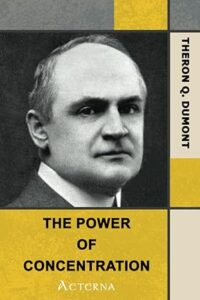
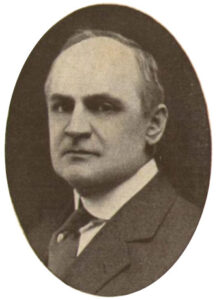
This article is built on the second lesson of the timeless book: The Power of Concentration, a lesson titled “The Self-Mastery: Self-Direction Power of Concentration.” The book has been written by Theron Q. Dumont. The latter one was a pen name—unreal identity or person—used by William Walker Atkinson (1862–1932), an influential American writer, lawyer, publisher, merchant and early proponent of the New Thought movement—which originated in the 19th century in the United States of America, underscoring the power of the mind to influence reality and lead to healing and well-being.
The lesson unveils a profound truth often neglected in today’s fast-paced, distraction-filled world: that true concentration is not merely a mental act, but a disciplined orchestration of the whole self. The author contended that unless one first attains mastery over their impulses, emotions, and bodily actions; the mind cannot function with sustained focus or precision.
This lesson strikes at the heart of personal transformation—reminding us that the ability to concentrate does not form a gift reserved for a select few, but a cultivated strength available to anyone willing to train their self-guiding faculties. Without self-mastery, concentration remains fleeting; with it, we unlock the commanding power to direct our thoughts, actions, and destiny.
Roots of concentration lie in mastery over mind and body
The author maintained that human beings have not trained themselves in a way to promote their self-mastery. He however said that every balanced mind possesses the faculties whose chief duties are to engineer, direct and concentrate the operations of the mind, both in a mental and physical sense. These faculties are innate mechanisms designed to steer, focus, and command the vast operations of thought and action, both mentally and physically.
“Man must learn to control not only his mind but his bodily movements. When the controlling faculties (autonomic) are in an untrained condition, the impulses, passions, emotions, thoughts, actions and habits of the person suffer from lack of regulation, and the procedure of mental concentration is not good, not because the mind is necessarily weak in the autonomic department of the faculties, but because the mind is not properly trained.”
He added “When the self-regulating faculties are not developed; the impulses, appetites, emotions and passions have full swing to do as they please and the mind becomes impulsive, restless, emotional and irregular in its action. This is what makes mental concentration poor.
When the self-guiding faculties are weak in development, the person always lacks the power of mental concentration. Therefore, you cannot learn to concentrate until you develop those very powers that qualify you to be able to concentrate. So if you cannot concentrate one of the following is the cause: 1. ‘Deficiency of the motor centers.’ 2. ‘An impulsive and emotional mind’. 3. ‘An untrained mind.’”
He emphasized that the last fault can soon be removed by systematic practice. “It is easiest to correct. The impulsive and emotional state of mind can best be corrected by restraining anger, passion and excitement, hatred, strong impulses, intense emotions, fretfulness, etc. It is impossible to concentrate when you are in any of these excited states.”
He said that correcting the deficiency of the motor centers is harder because as the person’s brain is undeveloped, he lacks will power. To cure, according to him, this takes some time and persons so afflicted may benefit by reading and studying his course, “The Master Mind.”
The late Atkinson affirmed that to be able to concentrate, you must possess the strength of mind. “The person that is feeble-minded cannot concentrate his mind, because of lack of will. The mind that cannot center itself on a special subject, or thought, is weak; also the mind that cannot draw itself from a subject or thought is weak. But the person that can center his mind on any problem, no matter what it is, and remove any unharmonious impressions has strength of mind. Concentration, first, last and all the time, means strength of mind.”
“Through concentration a person is able to collect and hold his mental and physical energies at work. A concentrated mind pays attention to thoughts, words, acts and plans. The person who allows his mind to roam at will will never accomplish a great deal in the world. He wastes his energies. If you work, think, talk and act aimlessly, and allow your brain to wander from your subject to foreign fields, you will not be able to concentrate. You concentrate at the moment when you say ‘I want to, I can, I will’.”
The following are some mistakes which some people commit, according to him. “If you waste your time reading sensational stories or worthless newspaper items, you excite the impulsive and the emotional faculties, and this means you are weakening your power of concentration. You will not be a free engineer, able to pilot yourself to success. Concentration of the mind can only be developed by watching yourself closely. All kinds of development commence with close attention. You should regulate your every thought and feeling.
When you commence to watch yourself and your own acts and also the acts of other people, you use the faculties of autonomy, and, as you continue to do so, you improve your faculties, until in time you can engineer your every thought, wish and plan. To be able to focalize the mind on the object at hand in a conscious manner leads to concentration. Only the trained mind can focalize. The person that cannot direct his thoughts, wishes, plans, resolutions and studies cannot possibly succeed to the fullest extent.”

Concentration entails remaining consciously attentive and keeping your mind on one thing at a time, and shutting out everything else. “When you are talking to anyone, give him your sole and undivided attention. Do not let your attention wander or be diverted. Give no heed to anything else, but make your will and intellect act in unison.”
“Never be in too much of a hurry; and, remember, the more you improve your concentration, the greater are your possibilities. Concentration means success, because you are better able to govern yourself and centralize your mind; you become more in earnest in what you do and this almost invariably improves your chances for success.”
When you fix your mind like a laser on one burning purpose, every trembling cell within you rallies in unison, surging like a river dammed and then unleashed—unstoppable, focused, and fierce. Scatter your energy, and it fizzles into nothing. Channel it with precision, and you awaken a storm of silent power that bends outcomes and commands influence. “Concentrate your strength upon the purpose you are talking about. Unless you do, you will waste your energy and not accomplish as much as you should. Center your mind on one purpose, one plan, one transaction.
When the mind can properly concentrate, all the energy of every microscopic cell is directed into one channel and then there is a powerful personal influence generated. Everyone possesses many millions of little trembling cells, and each one of these has a center where life and energy are stored up and generated. If this energy is not wasted but conserved and controlled, this person is influential, but when it is the opposite, he is not influential or successful.”
Concentration: power source for influence and success
“As an example, we see an engine going along the track very smoothly. Someone opens all the valves and the train stops. It is the same with you. If you want to use your full amount of steam, you must close your valves and direct your power of generating mental steam toward one end.
Just as it is impossible for a steam engine to run with all its valves open, so is it impossible for you to waste your energy and run at your top speed. Each neuron in the gray layers of the brain is a psychic center of thought and action, each one is pulsating an intelligent force of some kind, and when this force, your thoughts and emotions, are kept in cheek by a conservative, systematic and concentrated mind, the result will be magnetism, vitality and health.”
Atkinson explained that human organisms’ organs such as muscles, bones, ligaments, feet, hands and nerves are agents to carry out the mandates of the mind. “The sole purpose of the volitional faculties is to move the physical mechanism as the energy travels along the wires of nerves and muscles. Just for that reason, if you throw a voluntary control over these messages, impulses, thoughts, emotions, physical movements and over these physical instruments you develop your faculties of self-mastery and to the extent you succeed here in proportion will you develop the power of concentration.”

“When you allow yourself to become irritable, watch how you breathe and you will learn a valuable lesson. Watch how you breathe when you are happy. Watch your breathing when you harbor hate. Watch how you breathe when you feel in love with the whole world and noble emotions thrill you. When filled with good thoughts, you breathe a plentiful supply of oxygen into your lungs and love fills your soul.”
He emphasized “Love develops a person physically, mentally and socially. Breathe deeply when you are happy and you will gain life and strength; you will steady your mind and you will develop your power of concentration and become magnetic and powerful. If you want to get more out of life, you must think more of love. Unless you have real affection for something, you have no sentiment, no sweetness, no magnetism. So arouse your love affections by your will and enter into a fuller life.”

According to the writer—Atkinson, one of the best ways to study a person is to watch their physical movements, “for when we study his actions, we are studying his mind. Because actions are the expressions of the mind. As the mind is, so is the action. If it is uneasy, restless, erratic, unsteady; its actions are the same. When it is composed, the mind is composed. Concentration means control of the mind and body. You cannot secure control over one without the other.”
Nikola Tesla–living proof of concentrated genius
Nikola Tesla, the legendary inventor and electrical engineer, is a prime example of someone who mastered self-direction and applied intense concentration to achieve world-changing results. According to reputable biographies such as “Tesla: Man Out of Time” by Margaret Cheney and firsthand accounts, Tesla would routinely enter a state of such focused mental discipline that he could visualize entire inventions in his mind—down to the smallest mechanical detail—before ever putting them on paper or constructing a prototype.
The summary description of the book “Tesla: Man Out of Time” on Amazon reads “Called a madman by some, a genius by others, and an enigma by nearly everyone, Nikola Tesla created astonishing, world-transforming devises [devices] that were virtually without theoretical precedent. Tesla not only discovered the rotating magnetic field, the basis of most alternating current machinery, but also introduced the fundamentals of robotry, computers, and missile science and helped pave the way for such technologies as satellites, microwaves, beam weapons, and nuclear fusion.
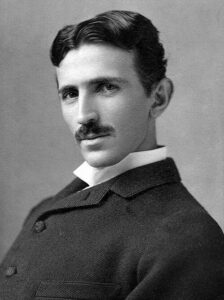
Almost supernaturally gifted, Tesla was also unusually erratic, and neurotic. But above all, he was the hero and mentor to many of the last century’s most famous scientists. In a meticulously researched, engagingly written biography, Margaret Cheney presents the many different dimensions of this extraordinary man, capturing his human qualities and quirks as she chronicles a lifetime of discoveries that continue to alter our world.”
As specified in the book, he once said “My method is different. I do not rush into actual work. When I get a new idea, I start at once building it up in my imagination… I change the construction, make improvements, and operate the device entirely in my mind.”
Cheney in the book continues, saying “Thus, he claimed he was able to perfect a conception without touching anything. Only when all the faults had been corrected in his brain, did he put the device into concrete form.”
“Invariably,” he wrote—according to Cheney, “my device works as I conceived that it should, and the experiment comes out exactly as I planned it. In twenty years there has not been a single exception. Why should it be otherwise? Engineering, electrical and mechanical, is positive in results.”
Cheney adds “Tesla’s childhood development is confusing because he enhanced his native talent with such rigorous mental discipline that it is impossible to separate the innate gifts from the acquired. Some people, for example, prefer to think of Tesla’s prodigious memory as being in no way abnormal but merely the result of making the most of what God gave him.
Yet the ability to memorize a page of type or the precise relationships and sizes of myriad patterns on a page in the wink of an eye—call it photographic, eidetic, or whatever—does seem to belong to the specially gifted. Such memory usually begins to wane in adolescence, indicating that it is affected by bodily chemical changes. In Tesla’s case, perhaps because of his special training in early childhood and his subsequent self-discipline, his phenomenal memory was retained throughout much of his life.”
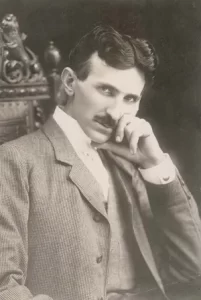
“Wizard: The Life and Times of Nikola Tesla: Biography of a Genius” is a book by Marc J. Seifer, another credible source about Tesla. Its summary description also on Amazon states “Nikola Tesla (1856-1943), credited as the inspiration for radio, robots, and even radar, has been called the patron saint of modern electricity, the man considered by many to be the founding father of modern electrical technology. Wizard is a truly remarkable biography of a remarkable man.”
The book highlights “Here is a deep and comprehensive biography of a great engineer of early electrical science. Indeed, it is likely to become the definitive biography of the Serbian-American inventor Nikola Tesla. The book brings together, into a cohesive whole, the many complex facets of the personal and technical life of the ‘wizard’ who stands alongside Thomas Edison and George Westinghouse as another great implementor and inventor…. Highly recommended.
Accused of being a visionary and dreamer, the consummate inventor ‘taxed his powers of concentration in the calm retirement of the night‘ to cultivate a way to bail himself out. Compelled by an all-consuming desire to be a major player in the burgeoning new age, the wizard preferred working through the night, when distractions could be minimized and concentration could be intensified.”
This supreme mental control is exactly what Dumont teaches: directing all the mind’s microscopic energy cells into one single concentrated channel. Tesla’s power of sustained mental concentration and self-mastery over distraction led to the invention of the AC motor, radio foundations, wireless energy concepts, and even precursors to modern radar—without relying heavily on trial and error in the lab.