By Jean Baptiste Ndabananiye
While Othman Belbeisi, the Regional Director of Middle East and North Africa within the International Organization for Migration [IOM] recommends climate action notably in conflict-torn regions and an end to wars in the world, whether this will happen remains obscure. Some of major parts of which this article consists are
- Conflict root causes to be eradicated, if wars are to cease
- Will those root causes be really eliminated?
In his opinion “We need urgent climate action in conflict zones” released by Al Jazeera yesterday, he states “Climate change is exacerbating conflicts in the Middle East and yet very little is being done to address it.”
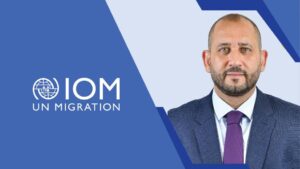
Belbeisi explains that effects of climate change manifest themselves not only in the Middle East region, affecting those touched by wars, but also in Sudan. “Over the past few weeks, an unusually wet rainy season has caused destructive floods across Sudan.
Tens of thousands of people displaced by the Sudanese civil war have been affected and tens of thousands more were displaced by the floodwaters sweeping their homes away. This has added to the suffering of the Sudanese people who have faced severe shortages of food, medicines, shelter and other basics since the start of conflict in April 2023.”
He adds “Meanwhile, in Gaza, high temperatures and the lack of access to fresh water and sanitation have made life miserable for the nearly 2 million Palestinians displaced by war. The hot weather has also facilitated the spread of infectious disease.”
Belbeisi points out that these regions don’t constitute the only places which are experiencing consequences of climate change and wars. “These serious developments in Sudan and Gaza make clear how extreme weather related to climate change can exacerbate already severe humanitarian crises caused by conflicts. And these are not the only places where war meets climate change to produce humanitarian disasters.
At the end of 2023, the United Nations estimated that 117.3 million people were displaced worldwide, with 68.3 million displaced internally. The main cause of displacement is conflict, but climate-change-related disasters, such as storms, floods, droughts and wildfires, also left some 20.3 million people homeless last year.”
He argues that more than a factor of displacement, climate change acts as a threat multiplier deepening resource competition, aggravates conflicts, bolsters social and economic inequalities, and raises vulnerability. “That is why climate action must be a part of the strategy for integrated humanitarian, development, and peace interventions across the world, especially in conflict-ridden regions like the Middle East, where climate change is expected to further destabilise already fragile societies,” he says.
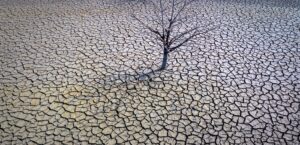
He highlights that droughts, water shortages, and extreme weather events are likely to raise displacement. He reiterates recurrent droughts which contributed to the “displacement of almost 140,000 people in Iraq as of March 2024, according to IOM estimates.” He further says that 240,000 people in Yemen were newly forced to quit their homes in 2023, “mostly due to floods, on top of the 4.5 million people displaced by the ongoing conflict”.
Belbeisi raises the issue of the lack of commitment, where engagements remain on paper rather than being translated into concrete actions. He states “Moving faster to reduce the impact of climate change, in line with the Paris Agreement, is essential. The recently concluded Aswan Forum, highlighted the urgent need to address the effects of climate and conflict. The topic was prominent in discussions in Egypt at COP27, in the UAE at COP28, and will be again in Azerbaijan at the upcoming COP29.
Yet so far, support for action is falling short. In the Arab region, six emerging countries – three of which are conflict-affected – received only 6 percent of climate finance support provided for the Arab region over the past decade.”
He underlines that conflicts are getting more protracted and complex, enmeshed in systems of weak governance, inequalities, and environmental degradation. There are several ongoing conflicts across the world, begetting significant humanitarian crises.
The war between Ukraine and Russia is continuing to be one of the deadliest, with high casualty rates and widespread displacement. The war between Israel and Palestine, especially in Gaza, remains highly volatile with substantial loss of life and destruction. This war bears the risk of expanding to other countries in the region and drawing each side’s allies from around the world. The civil war in Myanmar following the military coup in 2021 has led to significant violence and displacement across the country. The civil war in Yemen, which broke out in 2014, is continuing to rage, engendering widespread suffering, with both sides accused of perpetrating war crimes. The civil war in Syria, although diminished in intensity, continues to affect millions of people with ongoing violence and displacement.
The war in Sudan, particularly in the Darfur region, has escalated into one of the worst humanitarian crises, with thousands killed and millions displaced.The Democratic Republic of Congo has been racked by conflict for more than 30 years, according to Al Jazeera.
Belbeisi therefore suggests “A more proactive and preventive approach is needed across the international community. We must invest in and prioritise prevention. We must – equitably – reap the benefits of responsible innovation, using technology, promote peaceful and inclusive societies, provide access to justice for all, and build effective, accountable institutions to harness the power of peace and development.
We will never truly adapt to all climate change impacts without effective peace and an end to the long-standing and recurring conflicts that have driven so much displacement, especially in Africa.”
While explaining how this will turn into reality, he doesn’t clarify whether this suggestion will materialize. He just says if nations of the world are truly and seriously committed to reaching the 2030 Sustainable Development Goals, leaders in the world must accelerate and help to end the wars. There however prevails the doubt of accomplishing these goals, as detailed by this article.
The following quote contains a response that he provides, to address the problem. “The intersection of climate change, conflict, and displacement is a complex and growing challenge that requires a coordinated global response.
By acting early, investing in resilience, building governmental capacities or structures, and integrating climate action with humanitarian and development efforts, we can work towards a future where migration is a choice, not a necessity.”
Some complementary suggestions to solve the climate change crisis
As elucidated in this article, there continues the hot debate whether climate change is human-induced or not. In spite of this debate, even people opposing the claim that climate change proceeds from human activity agree to take action to safeguard this planet.
For example, a man in his 50s in Coastal Florida in the United States, in Pew Research Center’s survey said “And it is so very important that we take care of our planet. Let’s not litter. Let’s have good clean water. Let’s not do anything that’s going to hurt our planet that we live in. And so that’s what I feel about everybody’s duty, to take care of – everybody takes care of their own little piece, and I think it’s going to be fine.”
Ballot Pedia says that some scientists argue that if human-caused global warming is occurring, more cost-effective policies exist to address the potential consequences of warming, “rather than government regulations requiring reductions in carbon dioxide emissions.” “Freeman Dyson, a former professor of physics at the Institute for Advanced Study at Princeton University, has argued that while global warming may be caused by human activity, policies should focus on making renewable energy, which emits less carbon dioxide, more affordable.”
Ballotpedia features another scientist who exactly echoes Dyson’s views. “Bjorn Lomborg, a visiting professor at Copenhagen Business School, has argued that policies such as the Clean Power Plan and the Paris Climate Agreement will do little to reduce global temperatures and that policies should focus on lowering the costs of renewable energy sources so more individuals and businesses choose them over coal, oil, and natural gas .”
Root causes of conflict to be eradicated, if wars are to cease
Different sources suggest that for wars to truly cease, there needs to exist a global commitment to addressing the root causes of conflict, such as poverty, inequality, and political oppression.
Poverty and inequality
The National Institutes of Health [NIH] consisting of 27 institutes and centers belongs to the U.S. Department of Health and Human Services. This primary federal agency responsible for conducting and supporting medical research is said to be one of the world’s foremost biomedical research institutions.

In its 2002 February 9 article “Inequality and poverty cause war” it states “The roots of war lie in poverty: political, economic, and social inequalities whereby individuals or groups are motivated to fight to seek redress. War also often has a cultural dimension related to ethnicity or religion.
Stewart (p 342) says that although all these factors predispose to conflict, a history of conflict is always a constant factor. Policies to tackle poverty in countries that are prone to conflict are essential to reduce the likelihood of war in developing countries.”
The United Nations in its 19 June 2023 article titled “Integrated Policies Can Reduce Inequality, End Poverty and the War on Nature” said “In 2015, the SDGs [Sustainable Development Goals] were agreed as an integrated and indivisible set of Goals that cannot be achieved one at a time or in siloes. The recently released ‘Report of the Secretary-General on Progress towards the Sustainable Development Goals’ finds that only about 12% of SDG targets are on track to be achieved by 2030, with failures across all three dimensions of sustainability.
The promise to leave no one behind is faltering against rising poverty and hunger, and a triple planetary crisis with consequences that are most severe for the most vulnerable. The UN Secretary-General has called on governments to advance concrete, integrated, and targeted policies to eradicate poverty, reduce inequality, and end the war on nature.”
The War on Nature describes the ongoing environmental degradation caused by human activities, such as deforestation, pollution, overfishing, and climate change. The UN in the article pointed out “Ending the war on nature. Air, water, land, and ecosystems are foundations for life. Achieving the 2030 Agenda for Sustainable Development and the Paris Agreement on climate change depends on safeguarding these resources for sustainability, equality, and justice.
If the current trajectory towards climate change, biodiversity loss, pollution, and the degradation of ecosystems goes unaddressed, progress on the SDGs could unravel, exacerbating hunger, poverty, conflict, natural disasters, and public health emergencies.”
Statista is a German online organ specializing in data gathering and visualization, rated as a leading online statistics, data, and market research platform. It aggregates statistical data from over 22,500 sources, providing users with access to a wide range of information, including market trends, consumer behavior, and industry insights, among others. It deals with various spheres including technology, media, finance, healthcare, and global business.
Statista Research Department’s report published on Jul 30, 2024 indicates 29% survey respondents raised the issue of poverty and social inequality. The survey was performed from June 21 to July 4, 2024 worlwide with online pannel as a method of interviews. It involved 25,520 respondents in 29 countries.
The 2022 World Inequality Report reads “The richest 10% of the global population currently takes 52% of global income, whereas the poorest half of the population earns 8.5% of it. On average, an individual from the top 10% of the global income distribution earns €87,200 (USD122,100) per year, whereas an individual from the poorest half of the global income distribution makes €2,800 (USD3,920) per year.
Global wealth inequalities are even more pronounced than income inequalities. The poorest half of the global population barely owns any wealth at all, possessing just 2% of the total. In contrast, the richest 10% of the global population own 76% of all wealth. On average, the poorest half of the population owns PPP €2,900 per adult, i.e. USD4,100 and the top 10% own €550,900 (or USD771,300) on average.”

This report was the flagship product of the World Inequality Lab. The data and analysis presented in the report were based on the work of more than 100 researchers over four years, located on all continents, contributing to the World Inequality Database maintained by the World Inequality Lab.
This vast network collaborates with statistical institutions, tax authorities, universities and international organizations, to harmonize, analyze and disseminate comparable international inequality data. The lab constitutes a global research center focused on the study of inequality and public policies promoting social, economic and environmental justice.
Oxfam International in its 16th January 2023 article headlined “Richest 1% bag nearly twice as much wealth as the rest of the world put together over the past two years” said “The richest 1 percent grabbed nearly two-thirds of all new wealth worth $42 trillion created since 2020, almost twice as much money as the bottom 99 percent of the world’s population. During the past decade, the richest 1 percent had captured around half of all new wealth.”
Oxfam calls for a systemic and wide-ranging increase in taxation of the super-rich to claw back crisis gains driven by public money and profiteering. It highlights that decades of tax cuts for the richest and corporations have stoked inequality, with the poorest people in numerous countries paying higher tax rates than billionaires. “Elon Musk, one of the world’s richest men, paid a ‘true tax rate’ of about 3 percent between 2014 and 2018. Aber Christine, a flour vendor in Uganda, makes $80 a month and pays a tax rate of 40 percent.”
The tax rate of 40 percent said to be paid by Christine appears to be an example used to illustrate the intensity of income inequality and the tax burden on the poor compared to the wealthy. The claim is likely used rhetorically to emphasize inequality in global tax systems rather than being a precise, verifiable fact about an individual. It is often cited in reports and articles to underline disparities in tax systems, where the wealthy may pay lower effective tax rates than those with lower incomes. Life In Humanity has not found any source corroborating the claim.

Gabriela Bucher, Executive Director of Oxfam International says “Taxing the super-rich is the strategic precondition to reducing inequality and resuscitating democracy. We need to do this for innovation. For stronger public services. For happier and healthier societies. And to tackle the climate crisis, by investing in the solutions that counter the insane emissions of the very richest.”
Political oppression
Political oppression signifies the systematic and prolonged mistreatment of individuals or groups based on their political beliefs, affiliations, or activities. It often involves discriminatory practices that deny individuals their fundamental political rights and freedoms.
Examples include unjustifiably prohibiting a political party from partaking in elections, unwarrantedly banning political organizations, or enacting laws that disproportionately target certain political ideologies.
Political repression involves the use of force or coercion by a government or other authority to control or limit political freedom and expression. Political repression often involves more direct actions, such as arrests, imprisonment, violence, torture, and even extrajudicial killings. Political repression forms one of tools or tactics that can be used within a broader strategy of political oppression.
IDEES constitutes the online magazine on contemporary issues edited by the Centre for Contemporary Studies, an in-house think-tank of the Government of Catalonia. The latter one is a region in northeastern Spain. The center constitutes an in-house think tank of the Ministry for Foreign Action and European Union at the Government of Catalonia, dedicated to the analysis, debate and reflection on the key issues of the contemporary world.
In its 10.03.2020 report “Human rights and political repression around the world” of the study spanning five years from 2015 to 2020, IDEES raised “the worrying situation of human rights around the world against a backdrop of political repression.”
For example about Europe, it said “In Europe there is a worrying synergy in some EU member states who have sought to undermine the independence of the judiciary in order to avoid accountability. Likewise, the EU itself has continued to externalise border and migration control, thus seriously endangering human rights: thousands of people continue to be exposed to conflict, violence, torture and an uncertain future in conditions of squalor at the gates of Europe.”
“There is also an extremely disturbing trend whereby people who oppose these migration and border control policies are very often targeted by smear campaigns and harassment, including administrative and criminal penalties, evidently persecuting solidarity. This means a growing number of human rights advocates, activists and independent media outlets are being intimidated and prosecuted.”
As for Asia, IDEES stated “Governments manipulatively use hate speech to silence dissenting voices. Repression and human rights violations in Asia thus impact a wide range of groups.” According to the magazine, the groups include religious and ethnic minorities and indigenous peoples, human rights activists, journalists and academics, among others.
The National Center for Biotechnology Information [NCBI] represents a significant division within the United States’ National Library of Medicine (NLM). The NLM is a key institution of the country acting as the world’s largest biomedical library and being a part of the NIH.
This center’s 14 June 2024 article headlined “Political repression motivates anti-government violence” reads “The majority of the world’s population faces threats of political repression. Such repression can range from surveillance and harassment of ordinary citizens to torture and ‘disappearances’ of opposition activists.
The goal of political repression is to quell the opposition that is contesting power and to prevent citizens from engaging in anti-government activities or having anti-government views.”
Will those root causes be really eliminated?
As mentioned earlier, the issues discussed above are root causes of wars, and if wars are to end, these root causes must be uprooted. However, Life In Humanity cannot definitively say whether these root causes will be eradicated. Similarly, while investment and action are necessary to tackle climate change, Life In Humanity cannot predict whether these efforts will be sufficiently implemented. In the end, only time will tell.
Those depend on world rules and policies.
Thanks for sharing. I read many of your blog posts, cool, your blog is very good.
Thank you a lot for your inspiring comment.
Thanks for sharing. I read many of your blog posts, cool, your blog is very good.
Thanks for sharing. I read many of your blog posts, cool, your blog is very good.
Thanks for sharing. I read many of your blog posts, cool, your blog is very good.
Thank you indeed.
Your point of view caught my eye and was very interesting. Thanks. I have a question for you.
I don’t think the title of your article matches the content lol. Just kidding, mainly because I had some doubts after reading the article.
Your point of view caught my eye and was very interesting. Thanks. I have a question for you.
I don’t think the title of your article matches the content lol. Just kidding, mainly because I had some doubts after reading the article.
I don’t think the title of your article matches the content lol. Just kidding, mainly because I had some doubts after reading the article.
Your article helped me a lot, is there any more related content? Thanks!
Thank you a lot for your motivational feedback.
Thank you for your sharing. I am worried that I lack creative ideas. It is your article that makes me full of hope. Thank you. But, I have a question, can you help me?
Thank you so much for this feedback.
I don’t think the title of your article matches the content lol. Just kidding, mainly because I had some doubts after reading the article.
Thanks for the feedbakc, we wish you to enlighten us on the doubts.
Thank you, your article surprised me, there is such an excellent point of view. Thank you for sharing, I learned a lot.
Thank you for your thoughtful comment. We’re glad the article offered a surprising and valuable perspective. It’s encouraging to know that it helped you learn something new—that’s exactly what we strive for.
Thank you for your sharing. I am worried that I lack creative ideas. It is your article that makes me full of hope. Thank you. But, I have a question, can you help me?
Thank you so much indeed.
Can you be more specific about the content of your article? After reading it, I still have some doubts. Hope you can help me.
While we thank you for engaging with the article, please, clarify your doubts so that we may address them.
Thank you for your sharing. I am worried that I lack creative ideas. It is your article that makes me full of hope. Thank you. But, I have a question, can you help me?
Thank you so much indeed! Please, ask the question.
Thanks for sharing. I read many of your blog posts, cool, your blog is very good.
Thank you a lot indeed!
Can you be more specific about the content of your article? After reading it, I still have some doubts. Hope you can help me.
We thank you for taking the time to read the article. We will be more pleased, if you clarify your doubts so we may deal with them.
Thanks for sharing. I read many of your blog posts, cool, your blog is very good.
We really appreciate your kind words! It’s wonderful to know that you enjoy our blog posts. Thank you for reading and supporting our work — it truly encourages us to keep creating valuable content.
Your point of view caught my eye and was very interesting. Thanks. I have a question for you.
Thank you very much indeed, and please share your question.
Your point of view caught my eye and was very interesting. Thanks. I have a question for you.
Thank you very much. Please, share your question.
I don’t think the title of your article matches the content lol. Just kidding, mainly because I had some doubts after reading the article. https://accounts.binance.com/de-CH/register?ref=W0BCQMF1
We have really comprehended and value your kidding! We will be more delighted to get clarifications about the doubts so we can address them.
Thank you for your sharing. I am worried that I lack creative ideas. It is your article that makes me full of hope. Thank you. But, I have a question, can you help me?
We will be happy to get your question.
Thanks for sharing. I read many of your blog posts, cool, your blog is very good.
Thank you so much in fact for your inspiring words.